


How to select equipment for internal helical gear cutting
To choose the right tools for Internal Helical Gear Cutting, you need to carefully look at what the machine can do, how much you need to make, and how reliable the provider is. It's important to know what kind of gear you need (module range, helix angles, material hardness, and tolerance grades) and how these needs can be met by machine technologies such as gear shaping, power skiving, or hobbing. Buyers need to find a mix between the level of accuracy (ISO 6 Grade or higher), the amount of work that needs to be done, and the ability to grow in the future. The best equipment has accurate tooth profiles all the time, works with a wide range of materials, from 45# steel to AISI4140, and fits in perfectly with your current workflow. It should also come with strong after-sales support to ensure long-term operational success.
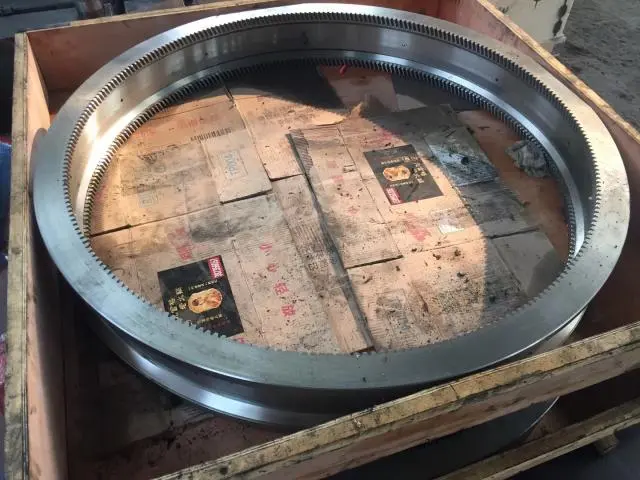
Understanding Internal Helical Gear Cutting and Its Challenges
Helical gears that are inside a machine are very different from those that are outside. The teeth are made on the inside diameter of a cylinder-shaped hole, which makes it harder to get to the tools and get rid of chips. For external gears, cutters come from the outside. For internal gears, cutters have to use special tools to get through tight areas while keeping accurate involute profiles and helix angles.
Why Internal Helical Gears Matter in Industrial Applications
It is very important for planetary gear reducers, machine tool feed mechanisms, and lifting equipment gearbox systems to have internal helical gears. Because their teeth are angled, they gradually engage, spreading the load across several teeth at the same time. When compared to spur gears, this design cuts noise levels by 15 to 20 decibels and raises load-bearing capacity by making contact ratios higher. These gears are used in heavy-duty winches, mining equipment, and aerospace actuators to handle a lot of torque while keeping the operation smooth.
Common Production Challenges
It is very hard to get tight tolerances in small areas because of the technology involved. As bore diameters get smaller, it gets harder to get to the tools, especially when cutting modules below 2.0 in small housings. Chip evacuation is also hard because metal shavings have to leave through the same small opening that the cutter works in, which could damage the surface if it's not done right. The stiffness of the machine has a direct effect on the accuracy of the teeth. If the machine shakes while cutting, it causes profile mistakes that spread around the whole gear. Cutting hard materials like carburised 20CrMnTi or quenched 42CrMo speeds up tool wear, so you need strong tools and accurate coolant delivery systems.
Core Criteria for Selecting Internal Helical Gear Cutting Equipment
More than anything else, your work needs of Internal Helical Gear Cutting determine what tools you choose. First, write down the details of your gear, such as the module range (0.5 to 50), helix angles (5° to 45°), material hardness (45 to 62 HRC), and the level of accuracy you need. It doesn't matter how many things are made—a shop that makes 50 gears a month has different needs than a factory that makes 5,000 units a week.
Machine Types and Technologies
Gear shaping is still the main method used to make internal helical gears. The revolving cutter with helix guide gears makes teeth by moving vertically and rotating in sync with each other. This method works well for blind holes and shoulders that are close to the gear teeth. Shaping machines are very adaptable because they can cut different modules and helix angles by changing the tools they use. However, their cycle times are longer than those of continuous processes.
In the last ten years, power skiving has changed the way internal helical gears are made. This way of continuous cutting blends hobbing kinematics with shaping freedom. Compared to traditional shaping, it cuts cycle times by 300–50%. The skiving cutter works at an angle across its axes, constantly cutting away material as both the tool and the subject spin at the same speed. Power skiving gets the quality up to DIN 5-7 right after cutting, so for green machining applications, secondary grinding operations are often not needed.
Hobbing traditionally serves external gears, but specialized internal hobbing setups exist for larger bore diameters. Broaching has very short cycle times for making a lot of things, but it's not very flexible because each type of gear needs its own expensive set of tools. Milling with 5-axis CNC machines can be used to make prototypes, but it can't match the accuracy or speed of production of generating processes.
Tooling Systems and CAD/CAM Integration
Digital design workflows must be able to work with modern gear-cutting tools. Before cutting metal, CAD/CAM systems let engineers practice cutting processes, find places where tools might interfere, and find the best cutting settings. Kinematically-caused twist errors are fixed by electronic lead correction, which makes sure that the tooth flanks are parallel across the facewidth. Look for machines that have multi-axis CNC control, setting accuracy of less than one micron, and real-time heat adjustment to keep tolerances during long production runs.
Supplier Support and Tooling Availability
The skill of the equipment doesn't mean much if you can't get to the right tools and get expert help. Check to see if new cuts, shape tools, or skiving heads are easy to get and don't take too long to arrive. Response time from suppliers directly affects production uptime. For example, a supplier that offers technical support and spare parts delivery 24–48 hours a day keeps production from being held up, which costs a lot of money.
Comparison of Popular Internal Helical Gear Cutting Methods and Machines
Knowing the pros and cons of each cutting method helps match the choice of equipment with the needs of the operation. Each technology has its own pros and cons that affect accuracy, cost, and how well it works for production.
Gear Shaping vs. Power Skiving
Gear shaping gives job shops that handle a wide range of orders unmatched flexibility. With simple tooling changes, machines can handle modules from 0.5 mm to 12 mm. Shaping takes care of blind holes and nearby shoulders that would get in the way of skiving operations with tools. It takes between 5 and 15 minutes per gear, though, depending on the module and facewidth. This makes shaping less competitive for mass production.
Power skiving is the main way that transmissions for cars and electric vehicles of Internal Helical Gear Cutting are made when the production volume justifies the investment. Skiving finishes gears in one to three minutes, while shaping takes ten or more minutes. After cutting, the surface finishes reach Ra 0.4–0.8 µm right away, meeting the requirements for green machining without the need for grinding. The problem is with the geometry: small bore diameters or close shoulders make it more likely for tools to collide, so careful kinematic simulation is needed during setup.
Grinding and Surface Finishing Considerations
When the job needs a surface hardness above 58 HRC with little warping, internal spiral gear grinding comes after cutting. Precision robots and aerospace devices need zero-backlash performance, which can only be achieved by grinding after heat treatment. Grinding fixes distortions caused by heat treatment and gets ISO 4-5 accuracy grades. However, grinding adds a lot of cost and time to the process, so it should only be done when the practical needs support the expense.
Practical Selection Factors
Budget limits affect the choices of equipment, but they shouldn't get in the way of meeting basic needs. Depending on their size, good gear shapers cost between $150,000 and $400,000, and high-tech power skiving centers cost between $500,000 and $1,200,000. Think about how much the tools will cost. Each shaping cutter costs $500 to $2,000, and each skiving head costs $3,000 to $8,000. Different machines need very different amounts of floor space. Small shapers need 15 to 25 square meters, while skiving centers with built-in loading systems need 35 to 50 square meters.
Expertise in the workforce has a big impact on operational success. Gear shape technology has improved over many years, making it easier for more people to learn how to set it up and use it. For power skiving, you need to know a lot about difficult mechanical connections and be very good at programming CNC machines. Investing in training is very important. Equipment suppliers that offer full operator training and ongoing technical support shorten the learning curve and lower the risks of starting up.
Practical Considerations When Procuring Internal Helical Gear Cutting Equipment
Technical standards don't ensure a successful buying process by themselves. Your investment will be safe over the 15 to 20 years that the equipment is in use if you check the reliability of the supplier and the service infrastructure.
Verifying Manufacturer Credentials
Standardised quality management is shown by ISO 9001 certification, but gear machinery needs more. Look for suppliers who have a history of working with your industry. For example, aerospace applications need different kinds of validation than mining equipment. Ask for case studies that show how setups went well in similar work settings. Customer examples are very helpful for finding out how well the equipment works, how reliable it is, and how quickly the seller is during setup and ongoing use.
Customization and After-Sales Support
Standard machines don't always meet the exact needs of production. Suppliers who offer customisation can change the way machines are set up, add special fixtures, or change software to work with custom gear designs. Comprehensive support after the sale is what sets exceptional suppliers apart from average ones. Technical training should cover more than just simple functions. It should also include advanced code, preventative upkeep, and fixing problems. Maintenance service agreements make sure that problems are fixed quickly—guaranteed 48-hour on-site service cuts down on unplanned downtime.
Outsourcing vs. In-House Production
Procurement managers have to make smart choices about where to make things. When you cut your own gear, you have control over quality, schedule, and protecting your intellectual property. Depending on its capabilities, capital equipment costs anywhere from $200,000 to over $1,000,000, and there are also ongoing costs for tools, maintenance, and skilled operators. By outsourcing to specialised gear makers like YIZHI MACHINERY, you can avoid having to invest in new equipment and make use of their already-established knowledge. We keep our ISO-compliant quality systems that were built over 15 years, our precision grinding tools, and our full range of heat treatment facilities. Companies that have fluctuating demand, limited floor space, or would rather use their own resources on core skills instead of gear production should consider outsourcing.
Maximizing ROI Through Optimal Equipment Selection and Usage
Return on investment extends beyond the initial purchase price. Optimizing machine utilization, maintaining consistent quality, and planning for future needs determine long-term profitability.
Fine-Tuning Cutting Parameters
Gear accuracy and tool life improve dramatically through parameter optimization of Internal Helical Gear Cutting. Cutting speed, feed rates, and depth of cut must balance productivity against tool wear. Cutting carburized materials like 20CrMnTi at surface hardness 58-62 HRC demands carbide tooling with proper coating and conservative cutting parameters to prevent premature failure. Coolant delivery strategy impacts chip evacuation and thermal management—high-pressure oil directed precisely at the cutting zone extends tool life by 40-60% compared to flood coolant alone.
CAD/CAM Integration Benefits
Integrating equipment with digital design systems streamlines workflows substantially. Engineers can validate gear designs against manufacturing constraints before releasing drawings. Automated tool path generation reduces programming errors that lead to scrapped parts or crashed tooling. Simulation capabilities detect potential collisions in complex internal geometries, particularly valuable when cutting gears with unusual helix angles or tight clearances. Throughput increases by 25-35% when programming time decreases, and setup errors are eliminated.
Future-Ready Technology Adoption
Industry 4.0 developments are reshaping gear manufacturing. Equipment with built-in sensors monitors cutting forces, tool wear, and dimensional accuracy in real-time. Predictive maintenance algorithms analyze vibration patterns and power consumption to schedule tool changes before failure occurs, preventing scrap and unplanned downtime. Automation integration—robotic loading systems, automated measurement, and lights-out production capability—positions your operation for competitive advantage as labor costs rise and skilled workforce availability tightens.
Here are the core advantages modern Internal Helical Gear Cutting equipment delivers:
- Compact Transmission Design: Internal helical configurations enable planetary arrangements that achieve 3:1 to 10:1 reduction ratios in 30-40% less space than equivalent spur gear systems, critical for mobile equipment and confined installations
- Superior Load Distribution: Helix angles from 15° to 35° create contact ratios exceeding 2.0, distributing loads across multiple teeth simultaneously and reducing individual tooth stress by 40-50% compared to straight-cut gears
- Acoustic Performance: Gradual tooth engagement inherent in helical geometry reduces transmission noise by 15-20 dB, essential for operator comfort in enclosed cabs and noise-sensitive environments
- Flexible Customization: Module ranges from 0.5 to 50, accommodating everything from precision instruments to heavy mining equipment, with customizable tooth counts, helix angles, and material selections matching specific application requirements
These advantages solve critical production challenges across industrial machinery, mining, and aerospace applications where reliability, compactness, and smooth operation determine equipment success. Equipment capable of producing ISO 6 Grade precision with surfaces hardened to 58-62 HRC delivers the performance these demanding sectors require.
Conclusion
Selecting equipment for Internal Helical Gear Cutting requires balancing technical capabilities against practical business considerations. Understanding your gear specifications, production volumes, and quality requirements guides you toward appropriate technology—whether gear shaping for flexibility, power skiving for throughput, or specialized processes for unique applications. Evaluate suppliers not just on machine specifications but on their support infrastructure, customization capabilities, and long-term partnership potential. The most successful procurement decisions integrate equipment seamlessly into existing workflows while providing scalability for future growth. Whether investing in in-house capabilities or partnering with specialized manufacturers, prioritizing precision, reliability, and comprehensive support ensures your gear production meets demanding industrial, mining, and aerospace standards.
FAQ
1. What factors most influence cutting accuracy in internal helical gears?
Machine rigidity forms the foundation for accuracy—any deflection during cutting translates directly to tooth profile errors. CNC positioning resolution and thermal stability maintain tolerances during extended runs. Cutting tool quality affects surface finish and dimensional consistency, while proper fixturing ensures workpiece stability. Electronic lead correction compensates for kinematic errors inherent in helical gear generation.
2. Can standard machines handle custom gear designs with unusual specifications?
Modern CNC-controlled gear cutting equipment accommodates wide specification ranges. Gear shapers and power skiving machines handle modules from 0.5 to 50mm and helix angles from 5° to 45° through programming changes. Custom tooth counts and profile modifications are standard capabilities. Extreme geometries—very small bores, large modules with tight shoulders, or non-standard pressure angles—may require specialized fixturing or tooling but remain feasible with experienced suppliers.
3. Should we purchase equipment or outsource internal helical gear production?
This decision depends on production volumes, capital availability, and strategic priorities. In-house production makes sense for high volumes (500+ gears monthly), proprietary designs requiring IP protection, or when gear production represents a core competency. Outsourcing suits variable demand, limited capital budgets, or companies preferring to focus resources elsewhere. Hybrid approaches—partnering with suppliers like YIZHI MACHINERY for overflow capacity or specialized processes—provide flexibility while maintaining control over critical production.
Partner with YIZHI MACHINERY for Expert Internal Helical Gear Solutions
YIZHI MACHINERY brings 15 years of specialized experience in Internal Helical Gear Cutting and precision gear manufacturing for industrial machinery, mining, and aerospace applications. Our ISO-compliant facility houses advanced gear shaping, hobbing, grinding, and heat treatment equipment capable of producing modules from 0.5 to 50mm with helix angles up to 45°. We work with premium materials, including 42CrMo, AISI4140, 20CrMnTi, and specialty alloys, delivering ISO 6 Grade precision with surface hardness from 45-62 HRC as your application demands. Custom design support, real-time production updates, and comprehensive quality inspection ensure your gears meet exact specifications. Contact us at sales@yizmachinery.com to discuss your requirements with a trusted Internal Helical Gear Cutting supplier offering flexible order quantities and 35-60 day delivery backed by our one-year warranty.
References
1. Stadtfeld, H.J. (2014). Gleason Bevel Gear Technology: The Science of Gear Engineering and Modern Manufacturing Methods for Angular Transmissions. The Gleason Works.
2. Radzevich, S.P. (2016). Dudley's Handbook of Practical Gear Design and Manufacture (3rd ed.). CRC Press.
3. Klingelnberg GmbH. (2016). Klingelnberg Cylindrical Gears: Calculation, Materials, Manufacturing. Springer Vieweg.
4. ISO 1328-1:2013. Cylindrical Gears — ISO System of Flank Tolerance Classification — Part 1: Definitions and Allowable Values of Deviations Relevant to Flanks of Gear Teeth. International Organization for Standardization.
5. Brecher, C., Brumm, M., & Henser, J. (2013). "Influence of the Grinding Process on the Running Behavior of Gears." Production Engineering Research and Development, 7(6), 673-680.
6. Kobialka, C. (2011). "Power Skiving of Internal Gears on Different Machine Platforms." Gear Technology Magazine, 28(5), 52-57.

USER EVALUATE
Here is the customer's evaluation of us