


How to Master Internal Helical Gear Cutting: Techniques and Innovations
To get good at internal helical gear cutting, you need to know how to use special manufacturing methods to make gears with angled teeth on the inside circle, which are needed for small, high-performance gearbox systems. Expertise is needed in this precise process when choosing the right tools, cutting parameters, heat treatment protocols, and quality control standards. We at YIZHI MACHINERY have spent 15 years perfecting these methods for use in mining, aircraft, and industrial machinery. We've reached ISO 6 Grade precision by using advanced CNC cutting, grinding, and a wide range of heat treatment techniques. Internal helical gear cutting solves important engineering problems like low noise, high torque density, and small design needs that standard external gears can't handle well.
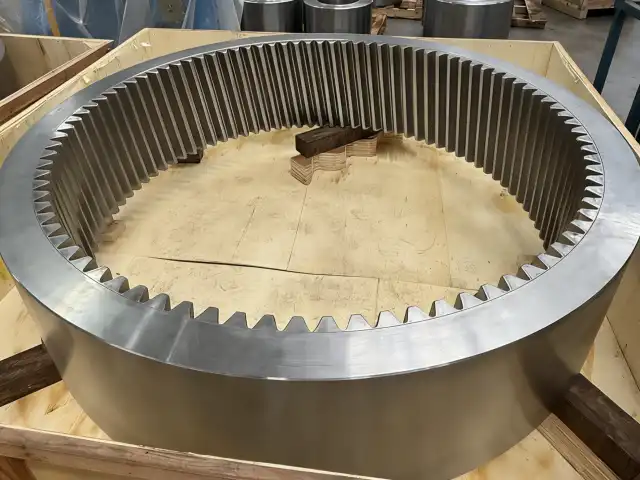
Understanding Internal Helical Gear Cutting: Fundamentals and Challenges
Internal helical gear cutting is a specialised area of manufacturing that makes gears with helical teeth that are formed on the inside diameter surface instead of the outside. Helical configurations differ from straight-cut internal spur gears because their teeth are angled between 5° and 45° relative to the gear axis. This allows the teeth to engage gradually, which greatly reduces noise, vibration, and harshness during operation.
The Core Process Workflow
First, the material is chosen. Most of the time, high-strength alloys like 42CrMo, AISI 4140, or 20CrMnTi are used. Next, the internal bore dimensions are set through rough machining. The helical tooth profile is then made using special techniques during the gear cutting process. The surface hardness is then raised to 58–62 HRC through heat treatments like carburising, quenching and tempering, or induction hardening. Final tooth grinding gets the required level of precision, often meeting ISO 6 tolerances that are needed for planetary gear reducers, machine tool feed mechanisms, and aerospace actuators.
Compared to external gear machining, this workflow has its own set of problems. When working with small internal sizes or deep bores, it becomes very hard to get to the tool inside the internal hollow. The spiral angle adds to the physical complexity, so the cutting tool and workpiece must move at the same time to keep the helix growth accurate across the whole face width.
Material and Geometric Challenges
Cutting factors and tool choice are greatly affected by the qualities of the material. For hard metals like SAE 4340 or 18CrNiMo7, you need carbide or treated tools that can handle high temperatures and cutting forces. For softer materials like 45# steel, you can use faster feed rates, but you need to be careful that chips don't get stuck inside the steel. The helix angle itself makes chips of different thicknesses during contact. To keep the tool from breaking or wearing out too quickly, the cutting speed and feed must be carefully optimised.
When making internal helical gears for planetary gear reducers, where multiple gears must mesh at the same time with precise load distribution, geometric accuracy is especially important. When tolerances get tighter to ISO 6 Grade standards, mistakes in profile, lead variation, and pitch that might be okay in lower-precision situations become unacceptable.
Techniques and Methods for Internal Helical Gear Cutting
For making internal helix gears, there are different ways to do it, and each has its own benefits based on production volume, quality needs, and physical limitations. When looking for manufacturing partners, knowing about these methods helps procurement professionals find partners with the right skills.
Gear Shaping with Helical Guides
Gear shaping is still one of the most flexible ways to cut internal helix gears. It uses a revolving cutter that slowly feeds inwards along the axis of rotation while keeping up with the object. The spinning connection is controlled by helical guides or computer axis alignment to make the right helix angle. This method works great for cutting gears with adjacent shoulders that stop through-cutting operations or blind internal bores. Modern CNC shaping machines are very accurate, but their cycle times are usually longer than those of continuous cutting processes. This makes this method perfect for small to medium production batches that need to be very flexible.
Power Skiving Revolution
Power skiving has changed internal spiral gear cutting by making shape and hobbing movements work together in a single cutting process. The skiving cutter cuts at an angle across its axes to the workpiece, and its multiple cutting edges are all working on the material at the same time. Cycle times are three to five times faster than with standard shapes, and the surface finish is still very good—Ra values of 0.4 to 0.8 µm are common right from the cutting process. Power skiving works best for medium to high-volume production, where spending money on specialised tools pays off in big ways in terms of productivity. To keep tools from interfering with each other in small internal spaces, the technology does need careful kinematic simulation.
Broaching for High-Volume Production
When production volumes are high enough to justify the investment in tools, internal broaching is a very productive method. A multi-tooth broach removes material step by step in a single stroke, making full tooth profiles in a matter of seconds. Broaching works great for straight internal spur gears, but for helical shapes, you need more complicated rotating broach assemblies that make the cost of the tooling much higher. This method works well for things like auto gearbox parts, where the gear specifications stay the same over thousands of units, but it's not flexible enough for custom designs or designs that change often.
Grinding for the Most Accurate Results
Tooth grinding is both the main way that things are made and the last step that is done after heat treatment. Grinding gets rid of the warping that heat processes cause, bringing the tooth shape back to exact specs. For internal helical gears that need to be very accurate, like aerospace gearbox parts that have to work in harsh conditions, grinding is necessary to get the tight tolerances, high-quality surface finish, and consistent tooth contact patterns that define ISO 6 Grade quality. Advanced CNC grinding centers use either formed or generation grinding, and their tools are specially made to deal with problems that come up when accessing the inside of the machine.
Comparative Analysis: Choosing the Right Cutting Method
Selecting optimal manufacturing techniques for internal helical gear cutting involves analyzing multiple factors that impact both immediate project success and long-term operational efficiency. The decision framework should balance quality outcomes, cost considerations, and delivery timelines against specific application requirements.
Quality and Precision Comparison
Grinding consistently delivers the highest precision, routinely achieving ISO 5-6 grades with exceptional surface finish and minimal tooth-to-tooth variation. Power skiving approaches these quality levels when properly optimized, often eliminating grinding requirements for applications tolerating ISO 6-7 grades. Traditional shaping produces reliable results in the ISO 6-7 range, with precision largely dependent on machine condition and operator expertise. Broaching typically achieves ISO 7-8 grades suitable for commercial applications where ultimate precision ranks secondary to cost efficiency.
At YIZHI MACHINERY, our comprehensive process capabilities—spanning cutting, hobbing, milling, and grinding—allow us to match manufacturing methods precisely to your specification requirements. Our quality inspection protocols verify profile accuracy, lead correctness, and pitch consistency through advanced coordinate measuring equipment, ensuring every internal helical gear meets documented standards before shipment.
Cost and Lead Time Considerations
Tooling costs vary dramatically across methods. Broaching demands the highest initial investment, sometimes reaching tens of thousands of dollars for complex helical broach assemblies, though per-piece costs drop substantially at high volumes. Power skiving requires specialized cutters costing several thousand dollars but offers excellent cost-per-part economics above moderate production quantities. Shaping utilizes relatively affordable cutters, making it economical for small batches and prototype development. Grinding typically involves the highest per-piece costs due to slower material removal rates and expensive abrasive wheels.
Lead times follow similar patterns. Our typical delivery window spans 35-60 days, encompassing design verification, production machining, heat treatment, quality inspection, and logistics coordination. Rush projects requiring expedited timelines may utilize shaping or milling approaches that minimize tooling lead times, while high-volume programs benefit from investing upfront time in broach manufacturing or skiving optimization to accelerate subsequent production.
Application-Specific Recommendations
Planetary gear reducers operating in mining equipment typically prioritize load capacity and durability over absolute precision, making carburized and tempered gears produced through shaping or skiving ideal choices. Aerospace actuator components demand verified traceability, documented heat treatment results, and ground tooth surfaces meeting stringent DIN 3962 standards. Machine tool feed mechanisms require excellent surface finish to minimize friction and wear, often justifying the additional investment in grinding operations. Understanding these application-specific priorities ensures manufacturing method selection aligns with actual performance requirements rather than defaulting to unnecessarily expensive or insufficiently capable processes.
Procurement Insights: How to Source Internal Helical Gear Cutting Services
Identifying reliable manufacturing partners for internal helical gear cutting requires systematic evaluation of technical capabilities, quality systems, and operational characteristics that indicate long-term partnership viability.
Evaluating Manufacturing Capabilities
Begin by assessing equipment sophistication and capacity. Leading suppliers maintain CNC-controlled gear shaping machines, modern grinding centers, and increasingly, power skiving systems representing current technology standards. Heat treatment capabilities prove equally critical—look for suppliers offering multiple processes, including carburizing, induction hardening, and quenching/tempering, to accommodate various material specifications. Tooth grinding equipment indicates commitment to precision applications, particularly when coupled with climate-controlled grinding environments that prevent thermal distortion during finishing operations.
YIZHI MACHINERY's production facility houses globally recognized precision manufacturing and inspection apparatus, encompassing high-precision CNC gear machining centers, fully automated grinding machines, and intelligent heat treatment production lines. This integrated capability eliminates outsourcing dependencies that introduce quality risks and schedule uncertainties, giving you direct accountability throughout the manufacturing sequence.
Certifications and Quality Standards
ISO certification demonstrates foundational quality management systems, though gear-specific certifications provide stronger assurance. Suppliers serving aerospace markets typically maintain AS9100 certification, while automotive-focused manufacturers often hold IATF 16949 credentials. Beyond certificates, investigate actual inspection capabilities—coordinate measuring machines, gear roll testers, and surface finish measurement equipment indicate a serious commitment to verification rather than reliance on process control alone.
Our quality protocols comply with ISO standards and incorporate comprehensive inspection at multiple production stages. We verify material certifications upon receipt, conduct in-process dimensional checks during machining, validate heat treatment results through hardness testing and metallurgical analysis, and perform final gear geometry inspection using advanced measuring centers. This multilayer approach catches potential issues early, preventing costly rework or field failures.
Understanding Quotes and Lead Times
Detailed quotations should itemize material costs, machining operations, heat treatment processes, and finishing steps separately, providing transparency into cost drivers. Vague lump-sum pricing often conceals risks or indicates an incomplete understanding of requirements. Lead time estimates must account for tooling procurement when necessary, raw material availability, production scheduling, heat treatment cycles, and final inspection—realistic timelines prevent disappointment and enable accurate project planning.
We provide itemized quotations that clearly delineate each process stage, helping you understand value delivery at every step. Our 35-60 day standard lead time reflects realistic scheduling across our complete process chain, and we offer expedited options when project urgency justifies premium handling. Real-time order tracking services push updates at each milestone from factory loading through final delivery signature, giving you continuous visibility into shipment progress.
OEM Partnership Considerations
Successful OEM relationships depend on manufacturing flexibility and technical collaboration capabilities. Look for suppliers accepting low minimum order quantities—some manufacturers impose minimums of hundreds or thousands of pieces that prove impractical for custom applications. Technical support during design phases adds substantial value, helping optimize gear specifications for manufacturability before committing to production tooling. Responsiveness to engineering changes and willingness to accommodate specification revisions distinguish true partners from transactional vendors.
At YIZHI MACHINERY, we welcome single-item production and maintain low minimum order quantities, recognizing that prototypes, spare parts, and specialized applications often require small batches. Our technical team provides design drawing support and engineering consultation throughout pre-sales phases, helping refine specifications that balance performance requirements with manufacturing realities. This collaborative approach reduces development cycles and prevents costly redesign iterations.
Innovations and Future Trends in Internal Helical Gear Cutting
The gear manufacturing industry continues evolving through technological advancement, with several trends reshaping how internal helical gear cutting achieves higher productivity, better quality, and improved cost efficiency.
Advanced CNC and Software Integration
Modern CNC controllers incorporate sophisticated algorithms that compensate for thermal growth, tool deflection, and kinematic errors during cutting operations. Software simulation validates tool paths before metal cutting begins, preventing crashes and optimizing cycle times through virtual process development. These digital capabilities prove particularly valuable for internal helical gear cutting, where restricted access amplifies collision risks and limits opportunities to recover from programming errors.
Integrated CAM systems now generate complete manufacturing sequences from 3D models, automatically calculating optimal cutting parameters based on material properties, tool specifications, and machine characteristics. This intelligence reduces programming time while improving consistency across production batches. At YIZHI MACHINERY, we leverage these technologies throughout our CNC machining operations, ensuring efficient toolpath generation and reliable process execution across diverse internal helical gear geometries.
Tool Material and Coating Developments
Cutting tool longevity directly impacts production economics, making advances in tool materials and surface coatings significant for internal helical gear cutting applications. Modern carbide grades incorporate refined grain structures and optimized binder compositions that enhance toughness without sacrificing wear resistance. Advanced coating technologies—including multilayer PVD treatments and diamond-like carbon films—dramatically extend tool life when cutting hardened alloys like AISI 8620 or 17CrNiMo6.
These improvements prove especially valuable for internal machining operations where tool changes consume disproportionate time due to access challenges. Longer tool life translates to fewer interruptions, more consistent surface finish characteristics, and reduced per-piece tooling costs. Staying current with these developments ensures your manufacturing partner employs optimal tooling strategies rather than relying on outdated consumables that inflate production costs.
Automation and Industry 4.0 Integration
Automated loading systems, robotic part handling, and integrated measurement stations increasingly connect into complete manufacturing cells that minimize manual intervention. Sensors embedded throughout production equipment monitor cutting forces, vibration signatures, and thermal conditions, triggering alerts when parameters drift outside acceptable ranges. This real-time monitoring prevents scrap generation by catching process deviations before they produce nonconforming parts.
Data analytics platforms aggregate information across production runs, identifying trends that inform preventive maintenance scheduling and process optimization initiatives. These Industry 4.0 capabilities transform gear manufacturing from craft-dependent operations into data-driven processes with predictable outcomes and continuous improvement trajectories. Progressive manufacturers invest in these technologies to maintain competitive advantages as customer expectations for quality consistency and delivery reliability intensify.
Material Science Advancements
New alloy formulations and heat treatment protocols continue expanding performance boundaries for internal helical gears operating under extreme conditions. Case-hardening processes now achieve deeper effective case depths with finer microstructural control, enhancing fatigue resistance in high-load applications like mining equipment gear reducers. Surface treatments, including shot peening and specialized coatings, improve resistance to pitting and micropitting wear mechanisms that limit gear life in contaminated operating environments.
Understanding these material developments helps specify appropriate combinations for specific applications. A planetary gear reducer operating in a clean industrial environment has vastly different metallurgical requirements compared to a winch gearbox exposed to abrasive mining conditions. Manufacturing partners with comprehensive heat treatment capabilities and metallurgical expertise to help navigate these options, ensuring material specifications align with actual service conditions rather than defaulting to generic solutions.
Conclusion
Mastering internal helical gear cutting combines deep technical knowledge with practical manufacturing expertise across material science, cutting technologies, heat treatment protocols, and quality verification methods. The techniques discussed—from traditional shaping to revolutionary power skiving—each offer distinct advantages depending on production volume, precision requirements, and geometric constraints. Successful procurement strategies focus on identifying partners with comprehensive capabilities, transparent processes, and commitment to collaborative problem-solving rather than simply chasing the lowest unit prices. As manufacturing technologies evolve through CNC integration, advanced tooling, and automation, staying informed about innovations ensures competitive advantages in product performance and production efficiency. The investment in understanding these complexities pays dividends through improved reliability, reduced warranty costs, and enhanced customer satisfaction across demanding applications in industrial machinery, mining equipment, and aerospace systems.
FAQ
1. What makes internal helical gear cutting more challenging than external gear machining?
Internal helical gear cutting presents restricted tool access within the bore diameter, limiting cutter size and requiring specialized tool geometries. The internal configuration complicates chip evacuation since metal particles must exit through the cutting zone rather than falling away naturally. Helix angle verification becomes more difficult due to measurement probe access limitations, and heat dissipation during cutting proves less efficient in confined spaces, potentially affecting dimensional stability and surface finish quality.
2. How do I specify appropriate tolerances for internal helical gears in my application?
Tolerance specification depends on application requirements, including load characteristics, operating speeds, and noise limitations. Planetary gear systems typically require ISO 6-7 grades for proper load distribution across multiple mesh points. High-speed applications benefit from tighter profile and pitch tolerances that minimize transmission error and resulting vibration. Consult with your manufacturing partner early in the design phase—experienced suppliers help balance performance requirements against manufacturing realities and cost implications, optimizing specifications for your specific operating conditions.
3. Can heat treatment distortion be controlled in internal helical gear production?
Heat treatment inevitably introduces some dimensional change, though the magnitude varies with material composition, geometry, and thermal process parameters. Carburizing typically produces more distortion than induction hardening due to deeper thermal penetration. Experienced manufacturers account for predictable distortion through machining allowances, leaving sufficient stock for post-heat-treatment grinding operations that restore final dimensions. Advanced heat treatment facilities with controlled quenching systems and tempering protocols minimize distortion magnitude, reducing subsequent grinding requirements and associated costs.
Partner with YIZHI MACHINERY for Internal Helical Gear Cutting Excellence
Achieving superior results in internal helical gear cutting requires more than just equipment—it demands integrated expertise spanning design optimization, material selection, process control, and quality verification. YIZHI MACHINERY brings 15 years of specialized experience manufacturing precision internal helical gears from materials including 42CrMo, AISI 4140, 20CrMnTi, and SAE 4340, serving demanding applications in planetary gear reducers, machine tool mechanisms, and aerospace transmission systems. Our ISO-compliant quality management systems ensure every component meets specified tolerances, while our comprehensive heat treatment capabilities—including carburizing, quenching and tempering, and induction hardening—deliver surface hardness values from 45-50 HRC to 58-62 HRC depending on application requirements.
We understand the procurement challenges you face when sourcing internal helical gear cutting suppliers: balancing quality standards against budget constraints, managing lead times that align with project schedules, and establishing partnerships that provide technical support throughout product lifecycles. Our customization capabilities accommodate modules from 0.5 to 50, helix angles spanning 5° to 45°, and tooth counts tailored precisely to your design specifications. Whether you require a single prototype or ongoing production volumes, our flexible minimum order policies and standardized OEM workflow—encompassing requirements discussion, design drawings, production machining, quality inspection, packaging, and transportation—deliver consistent results with full transparency.
Our logistics infrastructure addresses the unique vulnerabilities of precision gear components through customized packaging with shock-absorbing cushioning liners and protective wooden pallets, reducing transport damage rates below 0.1%. Multi-channel transport options, including sea freight, air freight, and China-Europe freight trains, provide flexible solutions matching your delivery urgency and budget parameters. Real-time tracking keeps you informed at every stage, from factory loading through final delivery signature. Ready to discuss your internal helical gear cutting requirements with an experienced manufacturer dedicated to your success? Contact our technical team at sales@yizmachinery.com to explore how our capabilities align with your specifications and discover why leading industrial machinery, mining, and aerospace companies trust YIZHI MACHINERY as their preferred internal helical gear cutting supplier.
References
1. Stadtfeld, H. J. (2014). Advanced Gear Engineering. Gleason Works Technical Publications.
2. Radzevich, S. P. (2016). Dudley's Handbook of Practical Gear Design and Manufacture (3rd ed.). CRC Press.
3. Klocke, F., & Brecher, C. (2013). Gear Manufacturing Processes: Cutting, Grinding, and Finishing. RWTH Aachen University Institute for Machine Tools and Production Engineering.
4. ISO 1328-1:2013. Cylindrical gears — ISO system of flank tolerance classification — Part 1: Definitions and allowable values of deviations relevant to flanks of gear teeth. International Organization for Standardization.
5. Merritt, H. E. (1971). Gear Engineering. John Wiley & Sons.
6. DIN 3962. Tolerances for cylindrical gear teeth — Tolerances for deviations of individual parameters. Deutsches Institut für Normung.

USER EVALUATE
Here is the customer's evaluation of us