


How to Choose the Right Spur Planetary Gear for Your Design
Choosing the right Spur Planetary Gear for your design demands more than scanning a catalog—it requires understanding how precision, material quality, and heat treatment influence the longevity of your planetary reducer. At YIZHI MACHINERY, we've partnered with mid-sized transmission equipment manufacturers for over 15 years, and we've learned that selecting planetary gears isn't about finding the cheapest option. It's about matching exact tooth accuracy, concentricity tolerances, and thermal processing methods to your operational demands while protecting your proprietary designs through reliable NDA agreements.
Introduction
This book guides engineers, technical directors, and purchasing managers who need to acquire planetary gears. You'll discover how to evaluate gear specs, manufacturing methods, and suppliers that prioritize flexible production and sampling when buying motor reducers, agricultural equipment, or household appliance transmission system parts. We will discuss OEM customers' primary concerns, such as custom dimension prototyping times, intellectual property protection, and quality assurance, and then demonstrate why Spur Planetary Gear systems are still the most significant feature of small gearbox designs.
Our basic objective is to help you make informed purchase selections when you're unsure about technical specifics. So you know every piece of gear you buy will boost product performance and service life.
Understanding Spur Planetary Gears and Their Role in Mechanical Systems
What Makes Spur Planetary Gears Unique
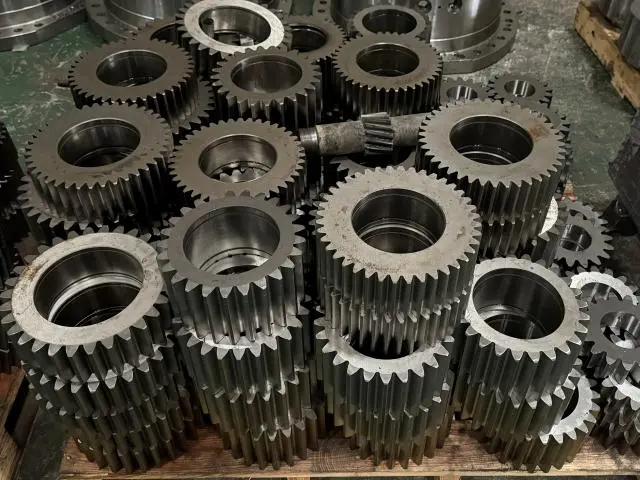
Spur Planetary Gear assemblies have straight-cut teeth parallel to the rotating axis. A sun gear is in the center, planet gears on a carrier, and a ring gear around the exterior. Helical structures provide axial thrust, whereas spur variations don't provide lateral forces. This simplifies bearing selection and system complexity. This design enhances load capacity in a tiny coaxial region by spreading force over three to four planet gears.
Straight teeth provide quick line contact during meshing, giving the machine 95% to 97% mechanical efficiency at every step. It produces higher audible frequencies than helical ones but without the sliding friction losses of angled tooth designs. Engineers prefer this feature in robotic joint actuators and conveyor drive units, where even 2% efficiency savings save money on operating expenses.
Planetary Gear Systems vs. Alternative Designs
Comparing spur planetary setups and bevel gears shows how shaft orientation and space consumption vary. Right-angle drives benefit from bevel gears' angular motion. However, planetary systems are ideal for inline motor integration because they align input and output lines. Cycloidal gears handle shock loads better but cost more and need stricter manufacturing requirements.
Harmonic drives feature nearly minimal backlash due to their flexible spline deformation, but their design restricts torque and makes them more costly. Standard spur gear trains require more room to accomplish planetary systems' epicyclic reduction ratios. Understanding these trade-offs helps you pick gears that fulfill your performance goals, whether space-saving, low-cost, or exact positioning.
Key Technical Criteria to Evaluate When Choosing a Spur Planetary Gear
Precision Grade and Tooth Accuracy
How easily your Spur Planetary Gear transfers motion when it's under load depends on its ISO 5–6 grade accuracy. Higher accuracy grades reduce involute profile errors (Falpha) and lead deviations (Fbeta), which directly lowers vibration and makes bearings last longer. When YIZHI MACHINERY makes planetary gears, we use coordinate measuring machines to make sure that the tooth geometry fits within a few microns of the design specifications.
In normal industrial grades, backlash, which is the angle difference between meshing teeth, is usually between 8 and 15 arc-minutes. To keep positioning mistakes from happening during fast indexing cycles, tighter tolerances below 5 arc-minutes are needed for precision uses like medical equipment or packing machinery. Inconsistent clearances are a sign of bad quality control, so ask possible sellers how they measure and control backlash across production runs.
Material Selection and Heat Treatment Processes
The materials and heating method determine planetary gear lifespan. Common alloys include 20CrMnTi, 42CrMo, and SAE4340. Core toughness and surface hardness vary. The carburizing heat treatment penetrates carbon into the outer layer, creating 0.8–1.2 mm case depths and HRC 58–62 surface hardness. The flexible core can absorb stress.
Quenching and tempering smooth metal grains, making it more fatigue-resistant under repeated loads. Induction hardening strengthens tooth edges without modifying them. This boosts productivity while maintaining quality. From billet to gear, we utilize forging, hobbing, milling, and precise grinding to maintain material integrity.
Modules 0.5 to 50 can handle anything from tiny servomotor reducers to large industrial gears. Custom tooth counts let you tailor reduction ratios, output speed, and power to fit mechanical demands without losing efficiency.
Load Capacity and Torsional Stiffness
To figure out load capacity, you have to find the contact stress (also called Hertzian pressure) between the teeth that are meshing and compare it to the material's yield strength. Spur Planetary Gear systems can handle three to four times more power than single-stage spur trains because they have more than one planet gear that shares the load. This spread-out pressure also makes the structure stiffer in the torsional direction, which reduces angle deflection in moving situations.
When designing automatic guided cars or surgical tables, stiffness is very important to keep the positioning accurate during many start-stop cycles. Look at the manufacturer's datasheets to find the rated torque values, but make sure you know if those values are for continuous duty or intermittent operation. A lot of the early gear failures we've seen in the industry are caused by duty cycles that don't match up.
Comparing Spur Planetary Gears with Alternatives for Informed Decision-Making
Spur vs. Helical Planetary Configurations
Helical planetary gears tilt the teeth in relation to the axis. This makes the contact slower, which lowers noise and vibration. But this shape creates axial thrust, which needs strong thrust bearings, which increases the cost and complexity. Spur Planetary Gear systems don't have this problem, which makes them better when motor bearing capacity is limited or when design choices are based on reducing the number of parts.
Helical systems might reach 96–98% efficiency, while spur designs might only reach 95–97%. However, the simpler bearing arrangements in spur designs often make up for any efficiency gap by reducing friction losses in secondary components. Noise levels should be taken into account. Spur gears produce higher decibel numbers, but current production accuracy and proper lubrication make audible signatures much less noticeable.
When to Choose Planetary Over Parallel Shaft Designs
In parallel shaft gearboxes, the gears are set up on different axes, so the housings have to be bigger to get the same reduction ratios. With planetary designs, parts are stacked on top of each other, which reduces the size of the system by up to 40% while keeping the same power capacity. This space efficiency is very important in robotics and mobile equipment, where limited space limits the designs that can be made.
When comparing durability, planetary systems in high-shock environments tend to do better. Single-point breakdowns are less likely to happen in two-gear mesh setups when loads are spread across more than two planet gears. But parallel shaft designs make upkeep and repair easier because techs can change individual gears without taking whole assemblies apart. This is an important thing to think about for equipment that can be fixed in the field.
Procurement Considerations for Spur Planetary Gears in Global B2B Markets
Supplier Reliability and Confidentiality Assurance
For OEM makers, protecting proprietary designs during the purchase of custom gear is a must. Before looking at technical plans, we follow strict NDA rules at YIZHI MACHINERY. This protects your intellectual property during the test and production stages. Make sure that any potential suppliers have quality management systems that are in line with ISO standards and can give you proof that the materials used in each batch can be tracked.
A supplier's name is more than just their certificates. Look into how well they've done with custom orders in the past. Can they work with non-standard sizes without adding too much to the lead time? Do they offer specialized project management for OEM clients to make sure that your specs aren't lost in the shuffle of mass production? These operational skills set competent vendors apart from real manufacturing partners.
Lead Times and Production Flexibility
Standard Spur Planetary Gear orders usually take 35 to 60 days to ship after the order is confirmed. This includes the time it takes to forge, machine, heat treat, and grind the gears. Custom designs add one to two months for testing and samples, which is about the same amount of time that most technical directors plan to spend on buying things. Make it clear if the lead times given include quality control and packaging, as unclear timelines cause problems in the supply chain.
Reliable suppliers can tell the difference between rigid operations and flexible manufacturing. We have low minimum order numbers, so you can test ideas before committing to mass production. This includes single-piece prototypes. This method lowers the financial risk of product development and speeds up the time it takes for new reducer models to reach the market.
Quality Certifications and After-Sales Support
Manufacturing that follows ISO standards makes sure that the dimensions and qualities of the material stay the same from one production run to the next. Ask for inspection records that include measurements of the tooth shape, the results of hardness tests, and confirmation of the surface finish. Reliable suppliers offer one-year warranties that cover flaws in the materials or the work itself, but it is still your responsibility to make sure they are installed correctly and are properly oiled.
Support after the sale is what sets long-term partners apart from transactional sellers. During design iterations, can the supplier offer technical advice? Do they offer CAD models that you can add to your building drawings? Respondent channels of communication, like sales@yizmachinery.com email or direct technical hotlines, make it easier to solve problems and cut down on project delays.
Practical Framework for Selecting the Right Spur Planetary Gear for Your Design
Define Performance Requirements and Constraints
First, you need to figure out the exact operating factors, such as the input speed, output torque, reduction ratio, duty cycle, and temperature range. Write down the room restrictions that affect the width and length of the gears. Find out whether the most important thing for your application is efficiency, noise reduction, or cost-effectiveness. These things affect the choice of material and precision grade.
Set standards for success that can be measured. Does your reducer need to be able to position itself accurately within 5 arc-minutes? Must it be able to handle 10 million load cycles without getting tooth pits? Clear specs keep you and your suppliers from misunderstanding each other and let you compare ideas objectively.
Evaluate Suppliers Using Systematic Scoring
Make a matrix that rates possible providers based on their technical skills, quality systems, ability to adapt to specific needs, and dependability of delivery. You should give each measure the weight that makes sense for your project. For example, OEM clients often put more importance on sampling speed and NDA compliance than on small price differences. Before signing a supplier agreement, you should ask for samples to check the sizes and do some bench testing.
Check that the material certificates and heat treatment records match the requirements you gave them. We've seen cases where sellers use cheaper metals instead of the original ones, which shortens the life of the gear. A third-party review by an independent party adds to the confidence when buying important parts for high-value systems.
Plan for Scalability and Long-Term Supply
Design partnerships look ahead to how production will grow in the future. Can your supplier keep the quality the same even if the number of orders goes up tenfold? Do they put money into expanding their facilities to help your business grow? Talk about inventory management methods that work with your business plan, such as keeping a safety stock or setting up just-in-time delivery schedules.
Think about regional logistics: YIZHI MACHINERY uses a mix of sea freight, air shipping, and rail transport between China and Europe to get the best speed and price for delivery. Real-time tracking systems let you see shipments from the time they are loaded at the factory until they are cleared by customs. This makes global supply chains less uncertain.
Conclusion
When choosing the best Spur Planetary Gear, you need to strike a balance between technical accuracy and cost-effectiveness. Using the models described here to look at things like tooth accuracy, material composition, heat treatment methods, and supplier dependability can turn component buying from a task that needs to be done into a strategic advantage. The right planetary gear improves the performance of your reducer, increases the time between service visits, and makes your goods stand out in a crowded market. As global business-to-business buying gets trickier, it's important to work with manufacturers who put an emphasis on consistent quality, customization options, and protecting intellectual property.
FAQ
1. What distinguishes spur from helical planetary gears in practical applications?
Due to their straight-cut teeth, spur designs don't produce any axial pressure. This makes choosing a bearing easier and lowers the cost of the parts. Because the teeth engage slowly, helical versions are quieter, but they need strong thrust bearings to handle the axial pressures. Choose spur variants when the motor bearing capacity is limited or when reducing noise is less important than increasing efficiency.
2. How long does custom gear sampling typically require?
It will take about one to two months to make a prototype, which includes validating the design, getting the materials, milling them, and checking the quality. This schedule assumes that there are clear requirements and that input is given quickly during iterative revision. When samples are rushed, they often have mistakes in the sizes that show up when they are put together, which delays projects more than patient prototyping.
3. Can planetary gears integrate into existing motor housings?
Yes, as long as the mounting interfaces and shaft dimensions match the specs for your motor. Ask for CAD models in STEP or IGES files to make sure they fit inside the space you have for the assembly. Suppliers with a lot of experience, like YIZHI MACHINERY, offer design advice to find problems with influence before production starts.
Partner with YIZHI MACHINERY for Precision Spur Planetary Gear Solutions
If you need to buy planetary gears, YIZHI MACHINERY can help you with that through full customization, strict quality control, and open project management. We have been making Spur Planetary Gears for 15 years and have worked with mid-sized transmission equipment makers, so we know the technical and privacy issues that come up with OEM partnerships. Our ISO-compliant factories make precision-ground gears that meet ISO 5-6 grade standards. These gears come with material certificates and guarantees that last for one year.
We keep our minimum order quantities low so that we can make prototypes quickly and easily. As your designs get better, we can increase the monthly production volumes without any problems. Our logistics team sets up custom packaging with shock-absorbing liners and wooden boxes to make sure that damage rates during foreign shipping are less than 0.1%. Real-time tracking lets you know about everything from the plant departure to the final transport, making the supply chain clear.
Contact our technical team at sales@yizmachinery.com to talk about your specific needs. We want to be your trusted partner in gear transmission, whether you need help with CAD integration, help choosing materials, or NDA-protected samples.
References
1. Dudley, D. W. (1994). Handbook of Practical Gear Design and Manufacture. CRC Press.
2. Lynwander, P. (1983). Gear Drive Systems: Design and Application. Marcel Dekker Inc.
3. Stadtfeld, H. J. (2014). Gleason Bevel Gear Technology: Manufacturing, Inspection and Optimization. The Gleason Works.
4. ISO 6336-1:2019. Calculation of Load Capacity of Spur and Helical Gears – Part 1: Basic Principles. International Organization for Standardization.
5. Müller, H. W. (1982). Epicyclic Drive Trains: Analysis, Synthesis, and Applications. Wayne State University Press.
6. Townsend, D. P. (1991). Dudley's Gear Handbook: The Design, Manufacture, and Application of Gears. McGraw-Hill Professional.

USER EVALUATE
Here is the customer's evaluation of us