


Helical Gearbox Parts: A Guide to Their Functions and Uses
Helical Gearbox Parts are precision-engineered components featuring gear teeth cut at a specific helix angle relative to the gear axis, enabling gradual tooth engagement for smoother power transmission. Unlike spur gears that engage abruptly, these parts include helical pinions, gear wheels, shafts, bearings, seals, and housings that work together to minimize noise, manage substantial loads, and deliver efficient torque conversion. We understand that for MRO distributors and repair service providers, having reliable replacement components means reduced downtime and satisfied end customers. Throughout this guide, we'll share practical insights on functions, maintenance, sourcing strategies, and how our 15 years of manufacturing experience at YIZHI MACHINERY supports your procurement goals.
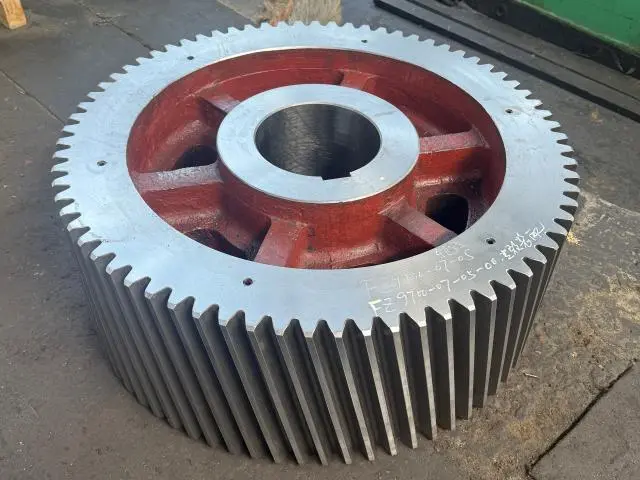
Understanding Helical Gearbox Parts and Their Functions
Any helical gearbox is made up of a coordinated system of Helical Gearbox Parts that work together to efficiently transfer mechanical power. Each part does a specific job to make sure the machine works well even in tough situations.
Core Components and Their Roles
The main part is the Helical Gearbox Parts, which has teeth that are machined at angles from 5° to 45°, depending on the needs of the application. This curved shape lets more than one tooth stay in contact at the same time, spreading the load over a larger surface area than straight-cut options. The result is operation that is quieter (often by 10 to 15 decibels) and can carry more weight, making it ideal for high-speed transmission uses.
Alloy steels like 42CrMo or AISI 4140 are used to make shafts that can handle torsional stress while still transmitting rotational force between gears. Most bearings, like spherical roller or taper roller types, can handle both radial loads and axial thrust caused by the helix angle. Seals keep dust and wetness out of internal parts, which increases their service life in tough industrial settings. The housing, which is usually made of cast iron or malleable iron, keeps the structure together and makes sure that the moving parts are lined up correctly.
Material Selection and Performance
The choice of material has a direct effect on how long it lasts and what it can be used for. For medium-duty uses, carbon steel types like 45# steel are easy to machine and have a middling hardness (200–300 HB). Alloy steels like 20CrMnTi, 18CrNiMo7, and SAE 4340 are hardened and cooled to get a surface hardness of 58 to 62 HRC while keeping their tough core. This mix keeps the tooth surfaces from wearing down and absorbs the shock loads that come from compressors, machine tool spindles, and precision transmission equipment.
Helical Gearbox Parts are made with modern heat treatment methods and casting, hobbing, milling, and grinding processes that make sure they are ISO 6 Grade precise. This level of accuracy guaranties transfer efficiency above 98% per stage, which is a key factor when figuring out how much energy a part will use over its entire life.
Common Issues and Maintenance Tips for Helical Gearbox Parts
Wear and tear happen to even the best-designed Helical Gearbox Parts over time. Early warning signs can help you avoid costly unexpected downtime.
Typical Failure Modes
Wear on gear teeth shows up on contact surfaces as pitting, scoring, or micropitting. Micropitting is a type of surface wear that happens when the width of the lubricant film isn't enough or when the surface is too rough. Failures of bearings are often caused by not enough lubricant, pollution, or loads that are too high. When shafts aren't lined up correctly, the load is spread out unevenly, which speeds up wear and causes too much shaking.
Failures of the lubrication system are one of the easiest problems to avoid. More friction and temperature jumps happen when there isn't enough oil, when the lubricant qualities have been lost, or when the oil is contaminated. Regularly checking the oil temperature—sudden rises often mean that the engine isn't getting enough coolant or that damage is starting to show on a component—allows for early intervention.
Proactive Maintenance Strategies
Regular maintenance routines greatly increase the life of parts. Checking the lubrication should be done at the times recommended by the maker, which is usually every 2,000 to 4,000 hours of operation, based on the load. Using synthetic oils with the right viscosity grades keeps the film thick, which keeps metals from touching even when heavy loads are put on them.
Using accelerometers for vibration analysis can find imbalance, misalignment, or bearing wear before they cause a catastrophic failure. Setting standard vibration patterns during the initial installation lets support teams spot changes that could mean problems are starting to appear. Regular visual checks, along with non-destructive testing methods like Magnetic Particle Inspection (MPI), can find tiny cracks or problems below the surface that can't be seen with the naked eye.
When these practices are used in maintenance programs, they cut down on unexpected fails by 40% compared to reactive methods. Preventive care is a good investment because continuous production depends on parts that work when they're supposed to.
How to Choose the Right Helical Gearbox Parts for Your Needs
To meet specific operating needs, choosing the right replacement Helical Gearbox Parts means combining a lot of technical and business factors.
Defining Operational Requirements
Load capacity and durability are often the most important factors in industrial settings. This is especially true for mining equipment, large gearboxes, and heavy machinery that are used all the time with changing loads. In the automotive and precision equipment fields, small size, low noise, and high speed may be important. Material and design choices are based on whether your application needs a lot of torque at low speeds or a moderate amount of torque at high speeds.
Module specs from 0.5 to 50mm cover a wide range of size needs, and tooth numbers that can be changed allow for exact ratio matching. The size of the axial thrust is affected by the helix angle. Steeper angles increase the thrust forces, which means that strong bearing arrangements are needed, but the contact is easier. The choice of surface hardness between 45-50 HRC and 58-62 HRC varies on how the material will be loaded and how long it needs to be serviced.
Evaluating Quality and Cost Factors
Checking the grade correctly is the first step in judging quality. ISO 6 Grade parts make sure that the dimensions are correct and support the best tooth contact patterns, which usually have a load-bearing area of 70 to 80%. This keeps stress from building up in one area. By asking for Coordinate Measuring Machine (CMM) reports, you can be sure that the accuracy of the lead and the profile of the part meet DIN or AGMA standards.
Costs include more than just the initial purchase price. They also include the total cost of ownership. Because they use less energy, energy-efficient designs lower running costs. The cost of labor and replacements are lower when the service life is longer. When deciding between OEM and aftermarket options, warranty terms and how well they work with other systems are often the deciding factors. OEM parts are guarantyd to meet exact specs, while good replacement parts may be cheaper with acceptable performance losses.
Supplier Reliability and Support
Suppliers you can trust give you certified test reports, records of the heat treatment process, and records of dimensional inspections. We've observed that producers who work with well-known mechanical engineering companies consistently produce high-quality products because of their good names. Fifteen years of production experience means that processes have been improved and knowledge has been gained that can be used in situations where younger sources might miss them.
Procuring Helical Gearbox Parts: Best Practices for B2B Clients
Effective procurement strategies improve inventory management and make sure that Helical Gearbox Parts are available when maintenance schedules or sudden failures require quick action.
Identifying Reliable Suppliers
Authorized distributors and direct manufacturers both have their own benefits. When you work directly with manufacturers like YIZHI MACHINERY, you can get expert help, the ability to customize your order, and low prices for large orders. We have low minimum order amounts and can even make a single item. This helps MRO sellers who worry about inventory turnover when they keep slow-moving SKUs in stock.
The evaluation of a supplier should check the skills of the production tools. High-precision CNC gear machining centers, fully automated gear grinding machines, and smart heat treatment production lines all show that they can consistently meet strict requirements. Ask for facility certifications and proof that the quality management system meets ISO standards.
Ordering Frameworks and Logistics
When you buy in bulk, you can get savings that were arranged when you first talked about the contract. If you need a project delivered quickly because of time constraints, make sure you know the production wait times (which are usually 35 to 60 days for unique specs) and the rush options that are available. Standardized processes for customization workflows (communication of requirements, design drawings, production machining, quality inspection, packaging, and transportation) cut down on mistakes and make sure that specifications meet operational needs.
Choosing the right modes of transportation is part of optimizing logistics. For non-urgent bulk shipments, sea freight is the most cost-effective option. On the other hand, air freight meets important deadlines at a higher cost. Freight trains between China and Europe are a good way to find a middle ground between cost and travel time. Our multi-channel transport choices include a range of options that can be used depending on the number of orders and the delivery needs. This keeps wait times under control.
Damage Prevention and Tracking
Helical Gearbox Parts can get surface damage while being shipped. Transport damage rates are kept below 0.1% by using custom packing with shock-absorbing cushioning layers and wooden pallets made just for protecting gear. Real-time order tracking lets you see what's happening from the time the plant loads the goods to the time they are delivered, so you can handle any problems in the supply chain before they affect production plans.
Here are the main benefits that make B2B buying more efficient when you work with skilled manufacturers:
- Comprehensive customization capabilities allow for specific needs, such as non-standard modules, unique helix angles, and material choices that are best for the purpose.
- Flexible MOQ policies can handle both large orders and wants for a single replacement part without punishing smaller amounts.
- Standardized OEM workflows make sure that quality is always the same by using processes that have been tested and proven to work over thousands of production runs.
- End-to-end visual tracking from beginning to end of the supply chain makes the whole process clear, which makes just-in-time inventory strategies less risky.
- Technical consultation support helps with design optimization, choosing materials, and fixing problems with compatibility before an order is placed.
These benefits successfully solve procurement problems such as worries about seller dependability, the cost of keeping inventory, and the lack of clarity in technical specifications that make it hard to choose where to get replacement parts.
Enhancing Performance with Advanced Helical Gearbox Solutions
As new technologies come out, they keep improving performance of Helical Gearbox Parts while lowering prices and harming the environment.
Material and Design Advances
Advanced alloy mixes like 17CrNiMo6 and 20CrNi2Mo offer better resistance to fatigue and longer service life when loaded and unloaded repeatedly. Precision grinding and other improvements to the manufacturing process make it possible to get surface finishes of Ra 0.4 or better, which reduces friction and stops micropitting from starting. These changes make it possible for higher torque ratings and faster operating speeds without lowering the durability.
Through better lubrication systems and adjusted tooth shapes, energy-efficient component designs cut down on friction losses. Noise reduction technologies that use changed helix angles and damping materials make workplaces better while keeping the load capacity the same. Payback periods of less than three years often make higher prices worth it because they save businesses money by using less energy.
Industry 4.0 Integration
Predictive maintenance plans can be used with smart condition tracking systems that have vibration monitors, temperature probes, and oil quality testers. Tracking performance in real time lets you see how things are getting worse before they break down, so you can schedule repairs for planned maintenance windows instead of having to deal with emergencies. Industry studies show that this method cuts down on unplanned downtime by up to 50%, which protects production plans and income streams.
Connectivity platforms collect data from many gearboxes and find patterns that make maintenance intervals more appropriate based on real-world conditions rather than manufacturers' conservative estimates. We see buying teams that are thinking ahead selecting sensor-ready parts when they make their first purchases. This protects investments for the future as facilities start using smart manufacturing methods.
Conclusion
This guide has gone over the technical basics, maintenance priorities, selection criteria, and best practices for buying Helical Gearbox Parts that you need to know in order to manage them well. Knowing how parts work, spotting common failure modes, and building relationships with dependable suppliers all have a direct effect on operational reliability and cost management. The angled tooth design of these parts gives real benefits, like less noise, better load distribution, and the ability to work at high speeds, that make them widely used in many industry sectors. Adding smart tracking and high-quality replacement parts to repair operations sets them up for long-term success as manufacturing technologies improve and Industry 4.0 ideas become more established. What you buy affects not only how often parts need to be replaced, but also how well the equipment works generally and where it stands in the market.
FAQ
1.What distinguishes helical gears from spur gear systems?
Helical Gearbox Parts have teeth that are cut at an angle to the gear axis. This lets the teeth mesh more and more across the face width, allowing for a steady contact. Spur gears have straight teeth that run parallel to the shaft and engage quickly across their whole width at the same time. Because of this basic difference, helical designs are quieter, can handle higher speeds well, and spread loads across more teeth. Helical shapes, on the other hand, produce axial thrust that needs thrust bearings, while spur gears only produce rotational forces.
2.How often should maintenance occur for helical gearbox components?
The amount of maintenance that needs to be done relies on the working conditions, such as load factors, duty cycles, and the environment. As a general rule, grease should be checked every 2,000 to 4,000 hours of use, and synthetic oil should be changed every 8,000 to 10,000 hours. Every three months, vibration studies should be done, and once a year, or after 15,000 to 20,000 hours of use, full checks should be done, including checking the contact pattern between gear teeth. When service conditions are bad, gaps should happen more often.
3.Should I choose OEM or aftermarket replacement parts?
OEM parts guaranty exact specifications and compatibility, and they often come with warranties that let you get your money back if they break down early. If you buy aftermarket parts from a reputable company, they might be cheaper and still meet or beat the original specs thanks to better materials or manufacturing methods. Instead of assuming that OEM is better, evaluate suppliers based on their certifications, inspection records, and production capabilities. Quality replacement parts from well-known brands are often the best way to get the most for your money.
Partner with YIZHI MACHINERY for Reliable Helical Gearbox Parts Supply
With 15 years of experience making things, YIZHI MACHINERY specializes in making accurate gears and Helical Gearbox Parts for MRO wholesalers and repair service providers all over the world. Our Helical Gearbox Parts supplier can make parts to your exact specs, with module numbers ranging from 0.5 to 50, helix angles ranging from 5° to 45°, and surface hardness levels that meet the needs of your individual application. We have flexible minimum order quantities so that we can produce both single items and large quantities. This way, we can meet the needs of customers who want to quickly sell their inventory without sacrificing quality or delivery reliability.
Our standard customization process includes communicating needs through design drawings, production machining, strict quality inspection, safe packing, and multiple shipping methods. Within 35 to 60 days, we deliver parts that meet ISO 6 Grade precision. Real-time order tracking lets you see what's going on in the supply chain, and our one-year warranty and quick response support take care of problems quickly.
Contact us at sales@yizmachinery.com to talk about your unique needs, get technical advice on choosing materials, or get personalized quotes for your future projects. Visit yizhimachinery.com to see our full line of products and learn how our wide range of services can help you meet your buying goals by providing you with reliable, high-performance transmission parts.
References
1. Dudley, Darle W. Handbook of Practical Gear Design and Manufacture. CRC Press, 2020.
2. Henriot, Georges. Traité théorique et pratique des engrenages (Theoretical and Practical Treatise on Gears). Dunod, 2018.
3. Jelaska, Damir T. Gears and Gear Drives. John Wiley & Sons, 2019.
4. Radzevich, Stephen P. Dudley's Handbook of Practical Gear Design and Manufacture. CRC Press, 2021.
5. Stadtfeld, Hermann J. Advanced Bevel Gear Technology. GEARS Publishing, 2020.
6. Townsend, Dennis P. Dudley's Gear Handbook: The Design, Manufacture, and Application of Gears. McGraw-Hill Education, 2019.

USER EVALUATE
Here is the customer's evaluation of us