


How to Choose the Right Internal Gear Grinding Machine for Precision Manufacturing
Choosing the right Internal Gear Grinding equipment is a very important choice that has a direct effect on the standard of output, the costs of running the business, and how competitive the company is in the mining, aerospace, and industrial machinery sectors. Internal Gear Grinding is the only way to finish the concave tooth shapes on ring gears used in planetary gearboxes, which can't be done with regular exterior grinding methods. The method fixes errors caused by heat treatment, gets very close tolerances (often ISO quality grade 5 or better), and gives surfaces with finishes between Ra 0.2 and 0.4 µm, which are important for spreading load and lowering noise in high-precision applications.
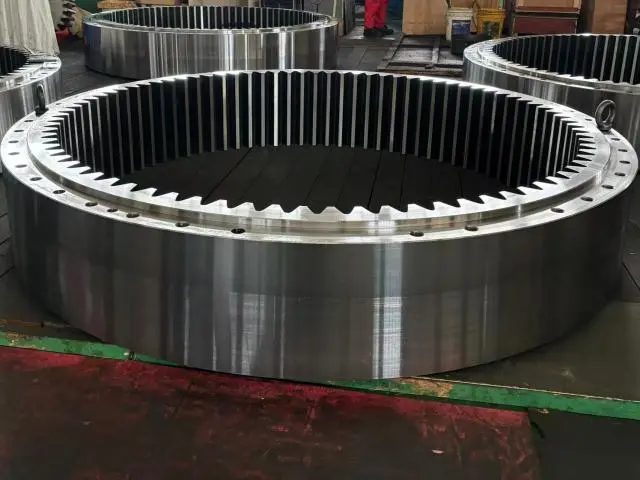
Understanding Internal Gear Grinding and Its Importance
Internal Gear Grinding is different from exterior grinding because it works on teeth that are on the inside of ring gears, which needs special mechanics and tooling arrangements. The curved shape makes interference problems that need careful wheel design and machine setting.
Form Grinding Versus Generating Methods
Profile form cutting has become the best method for use inside of things. Form grinding uses a shaped wheel that fits the desired tooth outline, while generating methods can get in the way of the internal structure of the tooth. This method gives you better control over root fillets and makes it easier to make complicated micro-geometry changes, like crowning and tip relief, which make up for bending under load. In planetary gearbox situations, where uneven load distribution leads to early wear and unnecessary noise, these changes are necessary.
Advantages Over Hobbing and Shaping
While hobbing and shaping are great for cutting the first gears, grinding hard-finished parts gives you more accuracy. Gears made by Hobbing are usually ISO 8–9 grade and have a surface roughness of 1.6–3.2 µm. Internal Gear Grinding makes this better, making the surface much more solid and bringing it up to ISO 6-7 grade or higher. The process gets rid of the distortions that happen during heat treatments like cooling and carburizing, which usually cause changes in size of 0.15 to 0.30 mm per side.
Critical Quality Metrics That Drive Selection
Knowing the goal specs helps you choose the right equipment. The tolerance values for profile deviation (f±), helix deviation (f²), and total runout (Fr) must match what the machine can do. The standards for surface finish have a direct effect on the formation of a grease film and the resistance to contact wear. For aerospace motors, near-zero backlash and precise positioning are important. On the other hand, load capacity and reliability are most important for mining equipment. These needs will help you decide whether you need a high-precision CNC machine or a cheaper option.
Core Criteria for Selecting an Internal Gear Grinding Machine
To find the best equipment for your industrial setting, the decision framework weighs technical skills, production needs, and cost factors. Important things to look for in an Internal Gear Grinding machine include the ability to handle specific gear sizes and volumes.
Production Volume and Gear Size Requirements
Production volume determines whether advanced technology investment proves worthwhile. CNC machines with automated loading and in-process gauging suit high-volume production by reducing labour costs and cycle time variation. Semi-automatic machines may prove more cost-effective for batch manufacturers producing 50-500 units monthly. Gear size directly influences machine selection—wind turbine ring gears over 1000mm require rigid, large-capacity machines, while aerospace parts prioritise precision over size. Module ranges 0.5-50 demand flexible cutting systems.
Machine Performance Metrics
Positioning accuracy within ±2µm ensures consistent tooth geometry and spacing. Repeatability below ±1µm maintains quality across production runs without frequent recalibration. Rigidity prevents deflection when cutting hard materials like SAE4340 or 42CrMo hardened to 58-62 HRC. Thermal stability maintains accuracy over extended periods—temperature changes cause dimensional variations compromising tolerances. Machines with temperature-controlled coolant systems and thermally stable castings deliver consistent results despite ambient temperature fluctuations, ensuring reliable performance in varying production environments.
CNC Versus Manual Control Considerations
CNC-enabled machines provide significant advantages in precision and flexibility. Multi-axis control enables complex helix angles from 5° to 45° with program-once, repeat-exactly capability. Automation reduces operator skill requirements and setup time for different gear types. Manual machines remain viable for prototyping, repair work, or small custom orders where programming time exceeds production time. YIZHI MACHINERY maintains both options to serve diverse customer requirements across applications.
Cost Analysis and ROI Framework
Initial investment extends beyond purchase price to include installation, training, and tooling inventory. Operating costs include consumables like grinding wheels and dressers, energy consumption, and maintenance. CBN wheels cost more initially but last significantly longer on hard materials, reducing per-part costs. ROI calculation compares total cost of ownership over 5-10 years against benefits of reduced cycle times, lower scrap rates, and decreased labour requirements. Machines with 35-60 day delivery minimise opportunity costs from production delays, accelerating return on investment.
Comparing Internal Gear Grinding with Alternative Gear Manufacturing Methods
The people who work in procurement can benefit from knowing when Internal Gear Grinding is better than other finishing methods like hobbing, shaping, or lapping.
Precision and Surface Finish Comparison
Internal Gear Grinding can get to standards that can't be reached by cutting. Hobbing makes gears that work well in general industrial settings, but they aren't precise enough for electric car powertrains, where gear whine is annoying without engine noise covering. Shaping makes internal gears, but the finish on the outside is still pretty rough. While shaving and polishing can improve the surface quality of lighter materials, they are not good ways to work with case-hardened parts. Lapping gives the surface a great finish, but it only takes a small amount of stock and can't fix major physical errors.
Production Speed and Application Scenarios
Grinding is slower than hobbing. Cycle times can be anywhere from a few minutes to over an hour, based on the module, the width, and the level of accuracy needed. But this investment pays off when tolerance and surface finish requirements are higher than what other ways can handle. Electric car planetary reduction boxes are a great example of a perfect application. Grinding makes sure that the tooth contact analysis is optimized, which reduces transmission error and lowers noise by 3–5 decibels compared to hobbed alternatives. Profile changes that stop edge loading and micropitting are good for wind turbine gears that have to deal with a lot of power and changing loads.
Real-World Case Study
A company that makes mining tools had planetary winch systems with hobbed ring gears at ISO 8 grade break down early. By spreading out the load better and lowering the amount of stress on the surface, switching to ground internal gears at ISO 6 grade increased the service life by 60%. The higher cost per unit was balanced out by fewer guarantee claims and a better reputation for dependability in tough underground conditions.
Optimizing Machine Parameters and Process for Maximum Precision and Efficiency
To get reliable high-quality results, you need to pay close attention to process factors and use systematic quality control. Optimization of machine settings is essential for achieving the best output in Internal Gear Grinding operations.
Wheel speed affects material removal rate and surface finish—higher speeds improve finish but increase machine stress. Feed rate determines the productivity-quality trade-off, with slower feeds producing finer finishes but longer cycles. Dressing methods restore wheel sharpness and profile accuracy. Coolant delivery proves critical in internal grinding where access is limited—high-pressure nozzles prevent thermal damage compromising surface hardness and causing premature wear failure.
Tooling Selection Strategies
CBN wheels outperform aluminum oxide abrasives when grinding hardened steels like 20CrMnTi at 58-62 HRC. Higher initial CBN cost is offset by longer wheel life and consistent performance, reducing total costs and improving process stability. Wheel geometry must accommodate internal gear dimensions while maintaining adequate clearance—smaller grinding spindles fit within ring gears but sacrifice rigidity. Balancing these factors achieves optimal results.
Maintenance and Quality Control Best Practices
Here are some important repair tasks that keep machines running well and keep the quality of the products they make:
- Routine Calibration: Use laser interferometry or precision ball bars to check the accuracy of placing and geometric alignment once a month. This will help you find problems early on before they affect the quality of the part.
- Spindle Condition Monitoring: Tracking vibration patterns and bearing temperature can help you predict spindle wear and avoid catastrophic breakdowns and unexpected downtime.
- Coolant System Management: Keep an eye on the amount of coolant, the amount of contamination, and the growth of germs to keep the system working well and stop corrosion or staining of the item.
- Wheel Wear Tracking: Keep track of dressing cycles and wheel life to make the best use of your goods and find out-of-the-ordinary trends of use that could mean there are problems with the process.
These maintenance practices make machines last longer and make sure that the standard of the output stays the same throughout production cycles. In-process measurement tools that find errors before parts are finished are the first step in quality control. Using coordinate measuring tools for post-process checking, profile deviation, helix deviation, and total runout are checked against ISO 1328 or DIN 3962 standards. Nital etch tests can find grinding burn, which is thermal damage that can't be seen by physical inspection but is bad for fatigue strength. Barkhausen noise analysis is a non-destructive way to find stress variations below the surface.
Procurement Insights: How to Source Internal Gear Grinding Machines and Services?
Strategic sourcing makes sure that the costs, skills, and risks of buying tools and working with other manufacturers are all balanced. Hiring specialized service providers to do your Internal Gear Grinding gives you freedom without having to spend money on new equipment.
New Versus Used Equipment Analysis
New machines cost more than used ones, but they come with warranties, the newest technology, and a reliable service life. Used equipment can save you a lot of money—sometimes 40 to 60 percent off the price of new equipment—but you don't know how long it will last or if there are any secret problems. When you're looking at used machines, make sure they come with full inspection reports, records of their upkeep, and cuts made on similar materials and with the same specs. Adding modern CNC settings to used equipment can make it last longer and save money at the same time.
Local Versus Global Sourcing Considerations
When you need local expert help, it's helpful to deal with domestic providers because they usually offer faster delivery and easier access to service support. Global buying gives you more choices and usually better prices, especially for specialized tools. Through ISO-compliant processes and strict inspection routines, we ship precision gear components all over the world from China at prices that are hard to beat. Our custom packing, which includes shock-absorbing padding and wooden pallets, keeps damage rates during transport to less than 0.1%, which eases your mind about foreign shipping.
Contract Manufacturing Partnerships
This method works well for businesses that have fluctuating demand, don't have a lot of cutting experience in-house, or are looking at market possibilities before buying equipment. YIZHI MACHINERY can handle concept development and small batch needs with low minimum order numbers and production of a single item. We can work with a wide range of materials, such as 45# steel, 20CrMnTi, 40CrNiMo, SAE4340, and many more. We can cut, hob, mill, and grind them, and we can heat treat them in a number of ways, such as by carburizing, cooling and tempering, or induction hardening. Lead times usually last between 35 and 60 days, so you need to plan ahead. Our normal process includes talking about needs, drawing up designs, making the products, checking for quality, packing them up, and transporting them.
Conclusion
To choose the best Internal Gear Grinding machine, you need to carefully consider your production needs, the machine's skills, and the total cost of ownership. Knowing why one process is better than another makes it clear when investing in grinding will pay off in the form of better quality, less noise, and longer component life. When choosing equipment, you need to make sure that its accuracy, stiffness, thermal stability, and level of automation are all right for the job, whether it's for planetary gears, winches, machine tool feed mechanisms, or aircraft actuators.
FAQ
1. What Makes Internal Gear Grinding More Expensive Than External Grinding?
Because smaller grinding wheels have to fit inside ring gears, the process of Internal Gear Grinding needs special machine mechanics. This is because the spindles have to be small, which means they have to give up some strength. When cutting, stiffer quills keep the tool from deflecting. Interference curves that come with concave shapes make the cleaning cycle more complicated. Compared to external grinding, these technical problems make the tools more expensive and make it harder to use.
2. Can Grinding Correct Heat Treatment Distortion Effectively?
If there is still enough stock space after heat treatment, grinding can fix flaws. Most of the time, 0.15-0.30 mm stock per side is enough to remove warping without going below the case-hardened layer. If there isn't enough stock, the correction isn't full or the surface qualities are harmed. Choosing the right materials and controlling the heat treatment process can lower the amount of warping, which means less cutting stock is needed.
3. How Do CNC Machines Improve Quality Consistency?
CNC control gets rid of the need for humans to change the placement of wheels, feed rates, and cleaning cycles. Once machines have made improved programs, they copy them exactly over thousands of parts. In-process measuring that is built into CNC systems lets you fix problems like wheel wear and temperature drift in real time. This machinery keeps tolerances tight during production runs without constant human help, which is especially helpful for making a lot of things.
Partner with YIZHI MACHINERY for Superior Internal Gear Grinding Solutions
YIZHI MACHINERY offer accurate Internal Gear Grinding services and parts that are designed for tough industrial machinery, mining, and aircraft uses. Our high-tech CNC gear machine centers, automatic grinding tools, and smart heat treatment lines make internal gears that meet ISO 7-8 grade standards and have a surface hardness of 45–50 HRC to 58–62 HRC. Custom specs can handle modules ranging from 0.5 to 50, helix angles ranging from 5° to 45°, and a range of materials, such as 42CrMo, AISI4140, 18CrNiMo7, and SAE4320. Whether you need a trusted Internal Gear Grinding supplier for ongoing production or expert advice on choosing the right tools, our team can help you from the planning phase all the way through delivery, with multi-channel logistics that keep lead times under control. Email us at sales@yizmachinery.com to talk about your needs and get a full quote.
References
1. Stadtfeld, H.J. (2014). Advanced Gear Grinding Technology: Theory and Practice. American Gear Manufacturers Association Technical Publications.
2. Klocke, F., & Gorgels, C. (2013). "Process Strategies for Internal Gear Grinding," Production Engineering Research and Development, Vol. 7, pp. 589-597.
3. Rowe, W.B. (2009). Principles of Modern Grinding Technology. William Andrew Publishing, Oxford.
4. Linke, B., & Overcash, M. (2012). "Life Cycle Analysis of Gear Manufacturing Processes," Journal of Cleaner Production, Vol. 24, pp. 130-141.
5. ISO 1328-1:2013. Cylindrical Gears — ISO System of Flank Tolerance Classification — Part 1: Definitions and Allowable Values of Deviations Relevant to Flanks of Gear Teeth. International Organization for Standardization.
6. Brinksmeier, E., & Klocke, F. (2011). "Hard Gear Finishing," CIRP Annals - Manufacturing Technology, Vol. 60, Issue 2, pp. 707-728.

USER EVALUATE
Here is the customer's evaluation of us