


How to Choose the Right Hand Drive Shaft for Industrial Applications?
Choosing the right gearbox part has a direct effect on how often the equipment works, how much it costs to maintain, and how consistently the production goes. A Right Hand Drive Shaft is an important part of heavy-duty systems that move spinning power, like machine tool gears and metallurgical rolling mills. As part of the selection process, you have to carefully think about the type of material used, the load rates, the exact standards, and the qualifications of the provider. Your procurement plan should support long-term business success by balancing these technical needs with cost-effectiveness and wait times.
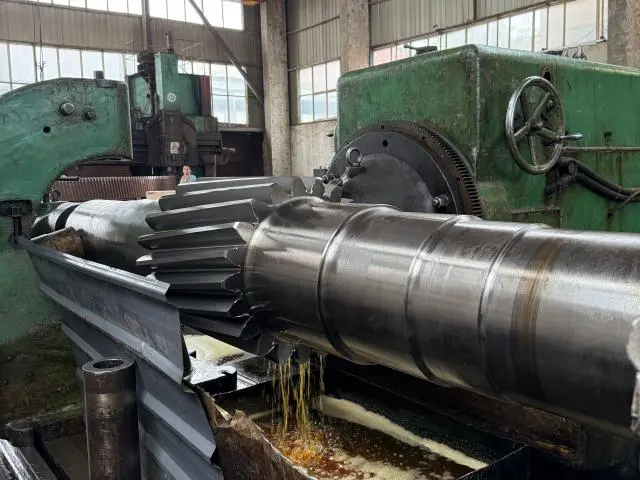
Understanding Right Hand Drive Shafts: Functions and Key Features
What Defines a Right Hand Drive Shaft in Industrial Systems?
A Right Hand Drive Shaft is a mechanical bridge that moves torque from prime movers to driven equipment in an industrial setting. The term "right hand" usually refers to the direction of rotation or the position of an object within an assembly. However, in the context of precision machinery, it usually refers to specific thread directions or mounting arrangements that keep the object from coming loose under operational loads.
These parts can handle constant spinning stress and stay aligned over a range of lengths. In contrast to lighter car uses, industrial versions have to handle extreme changes in torque, temperature, and contamination that are common in foundries, mines, and heavy production settings.
Core Functions in Heavy-Duty Applications
The main job is to send mechanical power with little energy loss while allowing for small misalignments between machines that are connected. In spindles for machine tools, these shafts keep the concentricity at the micron level to keep the cutting accurate. In mining tools, they have to be able to handle shock loads while materials are being worked on without permanently changing shape.
More advanced designs have parts that solve certain operational problems. High-quality steels like SAE4340 or 42CrMo have the right amount of strength to weight for high-speed uses. Specialized heat processes, such as carburizing, make surfaces that don't wear down easily, which increases their useful life in rough conditions. The precision grade, which is usually ISO 6 for industrial uses, sets the critical dimension tolerances for smooth operation and long-term bearing life.
Recognizing Component Failure Indicators
Vibration patterns that aren't normal during operation are often a sign of worn bearings or an imbalanced shaft. If you hear clicking or grinding sounds when you change directions, it could mean that the spline is damaged or the joint is breaking down. There shouldn't be any surface cracks, scoring marks, or rust pitting that can be seen. Too much radial play at connection places means that the splines or joints are worn out and need to be fixed right away.
Thermal imaging can find areas that are too hot because they aren't properly oiled or aligned, which are both situations that speed up material wear. Checking for these signs on a regular basis through planned checks stops catastrophic failures that stop production lines. We've seen that installing heavy machinery with inspection protocols every three months cuts down on unexpected downtime by about 40%.
Key Criteria for Selecting the Right Hand Drive Shaft for Your Industry Needs
Assessing Load Capacity and Torque Requirements
To make the right choice, you must first accurately calculate the transmitted torque at its highest level of operation. Machine tool gearboxes that handle cutting forces need shafts that can handle sudden load spikes, while mining reducers need shafts that can keep up a high torque level. The load capacity is directly related to the shaft diameter and the tensile strength of the material. Parts that are too small will break early, while parts that are too big will waste resources and make installation harder.
Together with gearbox system engineers, we suggest writing down the highest torque values along with safety factors of 1.5 to 2.0 for shock-load situations. This information helps choose the right material from normal carbon steels (like 45# steel) that can handle light loads to alloys (like 40CrNiMo and AISI4140) that are made for heavy-duty processes. Surface hardness ranges from 45 to 50 HRC to 58 to 62 HRC to account for different wear conditions. In mining, higher hardness values protect against sharp particles.
Material Composition and Heat Treatment Impact
The metallurgical qualities decide how long something will work and how often it needs to be maintained. Here are the most important things to think about when choosing materials for harsh industrial settings:
1. Alloy Steel Variants: Compounds like 20CrMnTi have very good core toughness and case-hardened surfaces, making them perfect for parts that are subjected to both torsional stress and surface wear. The 18CrNiMo7 grade is better at resisting fatigue in cyclic loading situations that happen a lot in reciprocating machinery.
2. Heat Treatment Processes: Carburizing makes the outside hard and immune to wear, while leaving the inside flexible and able to absorb impact loads. Induction stiffening makes certain areas stronger, like spline areas, without affecting the total flexibility. Quenching and tempering find the best balance between strength and ductility for each application.
3. Corrosion Protection: Parts that are used in mining and metallurgy are exposed to high temperatures, chemicals, and water. When choosing a material, it's important to make sure it won't rust or have protective coatings that keep the measurements accurate over time.
The total cost of ownership is greatly affected by these important choices. Even though it costs more at first, a properly specified Right Hand Drive Shaft made of AISI8620 steel that has been heat treated properly can last 300% longer than cheaper alternatives. The higher cost of the materials is worth it in mission-critical situations because they last longer and need less replacement.
Precision Standards and Dimensional Tolerances
When it comes to industrial gearbox parts, ISO 6 Grade precision sets the standard for tight tolerances on concentricity, straightness, and surface finish. This precise level makes sure that power is transmitted smoothly, that vibrations don't wear out bearings too quickly, and that equipment stays accurate for long periods of time.
Working with manufacturers that can adapt to different production needs is necessary because custom specifications must include specific mounting dimensions, spline configurations, and length needs. From fine-pitch instrument drives to heavy mining gears, module sizes from 0.5 to 50 can fit them all. In some situations, helix angles between 5° and 45° help spread the load evenly across the gear teeth, which lowers noise and makes the part last longer.
Comparing the Market: Top Right Hand Drive Shaft Brands and Solutions
Evaluating OEM Versus Aftermarket Options
Original Equipment Manufacturer (OEM) parts ensure that the dimensions and material requirements will fit the original design criteria. Getting replacement parts is easier with them, and they usually come with a full warranty. But OEM exclusivity often means higher prices and longer lead times, which can make it hard to handle supplies and upkeep budgets.
Aftermarket providers offer lower prices and faster access, which is especially helpful for old technology that doesn't get as much support from the original manufacturer. Quality varies a lot between aftermarket sources. Reputable makers keep their ISO 9001 certification and test their products in ways that meet or go beyond the original specs. On the other hand, budget providers may skimp on material quality or accuracy of measurements.
The choice process should take into account how important the equipment is and how much money is available. For production-critical equipment, OEM or certified aftermarket parts are required, but cheaper alternatives may work in auxiliary systems. Purchasing managers can lower the risk of buying things by working with suppliers who offer technical documentation, material certifications, and performance guarantees.
Certification Standards and Quality Indicators
Supplier qualifications show how well they can make things and how committed they are to quality. Industry-specific standards like IATF 16949 (automotive) or API certifications (petroleum) show specialized knowledge, while ISO 9001 certification shows systematic quality management. Ask for test reports on the material that confirm that the alloy's composition and hardness values meet the requirements.
Transparency in the production process is what sets high-end makers apart from commodity sellers. When facilities use CNC gear machining centers, automatic grinding equipment, and coordinate measuring tools, they always get better results than when they do things by hand. Computerized atmosphere control in heat treatment ovens makes it possible to get regular hardness profiles that could not be achieved with old-fashioned batch processes.
We've kept working together with many mechanical engineering companies because our production equipment includes high-precision CNC gear machining centers and smart heat treatment lines that give consistent results across production runs. This consistency is important when buying custom Right Hand Drive Shafts because differences in size can make assembly harder or cause the shaft to fail early.
Pricing Structures and Value-Added Services
Comparing costs isn't complete with unit pricing alone. For standard configurations, bulk order discounts cut the cost per piece by a large amount. Custom fabrication, on the other hand, usually has tooling charges that are spread out over the number of orders. When you commit to a certain amount of goods, you can often get better pricing and more flexible scheduling for production, which makes the supply chain more reliable.
Manufacturers' confidence in the durability of their products is shown by warranty terms that range from one year to the life of the equipment. When comparing small price differences, risk reduction that covers material flaws, measurement mistakes, and premature wear is worth looking at. After-sales technical support, such as help with installation, troubleshooting, and failure analysis, is hard to measure but very important when there are problems in the field.
Specialized makers are different from catalogue wholesalers because they can make things to order. Suppliers who offer design advice, prototype development, and custom changes can help with problems that off-the-shelf goods can't fix. This freedom is very helpful when improving old machines or making new ones work better. Our normal customization process, which includes talking about requirements, quality checking, and packaging, makes sure that orders are filled quickly, even for single-item production requests.
Step-by-Step Guide to Inspecting, Maintaining, and Replacing Right Hand Drive Shafts
Implementing Preventive Inspection Protocols
Visual checks that are done on a regular basis find early warning signs before a component fails and causes unplanned downtime. Surface conditions should be recorded every month, and cracks, corrosion, or wear patterns that show misalignment should be looked for. Checking the tightness of fasteners stops them from coming loose, which leads to too much play and speeds up bearing damage.
Operational tracking keeps an eye on performance indicators that show how problems are getting worse. Vibration analysis finds situations of imbalance that need to be fixed. By measuring temperature, you can find places where there isn't enough lubricant or binding. As wear goes on, the noise changes. For example, a bearing rumble, a gear whine, or a metallic clicking sound all point to different failure modes that need to be looked into.
Using micrometers or other coordinate measuring tools to check the dimensions makes sure that the wear hasn't gone beyond what is acceptable for the service. When splines wear out, shafts bend, or couplings erode, they need to be replaced. Keeping track of measurements creates trend data that helps predictive maintenance choices that plan replacements for planned shutdowns instead of emergency fixes.
Lubrication and Protection Best Practices
Proper lubrication greatly increases the life of parts by reducing friction and removing heat. Manufacturer specifications list the type of lubricant, how much to use, and how often to replace it based on the conditions of use. Synthetic lubricants that keep their viscosity under heat stress are needed for uses that are exposed to high temperatures. Heavy-duty greases that are better at resisting water are better for environments that are dirty.
Regular relubrication stops the most common cause of failure, which is a film that isn't thick enough, letting metals touch and creating wear particles and heat. Lubrication systems that are automated make sure that the right amount of oil is applied in places that are hard to get to. Filtration equipment cleans circulation systems of impurities, which makes the grease and parts last longer.
Protective treatments, such as coats that stop rust and environmental covers, keep water, chemicals, and rough particles away from surfaces that are easily damaged. In harsh places like foundries or outdoor mining installations, these steps are especially helpful. Putting in a little money to protect things pays off big time because they last longer and don't need to be replaced as often.
Determining Replacement Timing and Execution
Even with proper maintenance, components eventually require replacement, which can be assessed through non-destructive testing such as magnetic particle or dye penetrant inspection and dimensional comparison against specifications. Replacement decisions balance service costs, equipment criticality, and spare part inventory strategies. Proper installation—covering alignment, torque, balancing, and lubrication—by trained technicians is essential to prevent premature failure, supported by full technical assistance from suppliers.
Procurement Best Practices: How to Efficiently Buy Right Hand Drive Shafts for Industrial Use
Supplier Verification and Due Diligence
Authorized distributors work directly with manufacturers to make sure that the products they sell are real and that customers can get technical support. Reviews of brands from people in the same industry show patterns of dependability and service quality that product specs alone can't show. Compliance checks make sure that suppliers follow the rules and standards set by the government in the area where your business is located.
Asking current customers for examples gives you a clear picture of how the seller handled problems like order mistakes, poor quality, or late deliveries. When you visit a manufacturing facility, you can see how the production powers, quality control systems, and inventory management methods affect the dependability of order fulfillment. Compared to selection methods that focus on price, these steps of proof greatly lower the risk of purchase.
Strategic Purchasing and Custom Order Management
Bulk purchasing of Right Hand Drive Shaft enables cost savings and ensures availability for both planned maintenance and unexpected repairs, while blanket orders with scheduled releases reduce storage pressure. For custom orders, precise technical communication—covering dimensions, tolerances, materials, and heat treatment—is essential. Joint engineering reviews and prototype approvals help prevent errors before production, with collaborative design processes significantly reducing specification-related mistakes and improving overall procurement efficiency.
Logistics Coordination and After-Sales Support
International logistics requires clear coordination of Incoterms to define responsibility for shipping, insurance, and customs. Protective packaging using shock-absorbing materials ensures precision parts arrive undamaged. Strong after-sales support includes warranty coverage, technical assistance, and replacement services. Real-time shipment tracking improves transparency, while dedicated account managers and engineering support enable faster problem resolution, reducing delays and risks in critical procurement operations.
Conclusion
When picking the right gearbox parts, you have to balance technical specs, the supplier's abilities, and the total cost. Operational reliability is based on the type of material used, precision standards, and heat treatment processes. Procurement risk and long-term support are affected by the credentials and quality of service provided by suppliers. We've looked at how systematically evaluating load requirements, weather factors, and application-specific needs leads to the best solutions. Protocols for preventive maintenance and strategic purchasing practices make parts last longer while causing less trouble. Investing in quality parts and dependable supplier relationships always pays off in the form of lower maintenance costs, less downtime, and higher production efficiency.
FAQ
1.How do material grades affect drive shaft performance in high-temperature applications?
When heated to high temperatures, alloys like 40CrNiMo and AISI4140 keep their mechanical properties better than regular carbon steels. Some types of heat treatment, like cooling and tempering, make the grain more stable at high temperatures. Nickel-chromium alloys that don't lose their hardness and strength over time when heated to temperatures above 200°C are usually needed for parts that work at those temperatures.
2.What inspection frequency prevents unexpected failures in critical machinery?
Visual inspections once a month and vibration analysis every three months are enough for most industrial applications to find problems early. Equipment that works in harsh conditions, like high loads, contamination, or constant job cycles, should be checked thoroughly every month. This should include checking the dimensions and analyzing the lubricant. Customized monitoring intervals are based on failure data from similar installations in the past.
3.Can custom spline configurations match proprietary equipment designs?
Manufacturers who have CNC gear machining centers and coordinate measuring systems can make copies of almost any spline geometry from samples, drawings, or measurements that go backwards. Before committing to production numbers, prototype production checks that the product fits and works properly. Custom tooth counts, module specifications, and helix angles can be made to fit specific design needs that can't be met by standard catalogue items.
Partner with YIZHI MACHINERY for Superior Drive Shaft Solutions
15 years of specialized knowledge have helped YIZHI MACHINERY make precise gearbox parts for heavy industry uses. As a well-known company that makes Right Hand Drive Shafts, we offer unique options made from high-quality materials like SAE4340, 42CrMo, and AISI4140. These are put through advanced forging, hobbing, and grinding processes. Our production follows ISO standards and meets surface hardness requirements ranging from 45 to 50 HRC to 58 to 62 HRC. This makes sure that our products last in harsh environments like machine tool gearboxes and mining reducers.
We accept low minimum order numbers and can even make a single item. We can help with both prototyping and full-scale buying. Production times of 35 to 60 days offer a good balance between the ability to customize and the reliability of delivery. Our visual tracking from start to finish, customized packaging with damage avoidance guarantees, and multiple shipping choices make operations completely clear. Contact us at sales@yizmachinery.com to talk about your unique transmission needs and find out how our customization options can help you with even the toughest power transmission tasks.
References
1. American Gear Manufacturers Association. (2019). AGMA 2001-D04: Fundamental Rating Factors and Calculation Methods for Involute Spur and Helical Gear Teeth. Alexandria, VA: AGMA Publications.
2. Budynas, R. G., & Nisbett, J. K. (2020). Shigley's Mechanical Engineering Design (11th ed.). New York: McGraw-Hill Education.
3. International Organization for Standardization. (2018). ISO 6336-1:2019 - Calculation of Load Capacity of Spur and Helical Gears – Part 1: Basic Principles. Geneva: ISO Publications.
4. Deutschman, A. D., Michels, W. J., & Wilson, C. E. (2018). Machine Design: Theory and Practice (2nd ed.). New York: Macmillan Publishing.
5. Society of Automotive Engineers. (2017). SAE J1239: Universal Joint and Driveshaft Design Manual. Warrendale, PA: SAE International.
6. Norton, R. L. (2019). Machine Design: An Integrated Approach (6th ed.). Boston: Pearson Education.

USER EVALUATE
Here is the customer's evaluation of us