


How to Choose the Left Hand Drive Shaft for Industrial Applications?
Getting the right Left Hand Drive Shaft for your industrial gearbox system is very important. Over the years, I've worked with hundreds of gearbox makers and original equipment manufacturers (OEMs). I've seen how a well-chosen drive shaft can make a machine more productive and how a bad choice can cause expensive downtime and failure before its time. This detailed guide is made for technical purchasing officers, gearbox design supervisors, production planning managers and supplier quality engineers who work for medium- to large-sized companies that make gearbox parts. Learning about the different types of Left Hand Drive Shafts will help you make decisions that are in line with your operational goals and budget, whether you're looking for parts for general-purpose gearboxes, gearbox systems for farm equipment or automotive applications. We'll talk about usefulness, design basics, procurement strategies, and real-world examples to help you choose parts that will last the longest, cost the least, and work best with your machine.
Understanding Left Hand Drive Shafts: Functionality and Design Essentials
What Exactly Is a Left Hand Drive Shaft?
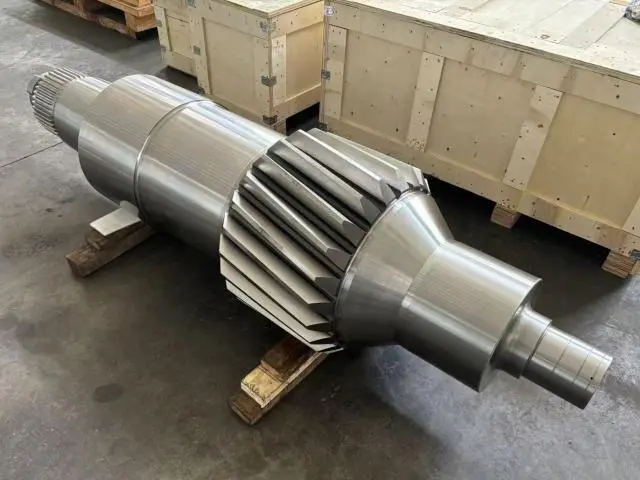
A Left Hand Drive Shaft is a precision-engineered part that transfers rotational power and torque in industrial machinery, mostly in gearbox assemblies, gearboxes and reducers. The "left hand" name refers to the helical direction of the teeth or spline shape, which turns counterclockwise when looking at it from the input end. In paired gearbox situations, where exact control of directional spin is needed to avoid backlash and ensure smooth power delivery, this orientation is very important. Unlike regular rigid shafts, these parts are made to ISO 6 Grade precision standards, which means they have no connection backlash and high transmission rigidity. These properties are important for machine tool spindles, precision instrument transmission systems, and robotic joints.
Core Design Elements and Material Selection
The choice of material and the way they are made have a big impact on how well they work and how long they last. Premium alloy steels like 45# steel, 20CrMnTi, 40CrNiMo, SAE4340, 42CrMo, AISI4140, 18CrNiMo7, 17CrNiMo6, and 20CrNiMo are often used to make high-quality units. These materials have great strength-to-weight ratios and the fatigue tolerance that is needed in industrial settings with a lot of stress.
Forging, cutting, hobbing, milling, and grinding are just a few of the precise steps that go into making something. Different heat treatments, like carburizing, quenching and tempering, and induction hardening, can make the surface hardness anywhere from 45 to 50 HRC to 58 to 62 HRC, depending on the need of the application. This layer of hardened metal doesn't wear away easily, and the core is still flexible enough to handle torsional shock loads without breaking.
Recognizing Failure Signs and Maintenance Essentials
Even the strongest drive shafts need to be closely watched. Unusual noises during operation, too much shaking, obvious wear on the spline teeth, and sudden temperature rises are all common signs that something is failing. These signs usually mean that the bearings are out of line, not properly oiled, or wearing out.
It is necessary to set up a proactive repair plan. Every 500 hours of use, you should check the balance of the shaft, look for worn splines and make sure there is enough oil in the system. If vibration levels get too high, balancing methods should be used because uneven shafts speed up bearing wear and lower the overall efficiency of the system. Keeping detailed maintenance logs helps find patterns that can be used to estimate how long a part will last and figure out the best time to replace it.
Comparing Left Hand Drive Shafts: Making the Right Technical Choice
Left Hand vs. Right Hand: Understanding the Critical Differences
The main difference between Left Hand Drive Shafts and Right Hand Drive Shafts is the way of their helical teeth and how well they work with spinning. When looked at from the driving end, left-hand configurations turn counterclockwise and right-hand configurations turn clockwise. This difference isn't just for looks; it has a direct effect on how the load is distributed, how noise is handled, and how well the system works.
Using the wrong handedness in paired gearbox systems can lead to binding, too much wear and failure before its time. Left Hand Drive Shafts work great in situations where they need to turn counterclockwise, transfer a lot of torque, and have little backlash. Because they take up less space, they work better in small installations where performance is important.
Left Hand Drive Shafts are clearly better than other options like universal joints or cardan shafts. Universal joints can work with misaligned angles, but they bring cyclical speed changes that can make precision uses less useful. On the other hand, Left Hand Drive Shafts that are properly built keep the transmission speed steady while also being very efficient and losing very little power. This makes them perfect for precision instrument transmission systems and robotic joints.
Evaluating Supplier Quality Markers and Brand Reputation
To find a reliable supplier, you need to look closely at a number of quality indicators. Look for companies that follow the IATF 16949:2016 standards and ISO compliance. These show that they are dedicated to quality management that is always the same. It is technologically possible for suppliers to meet exact requirements if they have high-precision CNC gear machining centers, fully automatic gear grinding machines, and clever heat treatment production lines.
Some quality indicators to put first are:
- Precision tolerances: Measurement precision of at least ISO 6 Grade is required for zero-backlash performance.
- Material traceability: Proof of the material's make-up and heat treatment conditions
- Testing protocols: Static rotational strength testing, dynamic wear life verification, and surface hardness confirmation are the tests that are used.
- Customization capability: Made-to-order tooth counts, modules ranging from 0.5 to 50, and helix angles ranging from 5° to 45°
Reliable suppliers work with well-known mechanical engineering companies for a long time, which shows that they can be trusted. During the whole manufacturing process, they should provide full expert advice, help with design drawings, and real-time reports on the progress of production.
Procurement Considerations: How to Buy the Right Left Hand Drive Shaft
Interpreting Technical Specifications and Load Requirements
To make a successful purchase, you must first clearly define the technology needs of your application. Some important specs are the load capacity, torque needs, compatibility with other sizes, number of teeth, module, and helix angle. Drive shafts for heavy-duty industrial uses need to be made of strong materials and have the right amount of surface roughness.
When you look over scientific datasheets, pay close attention to the following:
- Load capacity rating: Makes sure the shaft can handle the highest levels of load without deforming.
- Torque transmission capability: Must be able to handle more torque than your system's highest torque by a safe amount
- Dimensional specifications: The diameter, length, spline dimensions, and keyway configurations of the shaft must exactly match the geometry of the existing system.
- Surface hardness: A higher hardness (58–62 HRC) works well in rough conditions, while a moderate hardness (45–50 HRC) is better for protecting against impacts.
Specifications that don't match up cause faster wear, more frequent upkeep, and the possibility of a catastrophic failure. We've seen production lines stop for weeks because of parts that weren't properly specified. This has cost manufacturers tens of thousands of dollars in lost productivity.
OEM vs. Aftermarket: Sourcing Strategies for Optimal Value
When deciding between OEM and aftermarket, you have to weigh cost and quality guarantee. OEM parts usually cost more than aftermarket parts because they promise a perfect fit and consistent materials. Aftermarket options can save you money, especially when you buy in bulk, but quality variation is still a problem.
Partnering with specialized makers like YIZHI MACHINERY that offer both OEM-level accuracy and flexible customization is one way to find a middle ground. These suppliers have low minimum order quantities, can make just one item, and offer custom services that are made to fit the needs of each application. Production times are usually between 35 and 60 days, which gives enough time to plan for planned maintenance or upgrades to the production line.
Price factors include the cost of raw materials, the difficulty of production, the reputation of the brand, and the number of orders. When you buy in bulk, you can get big discounts. Custom specifications may raise the unit cost, but they deliver the best performance. Strategies for negotiating should focus on the total cost of ownership instead of just the purchase price. A slightly more expensive shaft that lasts 50% longer is a better deal than cheaper ones that need to be replaced all the time.
Installation, Repair, and Maintenance Best Practices
Step-by-Step Installation Procedures
Installing components correctly is essential for getting the most out of their life. First, clean all of the surfaces that touch each other well to get rid of dirt, old lubricants, and corrosion. Check the spline teeth for burrs or other damage that could make it hard for them to seat properly.
Alignment is very important. Even a small error in the parallel or angular direction causes too much stress to build up, which speeds up wear failure. Use dial indicators and precise alignment tools to make sure that the concentricity meets the requirements set by the maker. Use the right assembly lubricants on the bearing surfaces and splines, but don't use too much oil because it can attract dirt.
Use measured tools to tighten screws to certain values. Under-torquing lets the part move and fretting wear happen, while over-torquing can bend the part or cause residual stresses. After installation, run a test run with no load to make sure everything works smoothly and there are no strange noises or vibrations. During the first service, keep an eye on the operating temperatures to make sure the installation was done right.
Diagnostic Techniques and Replacement Criteria
It takes knowledge and systematic research to tell the difference between parts that can be fixed and parts that need to be replaced. Noise characteristics give doctors important information for diagnosing problems. A steady clicking sound that changes with the speed of spinning usually means that the splines or bearings are wearing out. Continuous grinding means that there isn't enough oil or dirt on the surface.
When you do a vibration study, you can find structural damage, misalignment, or unbalance. Portable vibration analyzers can measure how bad the problem is and find the exact fault frequency. When you look at the surface, you should look for cracking, spalling, or cracks. In low-precision applications, minor surface wear might be okay, but any cracks that appear must be replaced right away, no matter how bad they look.
For optimal shaft performance and fewer unexpected failures, here are some useful maintenance tips:
- Scheduled lubrication: Use the oils that the maker recommends at set times, usually every 500 to 1000 hours of operation, but this can change based on the load and the surroundings.
- Periodic alignment verification: Every time you do major maintenance, check and fix the alignment to stop wear patterns from getting worse faster.
- Vibration monitoring: Set up standard vibration signs and keep an eye on trends to spot problems before they become catastrophic.
- Temperature tracking: High operating temperatures often happen before bearings fail or don't have enough oil.
- Visual inspection protocols: Write down wear patterns, surface conditions, and the integrity of fasteners during scheduled maintenance times.
These preventative steps greatly increase the life of parts while lowering the chance of unexpected downtime. Setting up standard inspection checklists makes sure that all maintenance teams and facilities follow the same rules. This way, early warning signs can be found before small problems get worse and cause major failures.
Case Studies and Practical Insights from Industry Experts
Industrial Machine Upgrade: Reducing Downtime Through Strategic Component Selection
A company in the Midwest that makes farm equipment was having gearbox problems with their combine harvester gearbox system over and over again. The original parts could only be used for 1,200 hours before they needed to be replaced, which messed up production plans and made upkeep more expensive. After talking to gearbox experts, they switched to Left Hand Drive Shafts that were precisely engineered and made from 40CrNiMo alloy steel that had been induction hardened to a surface hardness of 58 to 62 HRC.
The upgraded parts had helix angles that were specially designed to work best with their load profiles and operating speeds. The results were better than expected: the lifespan of each component grew to over 3,500 working hours, which is an improvement of almost 300%. Lower vibration levels led to less bearing wear in nearby parts, which improved the reliability of the whole gearbox system. The company got their money back within six months because they had fewer repair calls and no longer had to stop production.
Preventive Maintenance Success: The Value of Supplier Partnership
An OEM for a car gearbox part had a hard time with quality issues from several aftermarket sources. Changes in the tolerances for dimensions made it hard to put things together and raised the rejection rate during quality inspection. They streamlined their sourcing by working with a single specialized manufacturer that could provide full technical support and make changes to their products.
The new provider gave thorough design advice, making sure that the spline shape and material choices were the best ones for the job. They set up synchronized reports on the progress of production, which let the OEM plan just-in-time stocking tactics. Most importantly, the supplier's dedication to ISO-compliant production methods and strict quality control got rid of the differences in dimensions that were a problem with older methods of buying.
Expert advice stresses how important it is to see sellers as strategic partners instead of just transactional vendors. Suppliers who have a lot of technical knowledge can find ways to improve performance and cut costs that internal teams might miss. This way of working together gets the best return on investment and makes supply chains more resilient.
Conclusion
When looking for the best Left Hand Drive Shaft for commercial use, you need to balance technical specs, quality concerns, and cost factors. Understanding basic design principles, the qualities of materials, and the methods used in manufacturing helps people make smart choices about which parts to use based on operating needs. To be successful in procurement, you need to be able to correctly read technical datasheets, judge the skills of potential suppliers, and use strategic sourcing methods that put total cost of ownership above initial purchase price. Correct fitting methods and planned repair schedules extend the life of parts and reduce unplanned downtime. Case studies from the real world show that carefully choosing the right components can improve performance and save a lot of money. You can improve the performance of your gearbox system, make it more reliable, and reach your operational goals more quickly if you work with experienced providers who offer customization options and full expert support.
FAQ
1.How do I know when a left hand drive shaft needs replacement?
Listen out for these warning signs: clicking sounds that happen in a rhythm while the machine is turning, excessive vibrations that are above and beyond normal operating levels, obvious spline wear or tooth damage, and high operating temperatures. Any cracks found during a visual inspection must be replaced right away, no matter how bad the wear is. Setting up standard performance data lets trend analysis figure out the best time to replace something before it fails catastrophically.
2.Can left hand and right hand drive shafts be used interchangeably?
No, they can't be switched out without redesigning the system. The direction of the helical affects rotational compatibility and load distribution in a fundamental way. Using the wrong handedness leads to binding, faster wear, and maybe even failure. To make sure the system works well and integrates properly, always check the rotational requirements and specify the right orientation when buying.
3.What factors most significantly influence pricing?
Base costs depend on the material used. For example, expensive metals like SAE4340 and 40CrNiMo cost more than regular carbon steels. Customization needs, tighter tolerances, and specialized heat treatment processes all make manufacturing more difficult. Prices are affected by a brand's image and its quality assurance methods. For example, providers who follow strict testing and ISO standards spend more on quality control. When you buy in bulk, the cost per unit is much lower than when you buy one at a time. This is because larger orders qualify for bigger discounts.
Partner with YIZHI MACHINERY for Precision-Engineered Left Hand Drive Shaft Solutions
To get the most out of your gearbox systems, you need more than just standard parts. You need solutions that are carefully designed to fit your specific operational needs. YIZHI MACHINERY has been making custom Left Hand Drive Shafts for 15 years and has quality control methods that are in line with ISO standards. High-precision CNC gear machining centers, fully automated gear grinding machines, and intelligent heat treatment production lines that make ISO 6 Grade precision parts are some of the advanced manufacturing tools we use.
We make drive shafts out of high-quality materials like 40CrNiMo, SAE4340, AISI4140, and 18CrNiMo7. You can choose from different tooth counts, module sizes (0.5 to 50), and helix angles (5° to 45°). Our approach is flexible enough to allow for low minimum order quantities and production of a single item, so you can get exactly what your application needs without having to keep too much inventory on hand. Delivery times between 35 and 60 days are in line with strategic planning needs, and our custom packaging with shock-absorbing cushioning liners and damage-prevention promises will keep your investment safe while it's in transit.
As a reputable maker of Left Hand Drive Shafts, we offer full support throughout the entire procurement process, from the initial design advice and technical drawings to real-time tracking of supplies and synchronized production updates. Contact us at sales@yizmachinery.com to get personalized suggestions, detailed specifications, and competitive quotes that are made to fit your needs for a gearbox or gearbox system.
References
1. American Gear Manufacturers Association. (2019). AGMA 2001-D04: Fundamental Rating Factors and Calculation Methods for Involute Spur and Helical Gear Teeth. Alexandria, VA: AGMA Technical Publications.
2. Budynas, R.G. & Nisbett, J.K. (2020). Shigley's Mechanical Engineering Design (11th ed.). New York: McGraw-Hill Education.
3. International Organization for Standardization. (2018). ISO 6336-1:2019 - Calculation of Load Capacity of Spur and Helical Gears - Part 1: Basic Principles. Geneva: ISO.
4. Norton, R.L. (2020). Machine Design: An Integrated Approach (6th ed.). Boston: Pearson Education.
5. Society of Automotive Engineers. (2021). SAE J1470: Performance Requirements for Power Take-Off Drive Shafts for Agricultural Equipment. Warrendale, PA: SAE International.
6. Townsend, D.P. (2019). Dudley's Handbook of Practical Gear Design and Manufacture (3rd ed.). Boca Raton, FL: CRC Press.

USER EVALUATE
Here is the customer's evaluation of us