


How to Choose the Right Aluminum Lock Nuts for Your Next Project
Choosing aluminum lock nuts demands careful evaluation of material specifications, load requirements, and environmental conditions to ensure optimal performance in weight-critical applications. These specialized fasteners combine aerospace-grade aluminum alloys with prevailing torque mechanisms, delivering approximately 65% weight reduction compared to steel alternatives while maintaining vibration resistance. For procurement professionals managing automotive, aerospace, or marine projects, selecting the correct fastener involves analyzing alloy grades (such as 6061-T6 or 7075-T6), surface treatments, thread precision, and supplier certifications. The decision directly impacts project safety, durability, and long-term operational costs, making informed selection essential for successful outcomes.
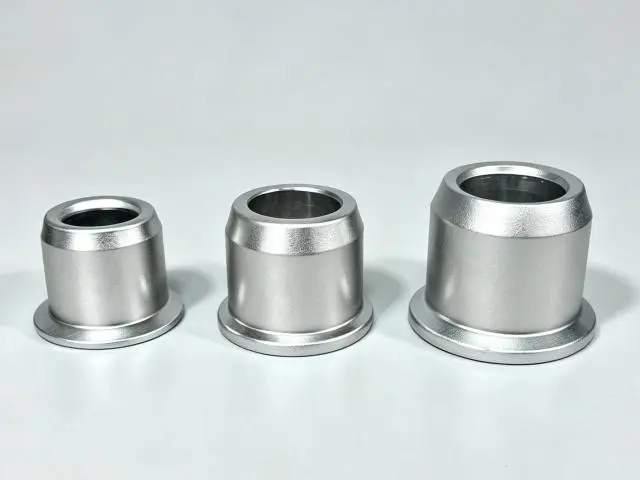
Understanding Aluminum Lock Nuts: Key Features and Benefits
Aluminum lock nuts are high-tech ways to fasten things that were made to solve problems in industries that care about weight. These parts are made of high-strength aluminum alloys and have special locking mechanisms that keep them from coming loose even when they are under constant vibration and dynamic loads.
How Locking Mechanisms Work
The ability to lock comes from either nylon inserts that meet DIN 985 standards or thread designs that are twisted in a way that creates prevailing torque. When the nylon ring or deformed metal section is put in place, it creates friction against the threads that are mated, which keeps the fastening secure even in places with a lot of vibration, like drone propeller assemblies or car engine bay parts. This design gets rid of the need for extra locking mechanisms, which makes assembly easier and cuts down on the number of parts needed.
Material Advantages in Industrial Applications
Aerospace-grade metals, such as 7075-T6, have a tensile strength of up to 572 MPa, which is about the same as mild steel, but they are only one-third as dense (about 2.81 g/cm³). Because they are so strong for how light they are, they are essential for UAV frames, racing vehicle chassis, and marine hardware where every gram matters for performance. The fact that the material is not magnetic is very important in making electronics and sensitive instruments where magnetic interference needs to be avoided.
Corrosion Resistance and Surface Protection
Type II or Type III hard anodizing processes raise the surface hardness to about 60 to 70 Rockwell C equivalent. This makes an oxide layer that protects against rust in salt water, chemical exposure, and oxidation. This quality is very important to companies that make marine equipment because it stops the rust weeping that happens a lot with steel fasteners in coastal areas. The anodized surface also lets you use color-coding to keep track of your supplies and blends in nicely with visible parts.
Comparing Aluminum Lock Nuts with Other Lock Nut Materials
The choice of material has a big effect on how well fasteners work in a variety of situations. Procurement teams can make the best specs by understanding the trade-offs between metal and other materials.
Steel Versus Aluminum: Weight and Strength Analysis
Steel bolts are required for safety-critical joints and structural support parts because they have better tensile strength and fatigue resistance. But their lower density makes them useless in situations where reducing spinning mass or unsprung weight has a direct effect on efficiency. Aluminum options save more than 65% of the weight, but they need careful torque control to keep the threads from stripping. Steel is still the standard for high-load situations, but aluminum works great for mounting situations that aren't very important and where the extra weight justifies a little less strength.
Stainless Steel Considerations
Stainless steel is resistant to rust and has strong mechanical qualities, but it is about three times heavier than aluminum. Procurement professionals usually pick stainless steel for long-lasting permanent installations, while aluminum is saved for situations where parts need to be taken apart often or where weight is an issue. A study of costs shows that stainless steel is usually 40–60% more expensive per unit, but in places where corrosion is common, aluminum may be cheaper over its lifetime because it needs less upkeep.
Performance Under Thermal Cycling
Aluminum metals keep their shape at temperatures ranging from -50°C to 120°C, and 6061-T6 aluminum lock nuts show the least amount of thermal growth compared to nylon or plastic options. This quality is very important in aerospace applications where temperatures change quickly during flight cycles. Steel can handle a wider range of temperatures, but it also transfers heat more quickly, which could affect other parts in highly sensitive assemblies.
Practical Criteria for Choosing Aluminum Lock Nuts in B2B Procurement
Systematic review systems make sure that the specifications match the needs of the project and that the costs are kept as low as possible during the purchase cycle.
Defining Load Capacity and Stress Parameters
The first step in making the right choice is to do an accurate load estimate. Engineers have to figure out if the job calls for static loads, dynamic vibrations, or shock impacts. For nuts made of 7075-T6 aluminum, proof load testing makes sure that the nuts can withstand axial loads compared to certain strength curves. Applications that aren't structural, like fastening valve covers, usually work well within the limits of the material. But putting a propeller needs a thorough stress analysis that takes into account rotational forces and vibration amplitudes. Looking at material property charts along with finite element analysis results keeps you from over-specifying and makes sure you have enough safety margins.
Thread Precision and Fitment Standards
Thread tolerance has a direct effect on the quality of the assembly and how well it locks. ISO metric threads made to a 6H tolerance class guarantee a perfect fit when checked with a 100% go/no-go gage. To avoid cross-threading problems, which happen more often with aluminum materials than steel ones because they are not as hard, procurement requirements should require calibrated ring gage proof. When suppliers offer detailed documentation for thread inspection, it shows that they care about quality control, which lowers the number of assemblies that are rejected.
Surface Treatment Requirements
The galvanizing, blackening, and phosphating processes all have different uses that go beyond how they look. Hard anodizing makes the metal more resistant to wear and offers electrical insulation, which is important for electronics housings where conductive screws could cause short circuits. When aluminum nuts fit together with similar alloy bolts, galling (cold-welding) risks are reduced by dry film lubricants that are used during production. This is an important standard for uses that need to be taken apart often. Teams in charge of buying things should be clear about the coating thickness (usually 10 to 25 microns) and ask for proof that the product will not rust after 200 hours of salt spray testing, as required by ASTM B117 standards.
Supplier Certification and Quality Systems
When buying things for the automotive and aerospace industries, suppliers have to follow quality control methods that are specific to those industries. While AS9100 certification shows that the aerospace supply chain is ready and IATF16949 certification shows that processes are safe for use in cars, verification audits show that the processes are actually being used. Ask for material test results that list the alloy's composition, its mechanical properties, and the parameters for heat treatment. Suppliers with ISO approval and 15 years or more of production experience usually have stable processes that decrease variation from batch to batch. This is an important factor to consider when choosing fasteners for safety-sensitive uses.
Step-by-Step Guide to Sourcing and Purchasing Aluminum Lock Nuts
Structured buying processes reduce risks in the supply chain and build long-term relationships with suppliers that can support changes in engineering and increased volume.
Technical Specification Verification
Start by comparing the project drawings to industry standards. ISO 7040 has information on standard torques, and DIN 985 has information on how to design nylon inserts. Check that supplier product datasheets clearly list alloy names (for example, 6061-T6 vs. 7075-T6) instead of vague "aluminum alloy" descriptions. Ask for proof of heat treatment certification, because materials that haven't been properly treated are much weaker. During the testing stages of a prototype, this step of proof stops expensive quality problems.
Sample Testing and Validation Protocols
Before committing to large-scale production, a physical sample evaluation of aluminum lock nuts shows how well the product is made. Measure the prevailing torque with calibrated torque tools to make sure that the locking performance meets the standards of IFI 100/107 or DIN 267 over a number of installation rounds. Check how much torque is needed for installation and removal to see if the part can be used again. This is important information for applications that need to be able to do maintenance. Coordinate measuring tools are used for dimensional checking, which checks the geometry and concentricity of the threads and finds possible assembly problems before they slow down production.
Comparing Procurement Channels
Working directly with the maker gives you more control over customization and could mean lower unit costs for large orders, but the minimum order numbers may be higher than what the project needs. Online business-to-business (B2B) marketplaces make it easier for different suppliers to get in touch with each other, but they also require more careful quality control checks. Distributor partnerships are a good way to get both technical support and ease of use. They are especially helpful for managing the different fastener specifications used across product lines. When making sourcing plans, look at how long it takes to get things, how much it costs, and how quickly engineers can get answers.
Building Long-Term Supply Chain Resilience
Dependencies on a single source make a business vulnerable to interruptions in production and changes in prices. Qualify secondary suppliers for critical fastener specifications and keep relationships alive by sending sample orders on a regular basis to make sure they can keep up with demand. Set up systems that can predict demand and share production dates with key providers 60 to 90 days in advance. This will allow you to plan your capacity and avoid having to pay extra for faster shipping. Framework agreements should be negotiated that set prices for 12 months and allow order quantities to be changed based on real consumption trends.
Best Practices and Expert Tips for Aluminum Lock Nut Usage and Maintenance
The best way to get fasteners to work and keep them working well over their whole life is to place them correctly and manage their performance over their whole life.
Torque Application Guidelines
When compared to steel fasteners, aluminum ones need much lower torque requirements—usually 30 to 50 percent less. Too much torque can cause thread break or material to give, while not enough torque can make locking less effective. Check out torque charts made by the maker that take into account the type of metal, the size of the threads, and the surface treatment. Maximum power for an M6 7075-T6 nut is usually between 9 and 11 Nm, while the same gear made of steel needs 15 to 18 Nm. Calibrated torque wrenches that are accurate to within ±3% stop installation mistakes that cause most failures in the field.
Anti-Seize Compounds and Galling Prevention
Galling, which is when two threads cold-weld together, is the main way that metal rivets fail. This happens when the touch between aluminum and steel or aluminum and aluminum creates enough friction heat to cause limited welding. When anti-seize compounds with copper or graphite particles are used as directed, they form a barrier layer that stops metal from touching directly. You can also ask for fasteners that have dry film lubricants applied at the factory or high-quality anodized coatings that do the same job of protecting. This safety measure is especially important for systems that are subject to thermal cycles or that need to be taken apart on a regular basis.
Reusability Assessment and Lifecycle Limitations
Nylon-insert lock nuts can be used three to five times for installation, but each time they are used, the torque that holds them in place decreases. Single-use policies are needed to make sure that locking works the same way every time in places with a lot of vibration, like drone motor mounts or racing suspension parts. For maintenance-accessible assemblies, write down the installation cycles and replace the fasteners when the torque measurements drop below the minimums required by the specifications. This practice stops shifting that could happen while the machine is running, which could cause parts to come apart. When you store fasteners correctly, they last longer and keep their quality. To stop rust from speeding up, keep metal parts in climate-controlled spaces below 30°C with relative humidity below 60%. Separate the different types of alloy so they don't mix, which could mess up traceability systems that are needed for aircraft quality standards.
Conclusion
To choose the right aluminum lock nuts, you have to find a balance between reducing weight and improving mechanical performance, all while making sure that the supplier's quality standards are met. The decision framework includes choosing an alloy between 6061-T6 for general uses and 7075-T6 for higher-stress environments; specifying a surface treatment that prevents corrosion; and making sure the thread is precise through thorough inspection protocols. Professionals in procurement need to check that suppliers have the right certifications, test samples to see how much power they have and how accurate the measurements are, and set up backups in the supply chain in case production stops. Installation that follows the manufacturer's torque recommendations and anti-seize application will stop galling failures, and lifecycle management policies will make sure that the locking works well between service intervals. These methodical methods lower the total cost of ownership while keeping the safety margins needed for weight-critical uses in the marine, aircraft, and automotive industries.
FAQ
1. Can aluminum lock nuts withstand high-vibration environments found in motorsports?
If you match the right aluminum lock nuts with nylon inserts or distorted thread designs to the right application loads, they will reliably prevent vibration. The prevailing torque mechanism keeps the clamping force even when things are moving, but the assembly torque must be exactly as specified by the manufacturer. Periodic inspection rounds that check the continued integrity of fasteners are helpful in critical situations.
2. What distinguishes 6061-T6 from 7075-T6 aluminum alloys in fastener applications?
7075-T6 has about twice the shear strength of 6061-T6, which is why it is the standard for load-bearing applications in aerospace. When weight loss doesn't hurt the structure's soundness, the higher unit costs are worth it because the improved mechanical qualities make the structure stronger. 6061-T6 is good enough for low-stress cosmetic or light-duty systems where saving money is the most important thing.
3. How do procurement teams verify thread accuracy before production orders?
For full quality control, all parts must be inspected one hundred percent of the time with measured ring gages that match certain tolerance classes, which are usually 6H for metric threads. Ask for inspection certificates that include go/no-go gage results and measurement reports made by coordinate measuring machines. Cross-threading problems can't happen during assembly operations because of this check.
Partner with YIZHI MACHINERY for Precision-Engineered Lightweight Fastener Solutions
When it comes to demanding aerospace, automotive, and marine applications where weight reduction directly affects operational efficiency, YIZHI MACHINERY is the company that makes the best aluminum lock nuts. Our ISO-certified production plants use 15 years of experience making precision fasteners to offer unique solutions for strength grades 4.8 through 12.9, along with advanced surface treatments like hard anodizing and galvanizing. We are a reliable source of aluminum lock nuts for OEMs and tier-one providers around the world. We offer full material traceability, detailed recording of all mechanical testing, production lead times of 35 to 60 days, and quality systems that keep transport damage rates below 0.1%. Before you buy, our engineering team gives you technical advice that is based on your unique load needs and the conditions in the area. This includes reviewing design drawings and helping you choose materials. Contact us at sales@yizmachinery.com to get free evaluation kits that show how well our threads lock and are precise. We want quality engineers and procurement managers to talk to us about how our standardized customization workflow, which includes everything from analyzing your needs to tracking shipments in real time, can make your supply chain more reliable while lowering your total cost of ownership.
References
1. Bickford, John H. Introduction to the Design and Behavior of Bolted Joints: Non-Gasketed Joints. 5th ed., CRC Press, 2018.
2. Budynas, Richard G., and J. Keith Nisbett. Shigley's Mechanical Engineering Design. 11th ed., McGraw-Hill Education, 2020.
3. Industrial Fasteners Institute. IFI 100/107: Metric Prevailing Torque Nuts - Performance and Test Requirements. Industrial Fasteners Institute, 2015.
4. Kaufman, J. Gilbert. Introduction to Aluminum Alloys and Tempers. ASM International, 2000.
5. Mayer, Ralf, and Marco Mayer. Fastener Design Manual. NASA Reference Publication 1228, National Aeronautics and Space Administration, 1990.
6. SAE International. AS9100D: Quality Management Systems - Requirements for Aviation, Space, and Defense Organizations. SAE International, 2016.

USER EVALUATE
Here is the customer's evaluation of us