


Shaft Mounted Gearbox: Complete Industrial Guide
The Shaft Mounted Gearbox is a smart choice for equipment designers and procurement managers who are under a lot of time and money pressure to meet tight installation deadlines and limited space. This small power transmission unit, which is technically called a shaft mount reducer, fits directly onto the shafts of driven machinery. This means that there is no need for a foundation, couplings or complicated alignment procedures. This gearbox configuration greatly cuts down on installation time and total ownership costs by using a torque arm instead of rigid baseplates. It is an essential part of conveyor systems, material handling, and aggregate processing, where uptime and space efficiency are key to making money.
What is a Shaft Mounted Gearbox and How Does It Work?
Core Design Principles
One thing that makes a Shaft Mounted Gearbox stand out is the way it is mounted. This reducer doesn't need to be precisely aligned and coupled like foot-mounted units do; instead, it slides directly onto the output shaft of conveyors or other driven equipment. The torque arm takes in reaction forces, which lets the unit 'float' with the system and keep the power gearbox stable. This design philosophy solves a major problem in the industry: it gets rid of the need for expensive fabrication for motor mounts and flexible couplings, and it greatly reduces the amount of alignment work that used to take hours of skilled technician time.
Working Mechanism and Torque Transmission
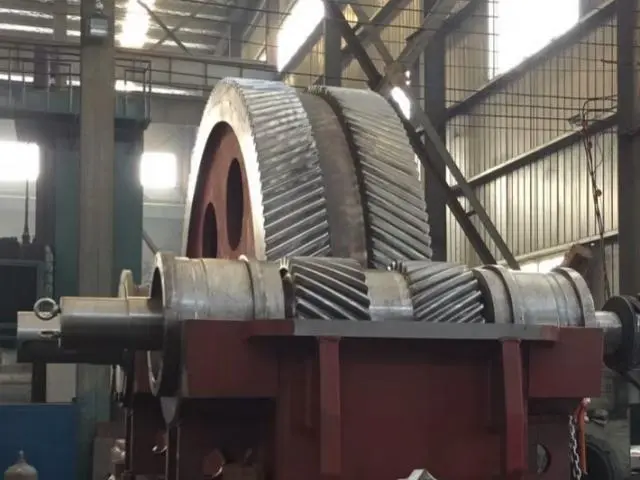
Hydraulic helical gear reduction inside a sealed, oil-lubricated cast iron case is what makes it work. Power comes into the Shaft Mounted Gearbox, usually from a V-belt drive or a straight motor connection. Precisely machined helical gears slow the motor down while increasing torque. At YIZHI MACHINERY, our machines use high-quality alloy steels like 20CrMnTi and AISI4140. These steels are heated and cooled to get a surface hardness of 58 to 62 HRC. This heat treatment process makes sure that the material has a high resistance to wear and a high load capacity, which is important for heavy-duty uses that run all the time in tough industrial settings.
The Shaft Mounted Gearbox efficiency is between 96% and 98% per stage, so even when the load is heavy, there isn't much power loss. The torque capacity is based on the gear module (which can be changed from 0.5 to 50) and the helix angles (5° to 45°), which are factors that we change to fit the needs of each application. The hollow bore design can fit shaft diameters that are specified by the customer. It is held in place by Twin Tapered Bushing systems that stop fretting corrosion, which is a common way for steel bores to break when they seize onto rotating shafts.
Common Types and Specifications
In industrial settings, three main configurations are used most often. Helical gear reducers are the most efficient and quiet type of reducer, making them perfect for packaging lines and food processing machines. Bevel gear units are used in agricultural equipment and for moving large amounts of material. They handle right-angle power transmission. Worm gear types have high reduction ratios in small packages, making them perfect for low-speed, high-torque uses like screw conveyors. With ratios that can go from 5:1 to 25:1, load rates are usually between 500 Nm and 50,000 Nm. These ranges can be increased by changing the way the input drives are set up.
Benefits and Industrial Applications of Shaft Mounted Gearboxes
Space-Saving Advantages
Manufacturing plants always have to deal with limited space. Motor bases, support structures, and safety guarding take up valuable floor space in traditional gearbox installations. By attaching directly to the driven shaft, the Shaft Mounted Gearbox design gets rid of these needs. This small size is very helpful for upgrade projects because adding new conveyors to existing production lines would need expensive changes to the structure otherwise. We've seen clients cut down on installation footprints by 40% compared to foot-mounted options, which directly translates to more production.
High Torque Capacity and Energy Efficiency
Power transmission in industrial settings needs to be strong enough to handle starting shocks, changing loads, and constant operation. Our Shaft Mounted Gearbox units have a high torque density thanks to their precision-ground helical gearing and optimised contact patterns, which keep between 70 and 80% of the tooth contact area to spread loads evenly and stop premature cracking. The sealed case design keeps the inside parts safe from rough cement dust, wet conditions in farms, and high temperatures in outdoor conveyor systems. Helical gearing uses less energy because it has lower friction coefficients. This saves money on operational costs over multiple years of service intervals.
Maintenance and Total Cost of Ownership
Accessibility for maintenance has a direct effect on the uptime of production. The modular design of Shaft Mounted Gearbox reducers lets the oil be changed quickly. The first service is done after 500 hours to flush out break-in debris, and after that, it's done every 2,500 hours under normal conditions. Tapered roller bearings are used in bearing setups because they are designed to handle radial and axial loads from the stress on the belt and the forces of the conveyor. When the specification calls for backstop devices (anti-runback mechanisms that are necessary for incline conveyors), these sprag clutches fit seamlessly into the housing and stop the belt from switching directions when the power goes out. This is a very important safety feature in aggregate processing, where loaded belts on steep slopes are very dangerous.
Industry Applications Across Sectors
Real-world application happens in many different fields. These reducers power belt conveyors that move crushed stone, coal, and ore in mining and aggregate operations, where rough materials and shock loads can shorten the life of equipment. Manufacturers of packaging machinery put small units into form-fill-seal systems that work horizontally or vertically when standard drive configurations can't be used because of lack of room. Agricultural equipment makers choose Shaft Mounted Gearbox designs for grain augers and manure spreaders, and they value sealed construction that can handle biological corrosives and being outside.
Facilities that process food can use sanitary designs with smooth outsides and stainless steel tools that follow hygiene rules in areas where food comes into direct touch with it. Material handling integrators use these units on bucket elevators, screw conveyors, and drag chain systems because they are easy to mount and take up little space, which lets them be used in creative ways. Customisation options at YIZHI MACHINERY, such as changing gear ratios, bore sizes, and mounting arrangements, let OEM partners find the best Shaft Mounted Gearbox solutions for their own equipment designs.
Comparing Shaft Mounted Gearboxes with Other Gearbox Types
Structural and Functional Differences
Choosing what to buy depends on knowing what your options are. While inline gearboxes are very efficient, they take up a lot of linear space because they connect the motor and driven shafts along a single axis. Right-angle units use bevel or worm gears to change the direction of power. They work best with shafts that are perpendicular to each other, but they lose even more efficiency. Foot-mounted gears are attached to the foundations of buildings. They provide the highest level of stiffness for precise tasks, but they need to be aligned carefully and have their own mounting system.
The Shaft Mounted Gearbox version is in the middle. It's not as precise in terms of alignment as rigidly mounted units, but it's much easier to install and takes up less space. When properly sized according to AGMA service factors, load capacity is the same as foot-mounted versions. It's much easier to install; technicians only need to mount the unit, tighten the belt drive, and secure the torque arm. This can be done in less than two hours, compared to eight or more hours for aligned foot-mounted systems.
Performance Versus Cost Considerations
Economic research shows that there are strong benefits. When you buy a Shaft Mounted Gearbox unit, it costs about the same as a foot-mounted one at first, but when you install it, the total cost is much lower because you don't have to pay for things like motor base fabrication (about $300 to $800 per unit), flexible coupling ($150 to $400), alignment labour (4-6 skilled hours), or keeping inventory for fewer types of parts. Operational efficiency stays the same when applications match design parameters. To keep the 96–98% transmission efficiency, avoid overloading and make sure the belt is properly tensioned.
Engineers have to look at the specifics of the application. Rock crushers and other places with a lot of shock need service factors of 2.0 or higher, which could mean using larger Shaft Mounted Gearbox units or different configurations. Inline spherical designs may be better for precise uses that need zero backlash. But for 70% of industrial drive applications—such as handling bulk materials, conveyors, and packaging—Shaft Mounted Gearbox reducers offer the best performance-to-cost ratios.
Maintenance Tips and Longevity Enhancement
Routine Maintenance Best Practices
To get the most out of your service life, you need to manage your lubrication properly. For normal temperatures, the first fill uses ISO VG 220 mineral gear oil. For high temperatures or heavy duty cycles, synthetic formulas (ISO VG 320) are used. Checking the oil level once a month with a sight glass is necessary—even a 10% underfilling speeds up bearing wear by a huge amount. It is necessary to change the break-in oil every 500 hours because metallic wear particles from gear meshing settlement contaminate the lube. Keeping these particles in the Shaft Mounted Gearbox causes increased abrasive wear, which shortens its life by 30 to 40 percent.
Inspection and Troubleshooting Protocols
Several important signs should be checked every three months during walk-around checks. Strange noise patterns, like grinding, squealing, or rhythmic knocking, can mean that gear teeth are damaged, a bearing is failing, or a foreign object is getting into the system. When operating temperatures go above 90°C, it means that the belt is too tight, there isn't enough lubrication, or the machine is being overloaded beyond its rated capacity. If oil leaks around shaft seals or housing joints, the seals must be replaced right away to keep contaminants out and oil from running out. Vibration tracking with handheld analysers can find worn-out bearings weeks before they fail completely. This allows for forecast maintenance that stops unplanned downtime on your Shaft Mounted Gearboxes.
Installation and Environmental Safeguards
Using the right installation steps keeps things from breaking down too soon. It's important that the torque arms mount in tension compared to the rotation of the Shaft Mounted Gearbox, since shock loads cause compression loading to buckle. When you tension a belt, you should follow the manufacturer's instructions. Too much tension puts too much stress on the bearings, and not enough tension lets them slip and makes heat. Keeping units in climate-controlled conditions (15–25°C, <60% relative humidity) while they are being stored before they are installed stops condensation and rust from happening inside. When installed outside, weather screens keep the breather plugs safe and stop water from getting in through the shaft seals during pressure washing or rain.
Procurement Guide for Shaft Mounted Gearboxes
Supplier Evaluation Criteria
To get around in the global market, you need to evaluate suppliers in a planned way. Reputable makers keep their ISO 9001 certification as a basic level of quality security. This shows that they have process controls in place from checking the raw materials to testing the finished product. Ask for heat treatment certifications that show the carburising depth and hardness values. Poor heat treatment is the main reason why teeth break early. It's important to know how to make things. Suppliers who use gear grinding tools make better tooth shapes than facilities that only do hobbing, which has a direct effect on efficiency and noise levels of the Shaft Mounted Gearbox.
Customization and Lead Time Management
YIZHI MACHINERY emphasizes transparent customization and strict quality control, using CMM inspection, no-load testing, and leak checks to ensure reliability. With 15 years of gearbox experience, the team tailors gear ratios, bores, and mounting options to optimize performance and integration. The customization process includes design approval, CNC manufacturing, ISO 6 inspection, and secure packaging. Lead times of 35–60 days are supported by regular production updates and flexible global logistics options.
Pricing and Value Assessment
Pricing is influenced by material selection, precision grade, and manufacturing complexity. Premium alloys like SAE4340 and 42CrMo cost more than 45# steel but offer better durability and lower wear. Tighter ISO 6 tolerances require additional grinding, increasing cost, while economies of scale appear above 10 units. Total value also includes warranty, after-sales support, low shipping damage (<0.1%), and flexible low minimum order quantities.
Leading Brands in Shaft Mounted Gearboxes
Global Market Leaders
The Shaft Mounted Gearbox market is led by several global manufacturers. SEW-Eurodrive offers high-efficiency systems with integrated drive compatibility, while Nord Gear focuses on modular design and global service coverage. Bonfiglioli specializes in compact high-torque solutions, Rexnord targets heavy-duty mining applications, and Sumitomo balances quality and cost. Selection should consider certifications (AGMA, ISO, ATEX), warranty terms, and regional support capabilities.
Emerging Specialists and Custom Solutions
Alongside major brands, niche manufacturers provide tailored solutions for specific needs. YIZHI MACHINERY combines advanced CNC machining, automated grinding, and intelligent heat treatment with strong customization and engineering support. Rather than offering only standard catalogue products, it collaborates closely with clients to solve application-specific challenges. This flexible approach enables solutions for complex installations, sealing requirements, and system integration, supported by 15 years of gear manufacturing experience.
Conclusion
Choosing and using Shaft Mounted Gearboxes has a big effect on the reliability of tools, the use of space, and the prices of running a business in many different industries. This whole guide has talked about the design concepts that make these reducers different from other setups, how they work better in real-world situations, and how to keep them in good shape to get the most out of their service life. Comparative analysis helps engineers match the right gearbox type to the job, and procurement guidance helps them find the best suppliers and find ways to make the product fit their needs. By learning about leading brands and new specialists, you can make smart decisions about where to buy things that balance quality, cost, and service. Now that equipment makers and facility managers know this, they can safely choose power transmission options that will boost productivity and give them a competitive edge in tough industrial settings.
FAQ
1.How should the torque arm be positioned on a shaft mounted gearbox?
The torque arm must always be mounted in tension, which means it is pulled instead of pushed as the shaft turns. This placement keeps the structure from buckling when it's loaded and keeps the Shaft Mounted Gearbox unit stable while it's running. If you don't place the tension correctly, the arm will break catastrophically during shock loads or emergency stops.
2.What causes most shaft mounted gearbox failures?
Problems with lubrication, like not adding enough oil, choosing the wrong thickness, or not changing the oil regularly, are the main cause of failure. This is closely followed by incorrect belt tensioning (too much tension overloads bearings; not enough tension causes sliding). Fretting corrosion, in which the gearbox sticks to the shaft, is one of the main maintenance issues that Twin Taper bushing systems help with.
3.Can these gearboxes operate in both rotational directions?
Gearing itself can turn in both directions. But units with internal backstop devices (sprag clutches that stop belt rollback on incline conveyors) can only work in one direction. Checking the backstop's position before starting up keeps the internal damage from getting worse—reversing against the backstop kills the clutch mechanism in seconds.
Partner with YIZHI MACHINERY for Reliable Shaft Mounted Gearbox Solutions
Choosing the right Shaft Mounted Gearbox source has long-lasting effects on how well equipment works. YIZHI MACHINERY has been making precision gears for 15 years and can customise their products in a wide range of ways. They work with companies around the world that make moving machines, packing equipment, and material handling systems. Our strict quality control procedures, advanced CNC machining centers, and ISO-compliant production methods allow us to make reducers that meet the high standards needed in industrial settings. We are experts at custom solutions, including gear ratios, bore sizes, and mounting arrangements. Our work is backed by a one-year warranty and quick technical support. Our customised packing and multi-channel services make sure that your items get delivered without damage and on time. No matter how many prototypes you need or how many you need for production, our team can help with engineering from the idea stage to the final commissioning. Contact us at sales@yizmachinery.com to discuss your needs with an experienced maker who wants to make your equipment more reliable and effective.
References
1. American Gear Manufacturers Association. (2008). AGMA 6001-E08: Design and Selection of Components for Enclosed Gear Drives. Alexandria, VA: AGMA Publications.
2. Dudley, D.W. (1994). Handbook of Practical Gear Design and Manufacture. Lancaster, PA: Technomic Publishing Company.
3. Errichello, R., & Muller, J. (2012). Gearbox Reliability Collaborative: Recommended Practices for the Design, Manufacture, and Testing of Gearboxes. Golden, CO: National Renewable Energy Laboratory.
4. ISO 6336-1:2019. Calculation of Load Capacity of Spur and Helical Gears — Part 1: Basic Principles, Introduction and General Influence Factors. Geneva: International Organization for Standardization.
5. Lynwander, P. (1983). Gear Drive Systems: Design and Application. New York: Marcel Dekker, Inc.
6. Townsend, D.P. (1991). Dudley's Gear Handbook: The Design, Manufacture, and Application of Gears (2nd ed.). New York: McGraw-Hill Professional.

USER EVALUATE
Here is the customer's evaluation of us