


How Right Hand Drive Shafts Work: Power Transmission
As an important part of torque gearbox, the Right Hand Drive Shaft sends rotational energy from the differential or transaxle assembly to the wheel hub on the right side. This shaft can handle changes in angle during suspension motion thanks to carefully designed constant velocity (CV) joints and splined links. It also keeps the power flowing smoothly and continuously. In transverse engine designs, the right-hand shaft usually has an intermediate support bearing to balance the lengths of the shafts. This directly fixes torque steer problems that make the car less stable when it speeds up. Procurement professionals who are looking for gearbox parts for machine tool gearboxes, metallurgical equipment and mining machinery need to understand how this mechanism works.
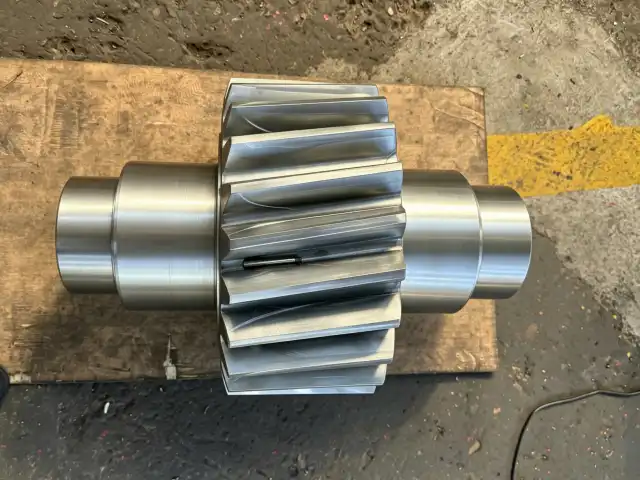
Understanding Right Hand Drive Shafts: Function and Mechanics
For the Right Hand Drive Shaft to work, it needs to turn differential output into wheel rotation through a series of mechanical interfaces. This part is fundamentally different from the one on the left, not just in terms of where it is installed, but also in terms of its design shape and how stress is distributed.
Core Structural Elements
Modern Right Hand Drive Shafts have three main parts: the outer spline that connects to the wheel hub; the inboard spline that engages the differential; and the tubular or solid center shaft bar. There are CV joints between these two ends, with a Rzeppa-style joint on the outside and a tripod-style joint on the inside. These joints allow the joint to move up to 47 degrees and transmit torque loads of more than 4,000 Nm in heavy-duty situations. The shaft bar itself has to be able to handle both the rotational shear stress and the bending moments that happen when the vehicle turns. It doesn't matter if it's hollow to save weight or solid for maximum stiffness.
Material choice has a direct effect on how long something lasts. High-quality steel types like SAE4340, AISI4140, and 42CrMo have the right tensile strength, and the forming process lines up the grain structures along the stress lines. Heat treatments like carburising and induction hardening make the surface hard, between 58 and 62 HRC. This makes the splines wear-resistant while keeping the core flexible so it can handle shock loads from rough terrain or quick power spikes.
Mechanical Operation in Drivetrain Assemblies
The Right Hand Drive Shaft has to be able to handle three motions at the same time: rotation at wheel speed, plunge movement when the suspension contracts or expands, and angular displacement when the steering is applied. This is made possible by precision-ground ball bearings that run in matched raceways and keep the same velocity ratios no matter what the articulation angle is. Molybdenum disulphide grease fills the joint spaces, and thermoplastic elastomer boots protect them. The boots must be able to handle temperatures ranging from -40°C to +120°C.
If you use these ideas in heavy industrial settings, like YIZHI MACHINERY's machine tool gearbox systems, you can get custom drive shafts with modules from 0.5 to 50, helix angles from 5° to 45°, and ISO 6 Grade-compliant teeth shapes that are precisely ground. During production, hobbing, milling and grinding are used to make sure that the connections have no backlash. This is very important for precision instrument transmission systems where errors in positioning can't be more than 0.02 degrees.
Identifying and Solving Common Issues with Right Hand Drive Shafts
Recognising early signs of failure helps keep equipment from breaking down and causing damage to other parts that are linked. The procurement and repair teams can do their jobs better if they know both the patterns of symptoms and the reasons of them.
Warning Signs of Degradation
If you hear clicking when making tight turns, it means that the outer CV joint is wearing down. This is usually caused by dirty oil after the boot ruptures. At highway speeds, vibration is a sign of dynamic imbalance, which is usually caused by intermediate bearings that are too loose or bent shaft bars. Grease splatter on the inner wheel wells proves that the boot has failed, leaving sensitive joint parts open to damage from foreign objects. When metal clunks when speeding up or slowing down, it means that the splines are worn, which lets the matching surfaces move apart.
Root Causes and Preventive Strategies
When operating angles are higher than the design limits, which happens a lot with lowered vehicles or lifted off-road equipment, mechanical wear speeds up. Longer service intervals or wrong grease specs can cause lubrication problems. ASTM D445 viscosity standards must match operating temperature ranges. Impact damage from falling objects or collisions may not cause failure right away, but it does start wear cracks that spread over time.
Following regular maintenance procedures greatly increases the life of a product. Every 15,000 miles, inspection reports should check the soundness of the boots for cracks, tears or clamps that have come loose. Adding new grease every 30,000 miles with compounds recommended by the manufacturer keeps the engine from running dry. Checking the torque on axle nuts makes sure that the bearing preload is correct, which stops pitting rust at the points where the splines meet.
Repair Versus Replacement Decision Criteria
If the boots are still whole but the joints have some small play, re-greasing may be enough for now. Because of clicking sounds and damaged boots, the joint needs to be replaced completely. Impact-bent shafts never fully recover their structural integrity; trying to straighten them weakens the grain structure. When a fix costs more than 60% of the cost of a new part, procurement managers usually choose to replace the whole thing. This is especially true when labour costs and guarantee coverage are taken into account.
Comparison and Decision-Making: Choosing the Right Drive Shaft for Your Needs
To choose the right drive shaft configurations, you have to look at a lot of technical and operational factors. The decision matrix includes the direction of the shaft, the type of source, and how well it works with other parts of the drivetrain.
Right Hand Versus Left Hand Structural Distinctions
Right Hand Drive Shafts in crosswise FWD layouts are usually 50–150 mm longer than their left-side counterparts, so they need middle support bearings to keep the critical speed from resonating. This difference in length makes the operating angles of the joints uneven, which used to cause torque steer until equal-length designs came along. When it comes to heavy machinery, "handedness" refers to the direction of rotation and the orientation of the mounting flange, not the side of the vehicle. This is very important when specifying custom shafts for metallurgical rolling mill equipment that needs to be able to rotate in the opposite direction.
OEM Versus Aftermarket Trade-offs
Original equipment parts come with full warranties that cover 36 months or 100,000 miles and promise accurate measurements and material certifications. Aftermarket options can save you 30–50% on the price, but they are not all the same quality. The best ones are made to OEM standards, while the worst ones might use cheaper materials or skip the balance steps. For mission-critical industry uses like mine gear reducers, failure too soon would have bad results, so OEM or approved aftermarket sources are the only way to go. This gap is filled by YIZHI MACHINERY, which uses ISO-compliant manufacturing to make special drive shafts with material approvals (20CrMnTi, 40CrNiMo, 18CrNiMo7) and production tracking.
Universal Joints and CV Axle Distinctions
Universal joints, or U-joints, use cross-shaped yokes that send torque through needle bearings. They work well in rear-wheel-drive situations where angles are kept low. CV joints work great in front-drive situations that need a lot of movement without any vibration. CV-style constant velocity features stop cyclic speed changes that cause positioning mistakes when choosing parts for robotic joints or precision instrument gearbox systems. Professionals in procurement need to match the type of joint to the job cycle of the application. For example, U-joints can handle shock loads better, while CV joints work more smoothly at high angles.
Procurement Guide: Buying Right Hand Drive Shafts for Global B2B Clients
Finding gearbox parts around the world means figuring out how to deal with complicated supplier networks, price systems, and shipping issues. Strategic procurement lowers the risks in the supply chain and raises the total cost of ownership at the same time.
Supplier Categories and Vetting Criteria
OEM manufacturers let you buy directly from them and offer engineering support, but they usually have minimum order quantities that make them impractical for prototyping or small-batch production. Specialised aftermarket vendors offer a wider range of products and more flexible ordering options, but quality checks are necessary. Custom fabrication partners like YIZHI MACHINERY can meet special needs like non-standard modules, custom spline profiles, or unusual materials that catalogue providers don't offer. Checking requirements should include ISO 9001 approval, material test reports (MTRs) for metal compositions, and records of dynamic balancing.
Online marketplaces make it easier to compare prices, but they also make it harder to tell how trustworthy a supplier is. To lower your risk, ask for samples with third-party inspection reports. Offline channels, like trade shows and industry groups, let you do direct plant audits to check the capabilities of production tools like CNC gear grinding centers and induction hardening lines.
Pricing Frameworks and Cost Analysis
Vehicle-grade Right Hand Drive Shafts cost between $85 and $450 for heavy-duty trucks and economy passenger vehicles. Industrial handmade shafts cost between $200 and $2,000, based on the size of the module, the type of material (45# steel vs. SAE4340), and how complicated the heat treatment is. Volume price lets you save 15–25% on orders of 100 or more units. To get a full picture of the costs, you need to look at the one-time costs of tooling for custom splines, inspection fees, and the costs of keeping inventory compared to the benefits of just-in-time delivery.
YIZHI MACHINERY's prices depend on the grade of the material you choose. For example, 40CrNiMo metal shafts that have been carburised cost more than regular 42CrMo shafts that have been quench-and-temper processed. Production times of 35 to 60 days are a good balance between saving money and getting the job done faster in 20 days for an extra 30%.
Logistics and Risk Mitigation Strategies
International shipping comes with a lot of unknowns, such as changing travel times, the chance of damage, and delays in clearing customs. Sea freight is best for large orders that can wait 30 to 45 days for delivery, while air freight is better for urgent needs but costs four times more. China-Europe train freight strikes a middle ground between the two, giving delivery in 18–22 days at a price in the middle.
Specifications for packaging have a direct effect on damage rates. For example, claims are cut to less than 0.1% with shock-absorbing liners, custom wooden pallets, and anticorrosion coatings. Real-time tracking systems let you see shipments from the time they are loaded at the factory until they are delivered, which lets you handle problems before they happen. The warranty terms should say how long a defect is covered, how to get a return merchandise authorisation (RMA), and how long it takes to get a replacement part. In competitive markets, suppliers stand out by offering technical support after the sale, such as help with installation and fixing problems.
Maximizing the Lifespan and Performance of Your Right Hand Drive Shaft
To keep your investments in gearbox parts safe, you need maintenance plans that are synchronised with how much they are used and the weather.
Routine Care and Inspection Protocols
Schedules for preventive repair should match the severity of the job cycle. Light-duty passenger uses can go 30,000 miles between inspections, but heavy-duty equipment needs to be checked every three months. During inspections, the boot is looked at visually for cracks or grease leaks, the engine is listened to during test runs for grinding or clicking sounds, and the joints are touched to make sure there isn't too much radial play. To keep bearings from getting damaged, torque specs for axle nuts must be checked with calibrated tools. These specs are usually between 180 and 240 Nm, depending on the type of vehicle.
How often you need to grease depends on the operating environment. In normal situations, factory-fill grease can last for 100,000 miles, but in off-road or high-contamination settings, it needs to be replaced every 15,000 miles. Most of the time, NLGI Grade 2 lithium-complex greases with molybdenum disulphide additives work well. However, extreme-pressure (EP) versions are better for high-torque commercial uses.
Replacement Indicators and Decision Logic
The signs of progressive wear get worse over time. Initial boot wear can be avoided; replacing boots costs $40 compared to $300 for whole shafts, showing that this is a cost-effective way to help. When clicking sounds start to happen, the Right Hand Drive Shaft CV joint is damaged. Continuing to use it increases wear at an exponential rate, which increases the risk of a catastrophic failure. If the vibration is greater than 0.5 mm, it means that the shaft is out of balance or deformed and needs to be replaced.
Decision criteria balance repair costs, equipment downtime expenses, and failure consequence severity. Important production equipment should be replaced before it breaks down at 80% of its expected service life, but less important cars can be used until they break down. Managers of procurement should keep a strategic inventory of parts that break down often, weighing the costs of carrying these parts against the costs of emergency procurement.
Replacement Procedures and Downtime Minimization
Coordinated replacement activities keep production from stopping too often. Checking that the specifications of the replacement parts match the existing parts in terms of spline counts, shaft lengths, and joint types is part of the pre-planning process. Other steps include setting up the tools that will be needed, like axle pullers and torque wrenches. If you schedule repair for planned breaks, you can avoid having to pay extra for emergency service. To keep this from happening again, installation teams should follow the manufacturer's torque sequences, use thread-locking compounds as directed, and make sure the boot clamps are properly seated.
YIZHI MACHINERY helps with smooth changes by providing detailed technical information such as installation drawings, torque specifications, and break-in suggestions. Our responsive technical support (available at sales@yizmachinery.com) and one-year guarantee cover make sure that procurement teams get help with installation and fixing problems throughout the lifetime of the component.
Conclusion
The Right Hand Drive Shaft is an example of a precision-engineered part that combines knowledge of materials, precision production, and practical understanding. When purchasing gearbox parts for machine tool gearboxes, metallurgical equipment or mining machinery, it's important to find a good balance between technical specifications, supplier credibility and lifecycle management. Strategic sourcing from certified manufacturers using approved materials like AISI4140 and 18CrNiMo7, along with strict quality control to ISO 6 Grade standards, lowers risk and raises performance. Capital investments are kept safe by following systematised repair routines and making smart decisions about replacements. As the needs for industrial gearbox change toward higher torque density and zero-backlash precision, it becomes important to work with providers who can customise products and offer professional support in order to stay ahead of the competition in global markets.
FAQ
1.What Determines Right Hand Drive Shaft Durability?
Service life depends on the type of material used, how well it was heated, and how it is used. In automotive applications, shafts made from SAE4340 chromoly steel and hardened with induction usually last 100,000 to 150,000 miles. Higher cycle loads can be handled by industrial versions of 20CrMnTi that have been carburised and have a surface hardness of 58–62 HRC. The integrity of the boots is the most important thing. In high-temperature environments, thermoplastic elastomer boots last longer than neoprene ones, which has a direct effect on the rate of joint contamination.
2.Can Left and Right Hand Drive Shafts Be Interchanged?
Physical interchangeability rests on the length of the shaft, the shape of the spline, and the suitability of the mounting brackets. Using the wrong sides makes the joint operate at the wrong angle, which speeds up wear and could cause torque steer. Side-swapping may be possible in industrial settings where the spinning direction and flange angle meet the design requirements. Always check the measurements on the models and read the manufacturer's instructions before making a change.
3.What Causes Premature Shaft Failure?
60% of early failures are caused by boot tears that let debris get inside. Bearing setup problems or loosening can happen if the pressure on the axle nuts is not set correctly. When you use tools or modify a car beyond its original articulation angles, the CV joints become overloaded. Wear is sped up by lubrication degradation caused by long intervals or greases that don't work well together. Fatigue cracks are caused by damage from road dangers. Taking care of these things through regular repair greatly increases the service life.
Partner with YIZHI MACHINERY for Custom Drive Shaft Solutions
YIZHI MACHINERY has been making specialised parts for 15 years, which helps global B2B buying teams that need precisely designed gearbox parts. We are a certified Right Hand Drive Shaft supplier and offer custom solutions from 0.5 to 50 modules. We use high-quality materials like 40CrNiMo and SAE4320 and have certifications to back them up. Our whole process of making things—forging, hobbing, grinding, and heat treatment—ensures ISO 6 Grade accuracy with a surface hardness that you choose (45–50 HRC or 58–62 HRC).
We accept small orders, even samples of a single item, and can deliver them in 35 to 60 days. Our custom packing guarantees that less than 0.1% of items will be damaged in transit. Our service is unique because it offers real-time tracking, multi-channel logistics that include both sea freight and rail choices, and full technology help throughout the entire procurement cycle. Contact us at sales@yizmachinery.com to talk about your gearbox system needs. We offer design advice, material suggestions and lifecycle support, all backed by a one-year guarantee.
References
1. Stone, R., & Ball, J. K. (2018). Automotive Engineering Fundamentals. SAE International Press.
2. Milliken, W. F., & Milliken, D. L. (2020). Chassis Design: Principles and Analysis. SAE International Technical Publications.
3. Budynas, R. G., & Nisbett, J. K. (2019). Shigley's Mechanical Engineering Design (11th ed.). McGraw-Hill Education.
4. Society of Automotive Engineers (2021). SAE J2530: Axle and Driveshaft Design Standard. SAE Technical Standards Board.
5. American Gear Manufacturers Association (2022). AGMA 2001-D04: Fundamental Rating Factors for Involute Spur and Helical Gear Teeth. AGMA Publications.
6. International Organization for Standardization (2020). ISO 6336-1: Calculation of Load Capacity of Spur and Helical Gears. ISO Technical Committee 60.

USER EVALUATE
Here is the customer's evaluation of us