


Where can I buy double enveloping worm online?
It takes strategic study and technical know-how to find reliable online providers of Double Enveloping Worm gears when you need to buy important power transmission parts for heavy-duty industrial operations. You can get these specialised parts from authorised original equipment makers, sellers of industrial parts, and B2B buying platforms that serve markets around the world. Reliable providers usually let you customise their products, make their technical specs clear, and make sure they follow international quality standards. These are all very important for procurement managers in the mining, metals, and heavy machinery industries that can't risk the reliability of their parts.
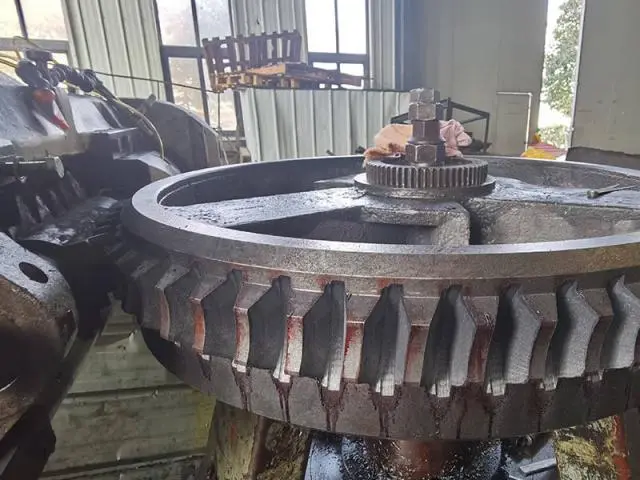
Understanding Double Enveloping Worm Gears
The Double Enveloping Worm technology is a big step forward from regular cylindrical worm gear systems. Most designs only wrap the gear around the worm, but this one has mutual envelopment: the worm takes on an hourglass shape that wraps around the gear, and the gear also wraps around the worm at the same time. This unique design makes area contact instead of simple line contact, which lets 3 to 11 teeth connect at the same time instead of just 1 to 2 teeth in normal setups.
Working Principles and Tooth Engagement
The practical benefit comes from the globoidal shape, which spreads the Hertzian contact stress over a much bigger surface area. When torque moves through the system, the multiple points of contact that are active at the same time lower the unit loading on each tooth. This mechanism directly addresses the risk of early failure that comes with working with heavy-duty mining equipment and other machines that are subject to shock loads. The enveloping design creates a hydrodynamic fluid wedge between joining surfaces even at low rotating speeds. This makes the drive more efficient while lowering the wear patterns that happen with regular worm drives.
Key Performance Advantages
The engineering benefits lead to real improvements in how things work. When compared to cylindrical reducers of the same size, the load capacity goes up by about 300%. This lets equipment designers choose smaller drive packages without sacrificing torque gearbox. Precision-grade units can keep backlash to less than 3 arc minutes, which is good enough for the precise placement needs of satellite antenna drives and automatic production line indexing systems. The strong tooth contact gives these parts great stiffness and shock absorption—often rated for 300% momentary overload—which makes them perfect for lift traction machines and mine lifting equipment that have to deal with quick changes in load.
Industrial Applications
Heavy machinery industries depend on these specialised parts, and they can't be compromised in terms of reliability. When auxiliary drives in a metallurgical rolling mill disengage, the self-locking feature stops the machine from moving backwards without meaning to. When space is limited, tunnel boring machine gearbox systems benefit from having a small footprint and a high torque density. These drives are used by port crane makers in slewing and luffing mechanisms because they provide smooth motion control and precise positioning, which have a direct effect on operating safety and the efficiency of cargo handling.
Criteria for Choosing the Right Double Enveloping Worm Gear Supplier Online
Strategic supplier selection is more than just comparing prices. Professionals in procurement have to judge partners based on a number of factors that affect the stability of the supply chain over time and the dependability of component performance. The Double Enveloping Worm gear market requires specialized engineering expertise to ensure long-term durability.
Quality Certifications and Manufacturing Standards
ISO compliance is the minimum standard, but picky buyers look into the manufacturing processes more deeply. For precision uses, suppliers should show that they follow AGMA 10 or DIN 5-7 accuracy classes. It is important to make sure that the materials used in worm screws are certified. They should be made of case-carburized alloy steels like 20CrMnTi, 40CrNiMo, or SAE4340, and they should have been heat-treated to a surface hardness of between 58 and 62 HRC. It doesn't matter what kind of material the gear wheel is made of; centrifugally cast tin-bronze or aluminum-bronze alloys are the best combination for load capacity and wear resistance. Reputable makers don't mind giving you material test results and hardness proof paperwork.
Customization Capabilities and Technical Support
Heavy equipment OEMs usually can't find goods that are mass-produced that meet their exact needs. The best supplier is more like a technical partner than just a supplier of parts. Look for manufacturers that offer full customisation workflows, such as requirement analysis sessions where engineers talk about load profiles that are specific to the application, precise CAD drawing development that takes into account the dimensions of the mounting interface, and the ability to make prototypes for testing before full production commits. True custom makers are different from catalogue wholesalers because they offer module ranges from 1 to 50, customised tooth counts, and surface treatments that are made to fit the application.
Lead Time Reliability and Delivery Performance
Planning when to make something depends on knowing when parts will arrive. Professional sellers can be told apart from fake sources by being open about when they can start making things. Custom-engineered gear sets have lead times of 35 to 60 days, and there are clear milestones that can be tracked throughout the production cycle. Advanced providers keep you up to date on the state of your order in real time, from the first step of machining to the final quality check and packing. Multi-channel logistics options, such as sea freight for large orders, air freight for urgent replacements, and rail options for continental delivery, show operational sophistication that keeps your production schedules safe from transportation problems.
After-Sales Support and Warranty Terms
Installing parts and providing long-term performance support show that the provider cares about the success of their customers. Comprehensive suppliers offer technical advice before the sale, such as application analysis and drive sizing calculations, as well as synchronised production updates with photos of key manufacturing stages and support after the sale, such as help with installation and fixing problems. The warranty should last at least one year and make it clear how to get a replacement if the product is defective. When dealing with problems in the field, it's very helpful to have quick ways to communicate, preferably with technical staff who understand application engineering instead of just sales staff.
Comparing Double Enveloping Worm Gears with Alternative Gear Types
To choose the right components, you need to look at how different gearbox methods meet the needs of your application and your operating limitations. The Double Enveloping Worm drive remains a specialized solution for high-torque, space-constrained environments.
Performance Against Single Enveloping Systems
Single enveloping worm gears keep the shape of the worm as a cylinder, and only the gear wraps around the worm. This uneven design causes line contact instead of area contact, which lowers the load capacity by about 60–70% compared to double-enveloping equivalents of the same size. Controlling backlash is harder in single-enveloping setups, which limits the use of precision positioning. Single encircling systems, on the other hand, are 30–40% less expensive and work better for medium-duty tasks where the highest load capacity is not the most important design factor. For mining hoist main drives or ship propulsion reducers that need to be safe, double-enveloping designs are worth the extra money because they have better contact mechanics.
Comparison with Hypoid and Spur Gears
Hypoid gears are more efficient than worm drives (usually 92–96%) and are better at handling heat for high-speed operation that doesn't stop. However, hypoid sets can't provide the high reduction ratios that can be achieved in single-stage worm designs. This means that multi-stage arrangements are needed, which are more complicated and cost more. Spur gears work very well in parallel-shaft situations but don't have the self-locking feature that is important for hoist safety and can't be used when right-angle gearbox is needed because of the way the gears are shaped. Spur and helical tooth engagement is more likely to cause damage, while worm gear sliding contact is smooth and reduces vibrations. This is why worm technology is better for machine tool indexing mechanisms where motion smoothness affects the quality of the surface finish.
How to Buy Double Enveloping Worm Gears Online: A Step-by-Step Procurement Guide
For efficient online sourcing, you need to do a lot of research on suppliers and follow strict technical verification protocols to make sure you don't get parts that aren't up to par. Purchasing a Double Enveloping Worm requires careful attention to material certifications and geometric tolerances.
Identifying Reputable Global Marketplaces
Specialised B2B industrial component platforms help buyers find suppliers by letting them narrow their search by certification, production capacity, and technical requirements. In addition to general marketplaces, trade groups and engineering societies keep industry-specific directories that list makers with a history of success in the heavy machinery sector. Most of the time, the most specific technical information can be found on the websites of direct manufacturers. These websites often have engineering guides, CAD model libraries, and application case studies that can help with basic design validation.
Preparing Comprehensive RFQ Documentation
Requests for quotations that are clear cut out the confusion that leads to misunderstandings and delays in procurement. Include all the technical details, such as the required reduction ratio, the input and output shaft configurations and bearing arrangement details, the mounting interface dimensions and tolerances, the expected duty cycle and load profile, and the environmental conditions, such as the temperature range and the amount of contamination that will be present. Include application sketches that show the limits of the placement area. List the certifications, inspection records, and any industry-specific rules that must be followed, like military specifications or approvals from the marine classification society. Clear RFQ paperwork lets suppliers give accurate quotes and reasonable delivery times instead of overly optimistic predictions that need to be changed later.
Validating Supplier Credentials and Product Originality
Checking for quality starts before a buy is made. Ask for proof of the certifications and registrations for the quality management system and the manufacturing facility. Ask the provider for names of similar uses where their parts have worked well, and give them permission to put you in touch with engineering contacts at those accounts. For important uses, you might want to have site audits, which can be done in person or by a third-party inspection service. This will make sure that the manufacturing tools and process controls are working properly. When buying from middle-men, you should pay extra attention to making sure the products are real. Make sure that the parts have manufacturer identification markings and serial numbers that can be tracked back to production quality records.
Understanding Pricing Structure and Total Cost Analysis
The price of a component at the start is only one part of the total cost of ownership. Quotes should be judged using a full cost model that takes into account things like incoming inspection fees, the cost of keeping spare parts in stock, the expected service life based on the application's duty cycle, and the possible costs of downtime if something breaks down too soon. Total cost performance is usually better with suppliers who charge a little more per unit but offer better technical support, faster wait times, and more extensive guarantees. Payment terms, currency exchange risk, and figuring out import duties are all parts of the financial research that you need to make smart buying choices.
Maintenance and Performance Tips for Long-Term Gear Efficiency
To get the best return on investment, you need to use systematic maintenance methods that are specifically designed for Double Enveloping Worm gear technology.
Lubrication Requirements and Oil Selection
Worm gears need special lubricants that go beyond regular gear oils because they have moving contact. When there is boundary lubrication, heavy-duty compounded oils or synthetic polyglycol (PAG) formulations with extreme pressure (EP) additives stop scoring. Choosing the right viscosity balances the strength of the film against the amount of heat it produces. ISO VG 220-460 grades are good for most industrial uses, with adjustments made based on the temperature and speed of the machine. When it comes to thermal loads, oil change times can be as short as 1,000 hours for small housings with a high torque density or as long as 3,000 to 5,000 hours for drives that are conservatively sized and have active cooling. Even though synthetic oils are more expensive at first, they often pay for themselves by lasting longer and being more stable at high temperatures.
Periodic Inspection and Wear Monitoring
Proactive condition monitoring stops catastrophic failures and finds the best time to replace a part. Backlash measurement with dial indicators tracks the wear on teeth; increases above the allowed limits show that the service life is almost up. Problems can be found with vibration analysis before they can be heard or cause more damage. When gear teeth are blued during routine maintenance, the contact pattern is checked to make sure that the load is evenly distributed across the tooth face, touching 50 to 70% of the possible contact area. Any strange patterns that point to misalignment or bearing wear need to be fixed right away to stop things from breaking down faster.
Precision in installation alignment and mounting
Axial alignment is more important in hourglass worm drives than in cylindrical ones because of the way the worms are shaped. The worm needs to be perfectly centred on the axis of the gear; even small changes in the axial direction can throw off the planned contact pattern and put extra stress on the tooth edges. Follow the installation instructions provided by the maker for the maximum shaft runout, the recommended bearing preload settings, and the straightness of the housing face. During installation, use dial markers to make sure that the orientation is within the allowed ranges. Alignment is affected by thermal expansion, so make sure that the mounting arrangements allow for different levels of expansion between the housing materials and that shim packs or changeable mounting clips can be used to make small positional adjustments.
Conclusion
When you buy Double Enveloping Worm gears online, you need to know a lot about technology and evaluate suppliers strategically in order to find parts that meet strict industry standards. Specialised geometry gives these drives the ability to carry more weight and place themselves precisely. They are necessary for heavy-duty gearbox systems, mining equipment, and metallurgical machinery where dependability affects safety and efficiency. To do a good job of procurement, you need to find manufacturers with proven customisation skills, quality systems that have been checked, and full technical support that goes beyond just delivering parts. For equipment engineers and strategic sourcing managers, using the evaluation criteria and buying methods described here can help them confidently find and buy precision-engineered gear sets that will last for a long time.
FAQ
1.Can Double Enveloping Worm drives be customized for specific applications?
When it comes to these specialised parts, customisation is the norm rather than the exception. Reliable manufacturers can meet specific needs for different applications by providing non-standard reduction ratios, custom shaft configurations, special materials for corrosive environments, and changed tooth geometries that work best with certain load profiles. As part of the customisation process, manufacturers usually hold collaborative engineering meetings to look at your job cycle, room limitations, and performance needs and come up with custom solutions. When specifications are very different from standard offerings, you should be ready to give detailed application information and allow time for prototype validation.
2.What typical lead times should be expected when ordering online?
Custom-engineered gear sets usually take 35 to 60 days to make from the time the order is confirmed until it is delivered. This time frame includes engineering review, getting the raw materials, precision machining tasks like cutting and grinding, heat treatment cycles, final assembly, and a full quality inspection. You may be able to get rush production if you need it quickly, but prices may be higher because of the tight plans. Standard catalogue items that are in stock may be shipped within days, but heavy equipment applications usually need custom configurations that meet specific mounting needs and performance standards. These take full manufacturing cycles.
3.How do I check the qualifications of the seller and the quality of the product?
The first step in verification is to ask for proof of ISO compliance and any industry-specific certifications that are important to your application field. Ask for material test records that prove the alloy's specs and the results of the heat treatment. These reports should include measurements of the hardness of key surfaces. Talk to reference customers in related fields to find out how reliable the supplier is and how well the product works in similar situations. Third-party inspection services can help you make sure that the manufacturing process and measurements are correct before the goods are shipped. This is especially important for large orders or when you are just getting to know a new supplier. Manufacturers with a good reputation accept openness and don't hesitate to provide full quality documents.
Partner with YIZHI MACHINERY for Premium Double Enveloping Worm Solutions
Custom-made Double Enveloping Worm gear sets from YIZHI MACHINERY are perfect for the tough needs of the mining, metalworking and heavy equipment industries. We have been making precision gearbox parts to ISO 8-9 grade standards since 2016 using high-tech materials like 40CrNiMo, SAE4340, and AISI4140 alloys that are hardened by carburising and then ground to a very fine surface. Our full customisation process, which includes analysing your needs, designing, producing, checking for quality, and shipping around the world, makes sure that parts fit perfectly into your important drive systems. We are your reliable Double Enveloping Worm supplier for parts ranging from module 1 to 50 with surface hardness requirements of 58 to 62 HRC. We have been making these parts for 15 years, have 35–60 day delivery schedules, and offer end-to-end shipment tracking with damage prevention packaging. Contact us at sales@yizmachinery.com to talk about your gearbox system needs and get detailed engineering proposals that come with a one-year warranty and quick customer service after the sale.
References
1. Dudley, D.W. (1994). Handbook of Practical Gear Design and Manufacture. CRC Press, Boca Raton, Florida.
2. American Gear Manufacturers Association (2019). AGMA 6034-B92: Practice for Enclosed Cylindrical Wormgear Speed Reducers and Gearmotors. Alexandria, Virginia.
3. Litvin, F.L. & Fuentes, A. (2004). Gear Geometry and Applied Theory (2nd Edition). Cambridge University Press, Cambridge, United Kingdom.
4. International Organization for Standardization (2013). ISO 8-9:2013 Cylindrical Gears for General and Heavy Engineering – Basic Rack. Geneva, Switzerland.
5. Nelson, W.E. (1961). Globoidal Worm Gearing: A Historical Perspective on Cone-Drive Technology. Transactions of the American Society of Mechanical Engineers, Vol. 83, Series B, pp. 239-248.
6. Colbourne, J.R. (1987). The Geometry of Involute Gears and Double Enveloping Worm Gears. Springer-Verlag, New York, New York.

USER EVALUATE
Here is the customer's evaluation of us