


How Planetary Gear Reducers Revolutionize Robotics
Modern robotics demands power transmission systems that combine precision, compactness, and reliability. The planet gear reducer addresses these needs through its epicyclic design, featuring a sun gear surrounded by multiple planet gears rotating within an outer ring gear. This configuration distributes torque across multiple contact points simultaneously, achieving efficiency rates of 95-97% while maintaining backlash below 3 arc-minutes—critical specifications for servo-driven robotic joints and automation systems requiring repeatable positioning accuracy.
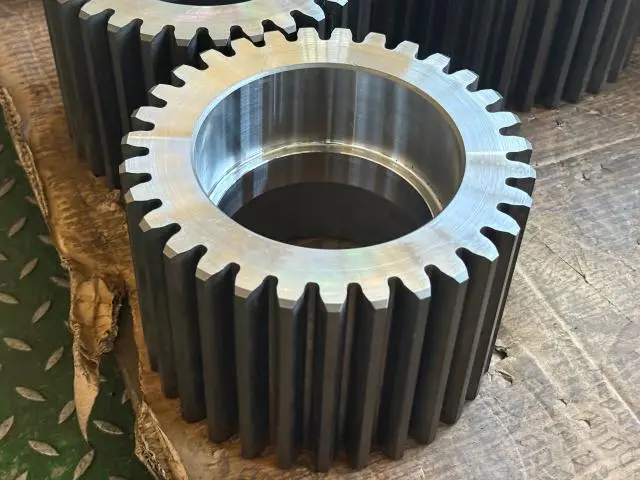
The Working Principle and Design Features of Planetary Gear Reducers
Understanding how these transmission devices function helps procurement professionals specify components that align with demanding automation requirements.
Core Operating Mechanism
The beautiful way the Planet Gear Reducer works is that power comes in through the sun gear, moves through several planet gears mounted on a carrier, and comes out through either the carrier gear or the ring gear, depending on the configuration. This load-sharing design makes it possible to multiply torques by a huge amount while taking up very little space. In contrast to parallel-shaft gearboxes, which focus forces on a single mesh point, the planetary configuration uses three to four planet gears at the same time, spreading stress and increasing the load capacity.
We can see that the gear ratio is affected by how the ring gear teeth and sun gear teeth fit together in the mechanical chain. By putting several planetary sets in series and keeping the input-output alignment coaxial, engineers can get ratios from 3:1 to over 100:1. This makes it easier to integrate into robotic arm structures and rotary indexing tables.
Material Selection and Heat Treatment
The materials used have a direct effect on how long they last and how consistently they work. We make planetary parts at YIZHI MACHINERY out of high-quality alloy steels like 20CrMnTi, 40CrNiMo, and SAE4340. When these materials are heated to a level called "carburizing," the surface becomes 58 to 62 HRC hard while the core stays tough and flexible. This metal shape stops tooth surfaces from pitting and wearing down while also absorbing shock loads during emergency stops, which are a frequent way for automatic systems to fail.
Precision casting is the first step in the production process. This sets up grain flow patterns that are in line with stress directions. After hobbing and milling, the initial tooth geometry is achieved. Next, the teeth are precision ground to ISO 5-6 grade tolerances. Finishing options for the surface, such as hard chrome plating, offer extra protection in harsh conditions where coolant mist or particle contamination can compromise the integrity of the seal.
Design Elements Impacting Performance
Industrial-grade Planet Gear Reducers are different from market options in a number of important ways. Backlash, which is the play in rotation between the input and output shafts, has a direct effect on how accurately robots can place their components. Precision-class units keep backlash below 3 arc-minutes by manufacturing with tight specs and making changes to the tooth shape that work best. When designing multi-axis motion patterns that need micron-level repeatability, this standard can't be changed.
Another important measure is torsional stiffness. Outside forces try to bend the output shaft while it is being machined or while moving materials. High-stiffness reducers keep this deflection to a minimum, which stops mistakes in positioning and damage to the surface finish. Because the planetary design uses a hard gear mesh instead of flexspline deflection, it is naturally stiffer than harmonic drives.
How lubrication is done affects how often upkeep needs to be done and how stable the temperature is. Most precision planetary units use synthetic grease (NLGI Grade 00/000) to keep them running smoothly for a long time, so they don't need to be serviced and the seal designs are easier. The grease covers areas with tooth mesh and bearing holes, lubricating the edges when the machine is first turned on and creating hydrodynamic films when it is running steadily. Choosing the right grease keeps things from breaking down thermally during long job cycles that are typical in automated production lines.
Advantages of Planetary Gear Reducers in Robotics
There are real benefits to these transmission systems that directly help automation integrators and OEM manufacturers with problems they are having.
Superior Torque Density in Compact Envelopes
Robotic manipulators are always weighing the size of their bodies against the weight they can carry. To meet torque requirements, traditional gear arrangements need large housing volumes, which limits arm reach or forces users to choose actuators that are too big for their needs. The Planet Gear Reducer gets around this problem with its multi-path power transfer, which lets it reach torque levels of more than 30 Nm per kilogram of reducer mass.
Consider a collaborative robot with a 900mm reach that can move 10 kg loads. The joint closest to the base has to deal with 150 Nm of output torque because of the combined forces of gravity and inertia. A planetary unit with this capacity takes up an area about 110 mm across and 70 mm long, which isn't possible with similar helical or worm gear options. This saving of space affects the whole kinematic chain, making it possible for thin arm profiles to reach tight spaces.
Enhanced Precision for Sensitive Applications
Positional repeatability within micrometers is needed for medical robotics and putting together electronics. When there is too much backlash, hysteresis happens, which means that the robot's real location is not in sync with its programmed coordinates when it changes direction. This problem is fixed by high-precision Planet Gear Reducers, which use special assembly methods to match parts so that there is as little space as possible between them.
When we make things at YIZHI MACHINERY, we test each one individually under 2% nominal force and use laser interferometry to measure rotational movement. Units that are going to be integrated with servos get certification papers that show the real backlash values. This lets motion controller compensation methods work. Professional-grade parts are different from mass-market ones that don't have individual characterization because they pay more attention to measurement details.
Precision is improved by thermal stability, which keeps performance constant across a wide range of temperatures. Quality reducers show temperature rises below 40°C above ambient during two hours of endurance testing at rated speed. Too much heat can mean that the bearings aren't properly oiled or that there are problems with the loading, which lowers their accuracy through thermal expansion. Specifications for purchases should require proof of temperature tests to show that the system is stable.
Operational Quietness and Vibration Control
The amount of noise produced is directly related to the quality of the production process. Tooth profiles that don't match up well cause impact loads when the mesh is engaged, which makes noise levels above 75 dB, which is not acceptable in collaborative robot environments where humans and robots share a workspace. Precision-ground planetary gears make noise levels below 65 dB at 3000 RPM by changing the teeth in the best way to move the load smoothly between teeth that mesh.
Controlling vibrations makes bearings last longer and stops problems with resonance. Radial forces are naturally balanced by the symmetrical arrangement of the planets, which keeps bearing loads and housing vibrations to a minimum. In situations where 120 pick-and-place rounds per minute are done by delta robots, this feature is very important because vibration speeds up wear and makes placement worse over time.
Here are maintenance considerations that preserve performance throughout service life:
- Seal Integrity Monitoring: Check the output shaft seals every three months for grease leaks that could mean too much internal pressure or seal damage. Early discovery stops pollution from getting in, which speeds up wear.
- Mounting Alignment Verification: If the motor shaft and reducer input are not lined up correctly, radial loads will be higher than the bearings can handle. During fitting, use dial markers to keep the concentricity within 0.02mm.
- Periodic Vibration Analysis: Set standard vibration signatures during commissioning, and then take readings every year to find patterns of bearing wear before they fail completely.
These maintenance practices extend service life beyond 20,000 operating hours under nominal loads, optimizing total cost of ownership across equipment lifecycles.
Comparing Planetary Gear Reducers With Other Gear Types for Industrial Robotics
Transmission choice has a big effect on system performance, so it's important to be able to compare different technologies objectively.
Efficiency and Power Loss Considerations
Through line contact between teeth, helical gear reducers get 92–94% efficiency per stage. This makes them smooth enough for use on conveyors and mixers. But stacking several steps to get the ratios needed for robots makes losses worse, lowering the system's efficiency to 85-88%. The Planet Gear Reducer architecture keeps 95–97% efficiency per stage by distributing loads more efficiently. This saves energy in battery-powered mobile robots and lowers the need for thermal management.
Because they use sliding contacts, worm gear alternatives are fundamentally less efficient and rarely achieve more than 70% efficiency. In older designs that put an emphasis on self-locking features, this limitation is fine, but it's a waste of time in modern servo-controlled systems where regenerative braking recovers kinetic energy.
Spatial Utilization and Integration Flexibility
Power flow can be redirected through right angles with bevel gear arrangements, which is useful in some joint configurations. But bevel sets need to be mounted precisely and create axial thrust loads that need a lot of bearing capacity. When compared to planetary options, the extra mechanical complexity raises the cost of assembly and the number of ways it can fail.
Planetary designs have coaxial input and output, which makes mounting easier and saves space along the actuator axis. This design works especially well for robotic arms where many axes are grouped together in small spaces. By nesting planetary stages concentrically, engineers can get high ratios without having to deal with lateral protrusions that get in the way of working boundaries.
Specialized Configurations Expanding Application Range
New ideas in Planet Gear Reducer design meet specific needs that can't be met by standard arrangements. Types that are waterproof and have double-lip seals and surface processes that prevent corrosion can be used in food processing or washdown areas. In dynamic applications where acceleration performance determines cycle time, lightweight designs with aluminum housings lower the amount of mass that needs to be moved.
Low-backlash types designed to handle semiconductors can achieve sub-arcminute accuracy with the help of special preload systems. These specialized units cost a lot, but they are worth it because they stop chip placement mistakes that cost thousands of dollars each time. By knowing which specialization fits the needs of the application, you can avoid specifying too many standard automations or not enough critical processes.
Procurement Considerations for B2B Clients: Choosing and Buying Planetary Gear Reducers
To choose the right components, you have to balance technical needs with business realities and supply chain issues.
Technical Specification Development
A correct load analysis that includes gravitational, inertial, and process forces is the first step in the right sizing process. Instead of just choosing based on peak loads, procurement engineers should figure out equal power that takes into account changes in duty cycle. This method stops people from over-sizing, which loses money and room, and from under-sizing, which causes things to fail too soon.
Environmental factors have a big effect on the choices of material and seal. When the temperature outside is below -20°C or above 80°C, synthetic oils with longer viscosity-temperature properties are needed. Chemicals used for washing need stainless steel fasteners and special coatings. Field failures that need expensive repairs can be avoided by carefully writing down working conditions.
Customization Capabilities and Lead Times
YIZHI MACHINERY provides customized gear ratios, mounting interfaces, and output shaft configurations for specialized automation. Its engineering team develops tailored designs using CNC machining and automatic grinding. Custom orders typically require 35–60 days for forging, heat treatment, machining, and quality assurance, with low minimum orders and single-unit prototypes available.
Evaluating Supplier Capabilities
The image of a brand affects purchasing choices, especially for risk-averse companies that put uptime first. European companies like SEW, Nord, and Bonfiglioli have built strong market positions by consistently producing high-quality goods and keeping detailed records. But the prices of these high-end names are based on decades of market growth rather than their relative technical superiority.
Other providers who can show that they follow ISO standards, keep accurate measurement records, and have clear production processes can offer similar technical performance at lower prices. When looking at Planet Gear Reducer sources, you should ask to see proof of:
- It is possible to grind precisely to ISO 5-6 grade limits.
- Controls for the heat treatment process with temperature maps for the furnace
- Individual unit testing with measures of slack and noise that are written down
- Material approvals that show how the alloy is made according to worldwide standards
These steps of verification tell the difference between makers who can do their job and wholesalers who just rebrand cheap goods without checking their quality.
After-Sales Support and Warranty Structures
A product's technical help is often just as important as the product itself. When you have complex integrations, you may have questions about how to mount them, how often to grease them, and how to fix problems. Quick response from engineers speeds up commissioning and avoids costly downtime.
The terms of the warranty show that the manufacturer trusts quality systems. Standard one-year guarantees cover flaws in the material and the work, but the coverage varies a lot. Make it clear if the coverage covers damages that happen because of something else, repair that can be done on-site, and replacement units. YIZHI MACHINERY offers full insurance support and quick response methods to keep production running as smoothly as possible when problems arise.
Real-World Applications and Future Trends in Robotics Gear Reduction
Looking at real-world examples shows how planetary transmission systems allow robotic progress.
Collaborative Robot Joint Actuation
Collaborative robots work with people without being confined, but they need to be controlled automatically and quietly. A big company that makes cobots put our Planet Gear Reducers into the shoulder and elbow joints. This made it possible to increase the mass from 5 kg to 10 kg without making the arm width bigger. Less backlash made the path more accurate during assembly tasks, which cut the number of scraps by 3.2% across all customer installations.
Automated Guided Vehicle Drive Systems
Compact wheel motors need to be able to multiply high torque for AGVs that move materials around manufacturing facilities. A logistics automation expert asked for planetary units with 200 Nm power from NEMA 34 servo motors so they could move at 1.2 meters per second and carry 500 kg. The high efficiency increased battery runtime by 18% compared to older worm gear designs, which decreased the need for charge facilities.
Delta Robot High-Speed Packaging
For pick-and-place cycles to work, delta robots need to have low inertia and fast acceleration. Planet Gear Reducers with 5:1 ratios were built into an FMCG packing line, which made it possible to have cycle rates of more than 120 picks per minute. The lower vibration got rid of mistakes in placing products that were causing downstream cartoning equipment to get stuck, which increased the total efficiency of the equipment by 7%.
Emerging Technology Integration
Emerging technologies are improving Planet Gear Reducers through lightweight composites, advanced coatings, smart sensors, and machine learning. These innovations reduce mass and friction, extend durability, and enable predictive maintenance by detecting vibration, temperature, and acoustic changes. Hybrid additive and conventional manufacturing also enables lighter, topology-optimized components without compromising structural integrity.
Conclusion
The Planet Gear Reducer is one of the most important parts of current robots because it is small, has a high torque density, and is very accurate. Its epicyclic design spreads loads across multiple gear meshes at the same time, making it more efficient and reliability than other types of transmission. The people who work in procurement should know about the technical specs (like backlash, torsional stiffness, and thermal stability) that set industrial-grade units apart from standard ones. When choosing components, it's important to find a balance between performance needs, customization needs, supplier capabilities, and lifecycle support. As robotics keeps getting better at collaborative, mobile, and precise tasks, planetary transmission technology changes by using new materials, integrating sensors, and making the manufacturing process more efficient.
FAQ
1.How do I calculate the required service life for a planet gear reducer in cyclic applications?
The equal torque method is used to figure out the service life, taking into account changes in load over full duty cycles. To find the equivalent continuous load, multiply each torque segment by its time fraction and then use the cube root of the sum. Industry guidelines aim for more than 20,000 hours of normal use, but making sure the right size is used for peak shock loads during emergency stops is just as important for avoiding catastrophic failures.
2.Can planetary reducers mount in any orientation without performance degradation?
Most units can be mounted on any surface, but vertical designs need to think about how to distribute the oil. For input-up positions, more grease may be needed to make sure that the top bearings stay lubricated during long periods of use. During purchase, you should specify the mounting position so that factory-optimized lubrication fills can be used to stop premature bearing wear.
3.What causes excessive noise after installation and how can it be prevented?
In new installations, noise is mostly caused by the driving motor and Planet Gear Reducer input not being lined up correctly. Even concentricity errors of 0.05 mm cause radial loads that make noise and speed up bearing wear. During assembly, use precision alignment tools to check that the parts are centered according to the manufacturer's instructions. System resonance at certain speeds may also make noise louder, which means that damping needs to be changed or the operating speed needs to be changed.
Partner With YIZHI MACHINERY for Your Planetary Gear Reducer Needs
When your automation projects demand reliable Planet Gear Reducer suppliers, YIZHI MACHINERY delivers the precision, customization, and support your systems require. Since 2016, we've specialized in manufacturing custom gear transmission components serving industrial robotics, machine tools, and precision automation. Our Planet Gear Reducers achieve ISO 5-6 grade tolerances through advanced grinding processes, utilizing premium alloy steels like 20CrMnTi and SAE4340 with surface hardness reaching 58-62 HRC. We support low-volume prototype orders and high-volume production with lead times of 35-60 days, backed by comprehensive technical consultation, synchronized progress updates, and one-year warranty coverage. Our global logistics expertise includes customized packaging reducing transport damage below 0.1% and real-time shipment tracking. Contact us at sales@yizmachinery.com to discuss your specific torque, backlash, and integration requirements, or visit yizhimachinery.com to explore our full capabilities in precision gear manufacturing.
References
1. Müller, H.W., "Epicyclic Drive Trains: Analysis, Synthesis and Applications," Wayne State University Press, 2015.
2. Lynwander, P., "Gear Drive Systems: Design and Application," Marcel Dekker Inc., 2019.
3. Stadtfeld, H.J., "Advanced Bevel Gear Technology," The Gleason Works, 2020.
4. Budynas, R.G. and Nisbett, J.K., "Shigley's Mechanical Engineering Design," McGraw-Hill Education, 11th Edition, 2018.
5. ISO 6336-1:2019, "Calculation of Load Capacity of Spur and Helical Gears – Part 1: Basic Principles," International Organization for Standardization.
6. Nakada, T., "Robotics and Automation in Precision Manufacturing," Society of Manufacturing Engineers Technical Paper Series, 2021.

USER EVALUATE
Here is the customer's evaluation of us