


Best Custom Spur Gear Options for Specialized Machinery
It is very important to choose the right Custom Spur Gear when industrial tools, mining equipment, or aircraft systems need precise motion control. These designed parts are different from off-the-shelf choices because they have custom tooth profiles, better materials, and exact size requirements that match specific practical needs. Custom Spur Gears get rid of the design flaws that come with stock gears. This means that they can transmit more power, have less slack, and last longer. This adaptability is very useful in specific situations where equipment breakdowns directly lead to lost income. This makes smart gear selection an important strategic procurement choice that affects both short-term performance and long-term running costs.
Introduction
1. Complex machinery in demanding industrial environments uses custom spur gears. Industrial machinery, mining, and aircraft procurement specialists know that gear selection influences performance, dependability, and cost. Custom spur gears fulfill center distances, load restrictions, and environmental standards better than generics.
2. Custom gear goes beyond fit. Careful material selection makes gears resistant to shock, abrasion, and temperature changes. Example: carburized metal steels and heat-treated high-strength grades. Sound reduction and load distribution are improved by custom tooth capping and tip relief. This book helps business-to-business customers manage procurement, investigate manufacturing options, and find suppliers who can deliver precision-engineered solutions that improve machinery performance and save costs and downtime.
Understanding Custom Spur Gears and Their Importance
What Defines a Custom Spur Gear
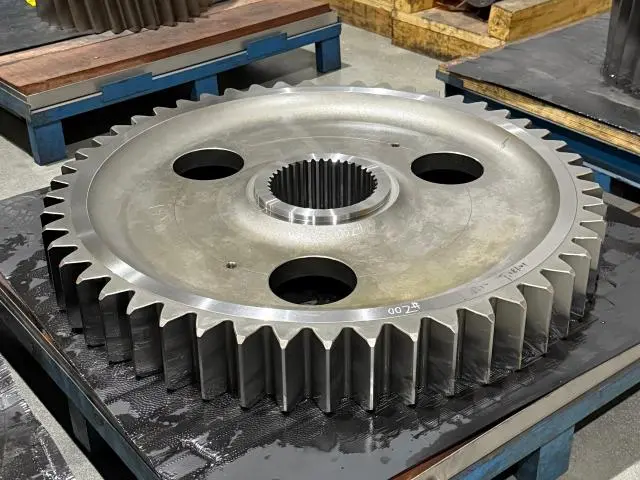
Custom spur gears are made for specific applications. Straight, parallel-to-rotating teeth. Modules and pressure angles are fixed in catalog gears. These pieces are tailored to each machine's kinematics, space, and load. This engineering solution solves critical problems that gears can't without mechanical sacrifice. Problems include center-distance matching, backlash control, and transmission error reduction. When customizing, module range (0.5 to 50), teeth count, pressure angles, and face lengths are examined. Precision grinding yields clean 0.8 µm Ra surface finishes, enhancing durability and performance. From 45# carbon steel to 18CrNiMo7, 42CrMo, and AISI 8620, materials vary. Each's hardness and wear resistance make it perfect for various industrial applications.
Critical Benefits in Specialized Applications
Custom Spur Gears solve industrial machinery issues well. To handle shock loads and abrasive dust, mining tool gears must be made of high-grade alloy steels with 58–62 HRC case-hardened surfaces. Aerospace requires excellent power-to-weight ratios. Optimizing tooth shape and employing vacuum-melted materials that endure strong G-forces and fast temperature fluctuations can do this. Robotic automation systems with ground-tooth custom gears and regulated backlash approaching zero-clearance achieve exquisite positional accuracy for sterile manufacturing. Describe precise gear ratios without reduction stages. This simplifies transmission design and improves efficiency. Custom solutions fit machine architectures, avoiding costly redesigns. Instead, they increase productivity with less vibration, noise, and maintenance.
How Custom Spur Gears Are Designed and Manufactured
Material Selection and Its Impact
The choice of material for Custom Spur Gears has a big impact on how well they work. The material must be suitable for the load conditions, surroundings, and expected service life. Carbon steels, like 45# steel, are cheap and good for moderate-load situations. Alloy types, like 20CrMnTi, 40CrNiMo, and SAE4340, are stronger and last longer because they have better chemical compositions. Case-hardening steels, such as AISI 8620 and 20CrNi2Mo, can have surfaces that are 58 to 62 HRC hard while still having tough, flexible cores that can handle shock loads. Both of the heat treatment methods are very important for getting the desired performance qualities. Carburizing adds carbon to the surface, making cases up to 1.5 mm thick that don't wear down easily. Quenching and seasoning make the core stronger and tougher. Induction hardening is a great way to harden only the surface of big gears when full-depth case hardening is not possible. When choosing between these treatments, things like the tooth module, the needed surface hardness, the core hardness specs, and the need for distortion control are all taken into account.
Precision Manufacturing Processes
Engineers and consumers assess needs before creating Custom Spur Gears. Torque loads, rotating speeds, climate, and size limitations are chosen. CAD modeling creates precise gear designs with tooth profile modifications for better contact patterns and load distribution. Testing prototypes in real life before production verifies designs. Production accuracy is nanoscale thanks to several precision procedures. Forging makes unique, grain-flowing blocks. CNC cutting determines base and attachment sizes. Tobs and mills carve tooth formations into nets. Precision grinding satisfies specifications and surface finishes, eliminating heat treatment warping. Coordinate measuring devices and gear analyzers assure ISO 5-6 or 8-9 precision on every element. Average manufacturing wait times are 35–60 days. Precision grinding, regulated heat treatment cycles, and cutting must be designed. This time lets you check quality at key manufacturing phases, preventing difficulties. If you buy from a dependable manufacturer that records process controls and tracking systems, output quality will be consistent.
Comparing Custom Spur Gears with Other Gear Options
Custom Versus Standard Spur Gears
Custom Spur Gears and normal spur gears are different in how they can be designed and how well they work in certain situations. Standard catalog gears mean that machine designs have to change to fit the available gear standards. This usually means giving up on center lengths, gear ratios, or housing sizes. Custom Spur Gears flip this relationship so they can fit the needs of the tools without changing the design. This gives you more options, so you don't have to pay extra for housings that are too big, extra reduction stages, or slower speeds that are needed because of normal gear limits. Costs are more than just the original buying price. When compared to stock options, Custom Spur Gears usually have higher unit costs and longer wait times. However, they are worth it because they work better and last longer. Precision changes to the teeth lower dynamic loads and shaking, which directly lowers the wear on the bearing and the need for maintenance. Customized materials and heat processes keep tooth surfaces from wearing down too quickly, which can lead to unplanned downtime. When you figure out the total cost of ownership, you have to include these operational perks along with the starting costs of buying the item.
Spur Gears Versus Helical Alternatives
Job-specific helical gears perform better or worse. Since they connect slowly, helicoid gears with slanted teeth are quieter. A higher contact ratio lets them handle greater weight. This setup generates axial thrust forces that need bearings. This increases mechanical design and part prices. Manufacturing helical gears requires more grinding, which increases costs. Spur gears have several benefits and can be used in many machine activities. The simple tooth design cuts production costs and wait times. Zero axial thrust eliminates thrust bearings, simplifying housing assembly. Helical tooth contact reduces sliding friction, improving power transmission. Custom Spur Gears are perfect for small gearboxes, motor reducers, and other situations where helix gear sets' bigger housings aren't possible. When choosing spur or helical designs, consider noise, room, load, and cost. Custom Spur Gears are ideal for industry and mining where durability and maintenance are more important than quality. Aerospace applications may prioritize weight reduction over noise reduction due to efficient spur gears.
Procuring Custom Spur Gears: What B2B Buyers Need to Know
Essential Specification Requirements
Purchase success begins with detailed specifications that ensure part application. Module or diametral pitch, teeth count, pressure angle (usually 20° but adjustable), face width, bore diameter, and hub arrangement are important. Industry-standard grades and hardness standards for surface (58–62 HRC for case-hardened gears) and core (30–40 HRC for toughness) are needed. Quality impacts gear performance and cost. AGMA or ISO 1328 quality standards specify pitch accuracy, profile shape, lead variation, and runout tolerances. Tasks with low transmission error and high speed or accuracy merit ISO 5–6 precision. However, ISO 8–9 grades suit moderate-tolerance industrial machines. Customers should request inspections to track and examine goods. Measurement records, material certificates, and heat treatment proof are needed. Purchase papers should include size, manufacturing process, and performance. Surface finish and measurements change with heat treatment, but grinding specifications ensure accuracy. Make tooth form modifications explicit to reduce noise or improve load efficiency. Explain crowning and tip relief. Clear standards prevent misinterpretations that could render parts unsuitable.
Evaluating Suppliers and Manufacturers
Choice of supplier affects buying success. Part quality, delivery reliability, expert help, and long-term partnership value are affected. Manufacturing companies need ISO 9001 quality management system certifications. Military or defense certifications help too. Production skills must match project needs. This includes heat treatment to reach the required hardness, precise cutting tools to meet quality standards, and the right equipment for the module range. OEM experience can help you evaluate a maker's custom construction. Industrial tools, mining, and aircraft suppliers improve specs and designs with subject matter expertise. Problem-solvers differ from producers in technical support skills like engineering advice, CAD modeling, and prototype development. Consider logistics when buying abroad. High-quality Custom Spur Gears take 35–60 days to make, but makers should meet delivery dates. Minimal order quantities limit buying flexibility. Prototyping, repair, and low-volume, specialized uses benefit from one-piece construction. Competitive pricing structures should be evaluated on quality, technical support, and on-time delivery, not just unit prices.
Navigating the Ordering Process
Effective ordering starts with needs communication. Application, environmental, and performance standards are discussed with manufacturer technical resources by procurement teams. During collaboration, people typically identify ways to make the idea easier, cheaper, or better. Professional custom gear makers might suggest materials, treatment, and exact measurements that consumers may not have considered. From first question to delivery, communicating requirements sets project parameters, designing drawings turn requirements into manufacturing specifications, production processing follows the manufacturing sequence, quality inspection checks specifications, packaging protects parts during transit, and transportation delivers products to end users. Quality suppliers clearly report production status and warn of any concerns. Value, not unit costs, should guide price negotiations. Engineering help, variable minimum order quantities, consistent quality, reliable delivery, and after-sales service effect TCO. Suppliers with fair prices and value-added services have better long-term partnerships than those that cut quality, communication, or support.
Why Trusted Custom Spur Gear Solutions Matter for Your Business
Quality Assurance and Technical Support
Working with expert Custom Spur Gear makers has benefits beyond parts. Complete quality assurance methods ensure production runs meet limits. This prevents costly part failures from disturbing production. Material certificates, heat treatment records, and written inspection methods provide traceability. This helps with regulatory compliance and performance root-cause investigation. Technical help abilities are invaluable for project planning. Engineering teams can optimize unique gear designs' material, tooth forms, and production processes to meet application goals. Collaboration typically yields cost-cutting or performance-boosting opportunities. CAD modeling and prototype development lower technical risks from unproven concepts and speed up project deadlines. Manufacturers who seek long-term customers stand out with after-sales service. Addressing application questions, correcting faults, and giving superior warranty policies reassure buyers and help them buy. These support options are useful in remote or critical work locations where broken parts are pricey.
Real-World Performance Benefits
Industry tool operators think Custom Spur Gear boosts machine performance. Optimizing gear ratios eliminates reduction steps. This simplifies transmission designs, saving weight, space, and mechanical losses. Precision teeth reduce shaking, speeding bearing wear and cleaning. Case-hardened surface treatments last longer and require less maintenance in mining. Manufacturers say custom gear implementations improve mining equipment reliability. Large modules made of high-quality alloy steels can handle shock loads and impurities in breaking and conveying systems. Gear systems last years longer with surface hardness between 58 and 62 HRC, preventing excessive wear that destroyed previous systems. Enhancing dependability fast reduces maintenance costs and increases tool availability, enhancing operations profitability. Custom Spur Gears provide design changes not available with regular parts in aerospace applications. Optimized tooth forms and high-quality materials provide power-to-weight ratios in actuation and supplemental power units, where every gram influences automotive performance. Precision manufacturing ensures flying system reliability. Non-standard pressure angles and coatings can be used to customize engineering solutions for harsh operating circumstances.
Emerging Technologies and Future Trends
Better manufacturing technology improves Custom Spur Gears. Additive manufacturing can swiftly create complex prototypes. Development time and design validation costs decrease. Hobbing and grinding are still used to create most industrial gear, but 3D-printed samples let you develop ideas before buying expensive machines. This is suitable for low-volume, niche applications where typical prototypes are too expensive. Modern gear surface treatments improve performance. Roughness ≤ 0.3 µm Ra is accomplished through superfinishing. Extended cleaning intervals reduce friction losses. Diamond-like carbon films resist wear and friction, making them suited for high-speed or lightly-oiled purposes. Shot peening enhances tooth root compressive loads, making them fatigue-resistant. High-performance racing and aircraft need this. If they stay current on these technologies, purchasing staff can make cutting-edge selections that provide their companies an edge. AI-driven process optimization, predictive maintenance analytics, and digital twin models alter gear manufacture. By simulating performance in numerous conditions before manufacturing something, virtual prototyping speeds production. In real time, smart manufacturing technologies optimize cutting parameters to improve dimension uniformity and reduce scrap. Quality, lead times, and buyer tracking improve with these digital innovations. All help consumers make confident purchases and improve operations.
Conclusion
To find the best Custom Spur Gear solutions for unique machinery, technical needs, pricing, and supplier capabilities must be balanced. Bespoke-engineered parts' exact dimensional matching, better materials, and teeth designs make equipment more efficient, reliable, and durable, justifying their higher initial costs. Detailed needs, rigorous supplier research, and engaging with the manufacturer to use their technical knowledge are necessary for successful procurement. Business-to-business purchasers can choose mining, aerospace, and industry gear that fulfills long-term operating goals by learning about production, quality, and new technologies.
Frequently Asked Questions About Custom Spur Gears
1. What information do manufacturers need to quote custom spur gears?
For accurate quotes, you need to include full details like the number of teeth, pressure angle, face width, hole diameter, hub layout, and module or diametral pitch. It is important to choose materials that meet specific requirements for surface and core hardness, and it is also important to specify the quality grade using ISO 1328 or AGMA standards. CAD models make it clear what sizes are needed and how they should be mounted. This speeds up the quote process and lowers the chance of mistakes.
2. Can custom spur gears handle high-torque mining applications?
When designed correctly, Custom Spur Gears work great in places with a lot of power. Large-module shapes made from high-quality alloy steels like 18CrNiMo7 or 42CrMo give teeth a lot of strength. Case-hardening through carburizing processes makes surfaces that are 58–62 HRC and resistant to wear, while keeping cores that are tough enough to handle the pressure loads that mining equipment puts on them. Long-term efficiency is guaranteed by gears that are designed correctly and take into account the real load conditions.
3. How do lead times compare between custom and standard gears?
Standard catalog gears can be shipped right away from stock, but Custom Spur Gears usually take 35 to 60 days to make. Precision production processes, such as hobbing, heat treatment, and grinding, need to be done within this time frame in order to meet quality standards. Project delays can be avoided by planning buying timelines that take these wait times into account. Reputable makers give accurate shipping figures and keep you up to date on the progress of production.
Partner with YIZHI MACHINERY for Precision-Engineered Custom Spur Gear Solutions
YIZHI MACHINERY specializes in producing custom spur gears with exceptional precision for demanding applications in mining, aviation, and industrial machinery. As a leading custom spur gears manufacturer, we have 15 years of experience and manufacture ISO-compliant parts using advanced techniques such as CNC cutting and grinding. Our gears are made from high-quality materials like 42CrMo and AISI 4140, ensuring durability and wear resistance. We offer flexible customization options and can produce quantities as low as one piece. For inquiries about your specific needs, contact our engineering team at sales@yizmachinery.com to learn more about our services.
References
1. American Gear Manufacturers Association. (2015). AGMA 2001-D04: Fundamental Rating Factors and Calculation Methods for Involute Spur and Helical Gear Teeth. Alexandria, VA: AGMA Publications.
2. Davis, J.R. (Ed.). (2005). Gear Materials, Properties, and Manufacture. Materials Park, OH: ASM International.
3. Dudley, D.W. (1994). Handbook of Practical Gear Design and Manufacture. Boca Raton, FL: CRC Press.
4. International Organization for Standardization. (2013). ISO 1328-1:2013 Cylindrical Gears – ISO System of Flank Tolerance Classification. Geneva, Switzerland: ISO.
5. Radzevich, S.P. (2012). Dudley's Handbook of Practical Gear Design and Manufacture (2nd ed.). Boca Raton, FL: CRC Press.
6. Townsend, D.P. (1991). Dudley's Gear Handbook: The Design, Manufacture, and Application of Gears (2nd ed.). New York, NY: McGraw-Hill.

USER EVALUATE
Here is the customer's evaluation of us