


Best Spur Planetary Gear Systems for Industrial Automation
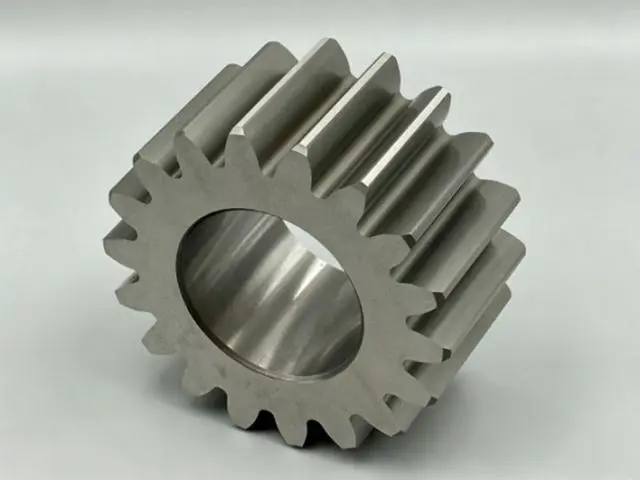
When looking for the best planetary gear systems for industrial automation, the Spur Planetary Gear design stands out as the best choice for tough jobs in the aircraft, mining, and manufacturing industries. A Spur Planetary Gear is a complex epicyclic gearing system with straight-cut teeth that are parallel to the spinning axis. It is made up of a sun gear in the middle, planet gears on a carrier, and a ring gear around the outside. This system has a very high transmission efficiency of 95–97% per stage and doesn't use axial thrust forces, which is a big plus for motors that can't handle thrust. When compared to helical profiles, the straight-tooth profile reduces rolling friction, which increases power density while reducing heat generation in small setups.
Understanding Spur Planetary Gear Systems
At YIZHI MACHINERY, we've seen how understanding the design of planetary gears changes choices about what to buy. The basic structure is made up of three main parts that move in sync with each other to achieve high power multiplication in a very small space.
The Basic Architecture and Operating Principle
The beauty of planetary gearing comes in its ability to share the load. The sun gear in the middle connects with three or four planet gears that are spaced evenly around it. Each planet gear also meshes with the ring gear's internal teeth. This setup spreads the transferred force across many contact points, which greatly increases the load capacity compared to single-mesh gear trains of the same size. The sun gear turns, which moves the planet gears. The planet gears roll along the fixed ring gear at the same time, which makes the planet carrier turn more slowly but with more power. Planetary systems are essential for robotic tasks that need precise speed reduction ratios from 3:1 to 10:1 in a single stage because of this mechanical benefit. Forging, hobbing, milling, and precise cutting are some of the advanced techniques used to make these systems. The steels we use at our plant are 20CrMnTi and 42CrMo alloy steels that have been heated to a level of hardness between 58 and 62 HRC. This metal treatment makes the case immune to wear while keeping the core tough, which is important for handling the repeated contact loads that come with running a Spur Planetary Gear.
Contrasting Spur Configuration with Helical and Bevel Variants
Spur planetary gears are different from helical gears in a number of important ways, including the straight-tooth shape. Helical planetary gears have angled teeth that connect more gradually, making the process easier and quieter—usually 5 to 8 decibels quieter while in use. But this design naturally creates axial thrust forces that need strong thrust bearings, which makes the system more complicated and costs more. Bevel planetary designs use conical gear elements to move motion between shafts that cross each other. These configurations are good for certain right-angle drive uses but are harder to make. Harmonic drive systems use the elastic displacement of a flexible spline to get almost no backlash, but they can only handle a small amount of power and are sensitive to shock loads. When engineers know these differences, they can match the gear layout to the needs of the application instead of just using tried-and-true methods.
Comparing Spur Planetary Gears with Other Gear Systems
Industrial automation needs machines that can work reliably even when they are being used all the time, often in difficult conditions with changing temperatures, vibrations, and contamination. When choosing the right gear technology, you have to weigh a lot of performance factors against business concerns.
Performance Characteristics Across Gear Technologies
Efficiency is one of the most important factors in choosing something because it has a direct effect on how much energy is used and how much heat is produced. Spur Planetary Gear designs get 95–97% efficiency per stage because the teeth roll against each other and slide against each other very little. The angled tooth contact in helical planetary systems makes them slightly less efficient (92% to 95%) because it adds slide motion components. Cycloidal drives are very good at handling shock loads, but they only work 80 to 85% of the time because the teeth have a complicated shape and there are many contact points. Noise features are very different between systems. Under normal conditions, helical gears make 65 to 75 dB of noise because the teeth connect slowly. Spur gears make 75 to 82 dB of noise when the teeth meet and make immediate line contact. For uses in busy places or places that are sensitive to noise, helical designs may be worth the extra cost. On the other hand, spur layouts work better in industrial settings that value speed and simplicity.
Maintenance Requirements and Operational Considerations
Access to maintenance has a big effect on the total cost of ownership over the span of an item. Planetary gear systems usually need to have their oil checked every 2,000 to 3,000 hours of use. The lubricant should also be replaced every 10,000 hours, but this depends on the temperature and load conditions during operation. The sealed design keeps the internal parts clean, which means they don't need to be serviced as often as open gear setups. Backlash, which is the angle difference between gear teeth that fit together, can change how accurately things are placed in motion control applications. Standard spur planetary gears have backlash of 8 to 15 arc-minutes, which is fine for use in conveyor systems, mixers, and pumps. Precision versions made to ISO 5-6 grade tolerances have backlash levels below 5 arc-minutes, making them good for robots and CNC machines that need to be able to repeat their placement. Harmonic drives have almost no backlash, but they are much more expensive and can't handle too much load.
Selecting the Best Spur Planetary Gear Systems for Your Industrial Needs
To strategically source planetary gear systems, you need to look at both technical specs and business factors in a planned way. Buying something affects not only how well it works right away, but also how much it costs to maintain, how easy it is to get replacement parts, and how long output can go on.
Critical Technical Selection Criteria
The most critical factor in sizing planetary gears is their torque capacity. By distributing load across three or four planet gears, these systems achieve high power density in compact designs. For instance, a spur planetary gearbox with a 150mm diameter can handle 500–800 Nm of torque, while parallel-shaft gearboxes require a diameter of 250mm. This compactness is advantageous in applications like robotic joints and AGV drives. In servo-controlled systems, the torsional stiffness of planetary designs—8–15 Nm/arcmin—enhances positioning accuracy and reduces settling times. Effective thermal control is also vital; proper lubrication, especially synthetic oils for high-temperature applications, minimizes heat generated by gear mesh friction and bearing losses.
Commercial Considerations and Supplier Evaluation
Managing leads significantly impacts project timelines and production start times. Standard catalog planetary gears usually ship within two to four weeks, while custom designs take 35 to 60 days, depending on complexity. At YIZHI MACHINERY, we have streamlined our customization process to ensure timely delivery of precision-engineered systems. We accommodate both large minimum order quantities and small batches, ideal for pilot projects or maintenance spares. Customers can tailor gear ratios, shaft configurations, and materials to meet specific needs. Our planetary gear sets stand out due to high transmission efficiency, effective load distribution, coaxial configurations, torsional rigidity, and modular scalability, addressing challenges like energy efficiency and compact design in demanding industrial environments.
Procuring Spur Planetary Gears: A Practical Guide for B2B Clients
Finding your way around the global market for industrial gearing means telling the difference between skilled producers and middle-men who don't know how to make the gears. A good procurement process strikes a balance between expert checking, business negotiations, and coordinating operations.
Identifying Qualified Suppliers and Assessing Capabilities
The inventory of production tools provides immediate insight into manufacturing capacity for precise planetary gears. We utilize advanced equipment, including CNC gear hobbing machines, gear grinding centers, and coordinate measuring tools, capable of achieving ISO 5-6 grade tolerances. Quality assurance is paramount; our CMM machines verify tooth shape accuracy, while gear testers assess pitch, concentricity, and surface finish. Our ISO 9001 and AS9100 certifications demonstrate our commitment to quality management, and we maintain industry-specific approvals like API and AGMA standards. By understanding production capabilities and maintaining long-term partnerships, we ensure timely delivery, even during peak demand periods.
Pricing Dynamics and Negotiation Strategies
The prices of spur planetary gears depend on raw material costs, manufacturing complexity, and order volume. Custom designs can be 30 to 50 percent more expensive than standard products due to engineering, tooling, and setup costs. Volume discounts are available, offering 10-15% off for orders of 25 units or more and 20-25% off for orders of 100 units. Material selection significantly impacts costs; while carbon steels like 45# are economical for lighter loads, alloy steels like 20CrMnTi offer better wear resistance at a higher price. Heat treatment methods, such as carburizing and induction hardening, enhance durability, making it essential to discuss application requirements with suppliers to select the most cost-effective process.
Logistics Management and Delivery Coordination
How you choose to transport your goods strikes a mix between travel time and freight costs. Freight by sea is a cheap way to get planned repair parts and new installs, and the schedules are open. It usually takes 30 to 45 days for goods to get from Asian manufacturers to North American ports. Air freight cuts travel time to 5–7 days, but it also raises handling costs by 400–600%. This is okay for urgent repairs or projects that need to be done quickly. China-Europe freight trains are a middle-ground choice because they take 18–25 days to travel and cost about the same as sea or air options. We've come up with special package rules to deal with the fragility of gear components. Custom wooden boxes and shock-absorbing cushioning covers keep tooth surfaces from getting damaged and bearing races from brinelling while they're being shipped. Because of this all-around security, our transport damage rates have dropped below 0.1%, which means we don't have to deal with the expensive delays that come with replacing goods. Full visual tracking shows the progress in real time, from loading in the plant to delivery to the customer. This lets you handle problems before they happen and make sure everyone is on the same page when it comes to getting.
Maintaining and Optimizing Spur Planetary Gear Performance
Preventive repair plans that are tailored to the working conditions are needed to make planetary gear systems last as long as possible. Systematic inspection methods find problems as they start to appear before they become so bad that they stop production.
Preventive Maintenance Protocols
Managing lubrication is crucial for maintenance. When selecting a lubricant, consider speed, load capacity, and operating temperature. Most industrial applications use synthetic gear oils with viscosity grades between ISO VG 220 and 320, which provide optimal film thickness at temperatures from 50°C to 90°C. Extreme pressure additives help prevent micropitting under high loads. Regular oil analysis monitors contamination and wear particles, enabling timely part replacements. Inspection frequency should align with usage; heavy equipment requires checks every three months, while infrequent use may only need semi-annual inspections. Key inspection aspects include listening for unusual noises, monitoring temperature changes, and checking seals for leaks. Using infrared thermography can identify overheating issues, signaling misalignment or inadequate lubrication. Each Spur Planetary Gear system includes comprehensive maintenance instructions, covering inspection methods, lubrication guidelines, and troubleshooting charts for common issues.
Performance Optimization Strategies
Long-term performance is greatly influenced by proper installation. To ensure even load distribution on planet gears, shaft orientation must maintain concentricity within 0.05 mm, and mounting surfaces should be flat within 0.02 mm per 100 mm while remaining perpendicular to the shafts' centerlines. We provide detailed assembly plans with essential measurements and torque values for accurate alignment. Operating within recommended limits prevents premature wear; exceeding force capacity by 20% can halve service life. For applications with frequent starts and stops, service factors should be 1.5 to 2.0 times the average loads. Client case studies demonstrate that systematic optimization, such as improved seal designs and new thermal break methods, can significantly enhance performance, leading to longer intervals between repairs and reduced positioning errors in CNC equipment.
Conclusion
To choose the best Spur Planetary Gear systems for industrial automation, you have to weigh technical performance factors against cost, supplier skills, and business needs. Spur planetary configurations are very efficient, have small sizes, and can handle a lot of weight. This makes them perfect for demanding uses in mining, manufacturing aircraft, and industrial machines. Implementation will go smoothly if you know the differences between gear systems, look at important selection factors, and work with skilled makers. Proactive repair plans and systematic efficiency improvement make things last longer and get you the most out of your money. We've laid out useful models for making decisions about purchases, evaluating suppliers, and implementing the best operational practices that we've learned from years of tech work and working with clients.
Frequently Asked Questions
1. What distinguishes spur planetary gears from helical configurations?
Spur Planetary Gear designs have teeth that are cut straight across and aligned to the shaft axis. This makes no axial motion and achieves 95–97% efficiency. Helical versions have angled teeth that make operation easier and quieter, but they also cause axial loads that need thrust bearings and work a little less efficiently. The material and heat treatment are the same, but spur configurations are better for uses that can handle modest noise levels because they are easier to make and cost less.
2. How do I determine appropriate gear ratios for my application?
To find the decrease ratio, divide the input speed by the ideal output speed. Planetary gears with one stage can have ratios between 3:1 and 10:1, while those with two stages can have ratios between 10:1 and 100:1. Higher numbers make things less efficient because each stage loses 3–5% of their value. Talking to makers with a lot of knowledge can help you get the best stage amount and ratio distribution for your speed and torque needs.
3. What maintenance intervals do planetary gear systems require?
Every 2,000 to 3,000 hours of normal use, check the amount and state of the lubrication. Completely replace the oil every 10,000 hours or once a year, whichever comes first. More regular inspections are needed in harsh settings with high or low temperatures, dirt, or heavy shock loads. Condition-based upkeep, which extends the life of parts and stops them from breaking down without warning, can be made possible by installing oil analysis tools.
Partnering with a Trusted Spur Planetary Gear Manufacturer
YIZHI MACHINERY, a leading spur planetary gear manufacturer, has been manufacturing precise spur planetary gear sets for industrial clients globally for 15 years, offering custom solutions tailored to your specifications, whether for a single prototype or large production runs without unreasonable minimum order requirements. Our comprehensive production process includes needs assessment, product design, and advanced manufacturing techniques such as casting, CNC hobbing, and stringent quality inspections meeting ISO 5-6 standards. Each system undergoes precision grinding and carburizing heat treatment for enhanced wear resistance (58–62 HRC). With customized packaging, efficient transportation, and production timelines of 35 to 60 days, we ensure low damage rates and provide expert support, including a one-year warranty. For inquiries regarding your planetary gear needs, contact our engineering team at sales@yizmachinery.com.
References
1. Müller, H.W. (2019). Epicyclic Drive Trains: Analysis, Synthesis and Applications. Detroit: Wayne State University Press.
2. Lynwander, P. (2021). Gear Drive Systems: Design and Application. New York: Marcel Dekker Publishing.
3. Stadtfeld, H.J. (2020). "Advanced Gear Manufacturing and Finishing: Classical and Modern Processes," Gear Technology Magazine, Vol. 37, No. 4, pp. 52-67.
4. American Gear Manufacturers Association (2022). ANSI/AGMA 6123-C16: Design Manual for Enclosed Epicyclic Gear Drives. Alexandria: AGMA Publications.
5. Jelaska, D. (2018). Gears and Gear Drives: Design, Analysis, and Applications. Hoboken: John Wiley & Sons Technical Publishing.
6. Radzevich, S.P. (2023). Theory of Gearing: Kinematics, Geometry, and Synthesis, 3rd Edition. Boca Raton: CRC Press Engineering Mechanics Series.

USER EVALUATE
Here is the customer's evaluation of us