


Uses of Helical Gear Gearbox in Manufacturing Systems
The Helical Gear Gearbox is a key technology in modern industries for safely shifting power between tasks. Angled teeth allow progressive contact in these gears, unlike spur designs. They can carry more weight, move power smoothly, and have less vibration. From mining conveyor systems to aerospace manufacturing precise equipment, the product solutions address noise reduction, high speed, and long service life objectives. This makes them vital in global industrial machinery, mining, and aerospace applications.
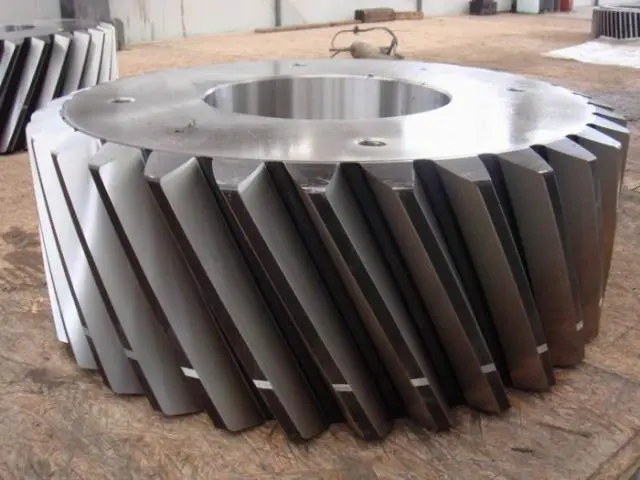
Understanding Helical Gear Gearboxes in Manufacturing Systems
Fundamental Design Principles and Operational Mechanics
The product teeth are cut at angles between 5° and 45° from the gear shaft, making it unique. Spur gears link teeth swiftly, whereas this helix angle connects them slowly. When helix teeth touch, the engagement moves readily along the tooth width, increasing the contact ratio, or number of teeth engaged simultaneously during operation. This fundamental design reduces power transfer cycle vibration and shock loads.
The product units mesh to provide axial thrust forces equivalent to the helix angle and torque. Bearing selection handles these forces in plants. Tapered or spherical roller bearings that can handle horizontal and axial loads are usually employed. Modern materials like 20CrMnTi alloy steel are carburized to harden the surface (58-62 HRC) and retain the core flexible to resist repeated loading and unloading.
Varieties of Helical Gearbox Configurations
Manufacturing systems use three Helical Gear Gearbox designs to suit space and performance requirements. A parallel shaft configuration has input and exit shafts on parallel lines. With 95 to 98% per stage ratings, they are ideal for speed decrease fast and efficiently. Combining helical gears and bevel gear sets in right-angle gearboxes reverses power transfer by 90 degrees. This helps in tiny setups with constrained equipment layout by space. Multi-stage Helical Gear Gearboxes have one body with multiple reduction stages. This allows large reduction ratios in a tiny size. These designs are beneficial in conveyor drives and mixers that demand high torque and a considerable speed decrease. Each stage has its own lubricant channels, allowing the best viscosity based on speeds and gear mesh temperatures.
Comparative Advantages Over Alternative Gear Technologies
Helical Gear Gearboxes are quieter than spur gears due to progressive tooth contact. Under the same loading conditions, noise drops by 10–15 dB. Lower impact forces and more even contact patterns prevent gear body and housing structure vibrations, improving sound performance. Manufacturing sites benefit from more comfortable workers who need fewer acoustic barriers and other noise-reduction measures. Another efficiency factor is load ability. The product teeth transmit 20-30% more power than spur gears of the same size due to their higher contact ratio. Because gearboxes can hold more weight, engineers can choose smaller ones, reducing equipment sizes and installation costs while maintaining safety regulations for high-load production conditions.
Applications of Helical Gear Gearboxes in Manufacturing Systems
Material Handling and Conveyor Systems
Helical Gear Gearboxes for mine bulk material conveyors must tolerate strong starting torque and constant job cycles. The product systems are sturdy and don't overheat, making them ideal for certain applications. Helical engagement's steady power supply prevents belt slip and reduces conveyor structure shock loads, extending system durability and service intervals. Helical Gear Gearboxes power automated warehouse sorters. Speed must be properly controlled, and start-stop cycles are frequent. Well-made Helical Gear Gearbox units feature minimal backlash and tolerances of 0.04-0.08 mm. This positions gears correctly during sorting. When distribution centers transition from worm gear drives to helical ones, processing capacity increases. Helical designs require less energy while running continually, they suggest.
Precision Machinery and Processing Equipment
Machine tool spindle drives use helical gear gearboxes to maintain cutting rates under stress. Helical gear meshes don't flex much when cutting forces are applied due to their high rotational stiffness. This ensures exact dimensions during precision machining. These features help aircraft part producers maintain micron-level tolerances for critical flying hardware. Plastic extrusion systems have extreme temperature and mechanical conditions, and the Helical Gear Gearbox's reliability affects the production line. Helical gear-driven extruder screws must maintain output speeds while sustaining high torque at high temperatures. Custom solutions like forced lubrication cooling and unique bearing arrangements can fix these issues. If maintained, systems can last over 50,000 hours before needing repair.
Mixing and Agitation Applications
Chemical processing companies employ Helical Gear Gearbox units in mixing drives to handle thick ingredients and huge impeller rotating loads. Most Industrial Helical Gear Gearbox types include stronger output shafts that can sustain large overhang loads without bending, preventing seal failure and bearing damage. Rust-proof coatings and airtight housing protect internal parts from harsh pharmaceutical and food processing chemicals. Water treatment plants frequently use mixing tools, requiring reliable driving parts. The product devices for these usage have too-large bearings and improved lubrication systems to maintain the film strong even when loaded. Facilities report cheaper maintenance costs when converting from worm gear to helical designs. They claim this is due to fewer downtime and part replacement.
Performance and Maintenance: Ensuring Longevity of Helical Gear Gearboxes
Critical Performance Indicators and Design Impacts
The torque number tells you how much steady load a Helical Gear Gearbox can safely handle without going over the limits of material stress or speeding up the rate of wear. Manufacturers figure out torque capacity by looking at the shape of the teeth, the qualities of the material, and the heat treatment instructions. The numbers are then confirmed by ISO 6336-compliant lab tests. Procurement teams should make sure that the torque numbers they are given include the right service factors to account for shock loads and changes in duty cycle that are common in industrial settings. Thermal efficiency has a direct effect on both the cost of running a business and the life of its tools. Most Helical Gear Gearbox units lose between 2 and 5 percent of their transferred power as heat. This happens because the gear mesh rubs against itself and the bearings wear out. When heat isn't removed quickly enough, lubricant temperatures rise, which speeds up the breakdown of oil and lowers its viscosity below the levels needed for good lubrication films. Modern models have cooling fans, forced-air ventilation, or extra cooling systems that keep the machine running at its best temperature even when it's under heavy load all the time.
Lubrication Strategies and Oil Selection Criteria
Choosing the right lubricant is still very important for the efficiency of the product. The lubricant should have the right viscosity at working temperatures and film strength under gear mesh pressures. Mineral-based industrial gear oils work well in most situations and don't cost too much. The viscosity grades are chosen based on the speeds of the gears and the temperature outside. When used in high-temperature settings like those found in continuous-duty industrial equipment, synthetic lubricants make drain intervals longer, up to 10,000 hours or more. They also offer better thermal stability. Condition-based repair methods that find early signs of failure and replace parts of the product before they do major damage are made possible by oil analysis tools. Regular sampling checks the amounts of pollution, oxidation, and wear metals. This lets you know right away if a bearing is wearing out, a seal is failing, or the filtering isn't good enough. Facilities that use thorough oil analysis report 30-40% less unplanned downtime because they repair parts before they break, which doesn't interfere with production plans.
Preventive Maintenance Protocols and Inspection Procedures
Systematic cleaning routines keep the Helical Gear Gearbox working well and extend its useful life. Every month, you should check the lube levels, make sure there isn't any strange noise or shaking, and look at the seals for oil leaks that could mean the gaskets are worn out or there is too much pressure inside the machine. Every three months, methods include a thorough vibration study using spectrum monitors to spot developing gear tooth damage, bearing flaws, or misalignment conditions before they show up as symptoms. No matter what the oil analysis results are, all grease in the Helical Gear Gearbox must be replaced every year during maintenance intervals, and if possible, the inside of the machine must also be inspected. Engineers look at the sides of gear teeth for cracking, scoring, or other odd wear patterns that could mean the gears aren't aligned correctly or aren't well oiled. By looking at the bearing, you can find signs of wear spalling, rust, or incorrect loading conditions that need to be fixed. A thorough record of the inspection results creates a starting point for trend analysis, which predicts the remaining useful life and helps with planning for capital replacement.
Choosing the Right Helical Gear Gearbox for Your Manufacturing Needs
Comparative Analysis of Gear Technologies
To choose the best gear technology, you need to know how performance changes in different setups. Spur gears are easier to make and don't produce any axial thrust, but they are noisier and can't hold as much weight as Helical Gear Gearbox types. Applications that can handle higher noise levels and light to mild loads may choose spur gears because they are cheaper and have simpler bearing arrangements that can't handle thrust loads. Worm gears have low efficiency scores (usually between 50 and 85%), even though they have high reduction ratios and small packages. This depends on the reduction ratio and the quality of the manufacturing. Worm gear meshes create a lot of heat because of the moving contact that they have, so they need better cooling systems. In situations where worm gear self-locking features are not needed for operating safety, Helical Gear Gearbox units offer higher efficiency, lower energy use, and longer service life. Bevel gear layouts change the direction of power transfer by changing angles, but they are more complicated and cost more to make than parallel shaft Helical Gear Gearbox designs. When space is limited and angular power transfer is needed, engineers should choose bevel or hypoid gear solutions. On the other hand, helix setups work best for parallel shaft applications that value efficiency, load capacity, and cost-effectiveness.
Essential Selection Factors and Technical Criteria
Load capacity is determined by accurate torque calculations with Helical Gear Gearbox-specific safety considerations. Shock loads from rapid starts, emergency stops, or process changes require higher safety factors—1.5 to 2.0 times expected steady-state torque values. If there are enough buffers against material stress limitations and faster wear, smaller safety factors can be employed in continuous jobs with smooth loading patterns. Helical Gear Gearbox specifications and safety features depend on the working climate. Outdoor equipment is subjected to extreme temperatures, dampness, and filth, therefore it needs improved sealing and rust-resistant coatings. Working with chemicals or minerals in explosive situations requires explosion-proof housings and spark-proof materials. Designs must be sealed to prevent oils and wear particles from contaminating clean rooms.
Supplier Evaluation and Procurement Considerations
Siemens, NORD, Flender, YIZHI MACHINERY, and Bonfiglioli are well-known Helical Gear Gearbox manufacturers with several products and global support networks. Procurement professionals should compare guarantee conditions, shipment wait periods, and after-sales support. Application engineers help choose Helical Gear Gearboxes, which may be cheaper. Customising the Helical Gear Gearbox is useful when shop products don't work for a certain application. Due to special mounting arrangements, shaft forms, or materials, custom-engineered solutions may be needed even if they take longer. It's useful when suppliers can make minor design adjustments without charging more. Due of its effectiveness in instances where ordinary products fail.
Procurement Insights: Buying and Customizing Helical Gear Gearboxes
Navigating Online Sourcing Workflows
By leveraging searchable databases with Helical Gear Gearbox performance data and specified requirements, digital procurement platforms enable supplier discovery and first technical assessment easier. Buyers should check internet catalogs for full-dimensional models, mounting arrangements, and performance curves to determine compatibility before contacting sellers. Good suppliers update their paperwork with compliance certificates and test results for certified materials vital to target markets. Complexity, production quantity, and customisation determine Industrial Helical Gear Gearbox prices. Standard shop items are cheap due to economies of scale, but custom-engineered solutions require design engineering and customized manufacturing. Transparent sellers provide detailed quotations that separate hardware, engineering, tools, and expedite fees. This allows smart offer comparison.
Customization Possibilities and Engineering Support
Modern production methods allow for several Helical Gear Gearbox application and performance modifications. Module ranges from 0.5 to 50 can meet torque and speed needs, and helix angles from 5° to 45° balance load capacity and axial thrust output. Select high-quality alloy steels like 20CrMnTi, 40CrNiMo, and AISI4140 to meet application requirements for mechanical properties and heat treatment reactions. Surface hardness affects Helical Gear Gearbox wear resistance and service life, from 45 to 50 HRC for light loads to 58 to 62 HRC for demanding situations. Tooth grinding creates ISO 5-6 accuracy grades for high-speed, quiet applications. A supplier that can carburize, induction harden, and cool lets you choose the optimal hardness patterns for core toughness and surface wear resistance.
Lead Time Planning and Delivery Logistics
Standard production times for custom-engineered Helical Gear Gearbox units are 35 to 60 days from order confirmation to shipment. We'll finish the design, procure the materials, heat treat and end grind, check quality, and pack. For faster production schedules, priority scheduling and premium freight plans can reduce wait times, but the additional costs must be justified by the requirement to finish soon or minimize downtime. International preparation for the Helical Gear Gearbox requires careful coordination between paperwork, customs clearance, and shipping plans. Experienced suppliers offer complete shipping solutions, including secure packaging for precision gear parts that could be damaged during delivery. Real-time tracking allows early exception handling, reducing delivery time issues caused by unforeseen delays or route changes.
Conclusion
Mining, aerospace, and industrial machinery manufacturers rely on Helical Gear Gearbox systems to transfer power reliably and fulfill performance standards. Helical designs have lower noise and vibration, larger load capacity, and superior efficiency than other gear technologies because to their curved tooth shape. To make the proper choice, consider power needs, working environment, and space limits against business aspects including cost, shipment time, and supplier assistance. Lubrication, inspections, and condition tracking prolong equipment life and save downtime. Working with professional suppliers who offer complete customization and technical support is the best method to ensure Helical Gear Gearbox solutions suit industrial system needs.
Frequently Asked Questions
1. What factors most significantly influence helical gearbox service life?
Quality of lubricant, load type, and operational temperature determine Helical Gear Gearbox lifespan. Choose the correct lubricant and make sure the film is strong enough to withstand gear mesh stresses to slow wear. Good seals and filtration prevent contamination and preserve lubricant integrity. Wear occurs faster in load patterns with significant shock or sustained overload. This reduces service life below steady loading. In persistent high-load circumstances, greater cooling is needed because high operating temperatures break down lubricants and accelerate oxidation.
2. How do helical gearboxes achieve quieter operation than spur designs?
The Helical Gear Gearbox tooth shape gently connects teeth, spreading contact pressures more evenly than a spur gear mesh. Slow engagement increases the contact ratio, or number of teeth sharing transferred loads. Their vibration amplitudes and sounds decrease. Precision in production affects noise performance. Hobbed teeth with poorer precision are louder than ground teeth with ISO 5-6 quality grades.
3. Can manufacturers accommodate specialized gearbox requirements for unique applications?
Comprehensive customization lets you choose the optimum Helical Gear Gearbox shape, material, and housing for your needs. The number of teeth, module specs, and helix angles can be adjusted to meet your torque capacity and reduction ratio needs. Installations with strange shapes or tough environments that don't fit conventional stock parts can require customized mounting, shaft, and sealing systems.
Partner with YIZHI MACHINERY for Superior Helical Gear Gearbox Solutions
YIZHI MACHINERY has 15 years of precision gear manufacturing experience and provides custom-engineered Helical Gear Gearbox solutions for industrial machines, mining, and aerospace industries. We use CNC gear machining centers, automated grinding equipment, and heat treatment systems to make ISO 5-6 precision components. We make gearboxes using high alloy steels as 20CrMnTi, 40CrNiMo, and AISI4140 with surface hardnesses from 45-50 HRC to 58-62 HRC to meet your load needs. As a Helical Gear Gearbox manufacturer, we can supply single units for prototype and specific applications without minimum order quantities. From requirements consultation to design engineering, precision production, quality inspection, and global shipping, our standardized customisation workflow provides 35-60 day delivery cycles with real-time progress tracking and damage-prevention packaging minimizing transit losses below 0.1%. To discuss your precision transmission needs, contact our engineering team at sales@yizmachinery.com for thorough technical proposals, a one-year warranty, and prompt after-sales assistance.
References
1. Dudley, D.W. (1994). Handbook of Practical Gear Design and Manufacture. CRC Press, Boca Raton, Florida.
2. ISO 6336-1:2019. Calculation of Load Capacity of Spur and Helical Gears – Part 1: Basic Principles, Introduction and General Influence Factors. International Organization for Standardization, Geneva.
3. Höhn, B.R., Michaelis, K., and Hinterstoißer, M. (2009). "Optimization of Gearbox Efficiency," Goriva i Maziva, Vol. 48, No. 4, pp. 441-480.
4. American Gear Manufacturers Association (2004). AGMA 2001-D04: Fundamental Rating Factors and Calculation Methods for Involute Spur and Helical Gear Teeth. Alexandria, Virginia.
5. Townsend, D.P. (1991). Dudley's Gear Handbook: The Design, Manufacture, and Application of Gears. McGraw-Hill Professional, New York.
6. Radzevich, S.P. (2012). Dudley's Handbook of Practical Gear Design and Manufacture, Second Edition. CRC Press, Boca Raton, Florida.

USER EVALUATE
Here is the customer's evaluation of us