


Where to Buy Spur Gear Ring from Reliable Suppliers?
To find high-quality gear parts for industrial tools, mining equipment, or aerospace uses, you need to be precise, rely on your provider, and have faith in them. When engineers and procurement managers need to buy a Spur Gear Ring, they have to make a big choice: should they buy it from an online market, directly from the maker, or from an authorized distributor? How do you make sure that high standards are met, that deliveries happen on time, and that good terms are negotiated? We at YIZHI MACHINERY know all about these problems inside and out. We help B2B buyers through every step of the buying process, from defining specifications to final delivery. With 15 years of manufacturing experience and deep technical knowledge, we make sure you get transmission parts that work perfectly in tough working conditions.
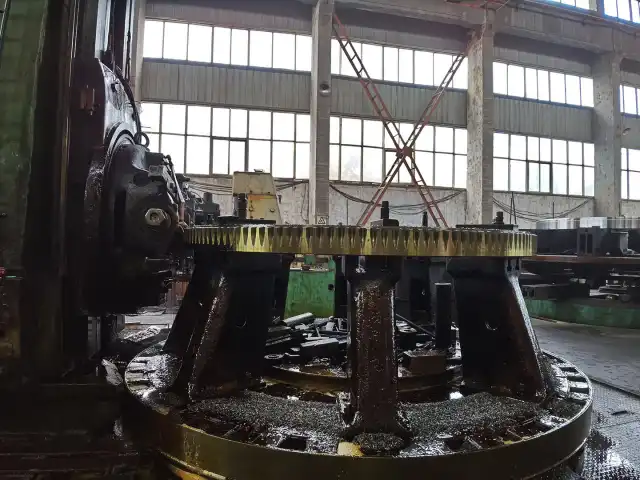
Understanding Spur Gear Rings: Basics and Technical Insights
A Spur Gear Ring is a cylinder-shaped transmission part with straight teeth that are cut parallel to the rotating plane. It is different from solid gears because it has an annular ring structure. This design solves certain technical problems in heavy-duty slewing drives, where large-diameter external rings send huge amounts of force, and in planetary gear systems, where it works as the internal ring gear. Helical Gear Rings create axial thrust, but Spur Gear Rings only keep radial forces. This makes it easier to choose bearings and build mechanical systems.
Fundamental Design and Operational Principles
For these gear rings to work, the teeth must connect directly with each other. When a pinion meshes with a ring gear, the straight teeth make quick line contact, moving the rotating motion and pressure with little friction. When well-oiled, this system can achieve transmission success rates of more than 95%. The gear ratio stays the same based on the number of teeth, which makes it possible to predict speed reduction ratios that are important for industrial reducers, motor drives, and farm equipment.
Material Selection and Performance Characteristics
Material selection affects load capacity, wear resistance, and lifespan. YIZHI MACHINERY makes Spur Gear Rings from high-quality alloy steels like AISI4140, SAE4340, 20CrMnTi, and 42CrMo. Each material has advantages. For example, carburizing types like 20CrMnTi have a hard surface (58–62 HRC) and a tough core, making them ideal for shock-loaded mining equipment. Through-hardening metals like 42CrMo give aircraft parts enough strength to maintain their shape under repeated stress.
We use forging, hobbing, milling, and precise grinding to ensure ISO 8–9 accuracy. Heat treatments like carburizing, cooling and tempering, and induction hardening improve tooth surfaces. Surface scratches, tooth root stress, and heat processing distortion are common breaks.
Design Parameters That Impact Performance
The performance of a Spur Gear Ring is determined by a number of important parameters. The tooth size and load-bearing ability are based on the module range (0.5–50). Larger modules can handle more torque transfer. Wear resistance is directly related to surface hardness, which should be between 45 and 50 HRC for cost-effective uses and 58 to 62 HRC for extreme-duty settings. It is still possible to change the number of teeth, which lets engineers get exact reduction ratios while keeping the outer measurements of gearbox designs small.
Comparing Spur Gear Rings with Other Gear Ring Types
Knowing the differences between gear types helps you make smart buying choices. When you look at Spur Gear Rings next to helical and bevel options, their basic design and how they work show clear pros and cons for different industrial uses.
Structural Design and Efficiency Differences
Spur teeth make contact immediately, but Helical Gear Rings' angled teeth connect gradually, making the process smoother and quieter. However, this spiral angle causes axial thrust, which requires thrust bearings, making the machine more complicated and expensive. Spur Gear Rings eliminate this vertical load, simplifying housing design and reducing bearing use. This simple structure reduces production costs and simplifies installation, which is crucial for budget-conscious projects.
Bevel gear rings allow power to be sent at an angle that changes shaft direction by 90 degrees or more. Bevel gears are useful in limited spaces, but they make fitting and mounting harder. Spur Gear Rings keep shafts parallel, making alignment easy and reducing installation time and wear.
Noise Generation and Load Capacity Considerations
Spur Gear Rings make their characteristic noise when they instantly contact teeth, especially at high speeds. This sound profile makes them unsuitable for quiet uses like precision instruments and home appliances. However, Helical Gear Rings mesh across more teeth, spreading loads and running quietly. These benefits make manufacturing and axial thrust management harder.
Spur Gear Rings perform best with high power and low to medium speed, according to load capacities. Simple tooth shapes allow for strong tooth profiles that can handle large rotational loads without rolling friction like helical designs. Spur Gear Rings are ideal for planetary gearbox end drives in mining excavators, cement kiln drives, and heavy industrial reducers that require the strongest teeth due to shock loads and high power.
Application Suitability and Material Standards
Material choices for different types of gear depend on how they will be used. Through-hardening processes make the core of Spur Gear Rings stronger, and case-hardening is often used on Helical Gear Rings to handle the complex stress patterns that come from teeth engaging at an angle. Our range of materials, which includes 18CrNiMo7, 17CrNiMo6, and AISI8620, meets the needs of a wide range of industries by providing the right hardness curves and wear resistance.
How to Select and Purchase Spur Gear Rings from Reliable Suppliers
Clear requirements are the first step in a successful buying process. Long-term supplier partnerships are the last step to ensure trustworthiness. For this process to work, technology needs, quality standards, and business concerns must all be balanced.
Defining Precise Specifications
Write down the operating details, such as the necessary module, the number of teeth, the bore diameter, the outside diameter, the face width, and the material grade. The required material strength and heat treatment specs are based on the torque needs and working speeds. Extreme temperatures, acidic atmospheres, or abrasive dust are some of the environmental factors that affect the choice of materials and protected coats. When normal catalog parts can't fit in an envelope or work with a certain interface, customization choices become necessary.
Evaluating Supplier Quality Standards
Compliance with ISO standards is the basic quality standard. Suppliers with ISO 9001 certification show that they handle quality in a planned way, and ISO standards for gear correctness (ISO 8-9 grade in our case) make sure that the dimensions are correct, which is important for smooth meshing and long service life. Ask for certificates of the materials that list their chemical make-up and mechanical qualities. Reports on heat treatment that check the surface roughness and case depth give confidence that parts will work under certain loads.
Precision providers are different from general manufacturers because they can grind. Grinding after heat treatment fixes thermal distortion, making it possible to reach the tight limits needed for noise-free, efficient power transfer. At YIZHI MACHINERY, our precision grinding equipment makes sure that the tooth profiles are always exactly the same across production batches. This is important for OEM uses that need parts that can be switched out.
Understanding Pricing, Lead Times, and Order Flexibility
Forging, machining, heat treatment, and final grinding all take time, so the production wait time for special Spur Gear Rings is usually between 35 and 60 days. Rush orders may cost more, but they can help with projects that need to be done quickly. Mass-production suppliers usually need hundreds of units, but specialized makers like YIZHI MACHINERY can make single-piece prototypes and small production runs, which is very important for aircraft and specialized machinery builders.
Pricing systems take into account the cost of materials, the difficulty of production, and the number of orders. Bulk orders take advantage of economies of scale to lower the cost per unit by making the best use of production schedule. Quotes that are clear should list the types of materials, how they are heated, and how they are inspected. This way, you can accurately compare prices between sellers. Talk about payment terms and delivery times that work with your project's goals. This will make sure that parts come exactly when you need them, saving you the cost of keeping expensive inventory on hand.
Maintenance and Troubleshooting of Spur Gear Rings
Preventative maintenance makes parts last longer and keeps important industry operations from going down without warning. Maintenance teams can get the most use out of their assets by following regular inspection routines and learning how common failures happen.
Essential Maintenance Protocols
Lubrication on a regular basis is still the most important upkeep task. Choosing the right lubricant—one whose thickness is right for the temperatures and speeds it will be used at—lowers friction and heat production. Check the state of the lube once a month to see if it has been contaminated by wear particles or water that speeds up the breakdown of the surface. Cleaning methods should get rid of built-up dirt without adding rough materials that hurt tooth surfaces.
Dimensional checks make sure that the accuracy stays high throughout the service life. Check the backlash at several points around the circumference to find wear patterns or mounting errors. Use precise tools to measure the thickness of the teeth and compare them to baseline values to figure out how fast they are wearing down. Periodic vibration analysis finds problems before they become major by using characteristic frequency patterns to find imbalances, misalignments, or tooth damage.
Common Failure Modes and Preventative Measures
Tooth wear is a gradual loss of material caused by repeated contact stress and moving friction. This slow breakdown speeds up when the grease stops working or when contaminants get into the mesh zone. Some things that can be done to stop problems are keeping the oil film at the right thickness, using good sealing systems, and replacing parts at the right time, before wear makes transmission less accurate.
When teeth aren't lined up correctly, the load isn't spread evenly across the width of the tooth face. This leads to edge loading and early failure. This problem can be avoided by carefully installing things and using precise alignment steps. Shim tweaks and readings of shaft alignment make sure that the mounting planes are aligned. Fatigue cracking starts where there is a lot of stress, which is usually in tooth root margins. Fatigue risk can be reduced by using the right material for the load range and heating it in the right way to create compressive surface forces. Regular magnetic particle screening or dye penetrant testing can find cracks before they get big enough to break a tooth.
Where to Buy Spur Gear Rings: Trusted Suppliers and Buying Channels
To find your way around foreign sourcing choices, you need to know the pros and cons of each purchasing channel. Making smart choices about how to work with suppliers has a direct effect on the quality of the parts, the regularity of delivery, and the long-term success of the business.
Online Marketplaces Versus Direct Manufacturer Channels
Online B2B platforms provide a variety of suppliers and competitive pricing, but assessing product quality from unknown sellers can be challenging. While standard parts often have clear specifications, specialized components like Spur Gear Rings benefit from direct relationships with manufacturers. This ensures control over production methods, quality standards, and material sourcing. At YIZHI MACHINERY, we specialize in unique gears, collaborating closely with clients from initial concepts to final delivery. Our direct approach minimizes misunderstandings and leverages 15 years of experience in mining, aircraft, and industrial machinery sectors.
Verifying Supplier Authenticity and Avoiding Substandard Products
Verifying your supplier is crucial to avoid counterfeit parts and ensure equipment reliability. Request certifications for the facility, details on production tools, and quality control methods. Reputable manufacturers provide documentation for each batch, including inspection reports and material certificates. Video factory tours can also showcase production capabilities and quality standards. Before placing large orders, testing samples is essential. Independent tests should analyze material composition, surface hardness, and dimensions, while performance tests validate load capacity and durability under simulated working conditions.
Custom Manufacturing and Bulk Order Advantages
Custom production addresses specific needs that standard catalog parts cannot fulfill, such as unique mounting connections or material specifications. At YIZHI MACHINERY, our custom workflow begins by understanding your requirements, followed by design drawings, production, quality inspection, packaging, and shipping to ensure timely and accurate fulfillment. Bulk orders can reduce costs through optimized production and better material purchasing power, while low minimum order quantities allow flexibility for prototyping and small runs. Our ability to produce single items helps clients quickly obtain samples or new parts without maintaining excessive inventory.
Building Long-Term Supplier Partnerships
Building long-term relationships with suppliers offers benefits beyond individual transactions. Preferred sellers often receive priority booking during capacity constraints, ensuring project continuity. Over time, these trusting partnerships facilitate easier communication about technical issues and faster problem-solving. Long-term partners understand your quality standards and application needs, frequently suggesting improvements and innovations. Exceptional providers distinguish themselves through prompt responses to technical inquiries, production updates, and proactive issue notifications. At YIZHI MACHINERY, we emphasize comprehensive support, offering technical assistance, real-time order updates, a one-year warranty, and swift problem resolution to maintain your confidence throughout the procurement process.
Conclusion
To get reliable Spur Gear Rings from reputable sources, you need to make choices about technical accuracy, quality control, and strategic sourcing. To make a good purchase, you need to understand basic gear ring principles, compare different design options, and set clear requirements. Checking sellers' certifications, seeing how well they can make things, and being open and honest with them are all ways to tell the difference between good partners and risky vendors. Proactive repair plans make parts last longer and reduce the number of unexpected failures that happen in important industry processes. Whether you buy from online markets or directly from manufacturers, making sure the seller is verified and samples are checked out carefully will protect you from getting low-quality goods. YIZHI MACHINERY has been making high-quality products for 15 years and can customize everything. They offer ISO-compliant parts with quick technical support and dependable global shipping. They are your trusted partner for precision gear transmission solutions.
FAQ
1. How Do I Select the Correct Spur Gear Ring Size?
Based on the torque you need and the room you have available, choose the module, the number of teeth, and the bore width. Use the formula pitch diameter = module × number of teeth to find the pitch diameter. Make sure that the face width gives the teeth enough strength for the load you're using them for. Talk to engineering help to make sure that the choices you've made fit the operational settings.
2. What Certifications Should I Look for in Suppliers?
Getting ISO 9001 certification shows that you handle quality in an organized way. Material papers confirm the chemical make-up and engineering features. Reports on heat treatment confirm the required surface hardness. Ask for records of dimensional inspections that show ISO grade correctness. All of these approvals make sure that parts meet standards for performance and dependability.
3. Can Spur Gear Rings Be Customized for Specific Applications?
Individual mounting connections, material standards, and size needs can all be met through full customization. Changes include changing the number of teeth, the shape of the hole, and the type of material used. At YIZHI MACHINERY, our engineering team works together during the whole design process to make sure that unique solutions exactly meet the needs of the application while still being easy to make and affordable.
Partner with YIZHI MACHINERY for Your Spur Gear Ring Requirements
Working with experienced Spur Gear Ring suppliers who put quality and customer success first makes it easy to deal with the complicated process of buying gear parts. When YIZHI MACHINERY makes gearbox parts, they use high-quality materials like 42CrMo, AISI4140, and SAE4340 and use modern forging, grinding, and heat treatment techniques to make them. Our ISO-compliant factory can achieve 8–9 grade precision, and our custom packaging keeps harm during shipping to less than 0.1%. We support projects around the world in industrial machinery, mining, and aircraft with 35–60 day production cycles, real-time shipment tracking, and flexible order numbers that allow for even single-piece production. Contact us at sales@yizmachinery.com about your unique needs, get detailed quotes, or look into custom Spur Gear Ring options that are made to fit your needs. Find out how a relationship with a trusted supplier can turn procurement problems into competitive benefits.
References
1. American Gear Manufacturers Association. (2019). AGMA Standard for Spur Gear Design and Specification. Alexandria, VA: AGMA Publications.
2. Dudley, D.W. (2020). Handbook of Practical Gear Design and Manufacture (3rd ed.). Boca Raton, FL: CRC Press.
3. International Organization for Standardization. (2018). ISO 1328-1:2013 - Cylindrical Gears - ISO System of Flank Tolerance Classification. Geneva: ISO Standards.
4. Khurmi, R.S. & Gupta, J.K. (2021). Machine Design: Gear Systems and Transmission Components. New Delhi: S. Chand Publishing.
5. Norton, R.L. (2022). Machine Design: An Integrated Approach (6th ed.). Boston: Pearson Education.
6. Society of Automotive Engineers. (2017). SAE J1141 - Standard for Steel Alloy Compositions in Gear Manufacturing. Warrendale, PA: SAE International.

USER EVALUATE
Here is the customer's evaluation of us