


Where to buy high-quality transmission gear shafts
To find high-quality gearbox gear shafts of Transmission Gear Shaft, you need to work with specialised manufacturers who know how to meet the precise needs of mining, aerospace, and industrial machinery. Reliable providers make designed parts from high-quality alloy steels like SAE4340 or AISI4140 and use advanced heat treatment methods like carburising and induction hardening to make them stronger. Manufacturers that you can trust usually have ISO certifications, offer custom engineering support, and keep clear quality control protocols. YIZHI MACHINERY is a great example of this standard because they offer precision-grade gear shafts backed by 15 years of production experience and full technical services that are suited to the needs of buyers around the world.
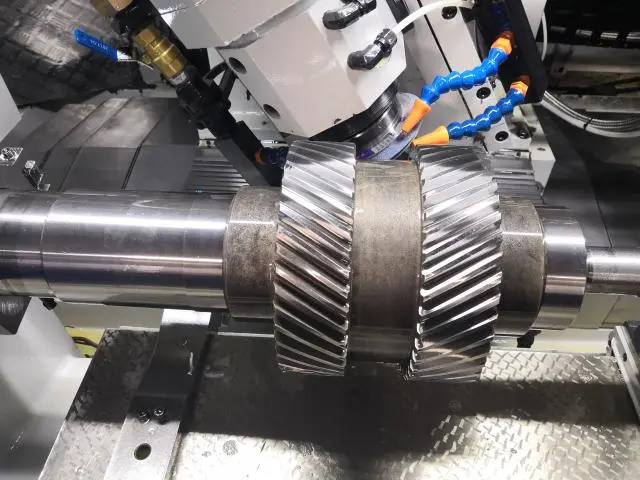
Understanding Transmission Gear Shafts: Key Concepts for Buyers
What Are Transmission Gear Shafts and Their Core Functions?
Transmission gear shafts provide high torque and rotational motion from a power source to machines powered by mated gears. These parts feature splines, keyways, or gear profiles machined into the shaft body, unlike spinning rods. This allows smooth drive train operation. The shaft eliminates torsional strain from turning loads, energy loss from axis misalignment, and high-speed vibration noise. In automobile gears, large industrial equipment, and precise robotics, these shafts carry the most strain. They slow down and boost torque while maintaining power delivery in severe situations.
Common Varieties: Splined, Solid, and Hollow Configurations
Different types of gear shafts are used for different tasks. Despite axial movement, splined shafts convey power. This makes them ideal for vehicle clutches, where gear changes move parts. Solid shafts are most torsional stiff and load-bearing. They are utilized in stationary mining equipment and industrial gearboxes to reduce shaft deflection. For airplane applications where weight reductions directly effect fuel efficiency, hollow shafts lower overall weight while maintaining strength ratios. Each design affects installation area, bearing arrangement, and maintenance ease. Buyers must ensure that the shaft geometry matches their machinery's design and operating envelope.
Material Selection: Steel Grades and Alloy Compositions
Material choice affects shaft performance and lifespan. SAE8620 and 20CrMnTi, low-carbon alloy steels, case-harden well, making surfaces wear-resistant and ductile cores that can withstand shock loads. Through-hardened medium-carbon steels like 42CrMo and AISI4140 are appropriate for smaller shafts under constant stresses. Nickel-chromium-molybdenum alloys like 40CrNiMo and 18CrNiMo7 have great wear strength and thermal stability, making them ideal for mine conveyors and naval power systems that operate beyond 120°C. Knowing these metal distinctions helps buyers pick materials that will withstand load cycles, weather, and maintenance.
Recognizing Wear Symptoms and Failure Modes
Finding the transmission gear shaft decline early on stops catastrophic breakdowns and unexpected downtime. Surface pitting shows up as small holes on the sides of gear teeth and is caused by repeated high contact stress that goes beyond the material's endurance limits or lubricant that isn't clean. Spalling looks like breaking off of material, which means that a stress crack is spreading below the surface. Too much runout during spinning can mean that the bearings are wearing out or the shaft is breaking, which makes the vibrations worse and speeds up the breakdown of the parts. Hearing whining or grinding sounds means that the tooth profile is damaged or the lubrication film is not thick enough. Colour changes caused by heat could mean that the system is overheating because of poor cooling or overloading. Procurement teams should set up regular inspection schedules that include ultrasonic testing to find internal voids and magnetic particle inspection to find surface cracks. This is especially important after long periods of high-load operation.
Key Factors in Choosing the Right Transmission Gear Shaft
OEM Versus Aftermarket Options: Quality and Compatibility Trade-offs
Factory-approved design compatibility and performance are guaranteed by OEM gearbox gear shafts. They normally have a complete guarantee and are based on original equipment designs. Confirmation testing ensures these parts fit, look well, and operate with other parts, reducing integration risks. Aftermarket choices offer cheaper pricing and shorter lead times than OEM solutions, particularly when OEM suppliers are busy. Quality varies greatly amongst replacement manufacturers. Premium producers employ the same materials and follow strict requirements, whereas budget manufacturers may scrimp on heat treatment depth or surface polish. Before substituting aftermarket parts in critical applications, procurement personnel should get material certifications, dimensional inspection reports, and case depth studies to ensure operational compliance.
Performance Parameters: Wear Resistance, Noise Levels, and Weight Considerations
Wear resistance depends on surface hardness and purity. Carbarizing shafts with a surface hardness of 58–62 HRC withstand abrasive wear and contact fatigue better than through-hardened ones. For longer life in filthy environments, vacuum-degassed steel types decrease non-metallic particles that cause fractures underneath the surface. Noise may come from tooth form variations, surface roughness, and dynamic incompatibilities. Using precision grinding to achieve ISO 6 Grade tolerances and Ra 0.4 µm surface polish significantly reduces gear mesh noise. When loaded, tooth crowning compensates for shaft deflection, maintaining the optimal contact patterns and reducing vibration. Machine weight impacts bearing loads, inertial resistance while speeding up, and efficiency. Hollow shafts provide moderate-load torsional strength but are 30–40% lighter than solid shafts.
Here are the core advantages that distinguish premium transmission components from standard alternatives:
- High transmission rigidity with zero connection backlash eliminates lost motion during load reversals, enhancing positioning accuracy in robotics and precision machinery while preventing impact stresses that accelerate gear tooth wear.
- Compact structure for reduced installation footprint allows integration into space-constrained assemblies common in mobile equipment and modular machine designs, reducing overall system weight and material costs.
- Low assembly and maintenance costs result from standardized mounting interfaces and accessible bearing arrangements that simplify installation procedures and enable routine inspection without extensive disassembly.
- High transmission efficiency with minimal power loss translates to reduced energy consumption, with properly designed gear shafts achieving 98–99% mechanical efficiency through optimized tooth geometry and surface treatments that minimize friction.
- Custom services accommodate unique application requirements, including non-standard dimensions, specialized materials, and integrated features such as mounting flanges or sensor targets, eliminating the need for secondary machining operations.
These advantages collectively address operational pain points across industrial sectors, delivering measurable improvements in equipment uptime, energy costs, and total cost of ownership throughout the component lifecycle.
Material Comparison: Steel Versus Alloy Performance Characteristics
Standard carbon steels like 45# steel provide adequate performance for light-duty applications with intermittent loading, offering cost advantages where operational demands remain moderate. Alloy steels containing chromium, nickel, and molybdenum deliver substantially enhanced mechanical properties. Chromium increases hardenability and corrosion resistance, enabling through-hardening in larger cross-sections and extending service life in moisture-exposed environments. Nickel improves core toughness and low-temperature impact strength, critical for equipment operating in outdoor or refrigerated conditions. Molybdenum refines grain structure and elevates temper resistance, preventing softening during high-temperature operation. Aerospace and mining applications typically specify nickel-chromium-molybdenum grades such as SAE4340 or 20CrNi2Mo, where fatigue strength, shock resistance, and environmental durability justify premium material costs. Understanding these performance distinctions enables procurement teams to optimize material selection based on quantified application demands rather than generic specifications.
Where to Buy Transmission Gear Shafts: Trusted Suppliers and Brands
Evaluating Leading Manufacturers and Industry Certifications
In the worldwide business-to-business precision Transmission Gear Shaft market, specialized manufacturers use modern manufacturing processes and quality management systems. Leading suppliers follow ISO 9001 quality standards, ISO 14001 environmental management standards, and industry-specific certifications like AS9100 for airplanes or API requirements for oil and gas equipment. Companies that acquire high-precision CNC gear machining centers, fully automated gear grinding machines, and intelligent heat treatment production lines maintain product dimensions and mechanical properties. Supplier skills may be assessed by facility audits, process capability studies with Cpk values over 1.67 for key metrics, and third-party material certifications that demonstrate chemical compliance and mechanical property accomplishment. Long-term partnerships with well-known mechanical engineering firms demonstrate reliability and technical expertise.
Criteria for Supplier Evaluation: Range, Delivery, and After-Sales Support
Product variety indicates manufacturing's flexibility and technicality. Suppliers with module ranges from 0.5 to 50, helix angles from 5° to 45°, and a variety of materials may suit many requirements without secondary sourcing. Delivery skills include capacity and reliability. Maintaining manufacturing equipment and people allows manufacturers to satisfy wait times and manage urgent orders and volume adjustments. Custom gearbox gear shafts require 35–60 days to produce, depending on complexity and speed. Premium providers offer fast technical assistance, warranty coverage, and well-documented corrective action methods. Buying professionals should evaluate suppliers based on their design assistance during specification development, real-time manufacturing updates, thorough inspection reports, and speedy nonconformance resolution.
Wholesale Suppliers, OEM Partnerships, and Custom Manufacturing Opportunities
Distributors sell common shaft designs, so typical replacement requirements may be fulfilled promptly without bespoke manufacturing lead times. This procedure is good for speedy part replacement in maintenance. Suppliers employ their technical expertise to determine the optimal gear shape, materials, and manufacturing techniques for performance and usability while working with OEMs on collaborative development. Custom made parts suit application demands that catalogue parts can't. Custom supplier handles everything from conveying requirements to producing design drawings to manufacturing, quality control, packing, and delivery. Negotiations should include the overall cost of ownership, including quality, delivery, professional assistance, and flexible payment arrangements, rather than simply unit pricing. Guaranteeing a particular quantity of a product may earn you better pricing, and flexible minimum order numbers make it easier to purchase specialist components in small quantities at cheap costs.
Procurement Best Practices: How to Buy Transmission Gear Shafts Efficiently
Defining Specifications Aligned with Machinery Requirements
Effective procurement begins with detailed specification development. Main parameters include shaft diameter and length, number of teeth and gear module, helix angle, keyway or spline dimensions, bearing journal sizes and tolerances, necessary surface hardness, and material grade. Gear design calculations utilize ISO 6336, quality classes use AGMA 2000, and involute tooth forms use DIN 3960. Consider how well two pieces fit while setting dimensional tolerances. For instance, bearing fittings need IT6 or IT7 precise grades on journal surfaces to ensure space and minimal interference. Materials should specify the steel, how it will be heated, and the circumstances for accurate hardness testing and metallurgical analysis. Records of torque loads, spinning speeds, task cycles, weather exposure, and expected service life let providers evaluate the design and offer reliability improvements.
Comparing Supplier Quotes: Total Cost of Ownership Analysis
The unit price is merely part of the transaction value. Total cost of ownership includes quality-related expenditures including inspection fees, repair or scrap owing to dimension non-conformances, guarantee claims, and downtime from parts breaking down early. Delivery logistics impact inventory costs and production schedule hazards. For instance, longer lead times necessitate more safety stock, and dependable delivery impacts production continuity. Working capital and project cost depend on payment conditions. Technical assistance helps engineers draft specifications and address issues. To compare suppliers fairly, procurement professionals should use weighted assessment models that incorporate pricing, quality history, delivery performance, technical expertise, and service responsiveness. Current customer references support the seller's claims concerning quality and issue resolution.
Quality Assurance Protocols and Maintenance Best Practices
Protocols for incoming checking of Transmission Gear Shaft keep output from getting parts that aren't up to par. Coordinate measurement equipment verify geometric tolerances, concentricity, and runout. Heat treatment works in certain places per hardness testing. Ultrasonic examination detects inside issues, whereas magnetic particle inspection reveals external fissures. Initial scratch testing indicates grinding burns that reduce surface hardness. Documentation review verifies material certifications against order specifications. Preventive maintenance lubrication keeps viscosity grades and impurities under control, extending gear shaft life. Vibration monitoring detects imbalances before they cause catastrophic failure. Inspection intervals based on operation hours or load cycles detect surface fatigue early. Installing fasteners with the proper torque and ensuring alignment prevents bearing failure and gear tooth damage. These quality assurance and maintenance techniques keep operations operating smoothly and maximize part value.
Why YIZHI MACHINERY Stands Out as Your Transmission Gear Shaft Supplier
As of 2016, YIZHI MACHINERY had a good name because it made custom gears and precise mechanical parts for the mining, aerospace, and industrial machinery industries. We are skilled in all stages of production, such as casting, cutting, hobbing, milling, and grinding. We use the world's most advanced and precise tools to do all of these tasks. Carburising, quenching and tempering, and induction hardening are all modern ways to treat metals with heat. From 45 to 50 HRC and 58 to 62 HRC, depending on the need of the application, these processes can make the surface hard. As long as you follow ISO quality standards, the measurements will always be accurate to ISO 6 Grade margins. There are many materials that can be used, from standard 45# steel to special alloys like SAE4340, 42CrMo, AISI4140, and 20CrNi2Mo, so they can all meet different performance needs.
There are some technical issues that come up with precision grinding, but we can solve them and offer full tailoring choices that can be scaled up to meet the needs of many businesses. The normal process includes talking about the needs, drawing up designs, making things, checking for quality, packing, and sending them out. Account management that is dedicated to the job helps the process go smoothly at all times. Low minimum order quantities make it possible to make samples and special uses, and single-item production is available for projects that need sets that are unique. Between 35 and 60 days for production lead times is a good range for making sure quality is high, and deliveries are on time.
Our service stands out because we use custom packaging with shock-absorbing cushioning liners and wooden pallets that keep damage to less than 0.1% during transport. This is done to protect the surfaces of precision gear parts that are most likely to get broken while being shipped. Using more than one type of transportation, like freight trains that run between China and Europe, sea freight, and air freight, together makes it possible to match capacity to order amounts and delivery dates. You can see the status of a shipment in real time from the time it is loaded at the factory until it is delivered to the customer. This improves the planning and execution of transportation and shipping tasks. As part of the engineering support before the sale, planning help and expert support are offered. Sending samples, keeping everyone up to date on progress, and doing thorough quality checks are all part of the services during the production phase. After the delivery, the promise includes a one-year guarantee with quick ways to fix any problems that come up. This makes sure that important things that use the gearbox keep working well.
Conclusion
Procuring high-quality transmission gear shafts demands careful evaluation of technical specifications, supplier capabilities, and total cost factors that extend beyond unit pricing. Understanding material properties, manufacturing processes, and performance parameters enables informed decision-making that aligns component characteristics with application demands across industrial machinery, mining equipment, and aerospace systems. Reliable suppliers demonstrate manufacturing excellence through precision equipment, quality certifications, and proven track records serving demanding industries. Effective procurement practices incorporating comprehensive specifications, rigorous quality assurance, and lifecycle maintenance planning protect operational continuity while optimizing equipment performance and longevity.
FAQ
1. What are typical lead times for customized transmission gear shafts?
Standard lead times range from 35 to 60 days, depending on design complexity, material availability, and production queue status. Simple modifications to existing designs require shorter cycles, while completely custom configurations involving unique gear profiles or specialized materials extend timelines. Suppliers maintaining adequate production capacity and material inventory can sometimes accommodate expedited schedules for urgent requirements, though rush orders may incur premium charges.
2. What warranty coverage should buyers expect?
Reputable manufacturers typically provide one-year warranty coverage against material defects and manufacturing non-conformances. Warranty terms should clearly define coverage scope, claim procedures, and remedies, including replacement, repair, or credit. Coverage generally excludes failures resulting from improper installation, inadequate lubrication, operation beyond rated capacity, or normal wear from extended service. Buyers should verify warranty terms during supplier evaluation and maintain proper documentation of operating conditions to support potential claims.
3. How can buyers verify product compatibility with existing machinery?
Compatibility verification requires a detailed dimensional comparison between replacement shafts and original components. Critical parameters include bearing journal diameters and lengths, keyway or spline dimensions, overall shaft length, gear specifications including module and tooth count, and mounting interface features. Requesting supplier review of assembly drawings or providing sample components enables engineering validation before production commitment. Dimensional inspection upon receipt confirms that manufactured parts match specifications and fit existing assemblies.
Get Started with YIZHI MACHINERY for Your Transmission Gear Shaft Needs
Procurement professionals seeking a dependable transmission gear shaft manufacturer benefit from YIZHI MACHINERY's 15 years of production expertise and commitment to precision engineering. Our comprehensive customization capabilities address unique application requirements across industrial machinery, mining, and aerospace sectors, supported by ISO-compliant quality systems and advanced manufacturing technology. Contact us at sales@yizmachinery.com to discuss your specific torque transmission requirements, material preferences, and delivery schedules. We provide complimentary design consultation, competitive quotations reflecting total value rather than just unit cost, and transparent production timelines. Whether your project requires prototype quantities or volume production, our flexible manufacturing approach and low minimum order policies accommodate diverse procurement scenarios.
References
1. American Gear Manufacturers Association. (2019). Gear Materials, Heat Treatment, and Processing Manual. AGMA Publication 2004-C08.
2. Budynas, R.G. & Nisbett, J.K. (2020). Shigley's Mechanical Engineering Design (11th ed.). McGraw-Hill Education.
3. International Organization for Standardization. (2019). Calculation of Load Capacity of Spur and Helical Gears – Part 1: Basic Principles, Introduction and General Influence Factors. ISO 6336-1:2019.
4. Kragelsky, I.V., Dobychin, M.N., & Kombalov, V.S. (2013). Friction and Wear: Calculation Methods. Elsevier Science & Technology.
5. Society of Automotive Engineers. (2018). Steel, Carburizing Grades (SAE J1249). SAE International Standards.
6. Townsend, D.P. (1991). Dudley's Gear Handbook: The Design, Manufacture, and Application of Gears (2nd ed.). McGraw-Hill Professional.

USER EVALUATE
Here is the customer's evaluation of us