


Where can I find high-quality industrial worm gear supplier online?
It has become very important for procurement professionals in the mining, aerospace, and industrial machinery sectors to find a reliable Industrial Worm Gear supplier online. The answer is to go after specialised B2B makers that have a track record of making precise gears, quality systems that are ISO-certified, and the ability to make a lot of changes to the product. Online platforms that show verified certificates, clear wait times, and expert support help show that a seller is trustworthy. Working with companies that offer traceable materials, modern heat treatment methods, and real-time order tracking will help you make sure that the worm gear you buy meets operating needs and reduces supply chain risks.
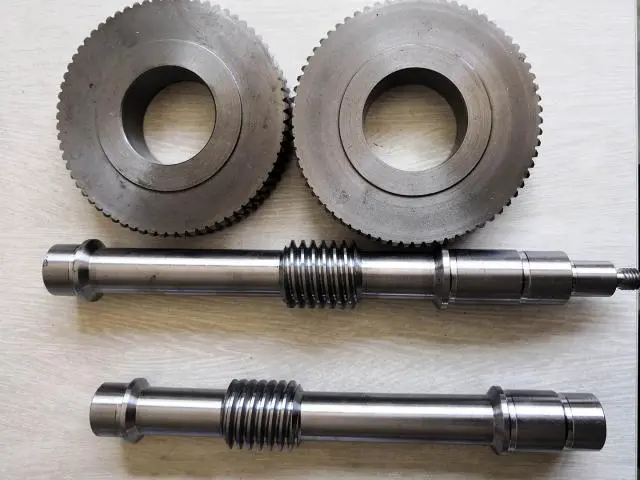
Understanding Industrial Worm Gears: Key Insights for B2B Procurement
When you're in charge of important power transfer systems, knowing about worm gear technology is the difference between successful projects and costly operating failures. These parts are very good at multiplying torque in situations where space is limited and load requirements are high.
What Makes Worm Gears Essential in Heavy-Duty Applications
An Industrial Worm Gear works by a screw-like worm engaging with a toothed wheel at a 90-degree angle. This makes huge speed reduction ratios from 5:1 to 100:1 while still taking up very little space. This arrangement of perpendicular shafts solves three important engineering problems: making the best use of space in small equipment layouts; absorbing shock loads in mining conveyors that deal with shifting rock loads; and stopping back-driving in lift systems where gravity loads need fail-safe holding capacity. The slide contact mechanism naturally reduces shaking more effectively than spur gears. This keeps motors upstream from being damaged by impact in crushing equipment.
Material Composition and Heat Treatment Standards
To handle the high moving speeds at mesh points, good worm gear sets need to carefully pair materials. Case-hardened alloy steels like 20CrMnTi, 42CrMo, or AISI4140 are often used for the worm shaft. These steels are heated and cooled to make the surface hard (58–62 HRC) while keeping the core tough. This two-layer structure stops pitting wear and absorbs shock loads. Most of the time, phosphor bronze or aluminium bronze alloys are used in the matching worm wheel to protect the more expensive worm shaft. Premium providers use advanced heat treatment methods, such as cooling and tempering or induction hardening, to keep distortion under control and increase wear resistance along the edges of the teeth.
Critical Performance Parameters and Precision Grades
When looking for worm gears, procurement teams should look at a number of technical specs. The module range (1–50) affects the size of the teeth and how much weight they can hold. The number of teeth has a direct effect on the reduction ratio and the smoothness. Precision grade certification to ISO 8-9 standards makes sure that the tooth profile is correct and that the pitch stays the same, which has a direct effect on noise levels and how well the machine works. Grinding is one way to finish the surface of something. This lowers the friction coefficients, which lets a hydrodynamic lubrication film form. This makes the product last longer than 10,000 operational hours in well-kept installations. The cylindrical worm gear profile type is the most flexible and can be used in a wide range of situations, from lift traction machines to automatic production line reducers, where noiseless gearbox is very important.
These technical foundations help procurement professionals match the skills and standards of suppliers with the real needs of the business. This way, they can avoid mismatches that cause products to fail early or not perform well enough in tough industrial settings.
How to Choose the Right Industrial Worm Gear Supplier Online
When you choose the right Industrial Worm Gear supplier, procurement goes from being a transactional activity to a strategic partnership that affects the uptime of your equipment and the total cost of ownership.
International Standards Compliance and Certification Verification
Manufacturers of reliable worm gears make sure to follow the rules set by AGMA 6034-B92 or DIN 3990, which control the accuracy of the tooth profile design and the surface finish requirements. ISO approval shows that quality management systems have been in place for a while, and material test records show how the alloy was made and what the results of the heat treatment were. When looking at online suppliers, make sure you ask for proof that the worm shafts have been tested for Rockwell hardness and that the tin and nickel content of the bronze wheel alloys has been analysed spectrographically to make sure they meet wear resistance standards. Suppliers with these qualifications clearly show the manufacturing discipline and quality assurance processes that are needed for mining and aircraft uses where a component failure can have very bad practical effects.
Customization Capabilities and Engineering Support
Worm gears that are already made don't always perfectly fit the needs of a specific machine design. Leading suppliers allow for full customisation, including choosing the right modules, making the most of the tooth count, and replacing materials based on things like harsh temperatures or corrosive environments. Being able to accept low minimum order numbers, even one-piece production, shows that the manufacturing system is flexible and the business model is focused on the customer. Having access to an expert during the pre-sales phase to look over design drawings and solve technical issues is very helpful, and it helps buying teams avoid making mistakes in the specifications that cause projects to be delayed. Suppliers who offer help with 3D modelling and finite element analysis for load testing show that they have advanced technical skills that go beyond basic manufacturing.
Delivery Reliability and Lead Time Management
Production plans have a direct effect on store prices and project schedules. Usually, making a good worm gear takes between 35 and 60 days, which includes getting the materials, precisely turning them through processes like cutting, hobbing, milling, and grinding, as well as heat treatment cycles and final checking procedures. When suppliers give clear updates on the progress of production, procurement teams can plan the next steps in assembly and keep track of just-in-time inventory strategies. Check to see if the makers offer a variety of shipping methods, such as sea freight, air freight, and expedited services, so that you can choose the fastest delivery choice based on how quickly you need the goods. Real-time tracking systems that send status updates from the time the factory loads the goods until they are delivered reduce stress and allow for proactive planning for what to do if changes need to be made to the schedule.
Warranty Policies and After-Sales Support
A full warranty that covers production flaws for at least one year shows that the seller is sure of the quality of the product and is willing to stand behind their work. How quickly expert help can fix problems is more important than how long the warranty lasts. Suppliers with specialised customer service teams that quickly solve problems, make new parts available, and offer troubleshooting advice make the buying relationship useful for a long time after the initial delivery. When equipment breaks down in remote mining operations or aerospace maintenance settings, this ongoing support is even more important because the costs go up and up.
Industrial Worm Gear vs. Other Gear Types: Making Informed Comparisons
When you know the trade-offs in performance between different Industrial Worm Gear systems and other gear types, you can make the best choice for your needs and budget.
Efficiency and Thermal Management Considerations
Worm gear systems have lower efficiency than helical and planetary gears due to sliding friction, with performance depending on lead angle and lubrication. Proper thermal management and synthetic PAG lubricants improve efficiency and durability. Despite energy losses, worm gears provide unmatched compactness and self-locking ability, reducing complexity in lifting and high-ratio applications.
Noise Levels and Vibration Characteristics
The constant moving contact in worm gear meshes makes a lot less noise than the rolling effect of spur gears. This makes them better for places that can't handle noise, like hospital lifts or high-precision packaging machines. Even though bevel gears work well for right-angle drives, they make more noise because the teeth engage and shock load the gear. Worm gear sliding action naturally absorbs shocks. This saves motors from sudden load spikes in conveyors that deal with unpredictable material flow, which lowers the frequency of upkeep on drive components upstream. While cycloidal gears offer smooth operation, they are much more expensive and can't be made to fit specific needs.
Load Capacity and Application Suitability
Worm gears work great when there is a lot of weight to move and the power needs to be sent through a small space. Worm wheel teeth have a lot of surface area, which helps spread forces evenly. This makes them strong enough to be used in mining conveyors and machine tool indexing mechanisms. The self-locking feature makes lifting equipment naturally safe by stopping load reversal when the power goes out. This is a major benefit over non-self-locking gear types that need extra fail-safe devices. When looking at different types of gear, you should choose the lead angle that best fits your needs. Lower lead angles (below 5 degrees) make sure that the gears can lock themselves, but they also make the system less efficient. Higher angles make the system more efficient, but they lose the ability to lock themselves.
Determining Optimal Gear Ratio for Your Application
The choice of gear ratio has a direct effect on the size of the motor, its speed, and how long the system lasts. Higher ratios multiply power more, but they slow down the output and make the machine less efficient. Figure out how much output torque is needed based on the load, then work backwards to figure out how fast the motor needs to go and how much power it needs. Worm gear sets with ratios between 10:1 and 60:1 work well in most industrial settings. If your supplier allows for a lot of customisation, they can find the best combinations of tooth count and modules to meet your exact performance goals. This way, you don't have to choose from a small number of standard configurations that might not work well or waste energy by being too specific.
Procurement and Supply Chain Considerations for Buying Industrial Worm Gears Online
Strategic sourcing for an Industrial Worm Gear is more than just choosing a product. It also includes making sure the supply chain is resilient and lowering costs all the way through the purchase process.
Identifying Reliable Online Platforms and Marketplaces
When compared to general industrial markets, specialised B2B gear providers with websites that show technical specs, material certifications, and production capabilities often offer better value. When you buy directly from the manufacturer, you avoid the markups that distributors add on top of the price, and you can still get engineering support and customisation services. When looking at online providers, make sure to check their business license information, the credentials of their production site, and customer references from businesses in the same industry. Platforms that show real pictures of CNC gear machining centers, automatic gear grinding machines, and intelligent heat treatment production lines show that manufacturing goes beyond dealing. Long-term partnerships between suppliers and well-known mechanical engineering companies show that the suppliers are reliable and skilled, as shown by repeat business.
Due Diligence and Supplier Authentication
To protect buying investments, suppliers must be carefully checked out before big orders are placed. Ask for material test papers that show the makeup of the alloy and the results of the heat treatment, making sure that the standards match the parameters that were given. Tooth contact pattern test results (blueing tests) that show 70%+ contact area show that the production process and assembly are correct. Reports from Coordinate Measuring Machines (CMMs) that check for lead error, profile error, and pitch error against ISO/AGMA classes are concrete proof of quality. Authorised sellers are happy to be checked out and keep records that make it easy to track their products. Be wary of sellers who won't give you certifications or who offer prices that are much lower than the market rate. This is usually a sign of low-quality materials or poor quality control that will affect the product's long-term dependability.
Market Price Trends and Budgeting Considerations
Worm gear pricing depends on materials, precision, customization, and processing requirements. Standard models are more affordable, while premium alloys and precision grinding increase costs. Custom solutions may require higher initial investment but improve performance and durability. Transparent suppliers provide detailed quotes covering materials, processing, inspection, and logistics for accurate value evaluation.
OEM vs. Aftermarket Components and Compatibility Assurance
When buying replacement parts, you have to choose between OEM parts that are guaranteed to work with the car and aftermarket parts that are cheaper. OEM providers keep exact size and material standards that match the original equipment. This lowers the risk of fitting and improves performance. When OEM suppliers have long lead times or stop making a product line, quality aftermarket manufacturers that offer custom production can copy OEM specifications from drawings or samples, giving customers a cost-effective alternative. When looking for replacements online, you should give full dimension information, such as the module's number of teeth, center distance, and shaft specifications. Suppliers with a good reputation check compatibility before production, which keeps costly mistakes from happening. Being able to make a single replacement gear without a minimum order requirement shows that the company is flexible in how it works, which is helpful in emergency breakdowns where the cost of equipment downtime is higher than the price of the part.
Building Trust: Why Partner with a Reputable Industrial Worm Gear Supplier
For long-term procurement success, partnerships with Industrial Worm Gear suppliers must be based on trust, professional know-how, and a shared dedication to operational quality.
Proven Track Record Through Case Studies and Client Feedback
A proven track record reflects supplier stability, experience, and problem-solving ability across industries. Long-term precision gear manufacturers understand demanding applications such as mining and aerospace through proper material selection, sealing, and quality control. Verified customer feedback provides reliable insights into supplier responsiveness, delivery performance, and real-world product reliability.
Certification Significance and Quality Assurance Benefits
ISO certification demonstrates structured quality management throughout production, including material tracking, process control, and accurate inspection systems. Compliance with standards like AGMA and DIN ensures proper gear geometry and surface quality. Precision grades such as ISO 8–9 reflect advanced manufacturing capability and strict controls for reliable, efficient, and smooth operation.
Comprehensive Customer Support and Technical Assistance
Comprehensive customer support covers engineering consultation, production updates, quality documentation, and after-sales assistance. Pre-sales guidance ensures proper specifications, while inspection records improve transparency. Warranty coverage and technical support help resolve installation, lubrication, and load issues. Shipment tracking enhances coordination, reduces uncertainty, and supports efficient equipment deployment after delivery.
Risk Mitigation Through Customized Packaging and Logistics Excellence
Gear tooth surfaces can be damaged by impacts while they are being moved, which could lead to stress concentrations that cause the gear to break before it should. Reliable providers use custom packing with shock-absorbing liners and wooden pallets that are made just for the job to protect sensitive surfaces while they are being handled and transported. Damage prevention systems that lower shipping damage rates to less than 0.1% show that business standards are focused on the customer and on the details. Using multiple modes of transportation, like sea freight to save money, air freight for quick delivery, and rail options for local delivery, lets you match the delivery speed to the needs of the order. Having real-time tracking visibility throughout the logistics chain makes it possible to handle exceptions proactively and gets rid of the frustrating uncertainty that comes with international procurement.
Conclusion
To find high-quality Industrial Worm Gears online, you have to weigh the scientific requirements against the supplier's skills, delivery reliability, and promises of long-term support. Understanding the material needs, precision standards, and performance parameters specific to the application lets you make smart choices that minimise costs up front and maximise long-term value. Partnering with well-known makers that can show they follow ISO standards, offer full customisation, and have a lot of experience in the field lowers buying risks and increases equipment reliability in difficult mining, aircraft, and industrial machinery uses. Relationships with suppliers are important because they help with more than just transactions. They also provide engineering support, quality testing, and quick problem-solving that keeps operations running smoothly for the life of the equipment.
FAQ
1.What lead times should I expect for custom worm gear orders?
Usually, making a high-quality custom Industrial Worm Gear takes between 35 and 60 days. This includes getting the materials, precisely machining them by cutting, hobbing, milling, and grinding, as well as heat treatment processes and thorough inspection procedures. Rush orders may be able to be processed more quickly, but this can change the price and should be planned for when the initial needs are discussed.
2.How do I determine appropriate material selection for my application?
The working environment and load factors affect the choice of material. Worms and wheels made of 45# steel work well in most situations. Premium metals, such as 20CrMnTi or 42CrMo, that strengthen to 58 to 62 HRC are good for situations with a lot of load or speed. In places where corrosion is a problem, you may need stainless steel or special coatings. Talk to the tech teams at your suppliers. They can help you find the best standards based on how you run your business.
3.Are custom worm gears more expensive than standard configurations?
Custom designs need engineering analysis and maybe even specialised tools, which drives up unit costs when only a few are being made. But optimised specs often make systems more efficient and extend their useful life enough to make the investment worth it by cutting down on energy and upkeep costs. Reliable sellers have low minimum order amounts, which means that even if you only need one piece, you can still get it customised.
Partner with YIZHI MACHINERY for Precision Worm Gear Solutions
YIZHI MACHINERY has been making custom Industrial Worm Gears for 15 years and supplies the mining, aircraft, and industrial machinery industries with well-designed gearbox parts. Our Industrial Worm Gears can be made from 20CrMnTi, 42CrMo, and AISI4140 materials, and they are treated with advanced heat treatment and precision grinding to meet ISO 8-9 standards. We offer full customisation, from figuring out what you need to planning, making, inspecting for quality, and shipping around the world, all while keeping you updated in real time. Our flexible manufacturing systems and expert support teams make sure that you get the best solutions that fit your exact needs, whether you need a single spare gear or a lot of them. Contact us by emailing sales@yizmachinery.com, or you can look through our full product catalogue at yizhimachinery.com to learn how working with a reliable Industrial Worm Gear supplier can improve the reliability and operational efficiency of your equipment.
References
1. American Gear Manufacturers Association. (2019). AGMA 6034-B92: Practice for Enclosed Cylindrical Wormgear Speed Reducers and Gearmotors. Alexandria: AGMA Publications.
2. Deutsches Institut für Normung. (2020). DIN 3990: Calculation of Load Capacity of Cylindrical Gears. Berlin: Beuth Verlag.
3. Budynas, R.G. & Nisbett, J.K. (2021). Shigley's Mechanical Engineering Design (11th ed.). New York: McGraw-Hill Education.
4. International Organization for Standardization. (2018). ISO 9001:2015 Quality Management Systems – Requirements. Geneva: ISO Central Secretariat.
5. Khurmi, R.S. & Gupta, J.K. (2020). A Textbook of Machine Design. New Delhi: S. Chand Publishing.
6. Norton, R.L. (2019). Machine Design: An Integrated Approach (6th ed.). Boston: Pearson Education.

USER EVALUATE
Here is the customer's evaluation of us