


Complete Guide to Worm Gear Reducer
If you need to send power from an industrial motor to a low-speed, high-torque motor, the Worm Gearbox Reducer is the right machine for you. It does this by using a special screw-threaded shaft (worm) and a toothed wheel to change the input speed and torque. Because it has a small footprint and can multiply torque very well, this right-angle configuration is essential for industrial machinery, mining operations, and aerospace applications that need to meet high performance standards but don't have a lot of room. Knowing about this important part helps engineers and buying workers make smart choices that have a direct effect on how well operations run and how long equipment lasts.
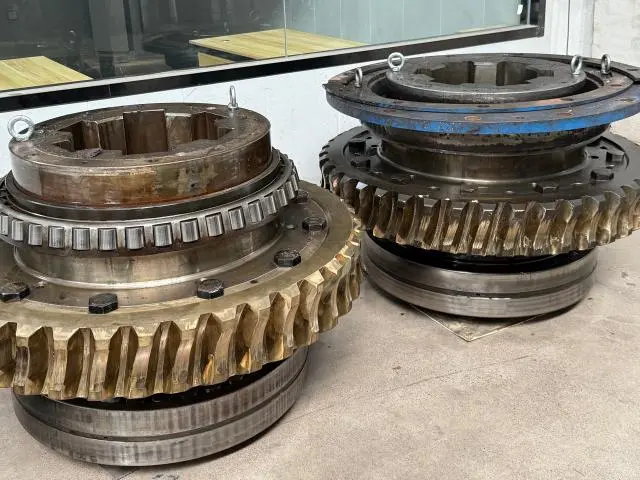
Understanding Worm Gearbox Reducers
Core Components and Mechanical Structure
There are two main parts that make up a Worm Gearbox Reducer, and they work together in sync. The worm, which is a threaded cylinder that looks like a screw, connects with the worm wheel at a right angle, making a 90-degree way for power to flow. It is different from parallel-shaft gears like helix or spur types because the shafts are not lined up in a straight line.
We at YIZHI MACHINERY make worm shafts out of high-quality alloy steels like 20CrMnTi, 40CrNiMo, and SAE4340. These steels are carburised and heated until the surface is 58 to 62 HRC hard. The worm wheel is usually made of high-quality materials that make it very resistant to wear even when it's moving against something all the time. This combination of materials keeps the structure's integrity under heavy loads while minimising friction losses.
Operating Principles and Torque Transmission
How the worm's spiral thread engages the wheel's teeth to make it turn is what makes this mechanism so clever. When the worm makes one turn, it moves the wheel forward by exactly one tooth. This makes high reduction ratios, which in single-stage setups are usually between 5:1 and 100:1. Because of this mechanical advantage, small units can make a lot of torque with only a small amount of power.
When two surfaces slide against each other, friction is created. This friction helps to reduce vibrations and make the process quieter than with rolling-contact gears. Engineers can better understand why worm reducers work so well in situations where they need to send power smoothly and with little noise in small installation spaces by understanding these principles.
Critical Design Factors Influencing Performance
Precision in manufacturing has a direct effect on how well and how long a gear works. To get ISO 8–9 grade accuracy, we use cutting, hobbing, milling, and precision grinding, among other advanced processing methods. Tooth surface cleaning is carefully checked to make sure the right contact patterns are used, with the goal of having over 60% center contact area for even load distribution.
The choice of module (from 1 to 50 in our customisation options) affects both the torque capacity and the smoothness of operation. Bigger units can hold more weight, but they might not be as small. The shape of the lead angle affects how self-locking it is and how well it works mechanically. This creates trade-offs that experienced engineers must carefully weigh against the needs of the application.
Applications and Advantages of Worm Gearbox Reducers
Industrial Deployment Across Multiple Sectors
Worm Gearbox Reducers are very useful in a wide range of industrial settings. They power conveyor lines that move mining ore, car parts, and packed goods in material handling systems. The right-angle shape lets motors be mounted parallel to conveyor lines, which saves important floor room in factories that are already full.
These reducers make sure that lift traction machines can move vertically in a safe and controlled way. The self-locking feature, which depends on the geometry of the lead angle, acts as passive brakes to stop the load from falling without being meant. Machine tool indexing mechanisms use their accurate pointing skills, and automatic production line reducers use their small size to work well in manufacturing cells that are very close together.
In mining, equipment has to deal with harsh conditions like abrasive dust, changes in temperature, and shock loads. Worm reducers that are properly specified can handle these problems because they are built to last and have the right sealing solutions. Aerospace ground support equipment needs to be reliable and use room efficiently. Worm gear technology is perfect for both of these needs.
Key Advantages That Drive Buyer Decisions
Figuring out what makes this technology so appealing helps to support decisions to invest. Here are the main benefits that make worm reducers stand out in competitive buying situations:
- High Transmission Ratio with Compact Structure: To get a 60:1 reduction in a single stage, you would need multiple helical gearbox stages, which would make it much bigger and more complicated. The worm configuration can do this with a footprint that is often 40–50% smaller than other designs. This makes it perfect for setups with limited room.
- Self-Locking Capability: Reverse driving is stopped automatically when the lead angle stays below about 5 degrees. In vertical lift uses, this built-in feature offers fail-safe holding without the need for external brake mechanisms. This makes the system simpler and easier to maintain.
- Smooth Transmission with Minimal Noise: The constant sliding contact loads the teeth gradually instead of impacting them like spur gears do. Noise levels are usually 10 to 15 decibels lower than with similar spur gear systems. This is helpful in noisy places like factories or neighbourhoods.
- High Load Capacity and Reliable Operation: We use high-tech heat treatment methods, such as cooling and tempering, on materials like AISI4140 and 42CrMo when we make our products. This engineering foundation makes it possible for strong load-bearing capabilities that are better than many other types of reducers of the same size.
These advantages collectively solve critical industrial challenges—from optimizing facility layouts to enhancing operator comfort through noise reduction—making worm reducers a practical choice for discerning procurement professionals.
Comparative Analysis with Alternative Gearbox Types
Comparing worm reducers to helical and planetary options makes it clear where they work best. Helical gearboxes are more mechanically efficient (usually 92–98%) than worm gearboxes (50–90%), but they can't reach the same reduction ratios in a single stage. Planetary gearboxes have a high power density, but they are expensive and don't have a self-locking feature built in.
Worm reducers work great when small size, right-angle gearbox, self-locking security or low cost are more important than maximum efficiency. When engineering teams understand these trade-offs, they can choose the right technology that fits business needs instead of focusing on theoretical performance measures that don't work in the real world.
Types and Specifications of Worm Gearbox Reducers
Configuration Categories and Design Variants
The most popular type is a single-stage Worm Gearbox Reducer, which comes in small housings and offers ratios from 5:1 to 100:1. When uses need ratios higher than 100:1, multi-stage designs mix worm reduction with helical or spur stages, weighing the need for ratios against the need for economy.
In right-angle models, the input and output shafts are at right angles to each other, which is the standard worm arrangement. Specialised inline versions have extra gearing to line up the input and output axes when the installation geometry needs shafts to be parallel. Custom attachment choices, such as foot-mounted, flange-mounted, and shaft-mounted options, can be used to meet the needs of a wide range of industrial tools, lifting equipment, and automatic systems.
Essential Performance Metrics for Procurement Decisions
To choose the right specifications, you need to know about the important performance parameters and how they affect operations:
The amount of torque it can hold relies on the material used, how well it was heated, and its shape. Our worm reducers are made from 45# steel, 20CrNiMo, and AISI8620. The surface hardness of these metals reaches 58–62 HRC, which means they can handle heavy loads well in tough situations. Speed ratios must meet the needs of the driven equipment. For example, conveyors usually need 20:1 to 40:1, while mixers may need 60:1 or more for the right stirring speeds.
The decrease ratio has an opposite effect on mechanical economy. A 10:1 reducer might work at 85–90% of its potential, but an 80:1 design might only work at 50–60% because of more slide friction. Because of this feature, careful thermal management and choosing the right lubricant are needed to get rid of the heat that is generated.
Noise Levels and Operational Lifespan Considerations
In many workplace settings, how well the noise is absorbed is important. Worm gear reducers are naturally quieter than spur gear reducers. Depending on size, load, and speed, noise levels can be anywhere from 60 to 75 dB. Precision production, which we do by grinding to very close tolerances, reduces the number of mesh flaws that make noise that isn't wanted.
The expected lifespan depends on a number of things, such as the quality of the lubrication, the operating temperature, the consistency of the load, and how well the maintenance is done. When used for moderate duty, well-maintained units usually last between 50,000 and 100,000 hours. Because we can customise, you can ask for better materials or different bearing setups for heavy-duty situations that need longer service intervals.
How to Choose the Best Worm Gearbox Reducer for Your Industrial Needs
Evaluating Technical Specifications for Application Fit
A thorough study of the needs is the first step in selecting the right Worm Gearbox Reducer. Find the needed output torque by figuring out the resistance of the driven equipment, such as the weight of a lift load, the friction of a conveyor belt, or the viscosity drag of a mixer. Include safety factors (usually 1.5 to 2.0) to account for the starting loads and odd overloads that happen in real life.
The needed reduction ratio is based on the input speed and the output speed that is wanted. Check that the potential reducers can handle the speed of your motor (usually between 1400 and 1800 RPM) and still deliver the desired output speed. The mounting arrangement needs to fit the room available for placement. Foot mounting is stable for stationary uses, while flange mounting makes it easier to connect equipment directly.
Environmental factors have a big impact on design choices. When the temperature outside is high, synthetic lubricants that are better at withstanding heat are needed. In dusty mine areas, double-lip designs are better for sealing. Because of the moisture, building materials and protective coats need to be corrosion-resistant. During the customisation process, our engineering team looks at these factors to make sure that the best configuration is used for each working situation.
Comparative Insights: Worm Versus Alternative Reducer Technologies
Smart buying decisions are based on knowing when worm reducers are the best option compared to other options. Planetary gears work best in high-efficiency, high-cycle situations, where their high efficiency of 95–97% makes up for their higher prices. Their small, coaxial form works well with robotic joints and servo-driven systems, but it doesn't have the self-locking security that is useful for pulling tasks.
Cycloidal reducers are great for precise positioning because they can handle high shock loads and have no backlash. Because they are more complicated and cost more, they are not general-purpose options. When the shafts are parallel, spur gearboxes are a simple and effective way to transfer power. However, when the shafts are at an angle, worm reducers are more compact.
Worm gear technology works great for projects that need a right-angle setup, to save space, to make things safer by self-locking, or to multiply force cheaply. Long-term results are better when technology powers are matched to application goals instead of trying to achieve maximum theoretical efficiency.
Supplier Selection Criteria and Partnership Evaluation
Selecting the right manufacturing partner affects product quality, delivery reliability, and total ownership costs. Standard suppliers provide proven products and support, while specialised manufacturers offer greater flexibility. YIZHI MACHINERY provides full customisation, low minimum orders, ISO 8–9 precision capability, 35–60 day lead times, and multi-channel logistics for reliable global supply.
Maintenance, Troubleshooting, and Best Practices
Essential Maintenance Protocols for Longevity
Using structured maintenance programs to keep Worm Gearbox Reducers in good shape extends their useful life and stops expensive unplanned downtime. Keeping track of lubrication is the most important part of upkeep. After 500 hours of use, the oil should be changed for the first time to get rid of break-in waste. After that, it should be changed every 2,500 hours for mineral oils or as directed for synthetic formulas.
As part of routine inspections, the operating temperature is checked. Too much heat can mean that the lubrication is wearing out or the system is overloaded. Once a month, check for oil leaks around seals and gaskets. Fixing small leaks stops seal damage and grease loss from getting worse. Listen for strange noise patterns that could mean that the bearings are wearing out or that the teeth are damaged and need to be looked into before something terrible happens.
Using portable analysers to track vibrations can find problems like bearing wear, irregular gear mesh, or mounting that is coming loose. Setting up standard data during commissioning lets you compare results and see patterns of performance degradation. Our one-year guarantee and quick response support help customers quickly fix problems that happen even after precautions have been taken.
Common Operational Issues and Troubleshooting Guidance
Recognising symptoms and identifying root causes helps solve gearbox problems quickly. Grinding, clicking, overheating, and abnormal wear may indicate lubrication issues, damage, misalignment, or contamination. Vibration monitoring and thermal analysis detect early failures, such as bearing wear or gear mesh problems, preventing further damage and improving maintenance efficiency through timely corrective actions.
Procurement Strategies for Bulk Industrial Buyers
Strategic procurement helps industrial buyers reduce costs and secure supply through demand consolidation, flexible ordering, and coordinated production planning. Realistic lead times and early engineering involvement improve project scheduling. Considering total landed costs, protective packaging, and real-time shipment tracking enhances supply chain visibility, reduces risks, and delivers value beyond basic product supply.
Conclusion
Worm Gearbox Reducers are indispensable in industrial machinery, mining operations, and aerospace applications due to their special combination of a small right-angle configuration, high torque multiplication, and built-in self-locking features. To apply something successfully, you need to know how it works, make sure that the requirements match the needs of the application, and choose manufacturing partners that can provide both high-quality goods and full support services. The technologies and methods explained in this guide give procurement professionals and engineers the information they need to make smart choices that improve operating efficiency and keep the total cost of ownership low over the lifecycles of equipment.
FAQ
1.What is the typical lifespan of a worm gearbox reducer in heavy industrial use?
The way it's used, maintained, and the original specs affect its lifespan. Worm Gearbox Reducers may survive 50,000–100,000 hours of moderate-duty operation if properly selected and maintained. Heavy-duty mining or continuous-process usage may replace parts or overhaul the device quicker. Using the correct lubricant, preventing long-term overloads, maintaining operating temperatures below 90°C, and scheduling frequent inspections helps increase service life. Complexly heat-treated 20CrMnTi and 40CrNiMo are used in our production. They may sustain longevity throughout their useful life with this foundation.
2.Can worm gearbox reducers be customized for specific industrial requirements?
YIZHI MACHINERY is skilled at customising items since conventional goods don't always fit each application. Our technical team varies the number of teeth, module range (1–50), mounting configurations, shaft arrangement, and materials to satisfy performance objectives. Dusty areas get improved seals, wet settings get non-rusting coatings, and high-temperature processes get thermal management. Customisation includes requirements communication, design drawings, cutting and grinding procedures, quality testing, and bespoke packaging. This all-around approach has helped embrace a variety of industrial tools, hoisting equipment, and automated production systems when ready-made solutions fail.
3. What factors should be considered when selecting a Worm Gearbox Reducer for industrial applications?
Engineers should consider output torque, reduction ratio, motor speed, mounting configuration, and operating environment when choosing a Worm Gearbox Reducer. Reducers should meet driven equipment load requirements including conveyor resistance, lifting loads, and mixer viscosity forces while considering beginning and overload safety parameters. High temperatures, dust, and moisture affect the choice of lubrication, sealing solutions, and corrosion-resistant materials for long-term performance.
Partner with YIZHI MACHINERY for Your Worm Gearbox Reducer Needs
For industrial processes to run smoothly, they need power transmission systems that are reliable and backed by technical knowledge and quick support. YIZHI MACHINERY has been making products for 15 years and can customise them in any way you want. They make Worm Gearbox Reducers for sale from high-quality materials like SAE4340 and AISI4140 by using complex techniques like hobbing, grinding, and heat treatment. Our precision grade, which is ISO-compliant, guarantees reliable performance in mining, aerospace, and industry gear. We can work on projects ranging from single prototypes to mass production, and we can deliver within 35 to 60 days. We also have logistics solutions that make sure transport damage rates are less than 0.1%. Contact us at sales@yizmachinery.com to talk about your particular needs. Whether you're looking for a reliable manufacturer to work with on an ongoing basis or for custom solutions to solve specific operational problems, our technical support, competitive pricing, and technical consultations will help you throughout the lifecycle of your equipment.
References
1. American Gear Manufacturers Association. (2019). AGMA 6034-B92: Practice for Enclosed Cylindrical Wormgear Speed Reducers and Gearmotors. Alexandria, VA: AGMA Publications.
2. Deutsches Institut für Normung. (2016). DIN 3996: Calculation of Load Capacity of Cylindrical Worm Gear Pairs with Rectangular Crossing Axes. Berlin: Beuth Verlag.
3. Budynas, R. G., & Nisbett, J. K. (2020). Shigley's Mechanical Engineering Design (11th ed.). New York: McGraw-Hill Education.
4. International Organization for Standardization. (2013). ISO 1328-1: Cylindrical Gears – ISO System of Flank Tolerance Classification. Geneva: ISO Central Secretariat.
5. Drago, R. J. (2018). Fundamentals of Gear Design. Warrendale, PA: SAE International.
6. Townsend, D. P. (1992). Dudley's Gear Handbook: The Design, Manufacture, and Application of Gears (2nd ed.). New York: McGraw-Hill Professional.

USER EVALUATE
Here is the customer's evaluation of us