


What Is a Large Spur Gear? Key Features and Applications?
Large Spur Gears are heavy-duty transmission parts with straight, parallel teeth. Industrial ones are over 500 mm wide and several meters long. These durable parts can handle high loads at low to medium speeds in harsh industrial environments, unlike gearing. They solve industry problems by eliminating axial thrust loads and transferring massive torque at 98% efficiency. This simplifies bearing configurations and housing complexity, making them essential in mining, aircraft, and large industrial machines that must be reliable in harsh conditions.
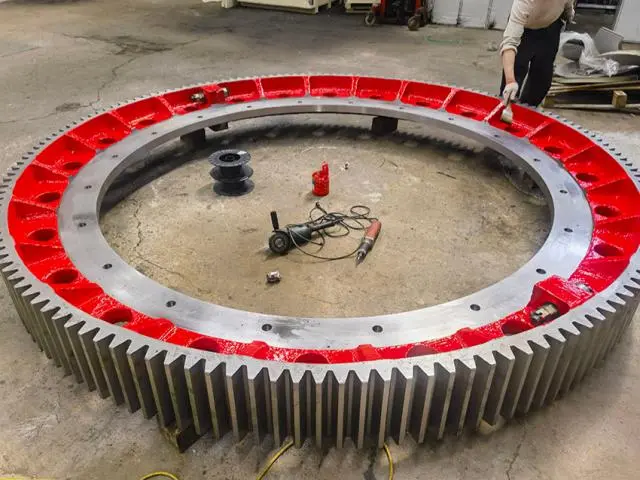
Understanding Large Spur Gears
Large Spur Gears are the building blocks of parallel shaft power transfer systems used in many heavy businesses. Their unique feature—straight teeth that are mounted parallel to the gear axis—allows them to handle much heavier loads than their smaller peers while still performing reliably under high operating stress.
Working Principles and Load Transmission Dynamics
Heavy-duty gears' teeth mesh and force distribution determine their physics. Tooth contact between driving and driven gears transfers rotational force. Straight teeth maintain face width contact, spreading loads evenly and increasing load-bearing capacity. Low rolling friction from direct contact boosts transmission efficiency to over 98% in well-maintained systems. This efficiency reduces energy use and equipment operating costs over time, which engineers like.
Design Considerations for Heavy-Duty Applications
Industrial gearmaking requires careful consideration of many factors. The gear's strength and load capacity depend on module size—pitch width to tooth count. The thicker teeth of larger modules allow them to transmit more force without breaking. Right pitch width affects gear ratio and system performance. Edge loading from heavy misalignments is prevented by tip relief and crowning. At YIZHI MACHINERY, we optimise these parameters using advanced CAD modelling and finite element analysis to ensure each custom gear meets your application's needs and lasts.
Material Requirements and Structural Integrity
Material affects heavy-duty transmission part stability. High-quality alloy steels like 18CrNiMo7, 42CrMo, AISI 4140, and SAE 4340 make gears. These materials can withstand contact stresses and bending wear due to their surface and inner toughness. Selecting factors include load size, working speed, climate, and service life. Our plant carefully checks new materials for chemical composition and mechanical standards before using them in industrial processes.
Key Features and Benefits of Large Spur Gears
Some advantages of these parts include high load-bearing capacity. Full-face tooth contact with large Spur Gears spreads forces across tooth width. Compared to point or line contact gears, they carry more load. Single-stage reduction ratios use this structural advantage while remaining small. Mechanical efficiency of 98–99% per mesh reduces energy loss during transfer, lowering running costs. Through fuel or electricity savings, this efficiency difference can save a lot of energy and reduce environmental damage in continuous mining.
High Load Capacity and Mechanical Efficiency
Some advantages of these parts include high load-bearing capacity. Straight teeth' full-face contact distributes forces across the tooth width. Compared to point or line contact gears, they carry more load. Single-stage reduction ratios use this structural advantage while remaining small. Mechanical efficiency of 98–99% per mesh reduces energy loss during transfer, lowering running costs. Through fuel or electricity savings, this efficiency difference can save a lot of energy and reduce environmental damage in continuous mining.
Simplified Design and Cost-Effective Maintenance
Straight-tooth gears are simple but long-lasting. These parts use fewer tools than helical or bevel. This cuts costs without sacrificing quality. Maintenance teams like these designs' accessibility. A quick visual inspection can reveal wear, tooth damage, and lubricant issues. No helix angles simplify adjustment, speeding replacement or repair. Designing products for easy maintenance. Their well-ground tooth surfaces and even stress distribution reduce maintenance and ownership costs.
Advanced Heat Treatment for Extended Lifespan
Surface cleaning greatly impacts gear performance and durability. Diffusion of surface carbon during carburizing makes the case tough and wear-resistant and the core flexible to handle shock loads. Quenched and tempered steel after carburization achieves 58–62 HRC surface hardness and core toughness. Limitation of hardening with little damage makes induction hardening viable. Heating metals with computer-controlled ovens that monitor the atmosphere. This maintains case hardness and depth. This accuracy predicts service life and reduces process failures.
Material Selection and Performance Characteristics
Long-term success depends on material selection. These material factors affect gear behavior in different settings: Carbon steels like 45# are cost-effective for moderate-load applications in benign conditions. These materials benefit from heat treatment and machining. For higher-stress applications, alloy steels like 20CrMnTi and 40CrNiMo have better hardenability and core strength. SAE 4340 and AISI 4140's fatigue resistance and consistency benefit aerospace and high-reliability applications. For marine and chemical processing applications, corrosion-resistant alloys or protective coatings extend service life without compromising mechanical performance. Use these materials to match performance to application and budget. Customers and our experts recommend materials based on real-world working conditions, not industry standards during design.
Applications of Large Spur Gears in Industry
Because these mechanical parts are so flexible, they are used in a wide range of industries to support important processes. Knowing the specific needs of an application helps engineers choose the right Large Spur Gear configurations that improve both speed and stability.
Mining and Material Processing Operations
Mechanical parts struggle most in mines. Girth gears in ball mills turn rock-breaking grinding drums several meters in diameter. These huge parts must withstand dust, shaking, and high temperatures without breaking teeth or wearing out faster. Strong tooth shapes and deeply case-hardened surfaces make mining-grade gears durable. Extreme impact loads make rock fracture crusher drives difficult. Our engineers shape teeth with larger root border radii and better load distribution to prevent high-impact early failure modes.
Aerospace Ground Support and Manufacturing Equipment
Aerospace requires precision and dependability. Tow trucks, hydraulic test stands, and assembly platforms hold parts within microns with precision gearing. Composite layup, drilling, and finishing tools must be precise over millions of rounds. We profile grind and test our gears to ISO 5-6 precision standards for size accuracy and surface finish. The paperwork package includes material tracking, dimensional inspection records, and heat treatment parameter approval. Aircraft manufacturers' strict quality standards are met.
Industrial Machinery and Power Transmission Systems
These parts are used in industrial gears, speed reducers, and direct-drive systems. Warehouse conveyor drives, chemical processing mixing drives, and metal forming press main drives all need torque transfer. Because straight-tooth designs are flexible, engineers can build small boxes with multi-stage reduction systems with desired speed ratios. These gears' shock-load resistance benefits moving systems. Starting and stopping processes while loaded damages less durable parts with stress spikes. The versatility of this basic gear shape is shown by our unique gear solutions for 50 mm precision instrument drives and 3 meter diameter kiln drives.
Real-World Performance and ROI Examples
Due to better materials and tooth geometry, our custom-engineered gears outlasted imported gears by 40% for a Nevada mining company. Longer replacement periods reduced maintenance costs and increased tool availability, paying for themselves in eight months. An aerospace company used our precision-ground gears for all assembly tools. This increased production and reduced placement errors by 60%. These findings show that well-designed gears affect business performance.
Comparing Large Spur Gears With Other Gear Types
Understanding the pros and cons of different tooth shapes is important for choosing the best gear design. Each type of gear has its own perks that make it better for certain tasks and situations of use. Large Spur Gears are the best choice for situations where simplicity, speed, and cost-effectiveness are more important than noise.
Spur Gears Versus Helical Gears
Helical gears are quieter and smoother than straight gears because their teeth connect slowly. Slow contact reduces vibration and noise in sealed gears with helical designs. The system is more expensive and difficult to use because the slanted teeth generate axial thrust forces that require thrust bearings and stronger housings. Straight teeth eliminate thrust loads, simplifying bearing selection and reducing loads. Energy savings from small efficiency improvements can be significant in high-power situations. Spur shapes reduce friction, making them more efficient. Speed, simplicity, and cost outweigh noise with straight-tooth gears.
Comparison With Bevel and Worm Gears
Bevel gears transfer power between right-angle shafts. Bevel gears can be useful in planning, but they can't handle as much weight and must be aligned more precisely than parallel-shaft setups. Worm gears have high reduction ratios in small packages but are 50–70% less efficient due to rolling friction. Worm gears are useful for some things but not for backwards driving or energy conservation because they self-lock. Straight-tooth configurations always outperform these for parallel-shaft efficiency and load capacity. We help our customers choose configurations that balance efficiency and realistic constraints during planning.
Precision Grades and Application Suitability
Precision classification impacts gear cost and performance. ISO 5-6 gears have very tight tooth shape, pitch, and runout. It smooths and prolongs precision and high-speed operations. Profile grinding and extensive testing increase production costs for these parts. ISO 8–9 gears work well in moderate-speed, high-load situations where accuracy is not important. While maintaining quality, wider tolerances simplify and lower production costs. We manufacture in this accuracy range so customers can choose the right quality level without over-specifying and wasting money.
Maintenance, Failure Causes, and Procurement Insights
To get the most out of your tools and keep your total cost of ownership as low as possible, you need to pay attention to both good repair habits and smart buying decisions. Both operational and buying plans are based on knowing the most common types of failure and how to stop them.
Routine Inspection and Preventive Maintenance
Maintenance programs should include regular inspections to catch problems before they become costly. Broken teeth, excessive wear, and contaminated lubricant are obvious. Vibration analysis can show tooth wear or bearing degradation. Temperature tracking detects grease or overloads. Lubrication is essential. Too little lubricant film thickness accelerates wear, while too much causes grinding losses and higher temperatures. Every gear shipment includes detailed maintenance instructions, including check times, lubrication types and amounts, and working conditions. This guide helps maintenance teams prolong equipment life.
Common Failure Modes and Root Causes
Know why gears break helps design and operation. Lack of grease, contamination, or uneven load distribution wear teeth. Pitting, small craters caused by contact fatigue, occurs when surface pressures exceed material durability. It usually indicates material or gear size issues. Too much stress, shock, or a stress-concentrating material flaw breaks teeth. Misaligned gears reduce load capacity and accelerate wear while edge loading. These failures are reduced by optimized tooth profiles, large root fillets, and material inspection before cutting.
Procurement Considerations and Supplier Selection
You must look beyond price when choosing gear providers. Chemical and mechanical properties are correct due to material quality and approval paperwork. Manufacturing skills like heat treating, grinding, and checking determine quality. Merchants can customize patterns for specific uses instead of forcing customers to choose from catalog items. Lead time reliability and production capacity determine sellers' ability to meet project deadlines and change orders. YIZHI MACHINERY communicates during purchase. Our production, quality inspection, and shipping updates allow customers to track their orders from design approval to delivery.
Quality Standards and Certification Requirements
Reliable providers follow international quality standards like ISO 9001 quality management systems and industry-specific standards like AGMA 2001-D04 for figuring out power ratings and ISO 6336 for making sure loads can be handled. Material approvals show what chemicals are in something and how strong it is by testing it by a third party. Using calibrated measuring tools that can be traced back to national standards, dimension inspection records make sure that the drawing specs are followed. The paperwork for the heat treatment shows that the methods used to reach the desired case depth and hardness profiles. We include complete paperwork packages with every shipment to meet our customers' quality assurance needs and make it possible to track goods all the way through the supply chain. In businesses with strict rules, like aircraft, where proof of compliance is needed, this paperwork is especially useful.
Conclusion
In industrial settings, picking the right power transfer parts has a direct effect on how reliable the system is, how much energy it uses, and the total cost of ownership. The Large Spur Gear design has strong benefits in terms of load capacity, mechanical efficiency, and ease of upkeep. These benefits make it the best choice for heavy-duty uses in mining, aircraft, and industrial machinery. When engineers and procurement workers know how material choice, heat treatment methods, precision grades, and application needs are connected, they can choose the best designs that meet performance needs and stay within budget. Working with seasoned manufacturers that offer full customization options, strict quality control, and quick technical support will make sure that the parts you get for your equipment are custom-designed for how it works, instead of generic off-the-shelf options.
FAQ
1. What factors should I consider when choosing a large spur gear for heavy machinery?
Choosing gears for large machinery involves several interrelated factors. The magnitude, shock components, and duty cycle of load factors determine tooth strength and material quality. Operating speed impacts tooth forces and grade. High temperatures, pollution, and corrosive atmospheres affect material and coating specs. Diameters and sections may be limited by space. Budget concerns balance initial cost with service life and maintenance. Our engineering team uses their years of experience with different applications to recommend setups that work best in certain situations instead of using general industry standards that may not meet specific needs.
2. How does material selection affect the performance of large spur gears?
Material choice impacts gear performance in many ways. Tensile, yield, and hardness indicate weight capacity and deformation resistance. Heat depth depends on case hardenability, which affects contact wear resistance. Under mine and material handling shock loads, toughness and impact resistance prevent brittle fractures. Naval, chemical processing, and outdoor environments with high wear and tear require corrosion protection. Luxury materials are chosen for cost and use. Aerospace-grade metals waste resources and perform poorly in moderate-duty tasks. We keep extensive material property and application records to select the best materials for real-world performance.
3. Can large spur gears be customized to fit unique industrial applications?
Professional gear makers customize, unlike catalog sellers. We start engineering by discussing working parameters, room constraints, interface specs, and performance goals. Design teams create CAD models and production plans with customer-specific part mounting, shaft connection, and weight distribution. Modular tooling and low setup costs allow manufacturing freedom for one or many samples. We've fixed tight-tolerance aircraft tooling gears and four-meter mining girth gears. This adaptability ensures customers get parts that meet their needs rather than putting standard stock items in inappropriate situations that could hurt performance.
Partner With YIZHI MACHINERY for Your Large Spur Gear Solutions
YIZHI MACHINERY is ready to help you with your power transfer needs. With 15 years of specialized experience, they have a lot of technical knowledge and manufacturing skills. As a reputable Large Spur Gear supplier, we offer custom solutions that are perfectly matched to your needs in mining, aircraft, and industrial machines. Our strict checking procedures, modern production tools like precision CNC gear machining centers and automated grinding systems, and quality systems that are in line with ISO standards make sure that every part meets the highest standards. We have competitive production times (35–60 days), flexible order numbers (including production of a single piece), and full transportation support, including tracking in real time and packaging that keeps items from getting damaged. Our technical team offers full design help, reports on the progress of production, and quick, helpful after-sales service, all backed by a one-year guarantee. Contact our experts at sales@yizmachinery.com right away to talk about your unique needs and find out how our custom gear solutions can make your equipment more reliable while lowering the total cost of ownership.
References
1. Dudley, D.W. (1994). Handbook of Practical Gear Design and Manufacture. CRC Press, Boca Raton, Florida.
2. American Gear Manufacturers Association (2004). AGMA 2001-D04: Fundamental Rating Factors and Calculation Methods for Involute Spur and Helical Gear Teeth. Alexandria, Virginia.
3. International Organization for Standardization (2006). ISO 6336: Calculation of Load Capacity of Spur and Helical Gears. Geneva, Switzerland.
4. Radzevich, S.P. (2012). Dudley's Handbook of Practical Gear Design and Manufacture, 2nd Edition. CRC Press, Boca Raton, Florida.
5. Townsend, D.P. (1991). Dudley's Gear Handbook: The Design, Manufacture, and Application of Gears, 2nd Edition. McGraw-Hill Professional, New York.
6. Maitra, G.M. (2013). Handbook of Gear Design, 2nd Edition. Tata McGraw-Hill Education, New Delhi, India.

USER EVALUATE
Here is the customer's evaluation of us