


What Is Spur Planetary Gear? Structure and Working Principle?
A Spur Planetary Gear is a special kind of epicyclic gear system with straight-cut teeth that run parallel to the gear's axis of motion. There are three main parts to this configuration: a sun gear in the middle, several planet gears placed on a frame, and an outer ring gear with teeth inside it. This system is different from helical ones because it has straight teeth instead of helical ones. This eliminates axial thrust forces and lets torque be transmitted efficiently through a small, coaxial setup that works well for industrial machinery, mining equipment, and aircraft uses.
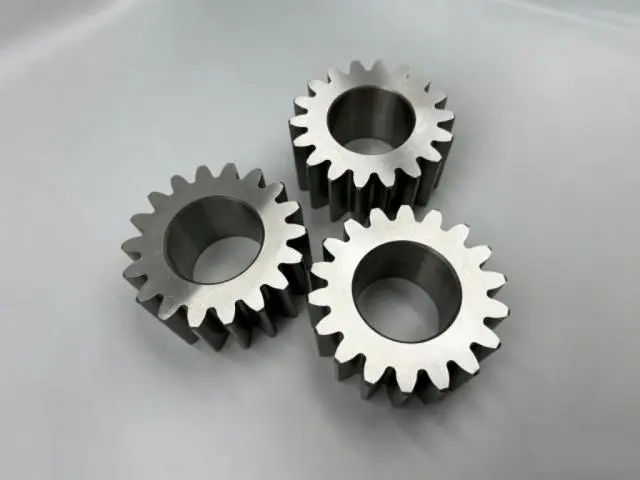
Understanding Spur Planetary Gears: Structure and Working Principle
Engineers have been interested in planetary gear systems for decades because of how well they can produce high torque in a small area. In contrast to normal parallel shaft setups, epicyclic designs spread loads across multiple engagement points, which provides the necessary mechanical benefits for industrial operations.
Core Components and Material Selection
This part is called the sun gear, and it is usually made from a high-quality metal like 20CrMnTi or SAE4340. The carburizing process makes the surfaces of these materials between 58 and 62 HRC hard, which protects them from cracking and wear when they are loaded and unloaded over and over again. Three or four planet gears spin on a carrier unit around the sun gear. Each one helps spread the load. The internal teeth of the ring gear surround the whole system and provide the structure for transferring power. Forging, hobbing, milling, and precise grinding are some of the processes used to make these parts. We use fully automated grinding tools and high-precision CNC gear machining centers at YIZHI MACHINERY to keep ISO 5-6 grade limits. This careful attention to detail makes sure that the gear teeth connect smoothly, which reduces vibrations and increases the efficiency of power transfer. The materials we use, like 42CrMo, AISI4140, and 18CrNiMo7, are chosen based on the needs of the product, matching cost with performance traits like tensile strength and fatigue resistance.
Operational Mechanics and Torque Distribution
How it works is based on how elements that are fixed and elements that are spinning move relative to each other. When power is sent to the sun gear, it turns the planet gears, which spin around their own axes while going around the sun gear. This two-way motion slows things down and increases force. When compared to single-mesh setups, the torque produced is spread evenly across all planet gears, which are usually three or four units. This lowers the stress on individual teeth by 70%. The operating efficiency of these systems is between 95% and 97% per stage. This is because the straight teeth roll against each other with little moving friction. When there are no axial loads, it's easier to choose the right bearings because thrust bearings aren't needed. This makes the machine simpler and lowers the cost of upkeep. Single-stage units usually have speed reduction ratios between 3:1 and 10:1. Multi-stage assemblies, on the other hand, can have ratios higher than 100:1 for specific uses in mine conveyors and aircraft actuators.
Distinguishing Features Compared to Helical Configurations
Helical planetary gears are quieter to use because the teeth connect slowly, but straight-cut spur teeth have clear benefits. Side forces that can damage motor bearings are taken care of by the perpendicular load application. This is especially important in servo-driven automation systems where bearing life directly affects downtime. Because spur gear cutting needs simpler tools and faster machining processes, it lowers the cost of making things by 15 to 20 percent. This way of thinking about design has real value for fields that value efficiency and mechanical simplicity, like motor reducers and farming machines. The straight tooth shape does make meshing noise, which can be measured by higher decibel levels when the teeth are engaged. This is taken care of by engineers using exact backlash control and improved lubrication methods. Extreme pressure additives in synthetic greases lower the surface temperatures caused by rapid tooth contact. This keeps the gearbox working smoothly even when it's being loaded and unloaded quickly, which happens in mine machines and industrial gears.
Advantages and Key Applications of Spur Planetary Gears
When choosing power transmission parts, people in the business world look at a number of factors, such as torque density, maintainability, lifecycle costs, and operating stability. These goals are met by straight-cut Spur Planetary Gear systems, which are designed in a way that works well in demanding production settings.
Mechanical and Economic Benefits
Due to their high torque density, these systems can handle 300-400% more power than parallel shaft gearboxes of the same size by distributing loads across multiple planet gears. Robotic joints with limited space but high torque benefit from this compact design. Mechanical losses below 5% per stage make these systems more efficient than worm gear reducers, saving energy over time. Easy installation with coaxial input and output saves 30% of assembly time. The load-sharing system extends maintenance intervals because each planet gear bears only a fraction of the total force, reducing wear. Heat treatment and lubrication can extend these components' lifespan to over 50,000 hours, and their simple design makes maintenance easy without tools.
Industrial Deployment Scenarios
Planetary gear sets are crucial to motion control in warehouse Automated Guided Vehicles (AGVs). Their small size and high starting power allow aggressive acceleration profiles that improve material flow. Zero-axial-load protects delicate servo motor bearings during frequent start-stop cycles. Straight-cut planetary gears distribute loads and simplify bearing setups in harsh mining environments, improving shock and dirt resistance. Compact gear reduction stages convert motor rotation into linear motion in aerospace applications, improving handling accuracy with high torsional stiffness. CNC machining centres need these gear sets to minimise backlash and maximise positioning precision for millions of cycles of multi-axis cutting.
Comparative Analysis with Alternative Technologies
Spur and spiral planetary designs have strengths and cons. Thrust bearings are needed because helical gears create axial forces. This increases expense and complexity. Helical forms gradually contact their teeth, reducing noise by 10–15 dB, making them suitable for quiet medical tools. Industrial pump drives and farming equipment transmissions benefit from simple alternatives since efficiency and convenience of use outweigh noise. Cycloidal reducers are less efficient but can tolerate larger shock loads. They typically operate at 80–85% mechanical efficiency. Cylindrical discs cost 40–50% more than straight-cut planetary gears due to their complexity. Planetary assemblies have the best lifecycle value for conveyor, packing machinery, and home appliance transmission systems with many duty cycles and mild shock loads.
Technical Specifications and Design Considerations
Professionals in procurement test gear systems against measurable criteria that predict how well they will work and whether they will work with current infrastructure. By understanding these specifications, you can make smart choices about where to source things that meet the needs of the job and your budget.
Critical Dimensional and Performance Parameters
For various applications, module spacing determines gear tooth sizes from 0.5 to 50 modules. Smaller modules are best for medical device motors, while larger ones are best for mining and cement mill drives. Engineers can fine-tune speed ratios without inefficient multi-stage systems by adjusting tooth numbers. Quenched 45# steel is used for lighter applications, while SAE4320, hardened to 58-62 HRC, is used for demanding environments. Radial and moment load ratings help these systems manage overhung loads. Precision gears have less than 5 arc-minutes of backlash tolerance, which reduces wear and noise in CNC tables and semiconductor handling. Standard units have 8 to 15 arc-minutes.
Standardization and Quality Assurance
ISO standardization enables global appropriateness and quality checks. Tooth profile variances, pitch errors, and runout tolerances determine ISO 5-6 gear accuracy. Procurement teams can compare supplier products and services impartially following these standards. It reduces the risk of acquiring critical parts. Following DIN 3962 and AGMA quality standards enhances European and American inspection systems. Coordinate measuring machines are utilized in YIZHI MACHINERY's quality control to compare tooth shapes to CAD models and keep variances between 5–6 grade tolerances. Material approvals relate alloy compositions to mill tests. Hardness testing at various surface levels supports heat treatment outcomes. These methods ensure parts fulfill aircraft AS9100 and mining durability criteria.
Lubrication Strategies and Maintenance Protocols
Gear systems last longer when greasing reduces friction and lets heat escape during meshing. For high-load applications above 80°C, synthetic gear oils with extreme pressure additives are best, while lithium-based greases protect motor reducer sealed gears with minimal maintenance. Maintenance plans balance operational efficiency and wear reduction; spectroscopic analysis checks industrial automation systems every 2,000 hours for backlash, noise, and lubricant condition. Every 1,000 hours, mining equipment needs stricter inspections. Accelerometers to monitor vibration patterns and thermal imaging to identify hotspots can detect wear and alignment issues early, reducing unplanned downtime by 60% against reactive maintenance.
Procurement Guide for Spur Planetary Gears
When looking for industrial gear components, you have to look at more than just the unit price of each provider. The long-term success of a project rests on how reliable the vendor is, how much technical help they offer, and how easy it is to make changes that meet the needs of the particular application for the Spur Planetary Gear.
Vendor Evaluation Criteria
Quality control ensures parts work properly. Suppliers with ISO 9001 and AS9100 certifications satisfy aerospace industry standards and control quality. Request material tracking documents verifying alloy compositions and heat treatment certifications. This is crucial for mining and airplanes, where broken parts can be disastrous. A provider's customization indicates if they can meet your design needs. When a client initially discusses their needs, YIZHI MACHINERY's engineering teams collaborate with them to approve CAD drawings, produce machines, inspect quality, pack products, and organize delivery. This versatile approach accommodates various tooth forms, non-standard mounting connections, and application-specific material alterations. Single-item production does not require minimum order quantities for testing or small-batch manufacture. This is extremely useful when developing a product.
Pricing Dynamics and Value Assessment
Material type, accuracy, and order quantity affect gear component pricing. Basic 45# steel parts are affordable for budget-friendly applications, but premium materials like 18CrNiMo7, which cost 30-40% more, last longer and require fewer replacements. Due to grinding requirements, ISO 6 gears cost less to produce than ISO 5 gears. For orders over 100 pieces, spreading setup costs across larger batches can reduce costs by 15-20%. Innovative and affordable, YIZHI MACHINERY offers flexible minimums and lower prices for higher volumes for prototyping and production.
Purchasing Channels and Procurement Strategies
Directly working with the maker avoids distributor markups, saving you money. You can also discuss modification with production-experienced engineering teams. Digital platforms simplify worldwide buying, but suppliers must be verified to create the items. Before placing a large order, verify quality claims with facility certifications, customer references, and trial parts. Long-term partnerships with qualified providers stabilize supply chains and stimulate problem-solving. Preferred partner partnerships often result in earlier booking and better prices during capacity shortages, demonstrating both organizations' commitment. Regular performance evaluations track delivery timelines, quality, and reaction to hold suppliers accountable and uncover mutually beneficial improvements.
Troubleshooting and Maximizing Spur Planetary Gear Performance
Reliability in operations comes from proper installation, preventative upkeep, and quickly fixing problems when they show up. Knowing the most common types of failure and what causes them lets you take preventative steps to keep tools available for any Spur Planetary Gear system.
Common Issues and Diagnostic Approaches
Too much noise indicates a crooked mesh or insufficient lubrication. Straight-cut tooth profiles buzz when working, but sudden volume or pitch changes indicate difficulty. If the backlash exceeds the requirements, the teeth are worn down and need to be replaced. Check lube level and condition. Broken oil loses viscosity, allowing metals to interact and generate heat and noise. The teeth are loaded unevenly when the input and exit shafts are not aligned, causing vibrations and quicker wear patterns on the surface. Gear wear may cause pitting, marking, or tooth breaking. Subsurface fatigue under rolling contact stress causes pitting, which commonly occurs when parts are regularly employed at near capacity. If carburized parts have surface hardness below 58 HRC, the case depth is insufficient and can cause premature wear. Scoring is lengthy incisions caused by adhesive wear between meshing surfaces without appropriate lubrication. Shock overloads exceed yield strength, breaking teeth. This frequently occurs when the application is wrong and gear rates don't allow for transient loading.
Corrective Actions and Performance Optimization
Increasing temperature indicates friction issues. Thermal imaging during operation can identify hotspots for gear mesh components experiencing localized overload. Misalignment, abrasive pollutants, and heat stress-induced lubricant breakdown are causes. Oil analysis detects metallic wear particles, water contamination, and additive loss, aiding flushing, refilling, realignment, and part replacement. Alignment modifications can solve installation errors that create uneven load distribution. Precision shimming and dial indication readings align shaft axes. Edge loading, which stresses teeth ends, is eliminated. Coupler choice impacts shaking. Flexible couplings can tolerate misalignment and shock loads, protecting gear teeth from reciprocating machine impact forces like pumps and compressors.
Lifecycle Extension Through Strategic Interventions
Continuous performance monitoring with condition-based maintenance identifies degradation trends for proactive problem solving. Baselines are set for operating temperature, vibration intensity, and backlash growth to detect anomalies. Historical data predictive analytics helps capital planning for replacements and prevents urgent, costly purchases. To improve processes, address root causes rather than symptoms, such as updating designs or changing materials due to harsh conditions. Engineers can analyze complex failure modes and implement effective solutions with YIZHI MACHINERY. Repair staff training on proper installation ensures torque settings, preload adjustments, and shaft alignment consistency, improving equipment reliability.
Conclusion
Spur planetary gear systems are helpful in industrial equipment, mining, and airplanes due to their high torque density, mechanical efficiency, and simplicity. Their straight-cut teeth shape eliminates axial thrust stresses, making bearing selection easier while maintaining 95–97% transmission efficiency. Understanding structural pieces, operational principles, and technical requirements helps procurement specialists identify the finest application solutions. Choosing suppliers based on quality, customization, and support is crucial to project success. Proactive repair and troubleshooting strategies extend equipment life, making mechanical parts reliable partners that help production succeed in harsh conditions.
FAQ
1. What lifespan can be expected from these gear assemblies under standard operating conditions?
When units are properly kept, they can work for 50,000 to 80,000 hours before they need important parts replaced. How long something lasts relies on how much it is loaded, how well it is oiled, and how dirty the surroundings is. Continuous-duty industrial applications with regular upkeep often have working lifespans longer than 10 years. On the other hand, high-shock mining environments may need to replace parts every 3 to 5 years.
2. Can these gear systems be customized for specialized industrial requirements?
Customization includes choosing the material, the number of teeth, the size of the module, and how it is mounted. Engineers work together to make designs that are specific to each application and take into account things like room limitations, torque needs, and weather factors. Single-unit production allows for prototype development, which lets designers make sure their ideas work before committing to mass production. This lowers the risk of development.
3. How do noise levels compare between spur and helical planetary gear variants?
Since teeth engage instantly in straight-cut designs, they make 10-15 decibels more noise than helical versions. Helical gears gradually connect, which smooths out the flow of power and lowers noise levels. Medical equipment and indoor systems that need to be quiet should use helical designs. On the other hand, spur layouts are better for industrial settings that can handle a little more noise and still get better efficiency and cost savings.
Partner with YIZHI MACHINERY for Precision Gear Solutions
When your industrial operations demand reliable power transmission components engineered to exacting standards, YIZHI MACHINERY stands ready as your trusted spur planetary gear supplier. Our 15 years of manufacturing experience yields ISO 5-6 quality gears made from 20CrMnTi, SAE4340, and 18CrNiMo7 alloys. Customized solutions for compact motor reducers to heavy-duty mining applications are available in module ranges from 0.5 to 50. Our complete service model includes pre-sales design advice, synchronized production updates, and a one-year warranty to ensure project success from inquiry to deployment. Flexible minimum order numbers facilitate prototype development and volume production, while advanced CNC machining centers and automated grinding equipment maintain aerospace and precision automation tolerances. Contact our engineering team at sales@yizmachinery.com to discuss your needs, obtain technical datasheets, or learn how our specialized packaging and multi-channel logistics assure damage-free worldwide shipping within 35-60 day lead times.
References
1. Stadtfeld, H.J. (2014). "Advances in Gear Design and Manufacture." CRC Press Technical Publications.
2. Jelaska, D. (2012). "Gears and Gear Drives: Industrial Applications and Performance Optimization." John Wiley & Sons Engineering Series.
3. Radzevich, S.P. (2016). "Dudley's Handbook of Practical Gear Design and Manufacture, Third Edition." CRC Press Mechanical Engineering.
4. Budynas, R.G. & Nisbett, J.K. (2015). "Shigley's Mechanical Engineering Design, Tenth Edition." McGraw-Hill Education.
5. Lynwander, P. (2008). "Gear Drive Systems: Design and Application." Marcel Dekker Industrial Press.
6. ISO 6336-1:2019. "Calculation of Load Capacity of Spur and Helical Gears - Part 1: Basic Principles." International Organization for Standardization.

USER EVALUATE
Here is the customer's evaluation of us