


What Are the Key Applications for a Durable Industrial Gear Reducer?
You quickly learn that power transmission is more than just connecting a motor to a load when you're in charge of complicated machines in mining, rocket manufacturing, or big industrial settings. The Industrial Reducer is the most important part of the connection between your prime mover and the driven equipment. It changes the high-speed motor rotation into the exact power and speed your application needs. These long-lasting gear reducers are used in systems that move tons of aggregate, automatic storage systems that need to be able to place items to within millimeters, and wastewater treatment aerators that work around the clock in harsh conditions. Basically, these mechanical workhorses do a few things: they match motor speeds to process needs, increase torque to handle heavy starting loads, absorb shock from quick changes in load, and keep sensitive drive parts safe in harsh industrial settings.
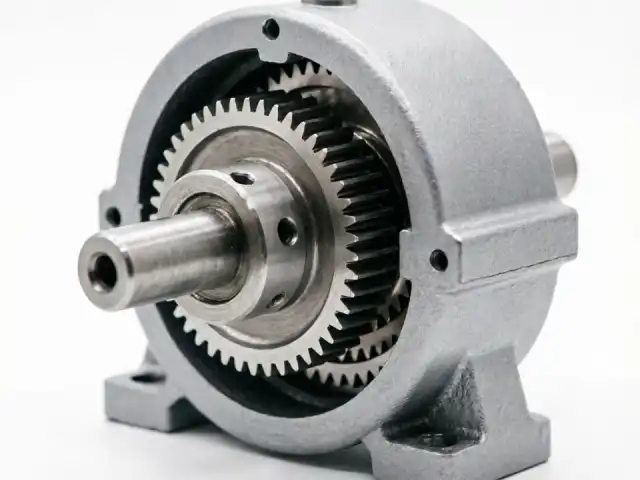
Understanding Industrial Gear Reducers: Functions and Design Principles
An Industrial Reducer is a exact piece of mechanical building made to settle the issue of speed and control not coordinating up in most mechanical settings. Most electric engines work at 1,450 to 2,900 RPM, but your crusher, container, or blending tank may as it were require 30 to 200 RPM to work at its best. This hole is filled by the equip reducer, which has carefully planned teeth and sends control in more than one stage.
Core Working Principles and Components
The operating principle of an Industrial Reducer is based on adapt proportions made when littler driving gears work with bigger driven gears. This prepare diminishes rotational speed whereas duplicating torque. For case, a 20:1 reducer changes over a 1,500 RPM engine speed into 75 RPM whereas essentially expanding yield drive. Inside gears are commonly fabricated from amalgam steels such as 20CrMnTi or SAE4340 and treated through carburizing to accomplish a difficult wear-resistant surface with a strong center. The lodging, regularly cast press, bolsters equip arrangement and disseminates warm produced amid control transmission operations.
Critical Design Factors for Durability
Durability in an Industrial Reducer depends on precise design calculations, material selection, fixing frameworks, and grease strategies. Guidelines such as AGMA 2001 or ISO 6336 assess stack capacity, whereas considering benefit variables caused by stun loads or nonstop operation. Present-day reducers regularly utilize maze or taconite seals to anticipate clean and contaminants from harming inner components. Oil frameworks change from spray oil in littler units to constrained circulation frameworks in bigger reducers, surpassing 500 HP. Manufactured oils progress productivity, decrease working temperature, and expand support interims, significantly lowering overall costs.
Gear Reducer Types and Their Specific Advantages
Different Industrial Reducer designs provide unique operational benefits depending on application prerequisites. Helical reducers offer smooth operation, calm execution, and tall effectiveness since different adapt teeth share the stack at the same time. Slope adapt reducers effectively alter control transmission heading, making them perfect for transports and vertical drives. Planetary reducers provide high torque in compact spaces with amazing torsional unbending nature for mechanical autonomy and accuracy apparatus. Worm equip reducers give tall reduction ratios and self-locking capabilities valuable for lifts, whereas cycloidal reducers convey zero backfire and uncommon stun resistance for reversing movement applications.
Primary Industrial Applications for Durable Gear Reducers
When you see at how numerous diverse businesses utilize these parts, you can see how adaptable adapt decrease innovation is. Each application setting has its possess issues that require to be fathomed in a certain way, which influences everything from the choice of fabric to the way it is mounted.
Heavy Mining and Aggregate Processing
Mining and aggregate operations place extremely high demands on every Industrial Reducer used in transports, crushers, and handling frameworks. Transport drives must handle beginning torques coming to a few times ordinary working loads since of overwhelming fabric weight and inactive contact. Crushers confront serious stun loads when difficult materials or tramp metal enter pulverizing chambers. Reducers utilized in these applications require fortified lodgings, solidified gears, curiously large heading, and progressed fixing frameworks to survive tidy, vibration, and temperature extremes. Viable warm dissemination and grease administration are moreover basic for keeping up dependable operation in these troublesome environments.
Automated Warehousing and Material Handling
Modern automated warehouses rely heavily on Industrial Reducer systems to control transports, cranes, and robotized capacity and recovery gear. These applications request exact situating exactness, compact plans, moo clamor levels, and solid continuous-duty execution. Planetary and bevel-helical reducers are commonly chosen since they give high torque capacity inside constrained installation spaces. Conveyance centers working around the clock too require calm reducers creating negligible commotion for satisfactory work environment conditions. Progressed fixing frameworks avoid grease spillage that may sully put away items, whereas proficient breather plans oversee weight changes caused by working temperature changes amid ceaseless operations.
Wastewater Treatment and Environmental Systems
Wastewater treatment plants depend on Industrial Reducer equipment to maintain continuous operation in highly corrosive and demanding conditions. Aerators, sludge thickeners, and clarifier drives operate constantly while exposed to moisture, hydrogen sulfide, and biological contaminants. To resist corrosion, reducers often use multi-layer epoxy coating systems and specially protected surfaces. Large impellers create strong axial and radial loads that require reinforced shafts and oversized bearings. Since equipment failure could create environmental and public health risks, plant operators typically choose premium-quality reducers with proven reliability, long service life, and strong resistance to contamination and harsh operating conditions.
Renewable Energy and Power Generation
Renewable energy systems, especially wind turbines, represent some of the most demanding Industrial Reducer applications in the world. Gearboxes must operate reliably under changing wind loads, extreme temperatures, and difficult maintenance conditions at high elevations. Multi-stage reducers increase slow rotor speeds into the higher speeds required for electrical generators. Modern systems integrate condition monitoring technologies such as vibration sensors, oil quality monitoring, and temperature probes to support predictive maintenance programs. Because maintenance work on wind turbines is extremely expensive, reliable reducers with advanced monitoring systems help reduce downtime and significantly improve overall project operating economics.
How to Choose the Right Industrial Gear Reducer for Your Application
To choose the right gear reduction option, you need to carefully look at a number of practical factors. Over the usual 15–25-year service life of industrial machinery, this choice will have a big effect on how reliable the equipment is, how much it costs to maintain, and how well the whole system works.
Analyzing Operational Parameters
The selection process for an Industrial Reducer begins with determining input speed, output speed, torque requirements, and transmitted power. Service factors are critical because they account for actual working conditions beyond theoretical calculations. Equipment operating continuously under heavy shock loads requires much higher service factors than lightly loaded intermittent machinery. Duty cycles, daily operating hours, startup frequency, and environmental conditions all affect reducer sizing. Harsh environments may require synthetic lubricants, corrosion-resistant materials, or explosion-proof certifications. Accurate analysis of these operational parameters ensures the reducer can handle real-world conditions without premature wear, overheating, or unexpected mechanical failure.
Comparing Solutions and Cost-Effectiveness
Comparing Industrial Reducer options involves balancing efficiency, performance, installation limitations, and long-term operating costs. Helical reducers are often the most economical choice for general industrial use because they provide high efficiency and reasonable purchase costs. Planetary reducers cost more but offer greater torque density and compact inline designs suitable for limited spaces. Total ownership cost analysis should include purchase price, energy consumption, maintenance frequency, spare parts availability, and downtime impact. Even small efficiency improvements can create substantial energy savings during years of continuous operation, making higher-efficiency reducers financially beneficial despite higher initial investment costs.
Evaluating Supplier Capabilities and Support
The quality of supplier support plays a major role in the long-term success of any Industrial Reducer installation. Experienced manufacturers understand industry-specific operating conditions and can recommend suitable configurations for difficult applications. Reliable suppliers also provide engineering support during sizing, installation, commissioning, and troubleshooting. Warranty terms often reflect confidence in product durability and manufacturing quality. Spare parts availability, field service capability, and technical response times directly affect maintenance efficiency and equipment downtime. Delivery schedules are also important because custom reducers may require several weeks of manufacturing depending on specialized gear ratios, shaft configurations, or mounting requirements requested by customers.
Maintenance and Troubleshooting Tips to Maximize Gear Reducer Lifespan
The right way to maintain your gear reducer will directly affect whether it lasts as long as it's supposed to or breaks down early, causing costly unplanned downtime. A planned approach to checking, greasing, and keeping an eye on the state of your investment saves it and keeps it working reliably.
Routine Inspection Schedules and Best Practices
Routine inspections help identify early warning signs that may shorten Industrial Reducer lifespan if left unresolved. Maintenance personnel should regularly check for oil leaks, unusual vibration, abnormal operating temperatures, and changes in noise levels. Grinding, knocking, or whining sounds often indicate gear wear, bearing damage, or lubrication problems requiring immediate investigation. Infrared temperature monitoring can reveal overheating caused by overloading or insufficient lubrication. Vibration analysis systems detect developing faults before major mechanical damage occurs. Establishing inspection intervals based on operating conditions and duty cycles allows operators to plan maintenance effectively while minimizing unplanned downtime and expensive emergency repairs.
Lubrication Management and Oil Analysis
Lubrication management is one of the most important maintenance tasks for any Industrial Reducer because lubricant protects internal components from wear and overheating. Industrial gear oils create protective fluid films between gear teeth and bearings while carrying away friction-generated heat. Oil levels should be monitored regularly, and only manufacturer-approved lubricants should be used. Mineral oils require more frequent replacement, while synthetic lubricants can extend service intervals significantly. Oil analysis programs provide valuable information about contamination, wear metals, and lubricant condition. This predictive maintenance approach helps identify developing problems early and optimizes oil replacement schedules for improved operational reliability.
Identifying Warning Signs and Troubleshooting Common Issues
Recognizing early warning signs allows Industrial Reducer problems to be corrected before serious mechanical damage develops. Overheating may result from low lubricant levels, excessive loads, blocked airflow, or inadequate cooling capacity. Unusual noises such as grinding or knocking often indicate bearing damage, misalignment, or worn gear teeth. Oil leaks may occur because of damaged seals, clogged breathers, or worn shaft surfaces that prevent proper sealing contact. Maintenance personnel should investigate any sudden changes in temperature, vibration, or operating sound immediately. Prompt troubleshooting reduces repair costs, prevents secondary component damage, and minimizes unexpected production downtime in industrial operations.
Future Trends and Innovations in Industrial Gear Reducers
The gear reducer business is always changing because people want them to be more efficient, last longer, and have smart tracking features. These changes directly address the needs of buying workers who want to lower the total cost of ownership while increasing the amount of time that equipment is available.
Advanced Materials and Surface Engineering
Industrial Reducer manufacture now employs sophisticated alloy steels, optimised carburising, and specialised surface coatings to increase durability and performance. Nickel, chromium, and molybdenum alloys harden and toughen better under strong stress loading. Ultra-hard ceramic layers on gear surfaces minimise friction and wear in Physical Vapour Deposition coatings. Marine, chemical, and wastewater applications use multi-layer corrosion prevention technologies instead of paint. These technical advancements increase reducer lifetime, improve contamination and corrosion resistance, and enable reliable operation in challenging industrial conditions.
Smart Monitoring and Predictive Maintenance Integration
Smart monitoring systems are connecting every Industrial Reducer to provide real-time operational data. Embedded sensors provide vibration, temperature, lubricant quality, and internal pressure data to maintenance management systems. These patterns are analysed by predictive maintenance software to detect bearing wear, gear damage, and lubrication failure before catastrophic failures. Comparing operational data to huge equipment performance databases using machine learning enhances fault detection accuracy. Remote monitoring lets manufacturers uncover application-wide performance patterns and suggest operational enhancements to boost dependability and save maintenance costs.
Energy Efficiency and Environmental Compliance
Industrial Reducer research is focusing on energy efficiency since even tiny efficiency increases save energy over time. Internal friction losses are reduced while load capacity is maintained via better gear tooth shape, bearing technology, and lubrication systems. Many companies must comply with severe environmental and efficiency rules, driving premium-efficiency reducers. Longer lubricant life and less oil usage minimise waste oil disposal and environmental effect. Advanced reducers and synthetic lubricants cost more, but they save money on energy and maintenance.
Conclusion
Mining, aerospace, and heavy industries depend on durable gear reducers. These designed pieces convert motor power into process-specific torque and speed. Their applications range from mine conveyors that manage severe shock loads to automated warehouses with precision placement. You can't merely base your decision on the initial purchase price. Take into account operational considerations, environmental circumstances, and total cost of ownership. Planning maintenance and monitoring your investment will safeguard it for 15–25 years. New technologies including improved materials, sophisticated tracking, and efficiency optimisation are improving these vital power transmission elements.
FAQ
1. What factors most significantly impact gear reducer durability in harsh environments?
Choice of material and heat treatment are two of the most important factors in determining longevity. Gears made from high-quality alloy steels like 20CrMnTi and heated through a process called carburizing have a surface hardness of 58 to 62 HRC, which makes them resistant to wear while still having a core sturdiness that can handle shock loads. Sealing systems are also very important. In mine or outdoor settings, labyrinth or taconite plugs stop dust and water from getting in, which would quickly damage internal parts.
2. How do I determine the correct service factor for my application?
The choice of service factor is based on three main factors: the type of load (uniform, mild shock, or heavy shock), the number of daily working hours, and the frequency of starting. According to AGMA rules, a conveyor with mild shock loads that runs 16 hours a day needs a service factor of 1.5 to 1.75, while a crusher that runs all the time with heavy shock loads needs a service factor of 2.0 to 2.5. One of the most common design mistakes that leads to early failure is underestimating the service factor.
3. What lead times should I expect when ordering custom gear reducers?
Standard catalog units with popular mounting options and ratios usually ship between two and four weeks. Production times are extended to 35 to 60 days for custom designs that need specific shaft sizes, non-standard ratios, special materials, or different mounting arrangements. This amount of time allows for the technical review, getting of materials, precision cutting, heat treatment, assembly, and quality testing that are needed for custom gear solutions.
Partner with YIZHI MACHINERY for Your Industrial Reducer Requirements
The company YIZHI MACHINERY has been making accurate gears for 15 years and works with buyers in the mining, aircraft, and industrial machinery industries. For our unique Industrial Reducer options, we use high-quality materials like 20CrMnTi and SAE4340 alloy steels, which are heated and shaped in strict ways to achieve ISO 5-6 grade accuracy. Before it is shipped, every gear reducer goes through a strict quality check. It is also protected by special packaging methods that keep damage rates during transport to less than 0.1%.
Our engineering staff analyses your working conditions and recommends configurations before a sale. You can trace your order from start to finish with synchronised status updates and real-time logistical tracking. As an experienced Industrial Reducer vendor, we provide reasonable 35–60-day delivery dates for completely customised solutions. Our variable production capability allows us to fulfil requests from a few to many units.
We back up every industrial gear reducer with a full warranty and fast expert help that can answer any questions you have about how it works. Whether you need helix gear reducers for general industrial use or precision planetary units for high-precision aircraft parts, our team can make solutions that are exactly what you need. Contact us by emailing sales@yizmachinery.com, or you can visit yizhimachinery.com to see all of our custom gear goods and precision mechanical parts made for the toughest industrial uses in the world.
References
1. American Gear Manufacturers Association. (2020). AGMA 2001-D04: Fundamental Rating Factors and Calculation Methods for Involute Spur and Helical Gear Teeth. Alexandria, VA: AGMA Publications.
2. Deutsches Institut für Normung. (2019). DIN 3990: Calculation of Load Capacity of Cylindrical Gears. Berlin: Beuth Verlag.
3. International Organization for Standardization. (2021). ISO 6336-1:2019 Calculation of Load Capacity of Spur and Helical Gears — Part 1: Basic Principles. Geneva: ISO Standards.
4. Budynas, R.G., & Nisbett, J.K. (2020). Shigley's Mechanical Engineering Design (11th ed.). New York: McGraw-Hill Education.
5. Drago, R.J. (2018). Gear Types and Nomenclature in Handbook of Practical Gear Design and Manufacture (3rd ed.). Boca Raton, FL: CRC Press.
6. Townsend, D.P. (Ed.). (2019). Dudley's Handbook of Practical Gear Design and Manufacture (4th ed.). Boca Raton, FL: CRC Press.

USER EVALUATE
Here is the customer's evaluation of us