


Precision Worm Gear Reducer Gearbox: How Accuracy Impacts Performance
When we talk about precision in motion control, the conversation inevitably leads to one of the most reliable and rugged components in industrial power transmission: the Worm Gear Reducer Gearbox. At its core, a precision worm gear reducer gearbox converts high-speed, low-torque input into low-speed, high-torque output through the meshing of a screw-shaped worm and a toothed worm wheel, typically at right angles. The "precision" descriptor isn't just marketing language—it refers to tight tolerances in gear tooth geometry, minimized backlash, and surface finishes that enable these devices to deliver repeatable, reliable performance in demanding environments like aerospace component handling, mining conveyor systems, and automated assembly lines. Accuracy directly influences not only the smoothness of operation but also load distribution, wear rates, and ultimately, the lifespan of the entire drivetrain.
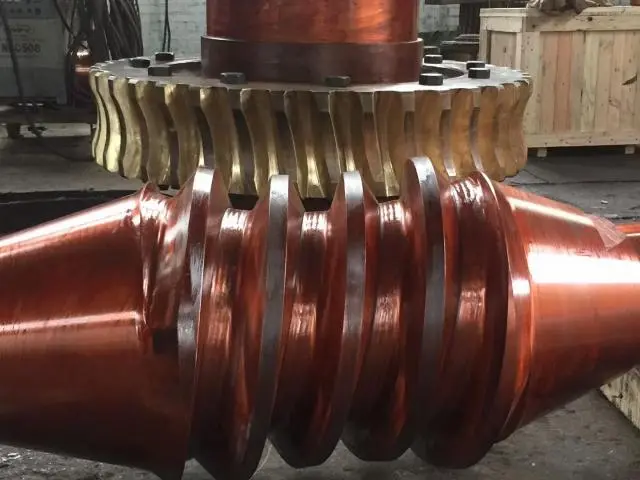
Understanding the Mechanics of Precision Worm Gear Reducer Gearboxes
The Operating Principle Behind High Reduction Ratios
A accurate Worm Gear Reducer Gearbox works by the worm shaft and the worm wheel moving against each other, rather than rolling against each other like helical or spur gear systems do. Because of this basic design feature, the device can reach reduction ratios of up to 100:1 in a single, small stage. The worm wheel is usually made of wear-resistant copper alloys like CuSn12Ni2. It is connected to the worm by a case-hardened alloy steel like 20CrMnTi or SAE4340. Friction is made by the moving action. Friction makes heat but also naturally reduces vibrations and makes the gears quieter than other types.
The accuracy of this method comes from how well the worm thread profile and worm wheel tooth dimensions are made. To keep measurements very accurate, manufacturers use high-tech methods of processing like hobbing, milling, and precision grinding. We follow ISO 8-9 grade precision standards at YIZHI MACHINERY, making sure that every tooth surface goes through careful finishing and heat treatment steps like induction hardening, quenching and tempering, or carburising. The surface hardness after these steps is between 58 and 62 HRC, which is very important for keeping things from wearing down when they are moving.
Material Selection and Surface Finishing Impact
The choice of material is very important for how well a fine Worm Gear Reducer Gearbox works when it is under stress. Some of the best alloy steels for the worm shaft are 40CrNiMo, 42CrMo, AISI4140, and 20CrNi2Mo. These steels have high tensile strength and resistance to fatigue. On the other hand, brass or other special metals that can handle rolling friction without scoring or pitting work best for the worm wheel.
Finishing the surface is also very important. Backlash, which is the unwanted play between joining teeth, is kept to a minimum by grinding the worm thread to tight standards. Backlash reduction is important for motion control applications that need to be very accurate, like machine tool indexing mechanisms and lift traction machines. When backlash is less than 0.05 mm, the gearbox can provide positional accuracy that meets the strict needs of automated production line reducers and putting together aerospace parts. These finishing steps also raise the contact ratio, which spreads loads more widely and lowers areas of high stress that could cause the part to break before its time.
Managing Efficiency, Noise, and Thermal Performance
A popular question among procurement workers is how well a Worm Gear Reducer Gearbox works compared to other types, such as helical or planetary reducers. Worm gear systems usually have lower mechanical efficiency, ranging from 60% to 90% depending on the reduction ratio and the quality of the oil used. This is because of sliding friction. Higher reduction ratios usually mean more friction and heat production, so strong thermal control methods are needed.
But precision worm gear reducers often have lower noise levels because they engage continuously moving, which makes less sound than spur gears that mesh by impact. To improve thermal performance, you need to choose high-viscosity synthetic lubricants, like Polyalkylene Glycol (PAG) oils, that keep the strength of the film at high temperatures. Proper lubrication not only keeps the gearbox cool, but it also keeps it from wearing out. If maintenance instructions are carefully followed, the gearbox can last longer than 15,000 hours.
The Impact of Precision on Performance and Applications
Superior Torque Transmission and Load Handling
When it comes to transferring torque, precision in a Worm Gear Reducer Gearbox directly means better performance. When you have accurate tooth shape, you can get a high contact ratio. This means that loads are spread across many teeth at once, which lowers the stress on each part. Precision worm gear reducers are great for heavy-duty uses in mining auxiliary equipment and construction equipment that need to handle shock loads and constant high torque demands because they can handle a lot of weight.
Extended Equipment Lifecycle and Reduced Maintenance
The self-locking feature of many precision Worm Gear Reducer Gearboxes adds an extra layer of safety in aircraft applications where handling parts needs to be both strong and precise. Self-locking behaviour usually happens when the ratio is above 60:1. This stops back-driving under load, which is an important safety trait in vertical lifting equipment and positioning systems. This feature gets rid of the need for external stopping systems, which makes the system easier to build and lighter overall.
When a Worm Gear Reducer Gearbox is made with very precise measurements, it wears much less quickly. Localised stresses that cause pitting and spalling are kept to a minimum by consistent tooth contact patterns. When you use advanced heat treatment methods, like carburising, you can make the outside harder while keeping the inside tough and flexible. This mix protects against both surface wear and impact damage, which makes the gearbox last longer.
Precision manufacturing has a direct benefit of shortening the time between maintenance checks. Industries lose millions of dollars every year because of broken equipment, especially in the mining and industrial gear sectors where constant operation is important. The only things that a well-designed precision Worm Gear Reducer Gearbox needs are to be oiled and inspected on a regular basis. The metal worm wheel can be changed without taking the whole thing apart. When procurement managers look at the total cost of ownership, they know that this ability to be serviced is a big plus.
Application-Specific Performance in Critical Industries
When it comes to efficiency, different businesses need their drivetrain parts to meet different needs. Repeatability and positional accuracy are very important in automated production lines. Robotic arms and tracking tables can achieve sub-millimeter positioning accuracy with precision Worm Gear Reducer Gearboxes with little backlash, which is necessary for assembly and packing tasks.
Because of the dust, oil, and heavy loads that are common in mining settings, gears need to be well sealed and able to handle a lot of weight. YIZHI MACHINERY offers a cylindrical worm gear profile type that can handle a lot of weight and work reliably. This makes the units good for use as backup gearbox systems in tough environments. Precision worm gear reducers make transmissions smooth and noiseless, which makes passengers more comfortable and extends the life of the system.
How to Choose and Size a Precision Worm Gear Reducer Gearbox
Evaluating Load Types and Torque Demands
To choose the right Worm Gear Reducer Gearbox, you must first carefully look at the load curve of the application. Different types of loads put different amounts of stress on gearbox parts. These include continuous loads, intermittent loads, and shock loads. To keep things from breaking down too soon, service factors—multipliers that are added to the nominal load to take into account working conditions—must be figured correctly.
To meet torque needs, the gearbox has to be a certain size and made of certain materials. At YIZHI MACHINERY, we can customise a module range from 1 to 50 so that we can perfectly match the gearbox to the power needs of the application. Although bigger sections can hold more weight, they also make the unit bigger and heavier. When deciding whether flange-mounted or foot-mounted installations are better, procurement teams have to weigh these factors against the available space and mounting options.
Speed Ratios and Motor Compatibility
Not only do desired speed ratios affect the choice of gearbox, but they also affect how efficient it is and how hot it gets. Because of slower moving speeds and less friction, an accurate Worm Gear Reducer Gearbox with a 10:1 ratio works better than one with a 100:1 ratio. Higher ratios, on the other hand, make things more small, which is useful in situations where room is limited.
Another important thing to think about is motor compatibility. The motor's output specs, such as shaft width, key measurements, and rotational speed, must match the input shaft of the gearbox. Mismatches can cause coupler problems, vibration, and shorten the life of the machine. Working with skilled suppliers like YIZHI MACHINERY, which offers full technical support, makes sure that the specifications of the motor and gearbox match perfectly, which improves the performance of the system.
Customization for Unique Applications
Catalogue gearboxes work well for many uses, but some businesses need special solutions to deal with their own unique operating problems. YIZHI MACHINERY specialises in making custom gears, with configurations that are made to fit specific load profiles, environmental conditions, and mounting needs. We have low minimum order amounts, so we can make even a single item. This gives us flexibility that most big producers can't match.
Customisation goes beyond just basic sizes. Picking the right materials, using the right heat treatment methods, and finishing the surface can all be changed to work in harsh industrial settings. In mining, equipment is often exposed to rough dust and oil, so it needs special coats that keep them sealed and don't rust. Advanced alloy steels and optimised geometries can be used to cut down on weight without losing performance in aerospace uses that need strong but light parts.
Maintenance and Troubleshooting for Precision Worm Gear Reducers
Lubrication Practices and Scheduled Inspections
Any accurate Worm Gear Reducer Gearbox needs to be oiled regularly in order to work well. When the worm and wheel slide against each other, they create heat and wear. Good synthetic lubricants can reduce both of these problems. The viscosity of the oil needs to be right for the temperature range it will be used in. For high ambient temperatures and loads, bigger viscosities are suggested.
During routine checks, oil levels, seals, and breather plugs should be looked at, and operating temperatures should be kept an eye on. By finding metal bits in the lubricant, oil analysis can find early signs of wear. This lets maintenance be done before a major failure happens. YIZHI MACHINERY suggests check times that depend on the number of hours the machine has been used and how much it is being loaded. These times are usually between 500 and 1,000 hours of operation.
Identifying and Addressing Common Problems
Drops in efficiency and strange noises are two of the most common signs that something is wrong with a Worm Gear Reducer Gearbox. When the worm wheel isn't properly oiled, aligned, or worn out too much, it can lead to a loss of efficiency. Unusual noise can be a sign of growing backlash, worn bearings, or damage to the tooth surface.
Thermal problems, which show up as overheating, need to be fixed right away. Too much heat speeds up the breakdown of lubricants and can bend gearbox housings or shafts. To fix burning, make sure the oil viscosity is correct, the oil amount is correct, and the input speeds do not go over the gearbox's thermal capacity rate. If the overheating doesn't go away, you may need to add external cooling systems or use better lubricants.
Spare Parts Availability and Technical Support
For minimising downtime, it's important that spare parts are always available. The brass spare worm wheel usually needs to be replaced every 15,000 to 20,000 hours of use, but this depends on how much it is used and how well it is maintained. By working with a supplier who keeps important parts in stock, you can get things back up and running quickly during maintenance cycles.
YIZHI MACHINERY offers quick technical support through our sales team at sales@yizmachinery.com. They can help with fixing problems, replacing parts, and making the machine run better. Our one-year guarantee covers problems with the way the product was made, and our quick response methods make sure that any problems are fixed right away, keeping your business running and protecting your investment.
Maximizing ROI: Procurement and Cost Efficiency Strategies
Understanding Pricing Dynamics and Budget Planning
Precision Worm Gear Reducer Gearbox prices vary a lot depending on the type of material used, the level of customisation, and the precision grade. Standard catalogue units made from 45# steel and meeting ISO 9 grade specs are less expensive. Customised units made from advanced metals like 40CrNiMo or 20CrNi2Mo and meeting ISO 8 grade precision are more expensive.
When making a budget, you should think about not only how much something costs to buy, but also how much it costs to own, which includes repairs, downtime, and new parts. Gearboxes made of better materials and with more accuracy tend to have lower lifetime costs because they need less maintenance and break down less often. Precision gearboxes are a good investment because they are affordable if you negotiate volume discounts and build long-term relationships with suppliers.
Direct Supplier Engagement vs. Online Purchases
There are a lot of things to think about when deciding between working directly with suppliers and buying things online. Working directly with makers like YIZHI MACHINERY lets you get personalised expert advice, make changes, and communicate more easily. Because we've been in production for 15 years, we can suggest the best options for your application, which lowers the risk of specs not matching.
Online shopping may be quick and easy, but it doesn't always come with the technical help and customisation options that are needed for complex industrial uses. Speed of delivery is another thing to think about. YIZHI MACHINERY's 35 to 60-day lead times are due to the careful manufacturing processes needed for precision parts, such as advanced heat treatment and surface finishing steps that can't be sped up without lowering quality.
Logistics and After-Sales Service Benefits
To get the most out of your investment, you need reliable transportation and service after the sale. Customised packaging from YIZHI MACHINERY uses shock-absorbing cushioning layers and custom wooden crates to protect fragile gear teeth during shipping. This keeps damage rates to below 0.1%. Our multi-channel transport solutions, which include sea freight, air freight, and freight trains between China and Europe, give you a choice of delivery options based on the size and urgency of your order.
Visual tracking from the factory to the customer's door makes the whole shipping process clear, with real-time updates from loading to delivery. This level of insight gives procurement managers the confidence to make installation dates and work with production teams to keep equipment downtime to a minimum. Our standardised OEM customisation process, which includes requirements talk, design drawings, production machining, quality inspection, packing, and shipping, and our global logistics support make sure that orders are filled quickly and easily.
Conclusion
Precision isn't just an academic term for a Worm Gear Reducer Gearbox; it's what makes it work reliably and for a long time in tough industrial settings. Tight tolerances, high-tech materials, and careful surface finishing all work together to provide better torque gearbox, less backlash, and longer service life. If you're in the business of mining, handling rocket parts, or automating production lines, you need to carefully look at load patterns, speed ratios, and environmental conditions in order to choose the right precision gearbox. Partnering with an experienced supplier that offers customisation, quick support, and proven logistics skills will make sure that your investment gets the most out of it and that your business can keep running.
FAQ
1.What maintenance intervals are recommended to preserve precision?
Every 500 to 1,000 hours of use, the lubrication should be checked, and every 2,000 hours, the oil should be changed completely. In harsh conditions, repair may need to be done more often.
2.How do noise levels compare between worm and helical gearboxes?
Because they keep moving, Precision Worm Gear Reducer Gearboxes usually make 5 to 10 dB less noise than helical gearboxes. This makes them perfect for places where noise is a problem.
3.Can customization accommodate heavy load applications?
Of course. To meet heavy-load needs, YIZHI MACHINERY can customise the material choice, heat treatment processes, and dimensional arrangements. Modules can be up to 50 and surface hardness can be up to 62 HRC.
Partner with YIZHI MACHINERY for Precision Worm Gear Reducer Gearbox Solutions
It's not enough to just compare specs when looking for a Worm Gear Reducer Gearbox maker. You need a partner that is dedicated to quality, customisation, and long-term support. YIZHI MACHINERY has been making precision gears for 15 years and meets ISO quality standards. They also offer advanced heat treatment services and full customisation options. Our low minimum order amounts allow for both the development of prototypes and full-scale production. Additionally, our global shipping network guarantees on-time delivery with damage rates below 0.1% during transport. Contact us at sales@yizmachinery.com to talk about your application needs, get technical help, and find out how our precision Worm Gear Reducer Gearbox solutions can help your business run better and get the most out of your investment.
References
1. Dudley, D. W. (1994). Handbook of Practical Gear Design and Manufacture. CRC Press.
2. Townsend, D. P. (1991). Dudley's Gear Handbook: The Design, Manufacture, and Application of Gears. McGraw-Hill.
3. Radzevich, S. P. (2012). Dudley's Handbook of Practical Gear Design and Manufacture (2nd Edition). CRC Press.
4. Buckingham, E. (1988). Analytical Mechanics of Gears. Dover Publications.
5. Maitra, G. M. (1994). Handbook of Gear Design (2nd Edition). Tata McGraw-Hill.
6. ISO 1328-1:2013. Cylindrical gears — ISO system of flank tolerance classification — Part 1: Definitions and allowable values of deviations relevant to flanks of gear teeth. International Organization for Standardization.

USER EVALUATE
Here is the customer's evaluation of us