


Internal Helical Gear Cutting: A Comprehensive Guide
Internal helical gear cutting is a complex manufacturing method for making gears with teeth that are angled in a spiral pattern, which are machined into the inside diameter of cylindrical gear blanks. Compared to regular spur gears, this method offers better torque transmission, lower operational noise, and longer durability. The process helps businesses that need small powertrains that can handle a lot of weight, like rocket motors, mining equipment, and automatic factory machinery. Power skiving and CNC gear shaping are two examples of advanced cutting methods that have greatly improved the efficiency of production while still meeting the ISO 6 grade precision standards that are necessary for today's engineering needs.
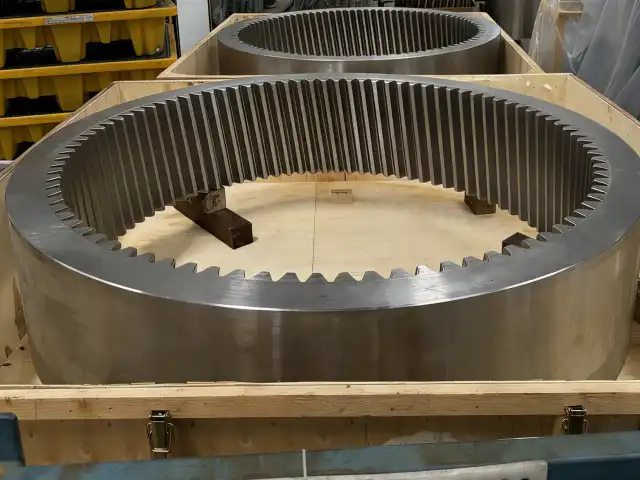
Understanding Internal Helical Gear Cutting
To make an internal helical gear, the teeth on the inside of a gear blank must be machined at exact helix angles ranging from 5° to 45°. Unlike external gears, which have teeth on the outside circle, these parts fit into planetary gear systems and small reduction drives, which need to be packaged efficiently because of limited space. The spiral tooth shape makes slow contact during spinning, spreading the load across several teeth at the same time. This design cuts down on noise and shaking a lot, which are problems that straight-cut spur gears often have in high-speed situations.
Applications Across Critical Industries
Internal helical gears are in high demand in many fields where dependability directly affects safety and efficiency. These parts are used in mining excavators' planetary gear reducers to handle the high torque loads that come with extracting materials. When precision machining is done, the smooth motion of machine tool feed mechanisms improves the quality of the surface finish. In aircraft systems, these gears allow for small actuator designs for flight control surfaces, where reducing weight is very important. Internal spiral configurations are used in winch systems and pulling equipment gearbox units to handle big loads with little slack.
Manufacturing Challenges and Solutions
Making these gears comes with its own problems that makers have to solve with modern technology and process control. For maintaining tight standards in blind bores, you need special tools that can get into small spaces. During internal cutting, chip evacuation is very important because swarf that builds up can damage finished tooth surfaces or bind cutting tools. To get rid of heat when cutting hard materials like AISI4140 or 42CrMo, you need smart systems for delivering coolant. These problems are solved by cutting-edge CNC gear machining centers with high-pressure through-spindle cooling systems and tools that can track tool wear in real time.
Internal Helical Gear Cutting Techniques and Best Practices
There are different ways of Internal Helical Gear Cutting to make internal helical profiles, and each has its own benefits based on the amount being made, how hard the material is, and the level of accuracy needed. When procurement teams know about these techniques, they can choose the right processes that balance quality and cost-effectiveness.
Power Skiving Technology
Power skiving is a new way to make internal gears that changes everything. It combines the kinematics of hobbing with the flexibility of gear shaping. For this method, a special cutter is used that cuts at an angle to the object that crosses its axes. The cutter cuts continuously, making teeth. It has three to five times faster production processes than standard gear shapes, which makes it perfect for industry and car uses with a lot of gears. The process gets surface finishes of Ra 0.4–0.8 µm right after cutting, so there's usually no need for additional grinding steps. Module sizes from 0.5 to 50 can fit both heavy industrial parts and precise instrument gears.
CNC Gear Shaping
For internal helical manufacturing, CNC gear shaping is still the most flexible method, especially for complicated shapes with shoulders or blind bores. The reciprocating cutter moves up and down and side to side while the workpiece rotates precisely at the same time, making involute profiles tooth by tooth. These days, electric helix guides are used instead of mechanical cam systems. This makes it possible to quickly change the setup for unique production runs. This method works great for cutting materials like 20CrMnTi and SAE4340 that need to be carburised, because the process parameters are easy to change to fit different types of materials. Depending on the complexity of the order and the need for heat treatment, lead times are usually between 35 and 60 days.
Precision Grinding and Finishing
Post-cutting grinding processes are needed to meet ISO 6 grade accuracy and surface hardness requirements of 45–50 HRC or 58–62 HRC. High-precision grinding machines with CBN wheels smooth out tooth profiles to get rid of marks from cutting tools and distortions caused by heat treatment. Deviations in the profile and lead are fixed to within a few microns, which ensures that the load is spread out correctly during operation. We use automatic gear measure centers that check the specs for tooth width, runout limits, and total pitch mistakes against DIN 3962 and ISO 1328-1:2013 standards. This quality control plan cuts down on failures in the field and increases the useful life of parts in harsh mining and aircraft settings.
Engineers look at the material's toughness, the size of the module, and the needs of the end application before choosing the cutting settings. These things decide the best cutting speeds, feed rates, and tool coatings for keeping accurate measurements and making the most of production efficiency. Our technical consulting services help clients find the best settings for these parameters based on the needs of their specific projects.
Comparing Internal Helical Gear Cutting Methods
Procurement professionals benefit from understanding performance trade-offs between different manufacturing approaches. Each method presents unique capabilities regarding complexity handling, tooling investments, and production scalability.
Internal vs External Gear Cutting
External gear cutting, offers simpler tool access and higher production rates, as cutting tools approach workpieces from the outside without clearance restrictions. However, internal helical configurations provide superior torque density in planetary arrangements where ring gears mesh with multiple planet gears simultaneously. The enclosed design protects tooth surfaces from environmental contamination, extending service intervals in mining equipment exposed to abrasive dust. Internal gears also enable more compact transmission designs, reducing overall system weight—a critical advantage in aerospace applications where every kilogram impacts fuel efficiency.
Broaching vs Generative Processes
Broaching delivers exceptional cycle times for high-volume production but requires expensive, dedicated tooling that limits flexibility. Helical internal broaches demand complex rotating mechanisms that significantly increase upfront investment compared to gear shaping or skiving cutters. Generative processes like those we employ offer superior adaptability for custom orders and prototype development. Our low minimum order quantities accept single-item production runs, allowing clients to test designs before committing to volume manufacturing. This flexibility proves invaluable when developing new products or supporting aftermarket repair operations requiring obsolete gear replacements.
Machine Selection Criteria
Choosing appropriate equipment for Internal Helical Gear Cutting involves balancing precision capabilities with productivity targets and budget constraints. High-volume operations benefit from dedicated power skiving machines offering sub-60-second cycle times for medium-module gears. Job shops handling diverse custom orders achieve better ROI through versatile CNC gear shapers capable of cutting various tooth forms without extensive retooling. Machine rigidity, thermal stability, and control system sophistication directly impact achievable accuracy levels. Our production facility operates globally, leading precision manufacturing equipment, including fully automated grinding machines and intelligent heat treatment lines that ensure consistent quality across production batches.
Procurement Guide for Internal Helical Gear Cutting Equipment and Services
Navigating the global supplier landscape requires understanding key evaluation criteria that separate capable partners from vendors unable to meet rigorous industrial demands.
Supplier Qualification Factors
Successful procurement begins with verifying manufacturer credentials and technical capabilities. ISO certification demonstrates commitment to standardized quality management systems, though practical expertise often matters more than paperwork. Evaluate whether potential partners maintain in-house heat treatment facilities, as outsourcing these operations introduces scheduling uncertainties and quality control gaps. Material traceability becomes essential when supplying aerospace components requiring full mill certifications for alloys like 18CrNiMo7 and 17CrNiMo6. We provide complete material documentation and third-party inspection reports that satisfy the most stringent procurement requirements.
Outsourcing vs In-House Production
Companies face strategic decisions regarding vertical integration of gear manufacturing capabilities. Building internal capacity requires substantial capital investment in CNC machinery, metrology equipment, and specialized operator training programs. Outsourcing to experienced manufacturers like YIZHI MACHINERY eliminates these fixed costs while accessing proven process expertise. Our 15 years of production experience translates to refined manufacturing procedures that minimize scrap rates and accelerate delivery timelines. The scalability of our operations accommodates fluctuating demand volumes without clients bearing excess capacity costs during slow periods.
Cost Structure and ROI Considerations
Service pricing reflects multiple factors, including material selection, heat treatment complexity, precision grade requirements, and order quantities. Premium alloys like SAE4320 and AISI8620 command higher raw material costs but deliver superior mechanical properties in heavy-duty applications. Quenching and tempering processes add expense compared to induction hardening, though carburizing provides optimal case hardness for wear resistance. Understanding these cost drivers enables more accurate budgeting and informed specification decisions. Our transparent quoting process details each cost component, allowing clients to optimize designs for manufacturability without sacrificing performance requirements.
Ensuring Quality, Safety, and Future-Proofing Your Operations
Maintaining the competitive advantage of Internal Helical Gear Cutting requires continuous improvement in quality systems and adoption of emerging manufacturing technologies.
Inspection Protocols and Standards Compliance
Rigorous quality control begins with incoming material verification and continues through every production stage. Coordinate measuring machines equipped with dedicated gear measurement software evaluate profile deviations, helix angle accuracy, and cumulative pitch errors against customer specifications. Double-flank roll testing identifies composite errors that might escape individual parameter checks, particularly important for planetary gear sets requiring matched tooth spacing. Our quality assurance protocols meet ANSI/AGMA 2001-D04 standards for gear classification, with documented inspection reports accompanying every shipment. Statistical process control charts track machining trends, enabling predictive maintenance that prevents quality drift.
Operator Training and Workplace Safety
Operating sophisticated CNC gear cutting equipment demands highly skilled technicians trained in both machine programming and precision measurement techniques. Comprehensive training programs reduce setup errors and maximize equipment utilization rates. Safety protocols address unique hazards associated with high-torque machining operations and rotating workpieces. Proper chip management systems prevent the accumulation that creates fire risks when machining reactive materials. We maintain certified training programs, ensuring our operators stay current with evolving technology and safety best practices.
Technological Advancements and Sustainability
Automation integration continues transforming gear manufacturing through robotic loading systems and adaptive machining algorithms that adjust parameters based on real-time sensor feedback. These innovations reduce labor costs while improving consistency across production runs. Sustainable manufacturing practices address environmental concerns through efficient coolant recycling, energy-optimized heat treatment cycles, and packaging materials designed to minimize transport damage. Our customized packaging systems utilize shock-absorbing cushioning liners and wooden pallets that reduce damage rates below 0.1%, eliminating costly rework and replacement shipments. Multi-channel transport options, including sea freight, air cargo, and China-Europe rail connections, provide flexible delivery solutions matching client urgency and budget parameters.
Conclusion
Internal helical gear cutting continues evolving through technological innovation while remaining grounded in fundamental precision manufacturing principles. The process delivers essential components enabling compact power transmission across industrial machinery, mining operations, and aerospace systems. Understanding various cutting methods, quality standards, and procurement considerations empowers engineering and purchasing teams to make informed decisions that optimize both performance and cost efficiency. Partnering with experienced manufacturers provides access to advanced capabilities without capital investment burdens, accelerating time-to-market for new product development.
FAQ
1. What advantages does CNC internal helical gear cutting offer over conventional methods?
CNC-controlled processes provide repeatable accuracy impossible with manual operations, maintaining consistent quality across production batches. Electronic helical guides eliminate mechanical wear issues that degrade precision over time. Programmable parameters enable rapid changeovers between different gear specifications, reducing setup time and supporting economical small-batch production.
2. How do you ensure tolerance compliance for aerospace applications?
We employ temperature-controlled inspection rooms housing calibrated gear measuring centers that verify dimensions against customer drawings and applicable standards. Material certifications trace alloy chemistry to original mill heats. First article inspection reports document full dimensional compliance before production proceeds, with in-process checks validating ongoing conformance.
3. What factors most significantly impact service costs?
Material selection, precision grade requirements, heat treatment specifications, and order quantities represent primary cost drivers. Complex geometries requiring specialized fixturing increase setup expenses. Rush delivery requests may necessitate overtime labor or expedited material procurement. We work collaboratively with clients to optimize specifications, balancing performance needs against budget constraints.
Partner With YIZHI MACHINERY for Superior Internal Helical Gear Solutions
YIZHI MACHINERY specializes in precision internal helical gear cutting services tailored to industrial machinery, mining, and aerospace sectors. Since our founding in 2016, we've built a reputation delivering ISO-compliant components machined from premium materials, including 40CrNiMo, SAE4340, and 20CrNi2Mo. Our comprehensive customization capabilities span requirement consultation through design support, production machining, stringent quality inspection, protective packaging, and reliable transportation. The standardized workflow ensures efficient order fulfillment with delivery timeframes of 35-60 days. Advanced CNC machining centers and automated grinding equipment enable us to achieve ISO 6 grade precision across helix angles from 5° to 45° and modules spanning 0.5 to 50. End-to-end visual tracking provides real-time shipment monitoring from factory loading through final delivery. As an established internal helical gear cutting manufacturer, we welcome procurement professionals seeking a trusted supplier to contact us at sales@yizmachinery.com for technical consultation and project quotations.
References
1. American Gear Manufacturers Association. ANSI/AGMA 2001-D04: Fundamental Rating Factors and Calculation Methods for Involute Spur and Helical Gear Teeth. Alexandria: AGMA, 2004.
2. Karpuschewski, B., Knoche, H.J., and Hipke, M. "Gear Finishing by Abrasive Processes." CIRP Annals - Manufacturing Technology 57, no. 2 (2008): 621-640.
3. Stadtfeld, H.J. Advanced Gear Manufacturing and Finishing: Classical and Modern Processes. Rochester: The Gleason Works, 2011.
4. International Organization for Standardization. ISO 1328-1:2013 Cylindrical Gears - ISO System of Flank Tolerance Classification. Geneva: ISO, 2013.
5. Radzevich, S.P. Gear Cutting Tools: Fundamentals of Design and Computation. Boca Raton: CRC Press, 2010.
6. Kobialka, C. "Power Skiving: An Old Process with New Life." Gear Solutions Magazine (October 2012): 34-42.

USER EVALUATE
Here is the customer's evaluation of us