


Industrial Spur Gear: How It Delivers Reliable Power Transmission
When it comes to dependable motion and power transfer in machinery, the Industrial Spur Gear stands as the most fundamental and widely adopted solution. Defined by its cylindrical shape and straight teeth parallel to the rotation axis, this gear type excels at transmitting torque between parallel shafts with impressive efficiency—often exceeding 98%. The Industrial Spur Gear resolves critical operational challenges such as eliminating axial thrust loads, which simplifies bearing selection and housing design. Its constant velocity ratio and robust load-bearing capacity make it indispensable for applications demanding precise timing, cost-effective manufacturing, and reliable performance across diverse industrial environments.
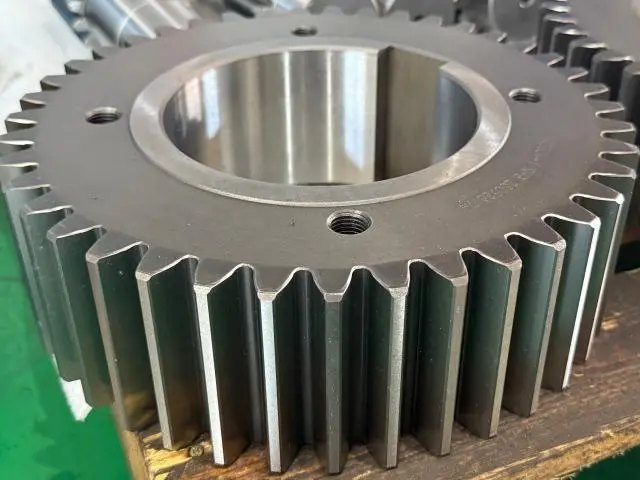
Understanding Industrial Spur Gears: Fundamentals and Applications
The Core Structure and Operating Principles
Spur gear teeth are straight and aligned with the gear's axis. This basic shape lets two meshing gears engage smoothly, imparting torque and rotational motion. Spur gears provide radial loads, unlike helical gears, which generate linear forces. This simplifies bearings and makes housings lighter and cheaper. Modern gears usually feature involute tooth profiles to maintain contact ratios and power transmission even when loads shift.
Direct tooth-to-tooth contact is key. The driving gear teeth press against the driven gear teeth as it spins. It produces a good mechanical connection that prevents gear sliding. Spur gears are suitable for motor reducers, compact gearboxes, and agricultural equipment that need precise speed ratios and time alignment.
Material Selection and Manufacturing Excellence
Spur gear durability and performance depend on their material. High-quality gears are made from 45# steel, 42CrMo, AISI 4140, 20CrMnTi, and SAE 4340. Materials are selected for the task. We use sophisticated forging, cutting, hobbing, milling, and grinding to create ISO 5-6 precision gears. Carbonizing, quenching, tempering, and induction hardening increase surface hardness to 58–62 HRC. This makes the material wear-resistant and long-lasting.
Grinding teeth smooths them further, improving accuracy and reducing noise. Small transmission systems for domestic appliances and heavy-duty industrial gears may fit the 0.5–50 module range. Engineers may customize gear teeth, face width, and pressure angles to meet their demands.
Broad Industry Applications and Real-World Impact
Industrial Spur Gears are popular. They are the main reducers in industrial and warehouse automated conveyor system motor gearboxes. They slow down and boost torque to move heavy items. This dependability saves expensive assembly line failures and preserves productivity.
Rugged tillers, harvesters, and irrigation pumps use spur gears. Simple design allows field maintenance and repair, keeping them running throughout planting and harvesting.
Power plant secondary drives use precise ground spur gears. While operating 24/7 in hot settings, AGMA Class 12 precision lowers vibration and noise. Mining ball mills spin cylindrical mills with large-diameter girth gears under high shock loads and harsh situations where chain drives fail.
Key Advantages Driving Adoption
When it comes to buying goals, spur gears are appealing because of a few main benefits:
- Simple tooth design cuts lead times and equipment costs. Competitive unit pricing advantages mid-sized OEMs with 500,000–3 million RMB procurement budgets.
- Spur gears' rolling contact and low friction provide 98–99% transmission efficiency. This gradually reduces energy waste and equipment expenses.
- Not having axial thrust simplifies bearing selection and housing design for installation and maintenance. Routine maintenance technicians may lubricate and inspect without training.
- The gears can take enormous radial loads and perform consistently under changing conditions. It protects production and equipment.
- Flexible customization: Low minimum order quantities and single-item creation enable prototype development and large-scale equipment assembly and after-sales replacement parts manufacture.
- Spur gears provide purchasing managers with the best price, speed, quality, and durability.
Industrial Spur Gear vs Other Gear Types: Making Informed Choices
Performance Characteristics and Operational Suitability
Product demands determine whether to utilize spur, helical, or bevel gears. Helical gears are quieter because their angled teeth engage slowly. They cause axial thrust; thus, bearings and housings must be stronger. The system becomes increasingly costly and sophisticated. Spur gears reduce axial tensions, which simplifies engine design and decreases bearing costs, which is beneficial for purchasing teams looking to save money.
Power flows between shafts at right angles using bevel gears. Some geometries need them, but constructing them is harder and costs more than spur gears for parallel shaft configurations. Spur gears are cheaper, simpler to install, and require less maintenance when the shafts are parallel.
Load Capacity and Efficiency Differences
Spur gears are ideal for transferring a lot of force in a compact area. Their full-face tooth contact evenly distributes stresses, improving load-bearing. Although helical gears are smoother, their tilted contact reduces their effective face width. To meet spur gear load ratings, larger gears are occasionally required.
Spur gears are efficient over a broad range of loads because they have less moving friction. Helical gears have greater contact, but their teeth meet at an angle; thus, they lose more friction. Spur gears are best for energy savings and operating cost reduction.
Material Selection Aligned with Operational Demands
What you utilize affects durability, affordability, and performance. For heavy-duty mining and construction tools, alloy steels like 40CrNiMo and SAE 4340 are ideal. Carburizing heat treatment makes the exterior robust and wear-resistant and the interior shock-absorbing, making it ideal for impact loads.
42CrMo or AISI 4140 are suitable candidates for moderate-duty purposes because they balance strength and machining ease, lowering manufacturing costs while maintaining performance. Material certifications and mill test reports (MTRs) help equipment OEMs and MRO distributors in Southeast Asia and the Middle East monitor items and address quality consistency problems.
When High Precision Matters
Standard spur gears work well for most mechanical drives where small errors are acceptable. In servo-driven systems, robotics, and precision instrumentation, high-precision spur gears that are ground to an ISO 5–6 grade of accuracy are necessary. Tighter tolerances cut down on backlash, improve positioning accuracy, and lower vibration, all of which directly improve the overall performance and return on investment of the system.
The extra cost of precise grinding has to be weighed against the long-term benefits, such as longer machine life, fewer repair visits, and higher machine reliability. Technical talks with providers in great detail make it clear when upgrading to high-precision versions is worth the money.
Buying and Procuring Industrial Spur Gears: A Practical Guide
Reliable Sourcing Channels and Supplier Verification
To do global business-to-business procurement, you need to find reliable providers who can consistently send high-quality goods on time. Buyers can find possible partners on well-known sites like Alibaba International, Google searches, and trade shows in the business, like PTC Expo. To check a supplier's trustworthiness, you need to look at their certifications (ISO compliance), production sites, and technical skills.
If a seller can give you material approvals, dimensional inspection reports, and heat treatment records, that shows they care about quality and being honest. Reliability is also shown by long-term partnerships with well-known mechanical engineering companies. Before agreeing to large orders, procurement managers should ask for samples of gears to check the finish quality, accuracy of measurements, and material qualities.
Customization Options and OEM Partnerships
Customization distinguishes skilled providers. Successful OEM practices begin with demand communication. Engineers discuss application, load, environment, and integration restrictions. Design plans outline these requirements. Specifications include module, teeth count, face width, bore, and keyways.
Hone or mill teeth, forge blanks, heat treat to harden, and grind for precision. Before packaging, quality control examines measurements, surface hardness, and material composition. Clear progress updates in this 35–60-day manufacturing cycle improve confidence and strategy.
Volume discounts encourage larger purchases, lowering unit prices for Industrial Spur Gear orders. This is crucial for wholesalers with additional parts and gear. Prototyping and small batch testing are affordable with one-item minimum orders.
Pricing Factors and Cost Optimization
The price depends on the type of material chosen, the precision grade, how hard it is to make, and the number of orders. Standard spur gears made of carbon steel (45#) that is moderately hard (45–50 HRC) are the most cost-effective choice for most uses. It costs more per unit to upgrade to alloy steels (42CrMo, AISI 4140) and higher hardness (58–62 HRC), but they last longer, so you don't have to buy as many replacements over time.
Precision grinding costs more, but it produces tighter tolerances that are needed for tough jobs. Instead of just looking at the initial purchase price, procurement teams should figure out the total cost of ownership, which includes things like how long something will last, how often it needs maintenance, and the risk of downtime. Tiered pricing can be used for volume sales, which makes buying in bulk more appealing for yearly supply deals.
Logistics, Delivery, and Import Compliance
Excellent logistics management ensures gear arrives on schedule and in excellent condition. Custom packaging with shock-absorbing coverings and hardwood boxes reduces tooth surface damage to 0.1% during delivery. Depending on urgency and size, sea freight, air freight, and the China-Europe rail network may transport products rapidly and affordably.
Real-time tracking systems show what's occurring from plant loading to delivery. Fix issues before they happen and predict their arrival. Follow import guidelines for seamless cross-border commerce. This includes RoHS/REACH compliance for European markets and customs documentation. Experienced suppliers can manage all these obstacles and provide comprehensive logistical assistance, making overseas shopping easy.
Ensuring Peak Performance: Design, Maintenance, and Troubleshooting
Critical Design Parameters for Durability
For optimal spur gear performance, start with precision design. A tooth profile with an involute form ensures smooth contact and constant velocity. Module (metric pitch) influences tooth size; larger modules carry greater weight but increase gear size. The pressure angle, generally 20 degrees, impacts tooth strength and load distribution. Weight capacity depends on gear face width. Wider gears may handle more weight but cost more.
Load capacity depends on material qualities, safety parameters, operating speed, and transmitted torque. Engineers must consider service circumstances, including shock loads, severe temperatures, and whether the item will be utilized constantly or intermittently, when choosing materials and heat treatments. With correct estimations, you may avoid under-designing, which causes early failure, and over-designing, which wastes resources.
Maintenance Best Practices for Extended Lifespan
Regular maintenance enhances equipment life and reduces unexpected downtime. Proper lubrication is crucial. Moderate-speed activities benefit from splash lubrication, whereas high-speed or highly loaded gears benefit from forced oil circulation. AGMA 9005-E02 requires lubricant consistency to meet operating temperatures and speeds. Regular oil analysis may detect wear-related metal particles, allowing you to intervene before a catastrophic breakdown.
Get regular exams to monitor tooth wear, pitting, and breakage. Edge loading from misaligned shafts causes quick wear. Alignment checks prevent it. Vibration analysis detects bearing or imbalance issues early. Gear teeth should be clean to prevent abrasion. The time between service visits increases.
Troubleshooting Common Issues
Unaligned parts, damaged bearings, and insufficient lubricant generate noise. Fixing the balance and adding oil usually stops the noise. Backlash, the gap between teeth, should be minimized. Too much backlash indicates worn or improper assembly. Fixing the center distance or replacing gears fixes the system.
Pitting and scuffing result from poor lubrication or overload. These issues may be resolved by thickening the grease or modifying the gears to reduce load. Suppliers who provide technical assistance, installation, and after-sales service speed up troubleshooting and eliminate operating disruptions. Operating with professional assistance increases trust and dependability.
Why Trusted Suppliers and Quality Matter in Industrial Spur Gears
Certifications and Compliance Assurance
Following business norms is the first step in quality assurance. Consistent production methods, traceability, and thorough testing are all made possible by ISO-compliant manufacturing processes. Certifications show that a supplier is dedicated to quality management and always making things better. Material certifications check the makeup of the alloy and the results of the heat treatment. This eases worries about uniformity from one batch to the next.
Following rules about safety and the environment, like RoHS and REACH, is becoming more and more important, especially for companies that sell their goods in Europe and North America. When suppliers provide complete paperwork, customer audits and regulatory entries are streamlined, which lowers the administrative load.
Customer Service and Warranty Provisions
Top-tier merchants thrive in customer service. Responding to inquiries and quotes creates trust. Clear production updates help customers plan. Samples allow you to try it before ordering in bulk.
Warranty terms, generally one year, cover manufacturing defects and premature breakdowns. Fast post-sale assistance for technical concerns, new parts, and field service makes the product more dependable. Expert advice during gear design ensures that the gears fulfill application demands, saving time and money on redesigns.
Case Examples and Proven Track Records
Suppliers can show what they can do by having successful relationships with clients. Long-term partnerships with well-known mechanical engineering companies prove technical proficiency and dependability. Delivering high-precision gears for aerospace uses or heavy-duty gears for mining equipment shows that the company is flexible and reliable.
Delivery records that are written down show that shipping and handling are done correctly and on time. Case studies that show how problems were solved—by choosing special materials, speeding up production schedules, or coming up with new ways to adapt designs—give potential clients more faith and trust in your business.
Future Trends Shaping Spur Gear Technology
New developments in the study of materials, like powder metallurgy and composite materials, offer gears that are lighter and stronger. Digitalization, such as combining CAD and CAM and using additive production, speeds up the process of testing and making changes. Automation improves the accuracy and consistency of manufacturing while cutting down on lead times.
IoT sensors and data analytics will make predictive repair possible, which will extend the life of gear and stop unplanned downtime. Working with suppliers who are thinking ahead gives you access to these new ideas and helps you stay ahead of the competition in markets that are changing quickly.
Conclusion
Industrial Spur Gears are still the most effective way to move power in a huge range of situations. Their straightforward layout, high level of efficiency, and cost-effectiveness meet the most important procurement goals: reasonable prices, reliable delivery, and consistent quality. When procurement managers and engineers know about the basics of construction, the qualities of materials, and the best ways to maintain equipment, they can make decisions that improve performance and lower the total cost of ownership. When you choose a reliable supplier with proven technical skills, a wide range of customization options, and strong logistics support, you turn component sourcing into a strategic partnership that leads to operational success and long-term dependability.
FAQ
1. What is the main difference between spur gears and helical gears regarding noise and efficiency?
Because their teeth are angled, helical gears make less noise because the teeth engage more slowly. But this design creates axial thrust, which means that the bearing setups need to be more complicated and the cost goes up. Spur gears are more efficient because they get rid of axial forces, make housing design easier, and lower the cost of bearings. They are a little noisier at higher speeds, though. When the speed is less than 20 meters per second, spur gears are the most cost-effective option without losing performance.
2. What materials are recommended for heavy-load Industrial Spur Gear applications?
Alloy steels like 40CrNiMo, SAE 4340, and 20CrMnTi are good for heavy-load uses. When these materials are heated through carburizing or cooling and tempering, they get a top hardness of 58 to 62 HRC while keeping their tough core. This mix gives great resistance to wear and great shock absorption, which is important for heavy tools used in mining, building, and other harsh environments.
3. What are typical lead times for custom Industrial Spur Gear orders?
Depending on how complicated the job is, how much of it there is, and how many are ordered, making a custom spur gear usually takes 35 to 60 days. Forging or cutting blanks, tooth cutting, heat treatment, grinding, quality control, and packaging are all included in this time frame. Procurement teams can make better plans when suppliers give clear updates on progress and allow for flexible scheduling. This helps them balance delivery speed with quality, cost, and production speed.
Partner with a Trusted Industrial Spur Gear Manufacturer
With 15 years of experience and ISO-compliant methods, YIZHI MACHINERY specializes in making custom gears and exporting precision mechanical parts all over the world. Our Industrial Spur Gear solutions are made from high-quality materials like 42CrMo and AISI 4140. They are then heated and ground very carefully to reach ISO 5-6 precision grades and a surface hardness of up to 62 HRC. We offer low minimum order amounts, production of a single item, and bulk discounts to meet the needs of a wide range of OEM and MRO customers. We send reliable gears within 35 to 60 days, covered by custom packaging that keeps damage rates below 0.1%. We do this with advanced CNC machining centers, smart heat treatment lines, and end-to-end logistics tracking. Our all-in-one service includes design advice before the sale, reports on production that happen at the same time, a one-year warranty, and quick help after the sale. Contact us at sales@yizmachinery.com to get a unique quote and learn how our knowledge can help you get the most out of your power transfer needs.
References
1. Dudley, D.W. (1994). Handbook of Practical Gear Design and Manufacture. CRC Press.
2. American Gear Manufacturers Association. (2004). AGMA 2000-A88: Gear Classification and Inspection Handbook.
3. Townsend, D.P. (1991). Dudley's Gear Handbook: The Design, Manufacture, and Application of Gears. McGraw-Hill.
4. ISO 1328-1:2013. Cylindrical Gears – ISO System of Flank Tolerance Classification.
5. Radzevich, S.P. (2012). Dudley's Handbook of Practical Gear Design and Manufacture. CRC Press, Second Edition.
6. Maitra, G.M. (2013). Handbook of Gear Design. Tata McGraw-Hill Education.

USER EVALUATE
Here is the customer's evaluation of us