


Industrial Bevel Gear: Precision for Smooth Power Transfer
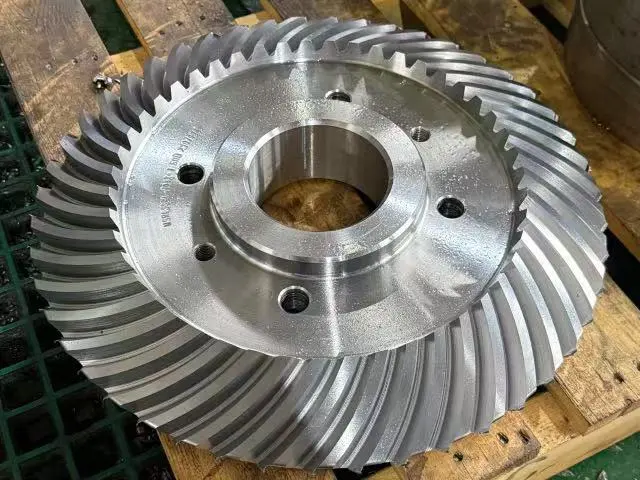
Precision-engineered bevel gears are essential for machines that need to direct power at an angle, like a mine loader, an aerospace actuator, or a conveyor belt in a production line. An Industrial Bevel Gear moves rotational motion between shafts that cross each other, usually at a 90-degree angle. It does this by providing power efficiently while reducing energy loss and mechanical wear. For mining operations, aircraft mechanisms, and heavy industrial equipment, where dependability in harsh conditions is a must, these parts are the backbone of power transfer systems.
Introduction
Power transmission in tough industrial applications requires components that function well under stress, temperature changes, and constant usage. Industrial Bevel Gears easily transmit motion between angled gears. Because their teeth are cone-shaped, they can accommodate intersecting shaft geometries better than spur gears. This makes them crucial for equipment that works in small places and with shifting power directions.
Gear performance relies on precision. Advanced machining methods, including hobbing, milling, and grinding, combined with heat treatments like carburising and chilling, provide strong tooth surfaces. Material selection is crucial. 18CrNiMo7, AISI 4140, and SAE 4340 alloy steels may power mining crushers, aviation gears, and industrial equipment drives.
Trustworthy suppliers realise one size doesn't fit all. Businesses may maximise tool performance by using torque, operating speed, and weather-specific solutions. Equipment made by skilled manufacturers will perform better, endure longer between service visits, and cost less. Standard settings or bespoke designs, this applies.
Understanding Industrial Bevel Gears: Types, Design, and Operation
Bevel gears come in a number of different shapes and sizes, each designed to meet specific working needs. Knowing about these differences helps buying teams choose parts that meet the performance needs of their machines.
Straight Bevel Gears: Simplicity with Limitations
When you move toward the cone's tip, the teeth on a straight bevel gear get thinner along straight lines. Their simple shape makes them easy to make, which lowers the cost of production. But tooth contact happens all at once across the whole face width, making noise and slowing down operations. These gears work well in low-speed situations where cost-effectiveness and ease are more important than noise, like in hand-operated valves or low-rpm machines.
Spiral Bevel Gears: Smooth Power Transfer at High Speeds
Spiral bevel gears have bent teeth that connect slowly, spreading the load across several teeth at the same time. This progressive contact lowers shock loads, lowers sound, and lets it work at speeds higher than 3,000 RPM. The Gleason cutting method, which is the standard for making precise spiral bevels, makes tooth shapes that keep their consistent contact patterns when they are loaded. Spiral designs are good for mining tools, aircraft motors, and high-speed industrial drives because they are efficient above 95% and quiet.
Hypoid Gears: Offset Axes for Compact Layouts
With hypoid gears, the pinion and gear planes can be moved away from each other, which makes the systems smaller. This offset makes it easier for the teeth to slide against each other, which needs special high-pressure lubrication but lets the motor produce more power in small areas. Automotive differentials made hypoid designs famous, but they are now also used in Industrial Bevel Gears systems for things like moving materials when room is limited, and engineers need to come up with creative solutions.
Material Selection and Heat Treatment
Carefully chosen materials and heat processes are needed to make high-performance bevel gears. Alloy steels like AISI 8620, 20CrMnTi, and 40CrNiMo are very tough at the centre and can be hardened on the outside. Adding carbon to the surface through carburising and then cooling makes the case hardness between 58 and 62 HRC. This makes tooth surfaces that don't wear down and flexible cores that can handle shock loads without cracking. This is very important for mining equipment that has to deal with quick load spikes.
Precision in manufacturing has a direct effect on efficiency. ISO 8–9 grade precision makes sure that there is little transfer error, which lowers noise and makes parts last longer. Precision grinding after heat treatment fixes thermal warping, creating tooth shapes that keep the best contact patterns across the full range of loads.
Comparing Industrial Bevel Gears: Which Gear Suits Your Application Best?
To pick the proper gear, consider how design characteristics match company demands. Each design has advantages based on speed, torque, noise tolerance, and maintenance.
Straight bevel gears excel in instances when convenience and low cost trump speed and noise. Their quick tooth attachment slows things down but simplifies manufacturing and mending. Straight bevels are utilised in agricultural equipment, slow-moving conveyors, and hand-held devices when their constraints don't interfere.
Most spiral bevel gears are designed to smoothly manage high speeds. Slow tooth contact reduces dynamic loads, sending more power with less noise. Machine tool spindle drives, aviation actuators, and industrial gears employ spiral bevels when performance justifies the additional labour. These gears maintain gearbox efficiency over 96% between 1,500 and 5,000 RPM when completely greased.
Tooth form matters when comparing load capacity. Spirals can take 30–50% more weight than straight bevels because they disperse stresses over more teeth. This enables you to transfer more power or use smaller gears with the same ratings to save space or weight.
Distinct varieties create distinct noises. Straight bevels create 75–85 dB when loaded, but spiral types make 65–75 dB since they join gradually. Aircraft and precise manufacturing must be quieter to fulfil safety regulations and preserve hearing than mining operations with enclosed equipment.
Total cost of ownership depends on upkeep. Straight bevels are simpler to maintain since they can bear misalignment and need less oiling. Align and lubricate spiral and hypoid gears using specific lubricants. With proper maintenance, they will last longer. Buyers should consider downtime and replacement frequency when comparing the initial cost to the lifetime cost.
Applications and Benefits of Industrial Bevel Gears in Heavy Machinery
In many fields, like those that depend on dependability for their operations, bevel gears make it possible to transfer power. Because they can change the direction of motion at precise angles, they can't be replaced in anything from underground mine tools to flight control systems.
Mining Equipment: Durability Under Extreme Conditions
Underground mining parts are susceptible to stress loads, harsh dust, and frequent usage. In crusher drives and conveyor systems, 42CrMo or SAE 4340 alloy steel large-module spiral bevel gears are employed. Surface hardness of 58–62 HRC and case depths of 1.5–3 mm prevent abrasion and stress wear. Mining firms believe well-oiled and aligned gears may endure over 15,000 hours.
One South American copper mine replaced imported gears with spiral bevels made for their crusher. The customised tooth design and material reduced unplanned downtime by 40% over two years. In challenging situations, purpose-built designs operate better than generic ones.
Aerospace Systems: Precision and Weight Optimisation
Aerospace applications need great power density and low weight. Precision-ground AGM Industrial Bevel Gears. Flight control devices, auxiliary power units, and rotor drives require Q12–Q15 quality criteria. After vacuum carburising, AISI 9310 and 18CrNiMo7 exhibit high strength-to-weight ratios. Every ounce matters in aircraft. Optimised gear designs reduce part weight by 15–25% while maintaining load capacity.
Aerospace gears are tested for wear, vibration, and reliability at all temperatures. Material certifications, heat treatment settings, and testing results are recorded for all parts made by manufacturers. Flight authorities demand this.
Industrial Machinery: Versatility Across Applications
Manufacturing machinery, textile tools, and packing systems use bevel gears for tiny right-angle drives. Machine tool spinning drives employ precision spiral bevels to power cutting heads accurately. Packaging lines with limited space employ bevel gear sets for forming stations. Off-road vehicles employ bevel gears for steering because they can bear shock loads and provide precise direction.
Because bevel gear sets are tiny, they may be fitted several ways. Equipment builders install motors, pumps, and valves to maximise space and power flow. This architectural flexibility accelerates product development and allows companies to create innovative machine combinations to stand out in competitive marketplaces.
Maintenance and Optimisation: Ensuring Longevity and Top Performance
With regular repair, gears last longer and don't break down when they're least expected, which stops production. Your investment is safe with proactive strategies like cleaning, inspection, and condition tracking.
Lubrication Best Practices
Extreme-pressure gear lubricants prevent metal-to-metal contact by forming a film on tooth surfaces. Oil viscosity should match utilisation speeds and temperatures. ISO VG 220-320 oils are suitable for most commercial purposes. Working circumstances determine lubrication frequency. Dusty mining equipment requires more frequent inspections and oil changes than factory-clean equipment.
Early wear is detected using oil research equipment. Higher iron levels cause acute wear, whereas copper or tin levels strain bearings. Fixing issues immediately prevents serious breakdowns and extends part life. Every month, critical equipment that breaks down regularly and costs a lot to repair should be evaluated.
Inspection and Wear Monitoring
Routine maintenance of Industrial Bevel Gears detects pitting, scoring, and tooth fracture before they become issues. Pitting, tiny holes on teeth, indicates that the material cannot sustain the impact force. Replacements may be scheduled during downtime since surface-initiated pitting is slow. To avoid tooth breakage, subsurface-initiated cracking must be repaired immediately.
Vibration analysis detects issues before they become visible. Gear housing accelerometers monitor shaking. Frequency or intensity changes indicate gear misalignment, unequal load, or bearing deterioration. Trending analysis reveals wear and tear patterns, allowing condition-based care to replace parts based on their actual status rather than timetables.
Alignment and Installation Precision
Effective gear installation impacts whether they last or break down early. The manufacturer sets the mounting distance—where the pinion is axially in respect to the gear—at 0.05 mm. Edge loading occurs when the mounting distance is wrong, concentrating stresses on the teeth rather than the face. This accelerates wear and reduces load capacity.
Backlash adjustment decreases binding and stress when the load changes direction. Industrial diameters typically range from 0.1 to 0.30 mm. Without adequate backlash, teeth might become trapped and heat up. Too much backlash may destroy teeth from impact loads. Precision shimming during assembly ensures the appropriate offset throughout operating temperatures.
Procuring Industrial Bevel Gears: What You Need to Know
Decisions about where to get things affect how well they work, when they arrive, and how much they cost in the long run. Working with skilled makers will help you get parts that meet your needs and fit into your working schedule.
Supplier Evaluation and Quality Assurance
Reputable manufacturers maintain ISO 9001 certification and apply quality control techniques throughout manufacturing. Inspections should include teeth geometry measurement instruments, hardness testing equipment, and material tracking systems. Request inspection records including critical measurements, surface hardness, and material certificates.
Yizhi Machinery has been creating handcrafted gears since 2016 and has 15 years of expertise. CNC gear machining centres, automated grinding tools, and smart heat treatment lines provide ISO 8–9 precision in our plant. We create bevel gears from 45# steel, 20CrMnTi, 40CrNiMo, AISI 4140, and 18CrNiMo7. We utilise carburising, cooling and tempering, or induction hardening to achieve the desired surface hardness.
Customisation Capabilities and Specifications
Specialised machinery needs custom gears, while common gears work adequately for most applications. Choose your tooth count, pressure angle (14.5° or 20°), and surface hardness (45-50 HRC or 58-62 HRC) for module sizes 0.5 to 50. The procedure is sophisticated; therefore, production schedules of 35 to 60 days provide time for plan verification, material acquisition, and quality assurance.
We can create one item as a test or spare part with a minimal minimum purchase. This allows design teams to make modifications fast and plant maintenance departments to retrieve old parts without buying much inventory.
Logistics and Support Services
Shipping goods around the world comes with risks. For example, gear teeth can be damaged by impacts while being handled. We use custom packing with liners that absorb shock and wooden crates that are made to protect tooth surfaces. Transport damage rates below 0.1% show that the packing works. When you combine sea freight, plane freight, and rail links, you get multi-channel logistics, which gives you the freedom to meet your supply deadlines and budget needs.
Real-time tracking tools let you see where your package is at all times. You can safely plan installation schedules when you get updates at key points like factory loading, customs clearance, and final delivery. Our expert team can help with creation before the sale, keep you up to date on production, and help you after the delivery. Our manufacturing quality is backed by a one-year guarantee, and any problems can be fixed quickly according to our procedures.
Conclusion
When performance can't be sacrificed, Industrial Bevel Gears are used to reliably transfer power in mining operations, industrial tools, and aerospace systems. Understanding the different types of gear, the qualities of the materials used, and the needs of the application helps buyers find solutions that make the equipment work better while keeping costs low over its lifetime. Good maintenance habits, like managing greasing, following inspection rules, and making sure everything is lined up correctly, will protect your investment and increase uptime. Working with skilled makers that offer customisation options, quality assurance, and full support will make sure that your power transfer systems are reliable enough for your operations.
FAQ
1. What Distinguishes Straight from Spiral Bevel Gears Operationally?
When teeth on a straight bevel gear suddenly touch across the whole face width, noise is made, and high-speed use is limited. Spiral bevel gears have curved teeth that connect gradually. This makes action smoother at speeds over 3,000 RPM with much lower noise levels. Spiral shapes can also handle 30 to 50 per cent more power because the load is spread across more teeth at the same time.
2. How Do You Adjust Backlash in Bevel Gear Assemblies?
Changing the pinion's horizontal fixing distance from the ring gear is how backlash is adjusted. Precision shimming during assembly gets backlash levels defined by the maker, which are usually between 0.1 and 0.30 mm for commercial uses. When backlash is set correctly, binding is avoided, and shock is kept to a minimum during load reversals. If the fix is wrong, it can either jam because there isn't enough space or be damaged by impacts because there is too much clearance.
3. What Causes Pitting on Gear Tooth Surfaces?
Pitting happens when contact pressures are higher than the material's failure limits. Misalignment or not enough lubrication viscosity can make this problem worse. Surface-initiated pitting starts out as small holes on the sides of teeth and moves slowly forward. Pitting that starts below the surface grows faster, which means the gear is getting close to its wear life limit. Pitting can be avoided by ensuring proper greasing, alignment, and load control.
Partner with YIZHI MACHINERY for Precision Gear Solutions
YIZHI MACHINERY makes custom bevel gear solutions that are built to last in harsh industrial settings. We have been making Industrial Bevel Gears for a long time and know how to use advanced CNC cutting, precise grinding, and smart heat treatment to make parts that meet ISO 8-9 grade standards. We offer 20CrMnTi, 40CrNiMo, AISI 4140, and 18CrNiMo7 metals, and their surface hardness ranges from 45 to 50 HRC to 58 to 62 HRC, depending on your needs. We have low minimum sales, can make just one thing, and can deliver in 35 to 60 days. Contact us about your needs, get expert drawings, or get a full quote by emailing sales@yizmachinery.com.
References
1. American Gear Manufacturers Association. AGMA 2003-C10: Rating the Pitting Resistance and Bending Strength of Generated Straight Bevel, Zerol Bevel, and Spiral Bevel Gear Teeth. Alexandria: AGMA Publications, 2010.
2. Dudley, Darle W. Handbook of Practical Gear Design and Manufacture. 2nd ed. Boca Raton: CRC Press, 2012.
3. International Organisation for Standardisation. ISO 10300: Calculation of Load Capacity of Bevel Gears. Geneva: ISO Standards, 2014.
4. Litvin, Faydor L., and Alfonso Fuentes. Gear Geometry and Applied Theory. 2nd ed. Cambridge: Cambridge University Press, 2004.
5. Radzevich, Stephen P. Theory of Gearing: Kinematics, Geometry, and Synthesis. 2nd ed. Boca Raton: CRC Press, 2018.
6. Stadtfeld, Hermann J. Gleason Bevel Gear Technology: Manufacturing, Inspection and Optimization. Rochester: The Gleason Works, 2014.

USER EVALUATE
Here is the customer's evaluation of us