


Why Precision Parts Machining Matters in Medical Device Manufacturing
Precision Parts Machining is the most important part of making modern medical devices, and tiny errors directly affect patient safety and regulatory approval. Accuracy within micron-level specs is needed for medical parts, which can't be done with normal manufacturing methods. This unique way of machining uses Computer Numerical Control (CNC) technology, advanced material science, and strict quality standards to make parts for surgical instruments, implantable devices, and diagnostic equipment. Very important things are at stake: a mistake in a single measure can make a gadget useless or even dangerous to life.
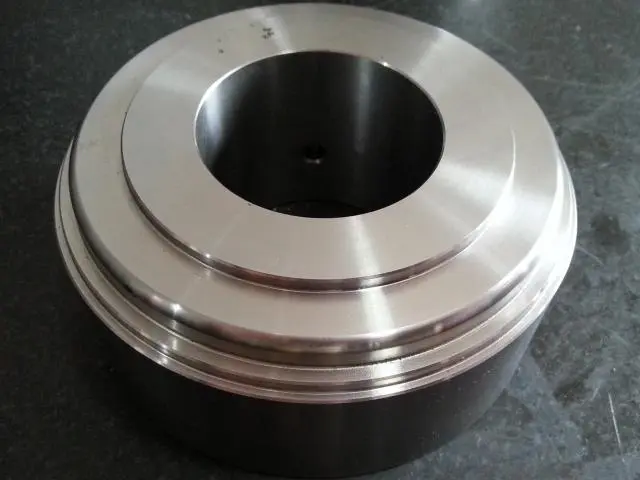
Understanding Precision Parts Machining in Medical Device Manufacturing
What Distinguishes Medical-Grade Machining from Standard Methods
The medical device business demands a different calibre of manufacture than most industrial uses. Standard machining tolerances are typically ±0.1mm while medical components sometimes require ±0.002mm tolerances – roughly fifty times tighter. The difference is due to the importance in medical applications where implants need to fit perfectly with the human body and surgical instruments need to work perfectly in sterile environments. Precision Parts Machining: Medical devices sometimes require complicated parts made from biocompatible materials, and multi-axis CNC centers can handle such tasks. The systems are used to take digital drawings and make physical parts by carrying out coordinated operations such as turning, milling, grinding and drilling using CAD/CAM software. The method handles difficult materials such as titanium alloys for orthopaedic implants, medical-grade stainless steel for surgical tools and speciality polymers such as PEEK for non-metallic applications.
Material Science in Medical Component Production
The materials used in the device directly affect its performance, lifespan and patient outcomes. For corrosion resistance, medical device producers often use 316L stainless steel, for strength-to-weight benefits in implants, Ti-6Al-4V titanium, and for joint replacements, cobalt-chromium alloys. These materials pose distinct problems in machining . Titanium has a very limited thermal conductivity such that the heat generated in the cut remains very close to the cutting edge . Hardened steels require special tools to maintain tight dimensional tolerances .
Materials such as 45# steel, 20CrMnTi, 35CrMo are used at YIZHI MACHINERY which are highly regarded in industrial machinery, aerospace and the medical industry. Our surface finishing capabilities include galvanising, blackening and anodising that preserve components while meeting the biocompatibility criteria needed for medical applications. Surface hardness HV 500-800 guarantees endurance in multiple sterilisation cycles and operating stress.
Regulatory Compliance as a Non-Negotiable Standard
The production of medical devices is highly regulated by the FDA in the United States and similar organisations across the world. ISO 13485 accreditation shows that the quality management system of the producer satisfies the criteria for medical devices. This accreditation demands total documentation, proven processes and traceability from the procurement of raw materials up to final inspection.
Procurement professionals should always ensure that their machining partners have current qualifications and consistently follow Good Manufacturing Practices (GMP). These rules shield manufacturers from costly recalls, legal penalties and harm to their brand, while making patient safety the first priority.
The Precision Parts Machining Process and Quality Control
From Design Intent to Physical Component
The manufacturing journey begins with collaborative design reviews where engineers analyze CAD models for manufacturability, identifying potential challenges before production commences. This proactive approach prevents costly revisions and ensures components meet functional requirements while remaining economically viable to produce.
The actual machining sequence typically progresses through several stages:
1. Roughing Operations: The first step of removing material establishes basic geometry while leaving excess stock for finishing passes. CNC turning machines create cylindrical features on rotating workpieces, while milling machines use multiple cutting directions to shape prismatic forms.
2. Semi-Finishing: Intermediate passes refine dimensions closer to final specifications, reducing surface roughness and preparing components for precision finishing. This stage balances material removal rates with dimensional accuracy, optimizing cycle times without compromising quality.
3. Precision Finishing: Final operations achieve target tolerances and surface characteristics. Grinding processes deliver exceptional surface finishes (Ra values below 0.8µm) and dimensional accuracy within single-micron ranges. Drilling operations create precise holes for fasteners or fluid passages using specialized tooling.
Our production timeline of 35-60 days accounts for these meticulous processes, allowing adequate time for quality verification at each manufacturing stage rather than rushing components through production.
Advanced Inspection Methodologies
Quality control in the manufacture of medical components is significantly more than just pass/fail measuring. Coordinate Measuring Machines (CMM) do three dimensional examinations, comparing produced parts to CAD models to check every key measurement. These technologies identify variations in the microns range, so components will work properly once they are integrated into entire devices.
Surface profilometry quantifies texture features that are critical for applications such as orthopaedic implants, where certain roughness patterns facilitate bone integration. Dye penetrant inspection and other non-destructive testing procedures can detect surface flaws that are not visible to the naked eye, preventing faulty parts from reaching assembly lines.
Statistical Process Control (SPC) approaches are used to monitor production trends, allowing process drift to be identified before components go out of specification limits. This predictive method lowers scrap rates and ensures the batch-to-batch uniformity required in regulated medical production.
Documentation and Traceability Requirements
The history of producing a medical device is followed with full documentation for each of its parts. The FAI reports confirm that the first production pieces fulfil all standards prior to full-scale fabrication. Material certifications examine chemical composition and mechanical qualities to ensure materials meet expectations in the demanding environment of medical applications.
Production travellers collect inspection data, operator IDs and machine settings as they track parts through the production process. This documentation allows you to do root cause analysis if quality concerns arise, and it meets regulatory requirements for production traceability.
Comparing Precision Parts Machining Solutions for Medical Device Procurement
Evaluating Manufacturing Methodologies
Procurement teams have to decide between a number of machining processes, each with its own benefits. Conventional manual machining offers flexibility for prototype development and extremely low numbers, but does not give the repeatability needed for regulated medical manufacturing. Humans are unique; machines are not.
CNC automation allows for more consistency from run to run as the computerised controls follow the same tool paths on each part. Multi-axis machining centers are able to machine complicated geometries in a single configuration, eliminating mistakes due to handling and enhancing efficiency. Swiss-style lathes can produce small-diameter, high-precision shafts and pins, such as those used in minimally invasive surgical equipment.
Electrical Discharge Machining (EDM) makes features that traditional cutting can’t, such complex cooling channels in surgical instrument tips or precise chambers in mould inserts. This thermal method manufactures hard materials without using mechanical force, therefore there is no risk of deformation on delicate structures.
Material Selection Impacts on Performance and Cost
Different medical uses require distinct material properties. Stainless steel alloys are cost-effective and have good corrosion resistance for reusable surgical equipment that require frequent sterilisation . Titanium is biocompatible and hence it is used for permanent implants yet it is difficult to manufacture and therefore the material and machining costs are expensive.
Radiolucent properties of engineering polymers like PEEK provide imaging compatibility, so surgeons may view the anatomy around implanted components during X-ray or CT operations. Furthermore, these polymers require particular machining conditions so that they do not melt or distort during the cutting processes.
YIZHI MACHINERY provides the option to use materials such as copper for electrical medical equipment, allowing procurement teams to optimise component requirements for their application. With our customised method dimensional tolerances, geometric tolerances and surface roughness are different for each project according to the specific needs, instead of pushing designs into pre-established solutions.
Balancing Cost, Quality, and Lead Time
Procurement experts are often juggling competing demands. Cost reduction can be aggressive and compromise quality, or it might be unreasonably tight tolerances that inflate cost with little practical advantage. “Working with your machining suppliers to value engineer together can be very effective,” she said. “There may be opportunities to open up non-critical tolerances or to use alternative materials without compromising the performance of the device through Precision Parts Machining.”
Lead time considerations are more than a manufacturing time. Reliable suppliers maintain capacity buffers and have production planning systems that can absorb schedule deviations without jeopardising quality. Rushed orders can also be a quality concern, as operators may skip inspection procedures or make setup errors under the time constraint.
Choosing the Right Precision Parts Machining Partner for Medical Devices
Certification and Compliance Verification
Regulatory certifications are the first thing to check when choosing machining partners. ISO 13485 accreditation shows the adherence to quality standards for medical devices and ISO 9001 gives the basic concepts of quality management. Vendors that provide to aerospace companies are frequently AS9100 certified, which means they’ve had to wrestle with similarly strict accuracy criteria.
FDA registration means that factories are compliant facilities that may be inspected and regulated. Procurement teams should ask for certificates and check their validity on the databases of the granting bodies, as certifications require ongoing renewals and surveillance checks.
YIZHI MACHINERY has ISO compliance quality systems created with 15 years of precise manufacturing expertise. Having supplied industrial gear, mining equipment and aircraft components, we are well placed to meet the demanding requirements required of medical devices.
Production Capacity and Scalability
Unique manufacturing problems arise from the lifespan of medical devices. The first launches will be at low levels of manufacturing, but with the ability to ramp up quickly if clinical uptake surpasses forecasts. The ability to grow production while delivering consistent quality is a characteristic that separates established businesses from restricted enterprises.
We cater to different manufacturing needs, including minimal minimum order numbers and even individual item production for prototype development. From demand communication, design drawings, manufacturing processing, quality inspection, packing and shipment, our customisation workflow offers turn-key solutions to ease procurement logistics.
Technical Support and Collaborative Engineering
Value-added relationships extend beyond manufacturing execution to include design-for-manufacturability assistance. In design evaluations, experienced machinists will see possible production problems and offer changes that may increase yield or reduce cost without compromising functionality. Working together in this way helps prevent problems occurring in production which might cause delays and overspend.
Pre-sales support include technical consulting and preparation of design drawings to ensure that the components fit the functional requirements and realities of production. Procurement teams receive real-time status updates during the production process and quality inspection reports confirm that specifications have been met. Real-time logistics tracking minimises uncertainty surrounding supply times and allows for synchronised production planning.
Quick issue response and our one year warranty provides confidence in our production quality and peace of mind to procurement teams that issues are resolved quickly. For many years we have been working with well-known companies in mechanical engineering – this confirms our reputation for dependability and technical superiority.
Evaluating Manufacturing Equipment and Capabilities
Advanced manufacturing needs advanced equipment. Medical-grade accuracy is supported by the technological basis of high-precision CNC machining centers, fully automated gear grinding machines and intelligent heat treatment manufacturing lines. Procurement teams should obtain site tours or thorough equipment inventories that ensure vendors have capabilities that align with project needs.
Inspection equipment is just as vital – CMM systems, surface profilometers and hardness testers help verify quality to the strict standards required by medical applications. CNC machines may use in-process probing devices which offer input on dimensions throughout the process so that the machine can automatically compensate for tool wear and maintain constant precision across long production runs .
Logistics Capabilities for Delicate Components
Medical components often have fine geometries that can be damaged during shipment. Scratched surfaces or damaged features can render precision-machined parts useless, leading to significant delays. The best logistics partners use customised packaging solutions that preserve components while in transit.
Our logistical advantages: Customised packaging, shock-absorbing cushioning liners, hardwood pallets. Transport damage rate less than 0.1%. Multi-channel transportation alternatives (sea freight, air freight and China-Europe freight trains) allow you flexibility in reconciling the urgency of shipping with economic concerns. With end-to-end visual tracking, customers are informed throughout the shipping process, from loading at the plant to signing on delivery, so there’s no wondering where the package is.
Future Trends and Innovations in Precision Parts Machining for Medical Devices
Automation and Industry 4.0 Integration
The medical manufacturing landscape is evolving toward connected, data-driven production environments. Industry 4.0 technologies integrate sensors, analytics, and artificial intelligence throughout manufacturing operations, creating unprecedented visibility into process performance. Real-time monitoring detects anomalies immediately, triggering corrective actions before defective parts are produced.
Predictive maintenance algorithms analyze equipment performance data, scheduling maintenance based on actual wear patterns rather than arbitrary time intervals. This approach maximizes equipment uptime while preventing unexpected failures that disrupt production schedules.
Hybrid Manufacturing Approaches
Additive manufacturing technologies are complementing traditional subtractive machining, particularly for complex internal geometries impossible to produce through conventional methods. Hybrid systems combine metal 3D printing with CNC machining in single platforms, building near-net shapes through additive processes then precision-machining critical surfaces to final tolerances.
These capabilities enable designs previously considered unmanufacturable, such as patient-specific implants with lattice structures promoting bone integration or surgical guides customized to individual anatomy. While additive processes currently suit lower production volumes, ongoing technological advancement steadily improves throughput and cost-effectiveness.
Sustainable Manufacturing Practices
Environmental consciousness is increasingly influencing procurement decisions. Medical device manufacturers face pressure to reduce their carbon footprint and minimize waste throughout supply chains. Precision Parts Machining naturally generates less waste than many alternative processes by removing only necessary material, but further improvements continue emerging.
Coolant recycling systems, energy-efficient machine tool designs, and optimized tool paths reducing cycle times all contribute to sustainability goals. Material selection increasingly considers recyclability and environmental impact alongside traditional performance criteria. Procurement teams seeking suppliers aligned with corporate sustainability initiatives should evaluate environmental management systems and waste reduction programs.
Advanced Material Development
Material science innovations continually expand options available for medical device designers. Bioactive materials promoting tissue integration, antimicrobial surfaces reducing infection risks, and shape-memory alloys enabling minimally invasive deployment represent emerging frontiers. These advanced materials often present novel machining challenges requiring specialized expertise and equipment capabilities.
Staying current with material developments ensures procurement teams can evaluate new options as they become commercially viable, potentially providing competitive advantages through improved device performance or reduced manufacturing costs.
Conclusion
Precision Parts Machining is the only company that can meet the strict standards for accuracy, quality, and regulatory compliance required for medical device manufacturing. Procurement professionals must evaluate potential manufacturing partners through multiple lenses: technical capabilities, quality systems, regulatory credentials, and logistical reliability. The selection process extends beyond simple cost comparisons, encompassing comprehensive assessment of suppliers' ability to deliver consistent quality meeting stringent medical standards. Successful partnerships balance manufacturing excellence with responsive communication and collaborative problem-solving. Precision Parts Machining will remain fundamental to translating innovative designs into life-changing devices as medical technology advances toward personalized treatments and minimally invasive procedures.
FAQ
1.What materials are optimal for machining critical medical device components?
Material selection depends on specific application requirements. Titanium alloys (Ti-6Al-4V) excel for orthopedic implants requiring biocompatibility and strength. Stainless steel 316L offers corrosion resistance for reusable surgical instruments. PEEK polymers provide radiolucency for imaging compatibility. Cobalt-chromium alloys suit high-wear applications like joint replacements. At YIZHI MACHINERY, we machine 45# steel, 20CrMnTi, 35CrMo, and copper, offering flexibility for diverse medical applications while maintaining surface hardness from HV 500-800 for durability under repeated sterilization.
2.How does precision machining enhance medical device reliability?
Tight tolerances ensure proper fit and function when components assemble into complete devices. Surface finish quality affects wear resistance and bacterial adhesion on implants. Dimensional consistency across production batches guarantees interchangeability, preventing assembly issues. Geometric accuracy ensures mechanical movements operate smoothly without binding or excessive clearances. These factors collectively determine whether devices perform reliably throughout their intended service life, directly impacting patient safety and clinical outcomes.
3.Which certifications should medical device machining suppliers maintain?
ISO 13485 certification specifically addresses medical device quality management systems, representing the industry gold standard. ISO 9001 provides foundational quality principles. FDA registration (for U.S. markets) confirms regulatory compliance. Suppliers serving multiple high-precision industries may hold AS9100 (aerospace) or IATF 16949 (automotive) certifications, demonstrating capability managing stringent requirements. Request current certificates and verify validity through issuing bodies, as certifications require periodic renewal and surveillance audits.
Partner with YIZHI MACHINERY for Medical-Grade Precision Parts Machining
With 15 years of precision manufacturing expertise, YIZHI MACHINERY produces medical device components by combining advanced CNC capabilities with ISO-compliant quality systems. We understand the exacting standards medical applications demand as a trusted Precision Parts Machining supplier to industrial machinery, mining, and aerospace sectors. Our customization workflow delivers components with tolerances, surface finishes, and material specifications tailored to your device requirements—from initial design consultation through final delivery. Production timelines of 35-60 days accommodate thorough quality verification without compromising your development schedules. With damage-prevention packaging guaranteeing transit integrity below 0.1% and real-time shipment tracking providing complete visibility, your components arrive ready for assembly. Our engineers provide pre-sales technical consultation, synchronized production updates, and one-year warranty support, establishing partnerships that extend beyond simple transactions. Whether you need prototype quantities or scalable production volumes, our low minimum order quantities and single-item production capabilities adapt to your project stage. Contact our team at sales@yizmachinery.com to discuss how our Precision Parts Machining manufacturer capabilities can support your medical device development goals with competitive quotes and technical solutions optimized for your specific applications.
References
1. Smith, J.R. & Thompson, M.K. (2021). Precision Manufacturing Techniques for Medical Device Applications. Medical Engineering Publications, Boston, MA.
2. International Organization for Standardization (2019). ISO 13485:2016 Medical Devices—Quality Management Systems Requirements for Regulatory Purposes. Geneva, Switzerland.
3. Anderson, P.L., Chen, W., & Rodriguez, E.F. (2020). "Machining Parameter Optimization for Biocompatible Titanium Alloys in Surgical Implant Production." Journal of Medical Device Manufacturing, Vol. 14, No. 3, pp. 127-145.
4. U.S. Food and Drug Administration (2022). Quality System Regulations and Medical Device Good Manufacturing Practices. Department of Health and Human Services, Silver Spring, MD.
5. Williams, D.F. (2018). Biocompatibility and Clinical Performance of Medical Device Materials. Cambridge University Press, Cambridge, UK.
6. National Institute of Standards and Technology (2020). Dimensional Measurement Standards for Medical Component Manufacturing. U.S. Department of Commerce, Gaithersburg, MD.

USER EVALUATE
Here is the customer's evaluation of us