


What Is a Spur Gear Ring? Role in Gear Assemblies?
Spur Gear Rings are rings with straight teeth cut parallel to their axis. This is crucial to mechanical power transfer systems. These rings are used as internal gears in planetary gear sets or as huge external girth gears in slewing drives and spinning machinery, unlike spur gears with solid hubs. Their main task is to efficiently transfer high torque loads while synchronizing gear groups. Industrial, mining, and aircraft actuation systems use these.
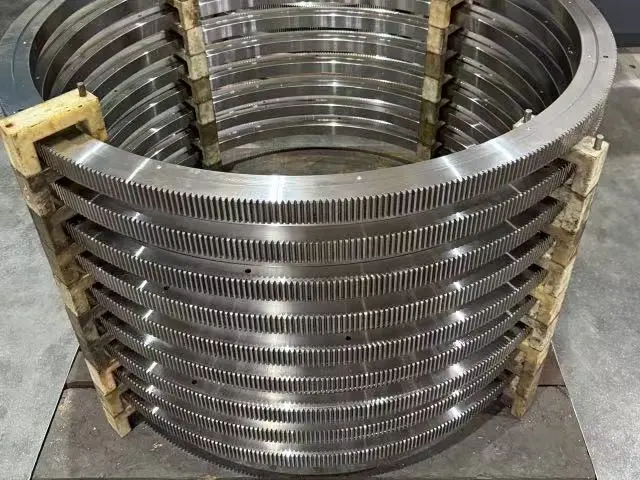
Understanding Spur Gear Rings: Definition and Core Principles
A Spur Gear Ring is built in a way that makes it different from other gear designs. Its unique shape and working features make it stand out. Since we started YIZHI MACHINERY in 2016, we've seen how these parts solve important engineering problems in a number of different fields.
What Makes Spur Gear Rings Different from Standard Gears?
The tooth shape and structure make it unique. Solid spur gears have teeth outside the center hole. However, gear rings have teeth inside or outside a hollow ring structure. They can connect with planetary gears or pinions without a fixed gear body due to their design. The shaft axis and straight-cut teeth make direct contact, transferring rotational motion. Not like helical designs, where teeth connect gradually. To make ISO 8–9 Grade parts, you must consider tooth shape factors like pressure angle, module, and involute profile accuracy. YIZHI MACHINERY uses casting, cutting, hobbing, milling, and grinding to achieve surface hardnesses from 45-50 HRC to 58-62 HRC, depending on the application.
Core Mechanical Principles in Torque Transmission
The way Spur Gear Rings work is based on direct force transfer through tooth contact. When a moving pinion meshes with the ring's teeth, contact happens across the whole tooth face width at the same time. This creates pure radial forces without any axial push. This feature makes designing bearings easier and lowers the horizontal load on shafts compared to spiral options. The load on the teeth is spread out according to well-known mechanical rules, with most of the contact stress centered at the pitch width. As part of our production process, we use induction hardening, quenching and tempering, and carburizing to make case-hardened surfaces that can withstand touch pressures of more than 1,500 MPa in heavy-duty situations. What kind of core material is used—45# steel, 20CrMnTi, 40CrNiMo, or special metals like SAE4340—has a direct effect on how much weight it can hold and how well it resists wear and tear.
Engineering Forces and System Reliability
When purchasing workers look at part specifications, they need to know about the force vectors working on gear ring teeth. Radial forces push against bearing systems, and tangential forces make the torque. Since spur designs don't have any axial forces, they don't need thrust bearings, which makes the assembly simpler. The allowed load values are based on estimates of tooth bending stress and contact stress. Our gear rings are designed with module ranges from 0.5 to 50, which lets you make them fit a wide range of needs, from motor reducers with a quarter horsepower to mine gearboxes with multiple megawatts of power. The precision grade is directly related to how accurately the signal is sent. This is very important for aircraft control systems that need to keep positional mistakes below 3 arc-minutes.
Types and Materials of Spur Gear Rings
Choosing the right type of Spur Gear Ring and material makeup is a key choice that affects how well it works, how long it lasts, and how much it costs to own. With 15 years of production experience, we've come up with a wide range of material and style choices that meet the needs of a wide range of industries.
Standard and Specialized Design Variants
Gear rings are available in various shapes and sizes to suit different applications. Standard external ring gears have outside-circle teeth. They are bolted together to make large drive rings for rotary kilns and ball mills in open gearing situations. Internal ring gears with inward teeth are used as the fixed part in planetary gearbox systems to achieve high reduction ratios in small spaces. Keyways, splines, and flanges make specialized designs easy to mount to housing structures or spinning drums. We have rings with 20 teeth for small motor reducers and 400 teeth or more for mining equipment slewing drives. The module standard determines tooth size. Compact modules (0.5–3) are better for aerospace actuators, while larger modules (10–50) can handle shock loads in industrial crushers and excavator final drives.
Material Selection for Performance Optimization
Material composition affects wear resistance, strength, and performance in different environments. YIZHI MACHINERY has several key materials. For moderate-load farm and home appliances, 45# carbon steel is economical and easy to hone or grind. For gearboxes that handle fluctuating loads and shocks, alloy steels like 20CrMnTi and AISI4140 have improved mechanical properties. Mining and heavy industrial equipment benefit from case-hardening alloys like 18CrNiMo7 and AISI8620, which are flexible but hard (58–62 HRC). We choose the right materials for each application using our metallurgy expertise to maximize efficiency and stay within budget.
Comparing Spur Rings with Helical and Bevel Alternatives
Understanding competition gear types helps buying teams decide. Helical gear rings have angled teeth that connect gradually, making them quieter and smoother than spur designs. Helical gears generate axial thrust forces, requiring more complex thrust bearings and housing. Spur gear rings reduce tooth friction, improving efficiency. Bevel gear rings transfer power between intersecting shafts but are costly and complicated to make. Spur gears are cost-effective for cement plants and mines but may be too loud for small offices.
Advantages and Maintenance of Spur Gear Rings
Spur Gear Ring technology is widely used in many industries because it is well-designed and meets practical goals like dependability, cost control, and convenience for maintenance. Taking good care of things makes them last a lot longer, which protects purchases.
Core Benefits Driving Industrial Adoption
Purchase decision-makers and plant managers like spur gear ring technology's benefits. Decades of experience highlight our strengths. With standard hobbing tools, the simple tooth design allows for fast production (35 to 60 days), competitive pricing, and thorough quality checks. Spur gears minimize friction losses through direct tooth contact, achieving over 98% mechanical efficiency. Full-width tooth contact ensures load-bearing stability, allowing higher equipment capacity without breakdowns. Additionally, lower unit costs and simplified installation reduce commissioning time and labor costs, simplifying maintenance. Thus, spur gear rings are preferred for reliable, cost-effective power transfer with flexible prototype and part ordering.
Operational Considerations and Noise Management
The main practical limitation that needs to be thought about is the sound signature of spur gear meshing. Engaging teeth happens instantly across the whole width of the face, creating contact forces that travel out as sound. Noise levels rise in direct relationship to rotational speed and transferred load, and they may be too high for comfort standards in tight spaces. Some ways to reduce the damage are to use sound-dampening materials in the housing, synthetic lubricants that are made to soften the contact of teeth, and, if possible, operating speed limits. Noise naturally dissipates in open industrial areas like quarries and building sites, which is why spur setups work so well there. When noise levels are important, enclosed precise machines may be able to use helical options even though they are more expensive.
Maintenance Protocols for Extended Service Life
Gear rings need preventative maintenance to avoid major breakdowns that disrupt production. Equipment usage should determine inspection schedules; continuously used equipment should be inspected monthly, occasionally used equipment quarterly. To detect issues, routine checks should visually and quantitatively evaluate tooth wear patterns. Even wear indicates proper alignment and lubrication, while localized wear indicates issues. Contamination detection and filtration systems reduce wear in harsh environments, making lubrication management essential. Corrective maintenance quickly replaces worn rings to protect adjacent components. Custom services speed emergency replacements, reducing downtime. These practices allow procurement managers to demonstrate long-term value and ensure seamless operations with a one-year warranty and rapid response support.
How to Choose the Best Spur Gear Ring for Your Application
Structured analysis can help with purchasing choices by matching the specs of a Spur Gear Ring to operational needs and organizational goals. We have created decision models that help users make the best choices based on speed, durability, and cost.
Defining Operational Parameters
Understanding the application's needs helps choose the right gear ring. Continuous, intermittent, and shock loads affect material strength and heat treatment. For impact-loaded mining crushers, case-hardened metals like 18CrNiMo7 with a surface hardness of 58-62 HRC are ideal, while 45# steel with mild hardening is suitable for steady-state motor reducers. Speed factors affect design; higher speeds increase centrifugal forces and temperatures, requiring strong and effective lubrication. Military actuation systems need ISO 8 Grade accuracy, while aggregate conveyors can operate at ISO 9 Grade. Corrosive environments require stainless steel or protective coatings, while cold environments require tough alloys to prevent brittle failure. Sealing patterns also protect sensitive areas from contaminants.
Balancing Cost, Durability, and Performance
Acquisition costs and product lifetime cost are common challenges for procurement professionals. Premium materials like SAE4340 cost more, but their durability reduces replacement frequency and downtime, making them a good investment. High-quality parts are needed during slow production to reduce failure risks, but backup systems may allow standard specifications. Our customization options let you choose the best module, tooth count, and material combinations for reliability without overengineering. Precision requires advanced materials and rigorous testing in aerospace applications, but cost-sensitive industries like agriculture prefer affordable seasonal options.
Supplier Evaluation and Quality Assurance
Providing detailed specifications and choosing reliable manufacturers are essential. Certified suppliers have a track record of quality. Our ISO-compliant quality control systems oversee the entire production process, from material inspection to final review. We use CNC machining centers and automated grinding machines to ensure uniform dimensions and eliminate subcontractor quality variations. Premium aftermarket support includes technical guidance during specification development and real-time production updates to ensure uninterrupted operations. Customers can trust our expertise and reduce technical risks due to our long-term relationships with reputable mechanical engineering firms.
Where and How to Buy Spur Gear Rings: Procurement Best Practices
Efficient buying strategies get the most value out of the supply chain while keeping administrative costs and supply chain stability in check. Modern procurement uses both digital marketplaces and smart relationships with suppliers to meet both short-term and long-term Spur Gear Ring needs.
Strategic Sourcing Channels
Each method for buying industrial parts has advantages. Price comparisons are easy on online B2B platforms with multiple suppliers and transparent pricing. Communication with manufacturers is better for technical items like precision gear rings because it allows for detailed specifications and customization. Working with specialized manufacturers like YIZHI MACHINERY ensures best value and negotiation flexibility, especially for bulk purchases that guarantee a steady supply. Domestic suppliers have higher prices but shorter lead times and fewer contact issues. However, efficient production methods allow international providers to offer competitive pricing. Comprehensive logistics solutions, including custom packing that reduces transport damage to 0.1%, address common international shipping challenges.
Custom Order Processes and Quality Control
Standardised parts are versatile, but custom specifications improve performance and compatibility. To ensure timely and consistent high-quality output, our structured customization process includes requirements communication, design drawing, order handling, quality checks, packing, and shipping. Our expert team advises on design to identify optimal specs and application issues after outlining operational factors, dimensional limits, and performance standards. We use advanced machining equipment to ensure tight tolerances during production, and hardness tests and microstructure analysis verify heat treatment protocols. Finally, coordinate measuring tools verify tooth shape accuracy and consistency, and we provide inspection documents for quality control and traceability.
Lead Time Management and Logistics Coordination
Production schedules are essential for purchasing and supply management. Our standard output window of 35-60 days allows for thorough manufacturing and inspection for most projects. Shorter deadlines may limit customization and increase costs, but rush orders are prioritized when capacity allows. Effective logistics planning affects delivery times and part quality. We use sea, air, and train freight between China and Europe, depending on order size and urgency. Vivid shipment tracking ensures proactive issue management. We provide customs clearance documentation for international orders, helping you plan your project and avoid shipping issues.
Interpreting Technical Datasheets
Technical documentation is crucial for program verification. Dimensional images of teeth, module, pitch circle, face width, and mounting features are in datasheets. Material approvals list the alloy's chemical composition and mechanical properties like tensile strength and hardness. Based on working conditions like lubrication and alignment, load capacity ratings indicate maximum torque and service factors. Understanding these specifications requires technical knowledge, so applications exceeding limits should consult experts for customized assessments. Production tolerances affect gear mesh quality and performance. By matching tolerance grades to application needs, costs can be cut while functionality is maintained.
Conclusion
Know what a Spur Gear Ring is and how it works in gear sets to make smart purchases that improve flight, mining, and industrial machinery mechanical systems. These cylinder-shaped parts with straight-cut teeth transmit torque directly, eliminating axial forces and simplifying design and production. Carbon steels and advanced case-hardening alloys can be used for light duty in agriculture and heavy shock loads in mines. To buy well, check the module, tooth count, precision grade, and heat treatment specs. You should also evaluate the supplier's production technology, quality systems, and aftermarket support. Strategic sourcing considers the product's lifetime value and original costs, knowing that higher standards often extend its useful life and lower repair costs.
FAQ
1. What is the typical lifespan of a Spur Gear Ring?
Service life changes a lot depending on how it is used, the specs of the materials, and how well it is maintained. When used in moderate-duty situations and kept oiled, rings that are properly described usually last longer than 50,000 hours. Even if the materials are high-quality, they may need to be replaced after 10,000 to 20,000 hours of use in heavy-shock settings like mine crushers. Condition-based replacement makes the best use of parts by keeping an eye on wear trends during regular inspections.
2. How do standard spur gear rings differ from precision grades?
Dimensional accuracy limits are set by precision grades that are measured using ISO standards. It is important for aircraft and precision machinery that ISO 8 Grade parts have a tighter tooth profile and pitch uniformity, which makes meshing easier and positional accuracy higher. The ISO 9 Grade is good for general industry uses where modest tolerances meet practical needs at a lower cost. The choice of grade should match the accuracy needs of the system.
3. Can spur gear rings handle high-speed applications?
The right rotational speed is based on the pitch line velocity, which is the sum of the RPM and the pitch width. Spur setups work best for speeds that are modest, usually less than 25 m/s pitch line velocity. Higher speeds make noise louder, add to dynamic loads, and create high temperatures that might be too high for grease to handle. Helical options that offer gradual engagement are often chosen for aerospace and automobile uses that need higher speeds, even though they are more expensive and complicated.
Partner with YIZHI MACHINERY for Reliable Spur Gear Ring Solutions
When your business needs power transmission parts that are reliable and built to strict standards, YIZHI MACHINERY, a spur gear ring manufacturer, can make unique spur gear rings backed by 15 years of production experience. As a specialist supplier to the mining, aerospace, and industrial machinery industries around the world, we use cutting-edge CNC machining centers and automated grinding equipment along with a wide range of materials, from cost-effective 45# steel to high-quality SAE4340 alloys, to achieve ISO 8–9 Grade precision that is perfect for your needs. Our standard customization process turns your needs into precisely made parts in 35 to 60 days. Real-time production tracking and damage-prevention logistics make sure the parts arrive in perfect condition. Before a sale, expert advice, synchronized progress reports, and a one-year guarantee with quick troubleshooting are all helpful for engineering teams. Our flexible minimum order method can work for projects of any size, from a single test ring to mass production for OEM integration. Get in touch with our experts at sales@yizmachinery.com to talk about your needs and find out how our custom mechanical solutions can improve the performance of your gear assembly while also making the buying process easier.
References
1. American Gear Manufacturers Association. (2019). AGMA 2001-D04: Fundamental Rating Factors and Calculation Methods for Involute Spur and Helical Gear Teeth. Alexandria, VA: AGMA Publications.
2. Budynas, R.G., & Nisbett, J.K. (2020). Shigley's Mechanical Engineering Design (11th ed.). New York: McGraw-Hill Education.
3. Khurmi, R.S., & Gupta, J.K. (2018). A Textbook of Machine Design. New Delhi: Eurasia Publishing House.
4. Lynwander, P. (2016). Gear Drive Systems: Design and Application. Boca Raton: CRC Press.
5. Maitra, G.M., & Prasad, L.V. (2017). Handbook of Gear Design (2nd ed.). New Delhi: Tata McGraw-Hill.
6. Radzevich, S.P. (2021). Dudley's Handbook of Practical Gear Design and Manufacture (4th ed.). Boca Raton: CRC Press.

USER EVALUATE
Here is the customer's evaluation of us