


Spur Planetary Gear Uses in Robotics and Heavy Equipment
With their strong torque transfer in small packages, Spur Planetary Gear systems have become essential in modern robots and heavy equipment. These epicyclic gearing systems have straight-cut teeth organized around a sun gear in the middle, several planet gears on a carrier, and a ring gear on the outside. This design gets rid of axial thrust loads and gives these parts great load-bearing capacity. This makes them perfect for automatic guided vehicles, robotic manipulators, mining excavators, and building equipment that needs to be reliable in tough conditions.
Understanding Spur Planetary Gears and Their Design Principles
One of the most beautiful ideas in mechanical engineering can be found in the basic structure of Spur Planetary Gear systems. When we look at how these parts work together, we can see that the three main parts work together to make a flexible transmission system that works better than many traditional gear setups.
How Spur Planetary Gears Operate
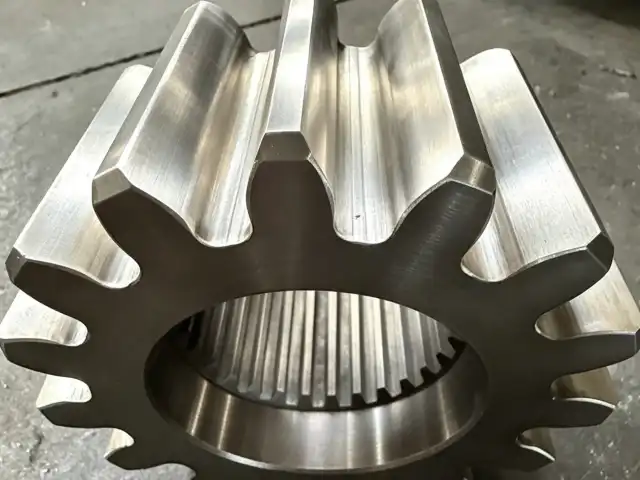
The sun gear is central. Power propels it around a stable plane. Three or four planet gears mesh with the sun gear and ring gear's internal teeth around this center part. The planet carrier holds these middle gears while the unit turns. This setup distributes load across several contact points, increasing power capacity without increasing size. Straight teeth make rapid line contact, transferring power with little friction. The parallel tooth direction doesn't create axial force like helical shapes, so it doesn't need thrust bearings and makes bearing selection easier.
Tooth Geometry and Load Distribution
These planetary systems have a straight-cut tooth outline. These teeth are carefully honed, milled, and ground to ISO 5–6 accuracy. How loads and contact stress are distributed across the gear mesh depends on tooth shape. When multiple planet gears engage at once, the load is evenly distributed, reducing tooth stress. Planetary setups can handle more force than similar-sized gear pairs because loads are shared in parallel. While keeping the core tough, carburizing heat treatment makes 20CrMnTi and AISI8620 harder on the outside (58–62 HRC). This protects tooth surfaces from rust and wear while the gear body absorbs pressure.
Gear Ratio Calculations and Efficiency
Knowing gear ratios helps engineers choose the right designs for each job. The ratio formula depends on which part stays the same. When the sun gear is driven while the ring gear is still, the carrier outputs slower and more power. One plus (ring/sun teeth). This setup achieves mechanical efficiency of 95%–97% per stage, better than worm gears and comparable to helical planetary designs. It works well because the straight teeth roll against each other and the mesh engages with little friction. Specialized makers make modules from 0.5 to 50, which can be customized for medical devices and heavy mining equipment.
Advantages and Applications of Spur Planetary Gears in Robotics and Heavy Equipment
Because of their unique benefits, these Spur Planetary Gear systems are very useful in many demanding industries. When procurement managers look at different transmission choices, a number of clear benefits become apparent that directly address practical problems in robots and heavy machinery.
High Torque Capacity in Compact Packages
The high torque density of these devices is their best feature. Because it uses multiple planet gears, a planetary system can send two to three times as much power as a parallel shaft gearbox of the same size. Robotics applications with limited space benefit from this small power transmission. A robotic arm joint that needs 500 Nm of holding torque may fit an 80-mm planetary gearbox, but a normal setup would be much larger. The coaxial input-output design lets you place the motor directly without brackets or couplings, simplifying mechanical integration.
Simple Maintenance and Cost-Effectiveness
Compared to other transmissions, maintenance is easy. Techs can easily detect wear patterns, pits, and tooth damage during eye checks because the tooth profile is straight. Replacement requires fewer tools than helical or bevel gear systems, reducing repair downtime. Due to their ease of production, straight-cut teeth are initially cheaper. Standard methods have been improved for decades in forging, cutting, hobbing, and grinding. This allows them to price custom specifications affordably. For most projects, 35–60 days is sufficient production time without extra fees.
Robotics Applications and Precision Motion Control
Parts of modern robots must precisely control motion with little backlash. To align parts, collaborative robots need positional accuracy within arc-minutes. ISO 5-6 precision planetary gears are reliable. Backlash is usually 5–15 arc-minutes, depending on the application. Automated guided cars need wheel drive systems that can handle many starts and stops without losing speed to navigate warehouses. Planetary designs can withstand shock loads from hard acceleration or emergency stops without breaking down. These systems provide high torsional stiffness for robotic welding arms. This maintains the precise tool path for good weld lines and reduces load movement.
Heavy Equipment Integration and Durability
Heavy construction and mining equipment works in dust, water, high temperatures, and vibrations. Crane hoists, crawler track systems, and excavator swing drives use planetary gear systems. You can choose 40CrNiMo, SAE4340, or 42CrMo steel. These steels can withstand impact loads when a bucket hits something unexpected. Induction hardening and carburizing create wear-resistant contact surfaces that retain their size over thousands of hours. Even as tooth surfaces wear down, these parts maintain load-bearing capacity when mining tractors move abrasive ore. Remote work sites have longer service times and lower repair costs.
Comparing Spur Planetary Gears with Other Gear Types for Informed Procurement
In order to choose the best transmission parts, you need to know how different Spur Planetary Gear designs work in key situations. While spur planetary systems work well in many situations, helix, bevel, and cycloidal alternatives each have their own benefits that may be useful in some situations.
Noise Levels and Operational Smoothness
Because it hits something immediately, a straight-cut tooth makes mesh frequency noise when it enters the mesh zone. This feature makes sound 5–10 dB louder than helical gears in the same settings. For quiet applications like medical equipment or indoor service robots, spiral planetary units are worth the extra cost. Outdoor big building equipment rarely faces noise restrictions. Straight teeth' efficiency benefits outweigh noise concerns. Changes in sound character often indicate problems before they become catastrophic, so the higher noise signature can aid diagnosis.
Efficiency Comparison Across Gear Types
Mechanical efficiency affects transport systems' energy and heat use. Planetary gearboxes have straight teeth, reducing sliding friction. They are efficient, scoring 95–97% per reduction step. Helical planetary designs introduce tooth helix angle rolling friction. Efficiency usually drops to 92%–95% per stage. This difference matters in multi-stage systems with rising costs. A two-stage helical reducer can convert 85% of input power into useful output, while a straight-tooth design can do 92%. Low parasitic losses make a big difference for battery-powered mobile robots' working length. Despite their high reduction ratios in single steps, cycloidal drives are only 80–85% efficient, making them unsuitable for energy-saving applications.
Durability and Service Life Considerations
Real-world part lifespan depends on load capacity and wear resistance. Planetary arrangements have more contact points than simple gear pairs, resulting in lower peak contact forces. These systems usually last 10,000 to 20,000 hours before needing to be replaced or repaired when made from alloy steels with a surface hardness of more than 58 HRC and properly heated. Bevel gear sets handle the same force, but contact pressures are higher on fewer teeth, requiring more maintenance. Specialized manufacturers let you tailor their products to different job cycles. Choosing harder materials for continuous use or shock-loaded uses extends their lifespan in critical areas.
Cost Analysis and Value Proposition
Original purchase price is only part of total ownership cost. Straight-tooth planetary systems cost 15–25% less than helical ones for the same power rate. Its ease of production and low waste make it beneficial. Even for single-unit production, custom makers accept low minimum orders. You don't need to stockpile inventory to find specific configurations. The simple design allows in-house service teams to check and lubricate the machine without training, lowering maintenance costs over its lifetime. The total cost of ownership over the life of the tools usually favors straight-tooth designs, despite their higher noise.
Maintenance Tips and Troubleshooting Common Issues
To keep Spur Planetary Gear systems working well and extend their service intervals, strategic repair plans that are specific to their needs are needed. When maintenance teams know about common failure modes, they can spot problems as they start to form before they cause costly downtime.
Lubrication Schedules and Product Selection
Proper lubrication is still the most important factor in gear longevity. Planetary setups have many mesh points and need lubricants that can maintain film strength as speed and load change. Synthetic gear oils protect tooth surfaces during boundary lubrication during starting and overload due to extreme pressure chemicals. Lubrication frequency depends on working temperature, load, and environmental contamination. Sealed units in clean areas may need lubrication every 2,000 to 3,000 hours, while open uses in dusty mines need it every 500 to 1,000 hours. Since the flowing lubricant moves heat away from the mesh zones, keeping the oil level steady in wet sump designs prevents bearings from drying out and maintains working temperature.
Inspection Procedures and Wear Pattern Detection
Visual inspection during routine maintenance reveals early issues. Under a microscope, you can see if wear patterns are evenly distributed across the face or concentrated at the teeth ends, indicating improper alignment. Smooth, polished touch areas indicate normal wear. Pitting, on the other hand, is small holes caused by surface wear. Spalling, or larger areas of material loss, indicates severe fatigue damage that must be repaired immediately. Checking planet gear bearing play can reveal too much space before carrier damage. Backlash during checks can indicate tooth wear beyond the application's location accuracy needs.
Common Failure Modes and Preventive Measures
Misaligned teeth stress certain teeth, speeding wear. If fitted properly and aligned with dial markers, this won't happen. Because structural parts bend when loaded and unloaded, mounting surfaces must be checked and adjusted regularly to keep equipment in line as it ages. Eating foreign objects can damage teeth in contaminated systems. Good seals and breather filters keep contaminants out and let internal pressure out. Torque limiters and shear pins prevent machines from crashing when stuck or overloaded. Thermal control is crucial in continuous-duty applications to maintain material quality and lubricant life.
Condition Monitoring and Predictive Replacement
Advanced maintenance strategies estimate service life using condition tracking. Changes in mesh frequency patterns indicate worn teeth or bearings in vibration research. Not enough grease or too much load causes abnormal heat production, according to temperature tracking. Regular oil research measures wear metal and part breakdown. These diagnostic methods allow replacements during planned repair windows rather than when something breaks down. Setting baseline measures during initial setup helps maintenance teams spot small changes that may indicate problems.
Procuring Spur Planetary Gears: Suppliers, Pricing, and Custom Manufacturing
To be successful at buying Spur Planetary Gear solutions, you need to find a balance between technical requirements, quality control, price, and delivery dates. By knowing the factors that affect each part, buyers can make smart choices that meet the needs of the project.
Identifying Reputable Suppliers and Quality Verification
Choosing a supplier starts with checking their production skills and quality certifications. ISO 9001 approval shows basic quality management systems, while industry-specific standards show advanced skills. Reliable manufacturers provide detailed technical datasheets that describe their materials, heating methods, hardness, and size and shape tolerances. Positional accuracy and operating smoothness depend on the grade, which can be ISO 5, ISO 6, or lower. Ask for inspection records from previous production lots to see if the supplier always meets requirements or if quality changes. Long-term relationships with well-known mechanical engineering firms demonstrate the company's reliability and expertise.
Understanding Pricing Factors and Value Drivers
Premium alloy steels like 20CrNiMo and SAE4320 cost more than carbon steel grades, so material choice affects price. Complex designs that require a lot of machining, heat treatment, and precise grinding cost more. Number of units ordered affects unit cost through economy of scale. Tool and test unit costs are higher than making more than 100 units. In their quotes, providers note that custom specs like tooth profiles, module sizes, and surface treatments make engineering and manufacturing harder. Understanding these drivers improves budget predictions and negotiation.
Lead Times and Production Scheduling
Standard production times of 35 to 60 days work for most projects if orders are placed early. This timeline includes material acquisition, casting, slow-cooling heat treatment, rough machining, finish grinding, and quality control. While speeding up production may save money, skipping heat treatment could damage the material. Plan your purchases to fit your project's schedule to avoid extra costs and quality issues from fast production. Suppliers can plan production schedules correctly when given delivery dates during initial talks.
Custom Manufacturing for OEM Applications
OEMs often require unique combinations that catalog items can't provide. Custom production services adapt designs to performance goals, mounting connections, and installation sizes. Customization begins with requirement meetings where engineers discuss the application environment, load patterns, speed ranges, and duty cycles. Design plans from the provider include required parameters and are optimized for manufacturing efficiency and cost. Standard production machining processes include forging, cutting, hobbing, milling, and grinding. Quality checking ensures that finished parts meet size and material requirements before packaging and shipping.
Conclusion
Certain Spur Planetary Gear systems have straight teeth. Robots and heavy equipment use these systems because they are small, powerful, and reliable. Simple design principles—spreading loads across multiple planet gears and eliminating axial thrust—make the system versatile enough for hard mining and precise robotic motion control. These parts save money because they are more efficient, cheaper, and easier to maintain than helix options, despite their different sound properties. Maintenance and tracking can extend service intervals and prevent breakdowns. Working with skilled custom engineers ensures gear systems fit perfectly into original equipment, improving performance and reliability.
Frequently Asked Questions About Planetary Gear Systems
1. What distinguishes spur-type planetary gears from helical variants?
The main difference is the direction of the teeth. Straight teeth don't create any axial thrust, which makes choosing a bearing easier and increases efficiency to 95–97% compared to 92–95% for spiral designs. It costs less to make straight teeth, but they make more noise. Spur Planetary Gear configurations are often chosen for applications that want to save energy and keep their size small. On the other hand, noise-sensitive settings may support helical configurations, even though they are less efficient.
2. How do material choices affect performance and longevity?
After being heated and carburized, alloy steel types like 20CrMnTi and AISI8620 have the best mix of surface hardness and core toughness. A surface hardness of 58 to 62 HRC stops wear and cracking, and the tough core can handle shock loads without breaking. When used in difficult situations like constant operation or heavy shock loading, the higher cost of premium materials is justified.
3. Can these components handle the contamination levels present in mining equipment?
When closing systems are done right, they keep dust and water out of internal parts. Sealing on the bearings and good breathers let the pressure equalize while screening out contaminants. When maintenance procedures are followed, regular checks and re-greasing get rid of accumulated particles before they do any damage. This allows effective operation in tough settings.
Partner with YIZHI MACHINERY for Custom Spur Planetary Gear Solutions
With 15 years of experience, YIZHI MACHINERY has made precision gear systems for mining, aircraft, and industrial machines. As a trusted Spur Planetary Gear manufacturer, we can produce ISO 5-6 precision parts through processes like forging, hobbing, heat treating, and finishing grinding. We collaborate with OEMs to develop customized Spur Planetary Gear solutions using high-quality 20CrMnTi, 40CrNiMo, and SAE4340 steels. We make one unit at a time and have low minimum order quantities as a reliable manufacturer. This way, you don't have to worry about inventory, and we can ensure the technical specs are right for your application. Our visual tracking, customizable packaging, and multiple shipping options ensure parts arrive on time in perfect condition. Contact us at sales@yizmachinery.com for full technical ideas, a one-year warranty, and fast after-sales support.
References
1. Müller, H.W. (2018). Epicyclic Drive Trains: Analysis, Synthesis and Applications. Wayne State University Press.
2. Budynas, R.G. & Nisbett, J.K. (2020). Shigley's Mechanical Engineering Design, 11th Edition. McGraw-Hill Education.
3. Radzevich, S.P. (2016). Dudley's Handbook of Practical Gear Design and Manufacture, 3rd Edition. CRC Press.
4. Lynwander, P. (2019). Gear Drive Systems: Design and Application. Marcel Dekker Publishing.
5. American Gear Manufacturers Association (2021). AGMA 6034-B92: Practice for Enclosed Cylindrical Wormgear Speed Reducers and Gearmotors. AGMA Technical Publications.
6. International Organization for Standardization (2017). ISO 6336-1:2019 Calculation of Load Capacity of Spur and Helical Gears – Part 1: Basic Principles. ISO Standards Catalogue.

USER EVALUATE
Here is the customer's evaluation of us