


Helical Gear Grinding Uses in Precision Industry
In advanced industrial settings, Helical Gear Grinding is required to get near-zero resistances on measurements and high-quality surface wraps up. Utilizing extraordinary abrasives, this strategy fixes twists caused by warm treatment and evacuates little layers of fabric, creating gears that meet ISO 5-6 Review exactness benchmarks. Businesses like aviation, mining, and mechanical apparatus depend on this wrapping up strategy to make parts that can withstand overwhelming loads, high-speed revolutions, and intense working conditions where failure is not an option.
Understanding Helical Gear Grinding in Precision Manufacturing
Making straightforward gears isn't sufficient for exactness fabricating. The crushing handle is diverse from other ways since it fathoms issues that come up after warm treatment.
Defining the Grinding Process and Its Unique Role
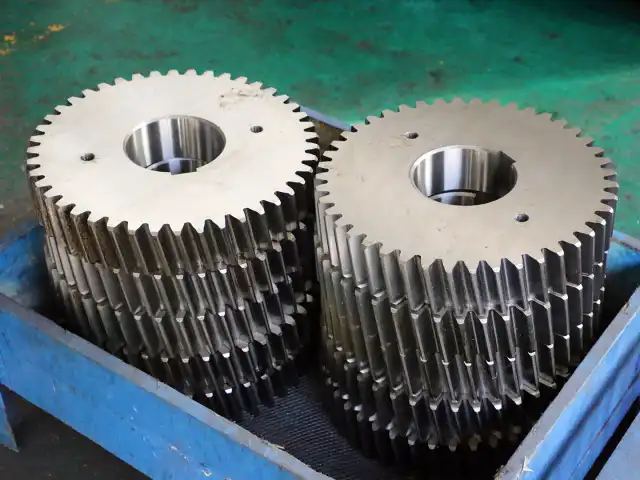
Helical Gear Grinding corrects carburizing, quenching, tempering, and induction hardening deformities after heat treatment. Hobbing or milling creates tooth geometry, but heat treatment causes warping or growth. To restore precision, vitrified or CBN wheels remove 0.10–0.15 mm per flank of controlled material. To provide perfect tooth geometry, the grinding wheel and gear rotation must be properly synchronized to maintain helix angles between 5° and 45°.
Key Process Parameters That Influence Quality
Several parameters directly affect final gear quality in Helical Gear Grinding. Feed rate controls material removal and surface finish, while grinding speed influences heat generation. Excess heat can cause grinding burn, damaging hardened surfaces, so depth of cut must be carefully managed. Achieving surface roughness below 0.4 μm Ra requires optimized coolant delivery, with high-pressure nozzles removing debris and dissipating heat. Controlling the specific material removal rate prevents microstructural damage. Using porous vitrified wheels and frequent dressing maintains sharp cutting edges, reducing cycle time while preserving surface integrity and dimensional accuracy.
Material Selection Criteria for Optimal Results
Material choice greatly affects grinding and gear durability. Heat-treated high-strength alloys like 20CrMnTi, 40CrNiMo, SAE4340, and AISI4140 work well for Helical Gear Grinding. These materials have 58–62 HRC surface hardness for heavy-duty usage and 45–50 HRC for mild use. Grinding stresses and operating loads are resistible by toughness and thermal stability. Uneven hardness from composition or heat treatment may cause wheel wear and dimensional inaccuracies. Production quality is maintained by verifying material certificates and heat treatment records.
Advantages of Helical Gear Grinding for Precision Applications
When you compare Helical Gear Grinding to other finishing methods, you can see clear performance benefits that make the investment worth it, especially for demanding uses where failure has significant effects.
Achieving Superior Tolerances and Surface Finishes
Helical Gear Grinding is more precise than hobbing or shaping. Grinding regularly achieves Grade 4–5 precision with micron-level profile, lead, and pitch defects, whereas traditional processes obtain DIN Grade 7–8. Increased gear life, transmission precision, and vibration reduction. Better surface polish, from 1.6-3.2 μm Ra in hobbed gears to 0.2-0.4 μm Ra in ground gears. The smoother surface decreases friction, improves lubrication film generation, and reduces pitting and spalling for long-term performance.
Industry-Specific Performance Benefits
Industries benefit differently from Helical Gear Grinding. Precision load distribution and fatigue resistance are needed for aerospace applications with zero failure tolerance. Ground gears prolong crusher and conveyor life under shock loads and pollution. Industrial equipment like CNC systems and precision motors needs little backlash and precise placement. In robotic and machine tool applications, even slight positioning mistakes may affect system performance and product quality. Grinding allows tight tolerances.
Cost-Efficiency Through Longevity and Reduced Failures
Helical Gear Grinding is expensive, but lifecycle analysis demonstrates economic advantages. Precision-ground gears last longer and need less maintenance. Triple-life gear decreases overall ownership cost despite greater initial expenditure. Reduced friction improves energy efficiency, particularly in continuous-duty heavy-duty systems. The combined savings frequently cover grinding expenses within the first year, making it a cost-effective alternative for high-performance and sensitive applications.
Selecting the Right Helical Gear Grinding Solutions for Your Business
Decisions about strategic sources affect both the ability to produce right away and the success of operations in the long run. Knowing the choices you have helps you match technology needs with business goals.
Evaluating Machine Types and Essential Features
CNC grinding machines dominate Helical Gear Grinding due to their ability to handle complex geometries and micro-adjustments. Continuous generating grinding suits high-volume production, while profile grinding offers flexibility for large modules and prototypes. Automation level affects productivity, with robotic loading enabling lights-out manufacturing. Precision varies, with high-end machines achieving 0.001 mm positioning accuracy. Maintenance factors include wheel dressing accessibility, coolant system serviceability, and spare part availability, all influencing long-term operational efficiency and reliability.
Outsourcing Versus In-House Investment
Choosing between outsourcing and in-house Helical Gear Grinding depends on volume, expertise, and budget. In-house capabilities offer control, faster iteration, and protection of proprietary designs, ideal for volumes above 500 units monthly. However, they require skilled operators and significant capital investment. Outsourcing suits low volumes or limited budgets, leveraging specialized providers' expertise and equipment. Typical outsourced lead times range from 35–60 days, including processing and inspection. Each approach must align with production scale and strategic priorities.
Vendor Selection and Service Reliability
Supplier evaluation should go beyond pricing. Experience indicates problem-solving capability, while ISO certification reflects standardized quality systems. Audits confirm actual compliance. Strong suppliers provide technical support, including design input, drawings, and application-specific recommendations. Customization options—such as module ranges from 0.5 to 50 and tailored heat treatments—add value. Flexible minimum order quantities enable prototyping and repairs without excess inventory. Reliable vendors combine manufacturing expertise with responsive support to ensure consistent quality and performance.
Optimizing Helical Gear Grinding Performance for Precision Industry Needs
To keep the standard high, you need to follow strict operational procedures and methods for ongoing growth that go beyond setting up the machines the first time.
Maintenance Protocols for Sustained Accuracy
To keep their accuracy, Helical Gear Grinding tools need to be serviced on a regular basis. Wheel dressing, which involves adjusting and sharpening the grinding wheel, needs to be done at regular times to keep the rate of material removal steady and avoid damage to the surface. Monitoring the filtration and replacing the fluid in coolant systems is needed to stop bacterial growth and keep the lubrication qualities. Every three months, geometric calibration checks the accuracy of the machine and finds wear in the spindle bearings, slideways, or ball screws before finished parts show measurement mistakes.We use organized rules for managing tools that keep track of how wheels are used, how they are dressed, and how well they work in terms of dimensions. This method is based on data and finds problems early on, so there is no waste or expensive rework. Controlling the temperature in the production area keeps the measurements stable because thermal expansion affects both the parts being made and the machine structures.
Parameter Optimization Based on Material Properties
Grinding pressure and heat have different effects on different materials. To keep from grinding burn, hardened alloy steels like 42CrMo and AISI4140 need conservative removal rates and strong coolant delivery. Carburized materials, like 18CrNiMo7 and 20CrNi2Mo, have tough cores and hard surfaces. They need to be ground in a way that doesn't break through to the softer subsurface.The size of the module affects the choice of parameters; bigger modules with more material volume need more grinding passes and slower feed rates to keep heat from building up. The helix angle changes the position and shape of the contact between the grinding wheel and the tooth side, so kinematic tweaks are needed to keep the right contact throughout the grinding stroke.Case studies from the making of aerospace parts show that parameter optimization can lead to measured gains. By changing the wheel specification, dressing frequency, and coolant pressure, one maker cut cycle time by 22% and improved the surface finish. These changes were found through controlled experiments.
Standards Compliance and Tolerance Verification
Industry guidelines give us a way to objectively judge the quality of gear. The ISO 1328 and AGMA 2015 standards set range classes for different types of correctness. For verification, you need coordinate measuring machines or specialized gear checking tools that can measure the profile, lead, pitch, and runout features. It is important for aerospace and other regulated industries to be able to track products from the raw materials through to the final inspection.Professionals in charge of buying things should ask for inspection reports that include measurement data, proofs of surface hardness, and certificates of the materials used. These documents let you compare different sources and show that parts meet the needs of the application before they are put together in critical systems.
Future Trends and Innovations in Helical Gear Grinding
Manufacturing skills are always changing because of new technologies. Companies can gain a competitive edge by using new methods early on.
Smart CNC Systems and Industry 4.0 Integration
Digital tracking is used in modern grinding systems to keep track of machine performance in real time. Vibration sensors find worn-out tools or failures that are about to happen before they cause major problems. During grinding, in-process gauging measures the size of the workpiece. This lets adaptive control instantly make up for tool wear or thermal effects. These technologies make it easier for operators to do their jobs while also making sure that all batches of products are made the same way.Through machine learning systems that look at past performance data, Industry 4.0 connection makes it possible to do predictive maintenance. Systems figure out when the best time is to do maintenance, when to change tools during planned breaks, and how to set up production sequences so that setup changes are kept to a minimum. Integration with business resource planning tools makes planning production and keeping track of supplies easier.
Impact on Procurement Strategies
Digital manufacturing lets you use just-in-time production methods, which lower the cost of keeping goods on hand. Buyers can adjust to changes in demand without having to hold on to too much stock by ordering smaller numbers with shorter wait times. Transparency through digital tracking lets you see how the production is going, so you don't have to guess when the delivery will happen. These skills are especially useful in aerospace and specialized machinery, where demand is uncertain and part costs are high.Global supply chain integration lets procurement teams get goods from specialized makers anywhere in the world. A US company that makes mining equipment can trust to get precise ground gears from suppliers with a lot of experience. They can take advantage of the suppliers' knowledge and lower prices while still keeping quality standards through digital verification and well-documented processes.
Sustainability Innovations and Environmental Responsibility
Energy-efficient cutting tools cut down on costs while still meeting companies' sustainability goals. When compared to older models of equipment, variable-speed drives, regenerative brakes, and better hydraulic systems use 30% to 40% less energy. With coolant recycling devices, you don't have to throw away as much leftover fluid and buy as much new lubricant. The environmental goals of these changes are met while real cost savings are made.For some uses, dry grinding technologies get rid of the need for coolant completely, which simplifies fluid management and lowers the cost of disposal. Even though it can only be used with certain types of materials and levels of accuracy, dry grinding is the ultimate sustainability goal. More and more, environmental effect is being taken into account along with cost and performance when making purchasing choices. This means that innovations in sustainability are becoming competitive differentiators instead of just compliance costs.
Conclusion
In conclusion, when other finishing methods fail in aerospace, mining, and industrial machinery, Helical Gear Grinding is the only way to get the accuracy, surface quality, and dependability that are needed. When procurement professionals know about grinding processes, material needs, and quality standards, they can make smart choices about where to buy things while matching performance needs with budget limits. The technology keeps changing as digital features are added and sustainability is improved, which can give businesses an edge. Precision ground gears can only work in critical situations if you choose suppliers with a lot of knowledge, a track record of success, strong quality systems, and responsive technical support.
FAQ
1. What materials are suitable for the grinding process?
After the right heat treatment, high-strength alloy steels like 20CrMnTi, 40CrNiMo, SAE4340, 42CrMo, AISI4140, 18CrNiMo7, and AISI8620 work very well when ground. Material hardenability and thermal stability decide how easy it is to grind and how well the end part works. Failures before they happen can be avoided by choosing the right material for the job.
2. How does grinding improve gear lifespan compared to other finishing methods?
With precision grinding, you can get better surface finishes below 0.4 μm Ra and tighter tolerances, which lowers stress concentrations and friction losses. These changes lower the rate of wear, lower the damage caused by vibrations, and stop surface-initiated fatigue failures. In demanding situations, components usually last two to three times longer than options that are made in the usual way.
3. Should we invest in grinding equipment or outsource the process?
Volume is the most important factor in making a choice. When you consistently need more than 500 pieces per month and the specs stay the same, it's worth investing in equipment that lets you manage production and get things done faster. Outsourcing to specialized providers with experience in a wide range of shapes and no set equipment costs is a good idea when you need to make a prototype or have limited capital.
Partner with YIZHI MACHINERY for Superior Helical Gear Grinding Solutions
Precision gear making is what YIZHI MACHINERY does best. They can make helical gears that meet ISO 5-6 Grade standards by using advanced Helical Gear Grinding technology. With 15 years of production experience, we can guarantee the quality of our parts for use in industrial tools, mining equipment, and aerospace applications. Based on your load needs, we work with a wide range of materials, such as 40CrNiMo, SAE4340, and AISI4140, whose surface hardness ranges from 45 to 62 HRC. Customization services can handle unique needs for samples that are as small as one piece up to large production runs. Modules can be anywhere from 0.5 to 50 and helix angles can be anywhere from 5° to 45°. Between 35 and 60 days for production, which includes a full quality check and safe shipping with real-time tracking. As a producer with a lot of experience in gear manufacturing, we offer full technical support, design help, and a one-year guarantee. Contact us at sales@yizmachinery.com to talk about your precision gear needs and get full quotes that fit your application standards.
References
1. Stadtfeld, H.J. (2014). Advanced Gear Manufacturing and Finishing: Classical and Modern Processes. American Gear Manufacturers Association Technical Publications.
2. Radzevich, S.P. (2012). Dudley's Handbook of Practical Gear Design and Manufacture (2nd ed.). CRC Press Engineering Reference Series.
3. Klocke, F. & Brecher, C. (2016). Gear Grinding: State of the Art and Future Potential. Production Engineering Research and Development, CIRP Annals - Manufacturing Technology.
4. ISO 1328-1:2013. Cylindrical Gears - ISO System of Flank Tolerance Classification - Part 1: Definitions and Allowable Values of Deviations Relevant to Flanks of Gear Teeth. International Organization for Standardization.
5. Litvin, F.L. & Fuentes, A. (2004). Gear Geometry and Applied Theory (2nd ed.). Cambridge University Press Engineering Mathematics Series.
6. AGMA 915-1-A02. (2002). Inspection Practices - Part 1: Cylindrical Gears - Tangential Measurements. American Gear Manufacturers Association Technical Standards.

USER EVALUATE
Here is the customer's evaluation of us