


Left Hand vs Right Hand Helical Gear Guide
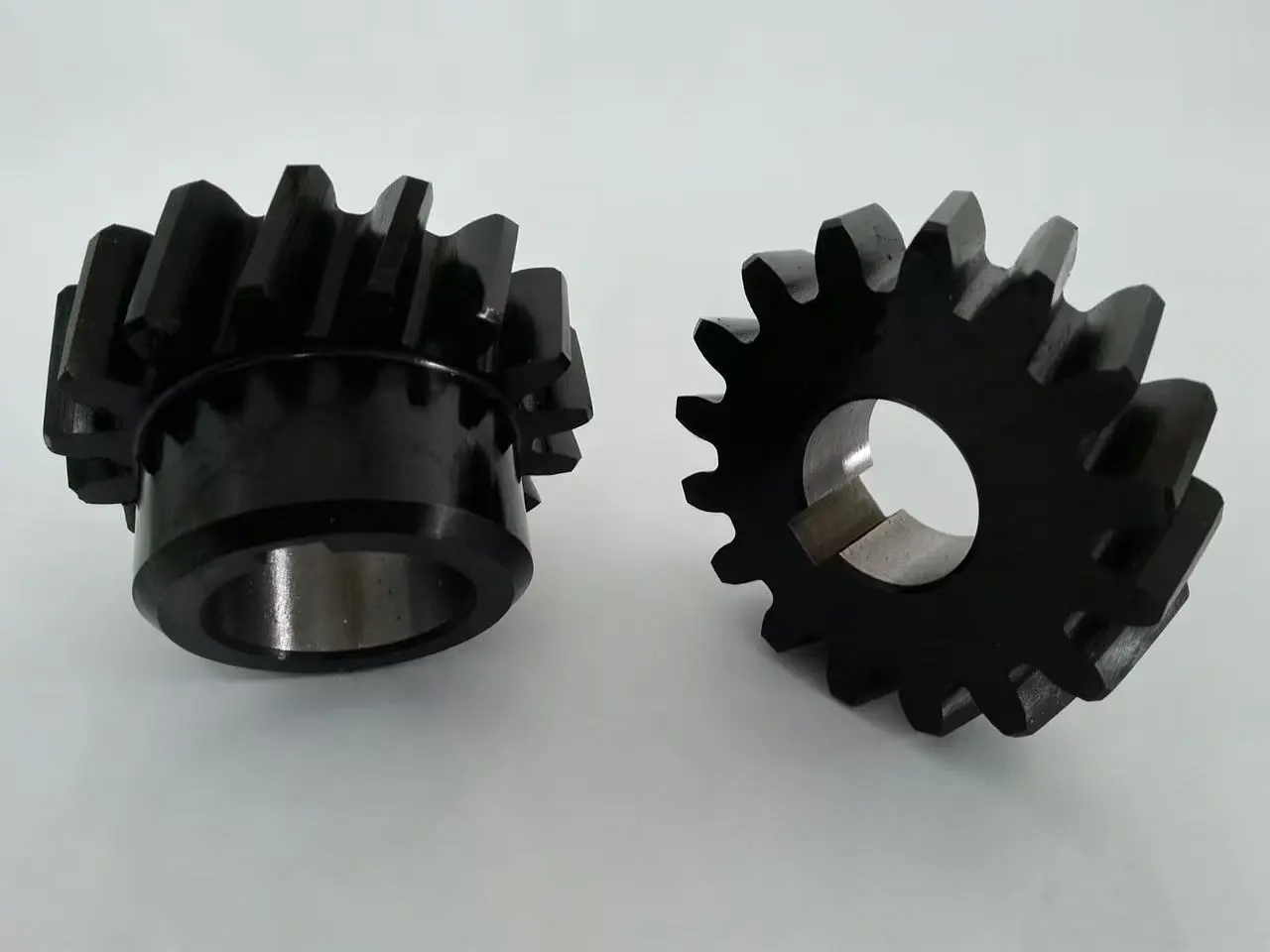
Engineers and procurement managers who have to choose the best transmission options for mining operations, aerospace uses, and industrial tools need to know the difference between left hand and right hand helical gears. When you look at a Left Hand Helical Gear along its axis, its teeth curve to the left. This makes for unique axial pressure patterns when it's in use. On the other hand, right hand variants curve to the right, making forces that go in the opposite way. These linear traits affect how meshing works, how loads are distributed, and how long equipment lasts in harsh settings.
Introduction
Helical gears are essential in modern power transmission systems, offering smoother operation and higher load capacity than spur gears. Procurement professionals and design engineers face pressure to reduce costs while improving mechanical efficiency. This guide covers technical differences between left-hand and right-hand helical configurations, performance characteristics, and purchasing recommendations. Understanding these fundamentals enables informed component selection that improves operational efficiency, reduces downtime, and meets application requirements for both parallel shaft and crossed-axis gear systems.
Understanding Helical Gears: Basics and Core Differences
Helical gears are fundamentally different from spur gears because their teeth are slanted. Rather than cutting teeth parallel to the gear axis, manufacturers machine helical teeth at a specific angle—the helix angle—typically ranging from 5° to 45° depending on application demands. This angled shape lets teeth connect gradually, spreading contact stress across multiple teeth at the same time. This makes helical gears run smoothly and quietly, which is why they are better for high-speed uses.
Identifying Left Hand and Right Hand Configurations
Holding a gear with its shaft straight up makes it easy to tell what it is by looking at it. Left Hand Helical Gear units have teeth that curve up and to the left, like the letter "A." Right Hand Gears, on the other hand, have teeth that curve to the right. This directed property has a direct effect on how gears create axial thrust forces during spinning, which is an important thing to think about when choosing bearings and designing housings.
Material Standards and Manufacturing Excellence
High-quality helix gears require careful material selection. YIZHI MACHINERY uses premium alloy steels including 20CrMnTi, 40CrNiMo, SAE4340, and AISI4140 for optimal strength-to-weight ratios. Heat treatments (carburizing, quenching/tempering, induction hardening) achieve 58–62 HRC surface hardness while maintaining tough ductile cores. Manufacturing processes include forging, hobbing, milling, and precision grinding ensuring ISO 5-6 precision grades. ISO, ANSI, and DIN compliance ensures component interchangeability across global supply chains.
Helix Angle Impact on Rotational Dynamics
Helix angle directly affects gear engagement and system performance. Steeper helix angles increase contact ratio (number of teeth simultaneously engaged), improving load capacity and reducing vibration. However, larger helix angles generate stronger axial thrust forces requiring appropriate thrust bearings or double helical (herringbone) designs that internally cancel these forces. Engineers must optimize based on application load magnitude, operating speed, and spatial constraints. The optimal helix angle balances smooth operation against bearing system complexity and cost.
Comparing Left-Hand and Right-Hand Helical Gears: Performance and Applications
The way in which helix gears are oriented has a big effect on how well they work with other mechanical systems. Knowing when to choose a left-hand or right-hand setup makes the gear train work better and the tools last longer.
Performance Characteristics and Advantages
Both left and right hand helical gears outperform spur gears through gradual tooth contact reducing impact loading—resulting in quieter operation essential for noise-sensitive environments like aerospace and enclosed industrial facilities. Higher contact ratios (30–50% greater than spur gears) distribute loads across more teeth, enabling higher power transmission. This makes helical gears valuable for mining equipment and heavy machinery requiring reliable continuous power. Sliding contact along tooth flanks generates more friction heat than spur gears, requiring proper thermal management.
Application-Specific Selection Criteria
In order for a parallel shaft setup, which is the most usual, to work properly, a Left Hand Helical Gear must be paired with a right hand companion. This pair produces opposing axial thrust forces that can be controlled by placing the bearings in the right places. In this case, alternating hand positions across multiple gear stages help balance thrust loads throughout the gearbox system. An example of this is an automotive transmission. Different things need to be done for crossed-axis uses. Two gears with the same hand direction can mate when their shafts cross at an angle, usually 90 degrees, but are not parallel. A Left Hand Helical Gear meshes with another left hand gear in these setups, which are common in textile machinery and packaging equipment where space limits mean that shafts can't be lined up parallel to each other. In these situations, torque values are usually smaller than in parallel shaft systems.
Comparison with Alternative Gear Types
Spur gears are simpler and have no axial thrust issues but produce more noise and lower load capacity. Bevel gears efficiently transmit power between crossing shafts but require precise mounting and alignment. Worm gears provide self-locking capability and high reduction ratios in compact spaces but suffer efficiency losses from sliding friction. Helical gears offer optimal balance for machine tool spindles, compressors, and large industrial gearboxes requiring smooth operation, moderate to high load capacity, and parallel shaft configurations. Application requirements determine optimal gear selection.
Maintenance Best Practices
Planned maintenance extends helical gear service life. Regular vibration analysis detects early tooth wear or bearing degradation before catastrophic failure. Lubricant analysis monitors contamination levels and chemical breakdown, signaling optimal oil change intervals. Visual inspections during scheduled downtime identify surface pitting, scoring, or unusual wear patterns indicating misalignment or improper lubrication. Temperature monitoring reveals developing issues—sudden temperature rises often indicate lubrication failure or excessive loading. Proactive maintenance reduces unplanned downtime 40–60% versus reactive approaches in mining and manufacturing settings.
Procurement Guide: Selecting and Buying Left Hand Helical Gears for Industrial Use
To get the right gear for the job while staying within budget and meeting deadlines, you have to find a balance between technical requirements, the supplier's skills, and practical issues.
Critical Technical Specifications
When purchasing Left Hand Helical Gears, specify module (0.5–50 range), tooth count, helix angle (5°–45°), and surface hardness (45–50 HRC for general industrial use; 58–62 HRC for heavy-duty). Hardness directly affects gear life and durability. Select alloy steel (20CrNiMo, AISI8620, SAE4320) considering temperature fluctuations, corrosive exposure, and shock loading patterns. Proper specification documentation is essential. Procurement teams must clearly define these parameters to ensure suppliers manufacture components meeting application requirements and performance expectations.
Pricing Trends and Lead Time Considerations
Helical gear pricing depends on material costs, manufacturing complexity, and order quantities. Custom specifications requiring special tooling carry premium for small orders but become cost-effective above 50–100 units. Heat treatment and precision grinding add 20–35% to production costs—necessary for high-performance applications. Custom helical gear lead times currently range 35–60 days including forging, machining, heat treatment, and quality inspection. Supply chain managers should plan procurement 90–120 days before installation dates to accommodate material shortages or expedited shipping needs.
Supplier Qualification and Selection
Thorough supplier evaluation requires examining multiple factors. Certification compliance provides baseline confidence—look for ISO 9001 and industry-specific certifications. Manufacturing capabilities should span entire production chain from forging through final grinding. Customization services are essential for non-standard applications needing unique tooth profiles, special materials, or modified helix angles. Manufacturing location affects logistics complexity and lead times—local suppliers offer faster shipping and easier communication; Asian manufacturers may offer better pricing for large orders. Request production samples and dimensional inspection reports before production commitment.
Quality Assurance and Warranty Considerations
Comprehensive quality control distinguishes premium suppliers. Multi-stage inspection procedures include material certification verification, in-process dimensional checks, heat treatment hardness testing, and coordinate measuring machine final tooth geometry verification. Teeth are ground to ISO 5-6 precision grades ensuring correct meshing and load distribution. Suppliers offering one-year warranties demonstrate manufacturing confidence and provide recourse for premature failure. Maintain documentation including material certificates, dimensional inspection reports, and heat treatment records to facilitate traceability and quality audits within your organization.
Case Studies and Real-World Applications of Left Hand Helical Gears
Examples from real life show how choosing the right gears can lead to measured performance gains in a wide range of industries.
Heavy Mining Equipment Optimization
A company that makes mining equipment came to us looking for new gears for crusher drive systems that were breaking down a lot when they were put under shock loads. An analysis showed that the first spur gear design put a lot of stress on certain teeth, which led to early wear breaking. We asked for Left Hand Helical Gear parts that were made from 40CrNiMo alloy steel and had a surface hardness of 60 HRC, which was reached by carburizing the steel. The spiral tooth shape spread contact loads across several teeth at the same time, which cut peak stress levels by 45%. The installation showed that the spur gear components would last 180% longer than before, and the noise level was cut by 12 decibels, which is an important safety factor in sealed mine operations.
Precision Manufacturing Automation
A company that makes parts for aircraft needed gear solutions for CNC machine tool wheels that could work at 8,000 RPM with little vibration so that they could keep their machining standards at the micron level. We gave you sets of left and right hand helical gears that were matched. They were made from 18CrNiMo7 steel and finished-ground to ISO 5 precision. Because helical designs contact teeth gradually, they don't have the impact sound that comes with spur gear systems. After tests, the amplitude of the spindle shaking was found to have decreased by 85%. This allowed the customer to control tolerances more precisely and improve the quality of the surface finish on important aircraft parts.
Balanced Gear Train Integration
Multi-stage gear trains are often used in industrial compressors to get the right speed ratios in small housings. By strategically pairing Left Hand Helical Gear parts with their right hand peers, engineers can make the assembly's axial thrust forces equal. One customer used a three-stage reduction design where the hand positions on each gear mesh changed over time. This made opposite thrust forces that mostly cancelled each other out throughout the system. This method got rid of the need for heavy-duty thrust bearings at every stage, which cut the weight of the system by 18% and made upkeep easier. The design shows that knowing how the hands are positioned can lead to creative solutions that improve performance and cut costs.
Conclusion
When choosing between left-hand and right-hand helical gear setups, you need to carefully think about the needs of the application, the way the shafts are arranged, and how the system fits together. Left Hand Helical Gear parts work very well in systems with parallel shafts when paired with their right hand counterparts. They also have specific uses in systems with crossed axes. When compared to other types of gear, helical designs are much better at reducing noise and carrying more weight because the teeth connect gradually. To make a good purchase, you need to be clear about technical details like the module, helix angle, material grade, and heat treatment needs, and then work with reliable manufacturers who can make changes, offer full quality assurance, and provide quick technical support. When engineers and buying workers understand these basics, they can make choices that improve the stability and working efficiency of equipment.
FAQ
1. How do I determine whether my application requires a left hand or right hand helical gear?
The main thing that determines this is how the shafts are arranged. For proper rotation and load transfer, one Left Hand Helical Gear must match up with one Right Hand Helical Gear in a parallel shaft layout, which is the most typical type of setup. The hand orientation needed for replacement or matched parts will be shown by your current gear or the design specs. For crossed-axis tasks where shafts meet at an angle, two gears from the same hand are used. When building new systems, talk to experienced gear engineers to make sure you choose the right hand and handle the thrust force correctly.
2. Can I interchange left and right hand helical gears in an existing system?
Most of the time, direct interchangeability is not possible. When you switch from left to right hand (or vice versa), the direction of spinning and axial push forces are switched around. The housing and bearings of the gearbox were made to handle certain directions of pressure. Reversing these forces may cause the bearings to fail early or damage the housing. If you don't redesign the whole gear train system, which includes choosing new bearings and making changes to the housing, the replacement gears must match the original hand position.
3. What maintenance schedule should I follow to maximize helical gear lifespan?
Every 2,000 to 3,000 hours of operation, the oil should be analyzed to look for pollution and additive wear. Every 8,000 to 10,000 hours, based on how the engine is used, it needs a full oil change. Once every three months, vibration tracking finds wear patterns before they become too big to fix. Visual checks are done once a year during planned shutdowns. This lets the tooth surfaces be directly checked for pitting, scoring, or unusual wear. Heavy-duty uses in the mining or continuous-process industries may need to be checked more often to avoid problems that come up out of the blue.
Partner with YIZHI MACHINERY for Custom Left Hand Helical Gear Solutions
To get the most out of your power transfer systems, you need to start by finding the right Left Hand Helical Gear supplier with a track record of success in production and full technical support. YIZHI MACHINERY has been making accurate gears for 15 years and has supplied parts to the mining, aircraft, and industrial machinery industries that need to meet the highest standards. Our manufacturing skills cover the whole production cycle, from the original casting to precise grinding, which makes sure that the dimensions are accurate enough to meet ISO 5-6 standards. We use high-quality alloy steels like 20CrMnTi, SAE4340, and AISI8620, and use modern heat treatment methods to get the surface hardness you need, which can be anywhere from 45 to 62 HRC. Our customization services can handle special needs like non-standard modules (0.5 to 50 range), specialized helix angles (5° to 45°), and custom tooth counts. We also offer flexible minimum order numbers that can support both prototype development and large-scale production. Standard production cycles of 35 to 60 days are in line with most project timelines. Our logistics experience includes custom packing that protects against shock, multiple shipping choices, and real-time tracking of shipments. A warranty that lasts for one year and quick expert support give buyers trust throughout the whole process. Contact us at sales@yizmachinery.com to talk about your unique Left Hand Helical Gear needs and get thorough technical proposals that are made to fit your application.
References
1. Dudley, D.W. (1994). Handbook of Practical Gear Design and Manufacture. CRC Press, Boca Raton, Florida.
2. Stadtfeld, H.J. (2014). Gleason Bevel Gear Technology: The Science of Gear Engineering and Modern Manufacturing Methods for Angular Transmissions. The Gleason Works, Rochester, New York.
3. ISO 1328-1:2013. Cylindrical gears — ISO system of flank tolerance classification — Part 1: Definitions and allowable values of deviations relevant to flanks of gear teeth. International Organization for Standardization, Geneva, Switzerland.
4. Budynas, R.G. and Nisbett, J.K. (2015). Shigley's Mechanical Engineering Design, 10th Edition. McGraw-Hill Education, New York.
5. American Gear Manufacturers Association (2015). ANSI/AGMA 2001-D04: Fundamental Rating Factors and Calculation Methods for Involute Spur and Helical Gear Teeth. AGMA, Alexandria, Virginia.
6. Radzevich, S.P. (2012). Dudley's Handbook of Practical Gear Design and Manufacture, 2nd Edition. CRC Press, Boca Raton, Florida.

USER EVALUATE
Here is the customer's evaluation of us