


What Is Left Hand Helical Gear? Full Guide
A Left Hand Helical Gear is a precision-engineered part for moving power that has teeth that curve to the left along its shaft. In contrast to standard straight-tooth designs, the helical shape allows teeth to connect gradually, spreading loads over larger contact areas. This special shape makes operation smoother, lowers vibration, and gives it great power dealing abilities in tough industrial settings. In parallel shaft setups, these gears usually mesh with their right-hand counterparts to keep thrust forces balanced. This makes them essential in industrial machinery, aircraft systems, and mining equipment that needs to be reliable in harsh conditions.
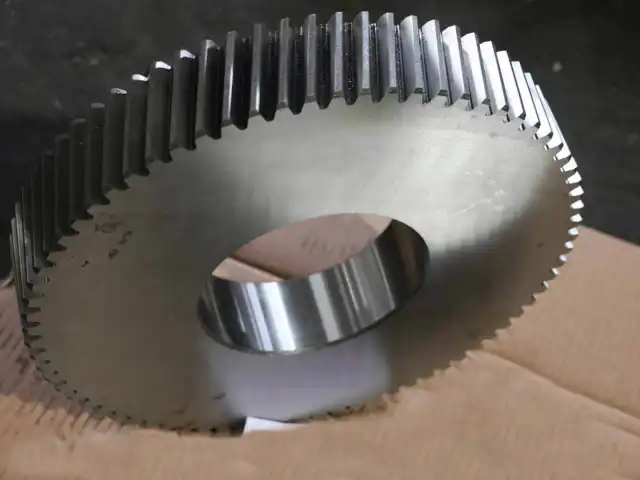
Understanding Left Hand Helical Gears
What Defines a Left Hand Helical Gear?
When looking at a Left Hand Helical Gear along its axis, the teeth curve to the left as they move away from the viewer, making the gear look like a left-leaning ladder. This directional twist makes a helix angle that is usually between 5° and 45°. In industry, angles between 15° and 30° are used most of the time. Because the teeth are angled, more than one can connect at the same time during spinning, resulting in contact ratios that are often higher than 2.0 compared to 1.4 for spur gears. This design of overlapped contacts greatly improves load distribution while reducing stress concentrations that lead to early wear.The direction of the spiral has a direct effect on the production of axial thrust. When the machine is running, spinning forces cause side loads that need to be balanced by strong bearing support systems. In normal parallel shaft setups, putting a left-hand gear next to a right-hand gear balances these pressure forces and keeps housing parts from wearing out too quickly. When choosing gears for gearboxes and transmission systems, it's important to understand this basic concept.
Key Design Principles and Material Selection
When making high-performance helical gears, you need to pay close attention to three important design parameters: the module, the helix angle, and the precision grade. Module numbers between 0.5 and 50 control the size of the teeth and how much weight they can hold. Smaller modules are better for accurate tools that need to be small, while bigger modules are better for heavy-duty mining and aerospace uses where torque needs to be more than 10,000 Nm.The choice of material has a direct effect on how long something will last and how well it will work. For jobs that need to be very tough, YIZHI MACHINERY uses high-quality alloy steels like 20CrMnTi, 40CrNiMo, and SAE4340. These materials go through a lot of tough heat treatments. For example, carburizing makes the surfaces hard (58–62 HRC) while keeping the cores flexible so they can handle shock loads. For normal industrial gearboxes, materials like AISI4140 and 42CrMo offer good cost-to-performance ratios. However, 18CrNiMo7 is often specified for aircraft parts because it has great fatigue strength at high temperatures.Forging, hobbing, milling, and precise grinding are all parts of the production process. Hobbing makes the first tooth shapes that are managed to be rough. Next, heat treatment makes hardness gradients. Final grinding operations reach ISO 5-6 precise grades, which make sure that the space between teeth is accurate to within 5 microns and that the profile limits meet strict aerospace and defense standards.
Distinguishing Left Hand from Right Hand Helical Gears
The main difference is the direction of the helix and the pushing force that results. When you look at it from the drive end and turn the left gear clockwise, it creates axial thrust that pushes away from the power source. On the other hand, a right-hand gear under the same conditions pushes back toward the source. Because of this difference in direction, certain bearing arrangements and housing designs are needed to handle side loads well.When properly designed, performance characteristics stay mostly the same between handedness versions. Both versions offer the same amount of torque, efficiency scores usually higher than 98%, and better noise reduction compared to spur options. Choosing between left-hand and right-hand gears is mostly based on how much space is available in the gearbox body and how much thrust needs to be spread across multiple gear stages. In double-reduction gearboxes, switching between steps of changing handedness cancels out cumulative thrust forces. This makes choosing bearings easier and increases the life of parts.
Performance and Application Insights
Operational Advantages in Industrial Environments
Left Hand Helical Gear technology solves a number of problems that high-demand transmission systems have. Because the teeth connect gradually, the action is noticeably quieter—sound pressure levels are often 10-15 dB lower than with similar spur gear assemblies. This sound advantage is very important in enclosed industrial areas where noise rules for machines limit the amount of noise that can be made, like in aircraft manufacturing facilities and precise machining centers.Increased efficient tooth contact area leads to better load capacity. While spur gears depend on point contact moving across tooth faces, helical versions use line contact to spread forces over larger areas. This shape makes it possible for small gearboxes to handle the same loads while taking up 30% less room, which is a big benefit for mining equipment and aircraft actuators that need to save space. The higher contact ratio also slows down sliding speeds at mesh surfaces. This lowers friction coefficients and makes it easier to control heat in high-speed situations.
Here are the core advantages that make these components essential across critical industries:
- Vibration Dampening: The constant sliding motion of helical tooth shapes absorbs torsional vibrations, keeping downstream parts safe from shock loads in systems with rotary compressor drives and variable-speed conveyors.
- Extended Service Life: Precise grinding and controlled surface hardness gradients (45–50 HRC working layers over tougher 30-35 HRC cores) prevent pitting and scoring failures, and mining gears have been shown to have service lives of more than 50,000 hours.
- High-Speed Capability: Less dynamic loading at the places where the teeth contact allows pitch line speeds to go over 25 m/s, which is necessary for aircraft gearbox uses where turbine-driven systems need rotational speeds over 10,000 RPM.
- Customization Flexibility: Module ranges from 0.5 to 50 can be used for a variety of tasks, and helix angles that can be changed from 5° to 45° let engineers find the best balance between thrust and smoothness for each operating profile.
Critical Application Scenarios
Industrial equipment manufacturers utilise these gears on machine tool frames for precision setup with minimal backlash and heat drift. The stable tooth contact pattern maintains positioning precision within 2 microns over lengthy cutting cycles, preventing aircraft part size errors. Helical stages in wind turbine gearing lower generator speeds from 1,500 RPM to tower spinning rates below 20 RPM. Over 500 kW may be sustained by each gear.Petroleum plant compressors are another key use. Pulsating loads rapidly stress spur gear teeth in reciprocating and screw compressor drives. Helical designs are over 97% efficient and can tolerate shocks since they distribute the load. Over years of usage, they reduce energy expenditures. These configurations balance thrust loads against smoothness with customised helix angles between 25° and 35° and bearing arrangements dependent on predicted axial force.Aerospace equipment has the highest performance criteria. Helicopter transmission gearboxes face continual vibrations and power-to-weight ratios that strain metals to their limits. Carburized 20CrNi2Mo gears honed to ISO 5 tolerances provide reliability. The typical time between military rotorcraft disasters is nearly 10,000 flying hours.
Comparative Analysis with Alternative Gear Types
Understanding spur, bevel, and worm gear performance trade-offs helps you pick the optimum parts. Spur gears have less weight per unit face width and emit 12 to 18 dB more noise, but they are simple to fabricate and don't produce axial thrust. They are appropriate for low-speed, high-torque applications where noise is not critical.Bevel gears can transfer power at a right angle between cross-shafts, whereas helical gears cannot. However, bevel curves make items harder and costlier to create. Precision-ground spiral bevel sets cost 40–60% more than comparable helix pairs. The machine housing form determines the decision.Worm gear assemblies offer high single-step reduction ratios but lower efficiency than helical versions (70–85% vs. 98%). In continuous-duty applications, they generate a lot of heat that must be cooled. Helical gears are particularly popular in conveyor drives and process industry gearing that operate many shifts a day, where energy savings reduce operating costs.
Procurement Considerations for Left Hand Helical Gears
Essential Selection Criteria for Buyers
Selecting the right Left Hand Helical Gear starts with defining load requirements, including both continuous torque and peak shock loads during startup or surges. For example, conveyor systems may operate at steady power but experience overloads up to 180%, requiring robust gear ratings. Material choice balances cost and durability: standard 45# steel suits moderate loads, while premium alloys like 40CrNiMo offer longer life in harsh environments despite higher cost. Precision grade selection also matters—ISO 6 suits most applications, while tighter tolerances increase cost and production time. Typical manufacturing lead times range from 35 to 60 days.
Evaluating Supplier Capabilities
Choosing between manufacturers and distributors affects cost, customization, and technical support. Direct manufacturers provide engineering collaboration, enabling optimized Left Hand Helical Gear designs tailored to specific loads and applications. Certification verification is critical—ISO 9001 ensures process control, while AS9100 confirms aerospace-level traceability. Buyers should validate certificates through official registries. Real-world case studies and customer references provide insight into reliability and problem-solving ability. Proven examples, such as vibration reduction or extended service life, demonstrate a supplier’s capability beyond marketing claims.
Pricing Structures and Cost Optimization
Pricing for Left Hand Helical Gear depends on material, size, precision, and order volume. Small-module precision gears cost more due to complex grinding, while large-module gears incur higher raw material costs. Bulk purchasing—typically above 50 industrial units or 20 aerospace units—reduces costs through better production efficiency. Strategic procurement, such as consolidating orders and phased deliveries, can lower expenses by 15–25%. Evaluating total cost of ownership is essential; higher-quality gears with longer service life often deliver better long-term value than cheaper alternatives requiring frequent replacement.
Case Studies and Real-World Examples
Automotive Transmission Enhancement Project
A European transmission manufacturer faced excessive noise in a six-speed gearbox, with spur gears producing over 78 dB at highway speeds. Replacing them with optimized Left Hand Helical Gear pairs featuring 23° helix angles significantly improved performance. Using SAE4320 steel hardened to 60 HRC, precision grinding achieved ISO 5 accuracy. Testing reduced noise to 64 dB and improved fuel efficiency by 2.1%. After scaling to 15,000 units annually, the redesign eliminated warranty failures in early production, highlighting how helical gear optimization enhances noise control and durability in automotive systems.
Mining Conveyor Gearbox Reliability Improvement
A North American copper mine experienced frequent gearbox failures due to shock loading and uneven stress in spur gears. Upgrading to Left Hand Helical Gear sets with module 16 teeth and 28° helix angles, made from 42CrMo steel, improved load distribution. Induction-hardened surfaces reached 58 HRC, reducing peak stress by 35%. Service intervals extended from 9–12 months to 32 months, with minimal wear observed. The upgrade saved $127,000 annually in maintenance and reduced downtime losses by $340,000, demonstrating the economic impact of proper gear selection in heavy-duty operations.
Custom Aerospace Actuator Development
An aerospace project required lightweight, high-speed Left Hand Helical Gear solutions for flight control actuators operating at 8,500 RPM under extreme loads. Custom gears made from 18CrNiMo7 alloy featured 2.5 modules and 18° helix angles to balance smooth operation and reduced thrust. Precision grinding to ISO 4 ensured micron-level accuracy. After 500 hours of testing, wear remained below 0.5 microns. The final design improved power-to-weight ratio by 35% and met strict noise requirements, leading to a $4.2 million production contract, proving capability in high-performance aerospace applications.
Conclusion
Left Hand Helical Gear technology has been used for a long time and has been shown to work well in situations that need smooth operation, a high load capacity, and a long service life. The directional tooth spiral makes gradual engagement patterns that lower noise, evenly spread loads, and allow for small gearbox designs in mining equipment, aircraft systems, and industrial machinery. These parts work reliably in tough conditions because they are made with care according to ISO 5-6 standards and the right materials are chosen. The helix angle is also carefully optimized. When making sourcing decisions, procurement teams should know the technical differences between gear types, carefully assess the skills of suppliers, and think about the total cost of ownership instead of just the original purchase price.
FAQ
1. How Do I Identify a Left Hand Helical Gear Visually?
Hold the gear so that its shaft is facing straight up. Look at the circular pattern of the teeth. If the teeth bend up and to the left, like the left stroke of the letter "A," you're looking at a Left Hand Helical Gear design. The opposite lean is seen in right-hand gears. This easy visual test works consistently for all helical gear sizes and helps keep installation mistakes from happening during assembly.
2. What Thrust Bearing Types Handle Axial Loads Best?
In industrial gearboxes, tapered roller bearings can handle loads greater than 150 kN and work best for controlling the axial pressure produced by helical gears. Angular contact ball bearings work well in aircraft uses that need to move quickly and have low mass. Instead, double helix (herringbone) gear designs cancel out thrust forces inside the gearbox, so there is no need for thrust bearings at all, which is helpful for small gearbox designs.
3. Can I Retrofit Spur Gears with Helical Alternatives?
For direct replacement, the housing's skills need to be carefully looked at. Even if the center lengths are the same, spiral designs add axial thrust forces that the original bearings and housings might not be able to handle well. Upgrades to the thrust bearings and possibly changes to the housing are needed for retrofits to work. Talk to skilled gear engineers to find out if it's possible and to avoid early crashes caused by bad thrust control.
Partner with YIZHI MACHINERY for Custom Left Hand Helical Gear Solutions
Choosing the right Left Hand Helical Gearmaker can affect how reliable your equipment is in the long run and how much it costs to run. With 15 years of experience, YIZHI MACHINERY has been making precise transmission parts for mining, aerospace, and industry machines all over the world. Our ISO-compliant factories use cutting-edge CNC gear machine centers and automatic grinding tools to make sure that every part we make meets your exact needs, whether it's for a module 0.5 precision instrument or a module 50 heavy-duty mining gearbox. We offer more than just parts. Our engineering team offers full technical support from the original review of the design all the way through production. They help you choose the best material, helix angles, and heat treatment specifications for your individual needs. We make global procurement operations easier by offering production wait times of 35 to 60 days, unique packaging that keeps items safe during shipping, and real-time tracking of shipments. Our open minimum order policies let us work with projects of all sizes, from a single prototype to mass production as a trusted supplier. Get in touch with our technical experts at sales@yizmachinery.com to talk about your transmission problems. You can look through our full list of products and ask for more information by going to yizhimachinery.com. You can feel confident when you work with a maker that is dedicated to accuracy, dependability, and quick service at all stages of a project.
References
1. Dudley, D.W. (1994). Handbook of Practical Gear Design and Manufacture. CRC Press, Boca Raton.
2. Townsend, D.P. (1991). Dudley's Gear Handbook: The Design, Manufacture, and Application of Gears. McGraw-Hill Professional, New York.
3. Radzevich, S.P. (2012). Dudley's Handbook of Practical Gear Design and Manufacture, Second Edition. CRC Press, Boca Raton.
4. Stadtfeld, H.J. (2014). Gleason Bevel Gear Technology: The Science of Gear Engineering and Modern Manufacturing Methods for Angular Transmissions. Gleason Corporation, Rochester.
5. Maitra, G.M. (2013). Handbook of Gear Design, Second Edition. Tata McGraw-Hill Education, New Delhi.
6. AGMA Standard 2001-D04 (2004). Fundamental Rating Factors and Calculation Methods for Involute Spur and Helical Gear Teeth. American Gear Manufacturers Association, Alexandria.

USER EVALUATE
Here is the customer's evaluation of us