


Left Hand Helical Gear Uses in Industry
Modern power transfer systems depend on the Left Hand Helical Gear, which is an important part of machines used in mining, aircraft, and other industries. Compared to standard straight-tooth gears, this one's unique tooth orientation—angled leftward along the shaft axis—improves load distribution, lowers noise, and makes it last longer. More and more, industries that need precise motion control depend on these gears to make power transfer smoother while keeping their small footprints in tough conditions. Understanding the equipment's specific uses helps buying managers get the most out of its performance and dependability.
Understanding Left Hand Helical Gears
What Defines a Left Hand Helical Gear?
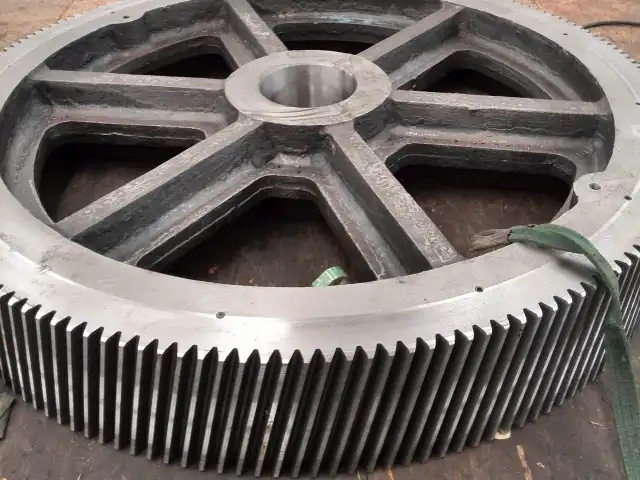
Helical gear teeth are cut at an angle to the shaft, unlike spur gears. With shaft upright, a Left Hand Helical Gear has teeth curving up and left. This directional orientation spreads engagement across larger surface area. Helix angle typically ranges 5°–45°, directly affecting thrust force and transmission efficiency. Engineers select this design when rotation direction and axial load control require specific mechanical responses in gearbox assemblies. Proper hand selection is critical for system performance.
Structural Properties and Material Selection
Advanced manufacturing determines gear longevity under stress. YIZHI MACHINERY uses premium alloy steels 40CrNiMo, SAE4340, and 18CrNiMo7 for high strength and fatigue resistance. Modules range 0.5–50 through precise forging and hobbing. Heat treatments including carburizing and quenching achieve 58–62 HRC surface hardness while maintaining tough cores—essential for shock loads in mining crushers and aircraft actuators. Multiple quality checks ensure dimensional consistency, proper fit, reduced backlash, and minimized vibration.
Distinguishing Left Hand from Right Hand Configurations
Primary mechanical difference is axial thrust direction during operation. With clockwise input facing viewer, generates thrust pushing away. Right-hand gears produce opposite thrust at same rotation speed. Parallel shaft assemblies pairing left and right hand gears cancel thrust forces, reducing bearing loads. Crossed-axis systems intentionally use matching hand angles to transmit motion between non-parallel shafts—critical design feature for compact machine tool spindles where conventional gear placement is spatially constrained.
Industrial Applications of Left Hand Helical Gears
Heavy Machinery and Mining Equipment
Underground mine gearboxes face shock loads, abrasive dust, and temperature extremes. Left Hand Helical Gear variants excel with higher contact ratios distributing stress across multiple teeth simultaneously. Conveyor systems handling ore chunks benefit from rapid torque spike handling without tooth fracture. Crushers use large-module versions with optimized helix angles for maximum load capacity (typically 500 kN radial force ratings). Gradual tooth engagement reduces impact forces during starting sequences—significantly beneficial when motors accelerate heavily loaded belt systems.
Aerospace Transmission Systems
Aircraft actuators require lightweight components without durability compromise. Left Hand Helical Gear units from aerospace-grade alloys like AISI4140 provide strength-to-weight ratios essential for flight control systems. Precision grinding reduces surface roughness below 0.8µm Ra, minimizing friction losses critical for battery-powered UAVs. Helix angles carefully balance thrust loads against bearing capacity ensuring consistent performance across temperature and altitude variations. Low noise output is particularly valuable in enclosed cabins where crew comfort affects mission performance during extended operations.
Precision Industrial Machinery
Helix gear reducers prevent machine tool spindle vibration during rotational-to-linear cutting force conversion. CNC machining centers require zero-backlash transmission maintaining micron-level tolerances. Left Hand Helical Gear products achieve this through precision-ground tooth surfaces matching within 5µm total composite error. Higher contact ratio (2.0 versus spur gears' 1.4) distributes cutting loads evenly, preventing chatter marks on finished parts. Helical angle design enables higher rotational speeds than spur versions with controlled tooth flank geometry managing thermal expansion.
Comparison and Decision-Making for Procurement
Efficiency Analysis Against Alternative Gear Types
Left Hand Helical Gear units typically achieve 96–98% efficiency versus spur gears' 94–96%. Sliding contact enables higher load capacity within same envelope despite some frictional heat. Trade-off requires thrust bearing installation—additional cost procurement must weigh against space savings and extended component life. At speeds above 1,500 RPM, efficiency gains accumulate significantly over multi-year operation. Double helical designs eliminate all axial thrust but increase manufacturing complexity and cost. Procurement decisions depend on bearing savings versus 30–40% price premium.
Selection Criteria for Industrial Environments
Harsh conditions demand material selection beyond standard requirements. Marine mining corrosive environments require stainless steel variants despite higher material costs. Applications above 200°C need metals retaining hardness—40CrNiMo with molybdenum additives resists tempering. YIZHI helps clients select materials using matrices correlating operational stresses with metallurgical properties, ensuring specified service life without premature wear. Dynamic factors including shock coefficients in reciprocating machinery or pulsating power from combustion engines must be incorporated into load analysis for proper specification.
Cost-Effectiveness Over Operational Lifespan
Initial purchase price represents only 20–30% of total gear ownership cost. Lifecycle costs dominated by energy consumption, maintenance labor, and replacement frequency. Left Hand Helical Gear efficiency reduces electricity usage in continuous-duty applications—2% efficiency gain yields significant savings for multi-shift facilities. Reduced vibration extends seal life and prevents oil contamination, lowering lubricant replenishment frequency. Custom manufacturing optimizes geometry matching specific load patterns; standard stock gears often include unnecessary capacity adding weight and inertia. Custom designs eliminate waste.
Procurement Guide for Left Hand Helical Gears
Evaluating Manufacturer Credentials
Checking a supplier's certifications is the first step in the screening process. These include ISO 9001 quality management and industry-specific standards like AS9100 for aircraft uses. Ask for proof of the heat treatment steps and the ability to track materials, making sure that the alloys meet the required standards. Audits of the manufacturing process show how deep a company's capabilities go. For example, facilities with Left Hand Helical Gear grinding tools show a dedication to accuracy that can't be reached by hobbing alone. YIZHI MACHINERY keeps detailed process paperwork that can be linked to specific production lots. This level of openness helps build trust in long-term partnerships.
Both capacity and effectiveness can be seen in production wait times. From analyzing your needs to doing the final inspection, our normal process gets custom gears to you in 35 to 60 days without losing quality checkpoints. There are fast choices for pressing repair projects that use pre-forged blanks and priority machining spots when production plans need to be flexible.
Custom Manufacturing and OEM Services
Off-the-shelf gears don't always perfectly fit the needs of an application. Custom changes to teeth, such as tip reduction or profile capping, improve contact patterns under load and greatly extend the time between services. We work with the engineering teams of our clients during the planning process and make suggestions on gear shape based on our 15 years of experience making things in a wide range of industries. This feedback stops expensive redesigns from being needed when trying prototypes shows that they don't work well enough.
Our low minimum order numbers are good for OEM partnerships, and we offer full engineering support for even one-piece production. Test runs on prototypes make sure that designs work before starting mass production. This lowers the financial risk of bringing new equipment models. Our digital production systems keep approved designs so that reordering is easy. This makes sure that replacement gears exactly match the original specs, even years after the first delivery.
Logistics and Global Delivery Capabilities
When sending precision gears across international borders, they need special packaging to keep the teeth from getting damaged during transport. We use custom-made wooden boxes with shock-absorbing liners. This keeps the damage rate during delivery to less than 0.1% for both air and sea freight. Real-time tracking updates let you see what's happening from the time the goods are loaded in the plant until they are cleared through customs. This lets you plan ahead for installation times.
Multiple modes of transportation help keep costs low and times tight. For example, consolidated ocean freight can be used during planned repair windows to save money, and air express can be used in case of an emergency breakdown. Compared to ocean lines, China-Europe train freight has more reliable schedules and longer wait times. Our transportation team looks at the size of the order and where it needs to go before suggesting the best shipping methods that will get it there on time for important project deadlines.
Technical Support and Maintenance Best Practices
Installation Guidelines for Optimal Performance
Gears that are properly aligned don't wear out or make noise. During assembly, dial indicators must be used to make sure that the shaft's parallelism stays within 0.02mm per 100mm of its length. Setting the bearing's preload has a big impact on how the teeth touch each other. If there isn't enough preload, the shaft can bend under load, and if there is too much preload, friction losses rise. We give you full installation instructions that include torque values, clearance measurements, and alignment steps that are specific to each Left Hand Helical Gear type.
Adjusting the backlash strikes a balance between the need for smooth operation and the need for positional accuracy. To keep cutting precisely, machine tools need very little backlash (0.03-0.05mm), but conveyors can handle bigger gaps (0.10-0.15mm), which makes them easier to put together. Shim kits that come with our gearbox parts make it possible for field techs to reach certain backlash ranges without using special tools.
Lubrication and Inspection Protocols
Left Hand Helical Gear units slide faster than spur gears, so they need extreme pressure oils with additives that keep them from scratching. The choice of oil thickness depends on the speeds and temperatures that will be used. ISO VG 220 mineral oils work best in normal situations, while synthetic PAO mixes are better for high temperatures or food-grade needs. Oil research tools find early signs of wear particle buildup, which allows for repairs to be made before major problems happen.
Visual checks should be done on the flanks of teeth to look for pitting or scoring patterns that show lubrication breakdown. Magnetic drain plugs catch metal trash and show how much wear there is between overhauls. We suggest checking times based on job cycles: for constant operation, checks should be done every three months; for intermittent use, checks should be done every six months.
Troubleshooting Common Operational Issues
Strange noises during operation are often a sign of misalignment or not enough lubricant. A high-frequency whine means that there is resonance at the mesh frequency. This can be fixed by changing the damping or the speed a little. Sounds like grinding indicate contamination or a failing gear that needs to be shut down right away to avoid further damage. Our technical support team helps with online repairs using data from vibration analysis to find the root causes without having to take apart equipment that doesn't need to be.
Anomaly in the wear patterns shows operating issues: localized pitting near the ends of teeth shows edge loads from misalignment, while even wear across faces confirms proper contact. Photographic evidence sent to our engineering team allows for expert evaluation, with suggestions ranging from fixing the balance to adding more material in case of unexpected load conditions.
Conclusion
Left Hand Helical Gear components are strategically used to solve important transmission problems in the mining, aircraft, and industrial machinery sectors. Their better load distribution, lower noise levels, and small size allow engineers to get the best performance out of tools while still staying within practical and space limits. To do a good job of buying, you need to balance things like material requirements, manufacturing accuracy, and supplier skills with lifetime cost factors. YIZHI MACHINERY takes a complete approach, from custom design to global shipping, to make sure that customers get precisely made parts backed by technical knowledge and on-time delivery. Buying good helix gears now will save you money on costly downtime tomorrow and make the whole system work better.
FAQ
1. How do I determine the correct helix angle for my application?
Choosing the right helix angle matches the load capacity with the thrust force amount. Most commercial uses angles between 15° and 30°, which give good economy without too much axial load. Higher angles make contact ratios higher, but they also need strong thrust bearings. To find the best angles, our engineering team does a load study that takes into account your power needs, the stiffness of the shaft, and the bearing specs for your Left Hand Helical Gear setup.
2. Can left-hand helical gears operate in high-temperature environments?
The right choice of materials and heat treatment methods allow for use up to 250°C. Alloys like 40CrNiMo keep their strength stable at high temperatures, and special lubricants keep them from breaking down. We suggest induction hardening for parts that will be thermally cycling to keep their shape across a wide range of temperatures.
3. What minimum order quantities do you accommodate?
We can take special orders for a single piece, and we understand the need for prototypes and quick replacements. Economies of scale help with volume production, but our flexible manufacturing method makes sure that both small and large amounts get the same high quality standards. This way, we can keep precision and material integrity no matter what size order we have.
Partner with a Trusted Left Hand Helical Gear Manufacturer
YIZHI MACHINERY makes Left Hand Helical Gear solutions that are precisely designed to meet the tough needs of mining, aircraft, and industrial machines. Our ISO-certified production processes use advanced CNC cutting and strict quality checks to make gears that are more accurate and last longer than the industry standard. With 15 years of production knowledge and the ability to make any changes you need, we can turn your complicated needs into reliable parts that help your business succeed. Our global shipping network makes sure that deliveries are safe and that you can track them in real time. We also offer dedicated expert support to help with everything from installation to maintenance. Get in touch with our engineering team at sales@yizmachinery.com to talk about your unique gear needs and get accurate quotes.
References
1. Dudley, D.W. (1994). Handbook of Practical Gear Design and Manufacture. CRC Press.
2. Maitra, G.M. (2012). Handbook of Gear Design, Second Edition. Tata McGraw-Hill Education.
3. Radzevich, S.P. (2016). Dudley's Handbook of Practical Gear Design and Manufacture, Third Edition. CRC Press.
4. American Gear Manufacturers Association. (2015). AGMA 2001-D04: Fundamental Rating Factors and Calculation Methods for Involute Spur and Helical Gear Teeth. AGMA Standards.
5. International Organization for Standardization. (2013). ISO 1328-1:2013 Cylindrical Gears — ISO System of Flank Tolerance Classification. ISO Standards.
6. Lynwander, P. (1983). Gear Drive Systems: Design and Application. Marcel Dekker Incorporated.

USER EVALUATE
Here is the customer's evaluation of us