


Large Gear Wheel Benefits: Efficiency, Durability & Precision
When you operate in industrial machinery, mining, or aerospace, the components driving your operations must deliver relentless performance under extreme conditions. Large gear wheels—often referred to as girth gears, bull gears, or ring gears—stand as the backbone of heavy-duty transmission systems, converting massive torque and motion with unmatched mechanical advantage. These gears provide three core benefits that directly impact your bottom line: efficiency that reduces energy waste, durability that extends equipment lifespan, and precision that maintains consistent output quality. Understanding how material selection, advanced manufacturing processes, and design innovations optimise these attributes helps procurement managers make informed decisions that protect operational continuity and profitability.
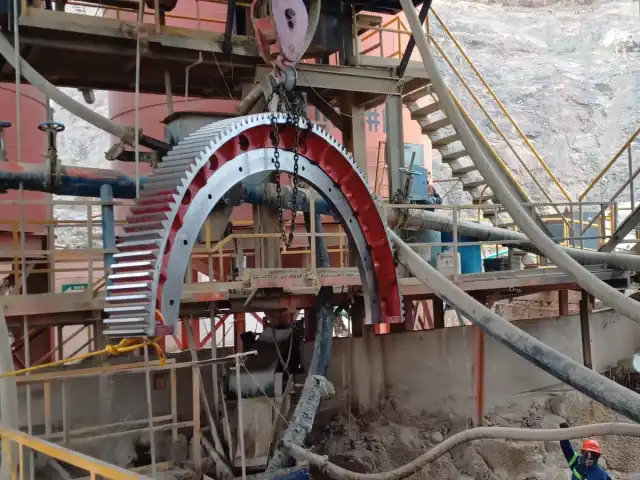
Understanding Large Gear Wheels: Key Features and Benefits
What Defines a Large Gear Wheel?
A large gear wheel usually has a diameter bigger than 1,000 mm, and sizes up to 14 meters are becoming more common in industrial settings. These huge circle parts with precisely cut teeth are important parts of heavy-duty drive systems for transmitting power. In contrast to normal sealed gearboxes, large gear wheels are designed to move huge amounts of inertia at low rotational speeds, often sending torque levels of more than 5,000 kNm. The way they work is based on meshing teeth engaging, which changes rotational motion from a driving pinion to a controlled, high-torque output. This makes them necessary in situations where size or technical needs make regular gears impractical.
Common Types and Industrial Applications
Spur gears have straight teeth parallel to gear axis—simple, efficient for parallel shafts. Helical gears have angled teeth engaging gradually, reducing noise/vibration while handling higher loads—ideal for mining ball mills. Bevel gears enable power transmission between intersecting shafts—used in aerospace actuation and machine tool spindles. In mining, SAG and ball mill gears handle constant shock loads, shell deflection, and abrasive slurry. Cement rotary kiln gears operate in high radiating heat (>200°C). Aerospace gears require compact size and tight tolerances.
Core Benefits: Efficiency, Durability, and Precision
Optimized tooth profiles and surface finishes reduce friction losses. ISO 5-6 Grade gears maintain consistent contact patterns—over 95% mechanical efficiency directly affecting production costs. Durability comes from material selection and heat treatment. Alloy steels 42CrMo, SAE4340, 18CrNiMo7 achieve 800–1000 MPa core tensile strength. Surface hardness 45–62 HRC provides wear resistance. Service life typically 20–25 years. Precision ensures consistent system performance via advanced manufacturing methods meeting AGMA 6014 and ISO 6336 standards.
Material and Design Considerations for Optimal Performance
Material Selection: Steel Grades and Performance Characteristics
For Large Gear Wheel applications, carbon steels like 45# suit moderate loads on limited budgets. Alloy steels 20CrMnTi, 40CrNiMo, AISI4140 offer superior hardenability and core strength—ideal for heavy-duty mining equipment. Premium alloys 18CrNiMo7 and 17CrNiMo6 serve aerospace and precision machines requiring high surface hardness after carburising and exceptional toughness. Material selection weighs performance against costs—premium metals cost more upfront but reduce total ownership costs through longer life and less maintenance. Cast iron alternatives dampen noise but suit lighter loads.
Design Principles: Tooth Profile and Surface Quality
Tooth profile accuracy directly affects load distribution and operational smoothness. CAD systems optimize involute curves ensuring even stress distribution across tooth flanks during engagement. Precision grinding improves surface finish, reducing friction coefficients and eliminating stress concentration points. ISO 5-6 Grade standards maintain tooth spacing within microns, preventing uneven load that accelerates wear. Pressure angle selection affects contact ratio and bending stress—20° is industry standard; 14.5° suits applications requiring smoother engagement. Face width and module selection balance bending strength with manufacturability.
Manufacturing Processes and Quality Standards
Forging establishes beneficial grain flow patterns superior to cast options. Cutting, hobbing, and milling shape tooth forms to near-net dimensions. Grinding achieves final surface roughness and dimensional tolerances. Heat treatment transforms material properties: carburizing adds carbon to surface layers (58–62 HRC) while maintaining tough core; quenching/tempering provides strength-hardness balance; induction hardening offers selective surface hardening. NDT includes ultrasonic testing per ASTM A609 Level 2 for internal voids and MPI for surface cracks. CMM verifies tooth profile, helix, and pitch errors against DIN 3962/ISO 1328 Grade 8-10.
How to Choose the Best Large Gear Wheel for Your Needs?
Defining Application-Specific Requirement
Torque load calculation must account for steady-state operation and peak demands during startup or emergency stops. Speed requirements determine contact stress levels and lubrication regime—high-speed applications need finer surface finishes and precise balancing. Environmental factors: high-temperature areas need materials retaining strength at elevated temperatures; corrosive marine/chemical settings require stainless steels or protective coatings; abrasive mining dust demands fortified surface treatments and robust lubrication systems maintaining protective films between metal surfaces.
Comparing Solutions: Gears vs. Alternative Components
Belt drives provide overload protection through slippage but lack gear drive precision. Chain drives allow shaft offset but need frequent maintenance and generate noise. Planetary gearboxes offer high torque density but cannot match open gear wheel power capacity at comparable size/cost. Hydraulic drives provide stepless speed variation but sacrifice efficiency and complicate maintenance. Direct drive motors eliminate transmission components but remain cost-prohibitive above hundreds of kilowatts. Large gear wheels offer superior reliability and longevity for heavy-duty applications.
Supplier Evaluation Criteria
When selecting a Large Gear Wheel supplier, buyers should evaluate manufacturing experience, machining precision, material quality, customization capability, and delivery reliability. YIZHI MACHINERY stands out with 15 years of precision gear production experience, ISO-standard manufacturing, advanced CNC grinding equipment, flexible customization services, strict quality inspection, and stable global logistics support for industrial applications worldwide.
Ensuring Longevity: Maintenance Tips and Best Practices
Routine Inspection Protocols
Proactive maintenance programs dramatically extend component service life and prevent catastrophic failures. Monthly inspections during scheduled maintenance windows examine tooth surfaces for pitting, scoring, or unusual wear patterns indicating lubrication issues or misalignment. Shaft alignment verification is critical—even 0.1-degree misalignment causes edge loading leading to root fracture. Laser alignment tools provide precise measurement. Infrared thermography identifies hot spots indicating insufficient lubrication or excessive friction from misalignment. Proper alignment ensures pinion-to-gear relationship throughout machine life.
Common Failure Modes and Prevention Strategies
Tooth fracture typically results from excessive shock loads, fatigue crack propagation from inadequate root fillet design, or material defects. Prevention requires proper service factor during design, material quality verification via NDT, and operational monitoring avoiding overload conditions. Pitting/spalling from contact fatigue occurs when surface loads exceed material capability or lubrication film breakdown allows metal-to-metal contact. Prevention uses correct viscosity lubricants, proper application rates, and materials with adequate surface hardness. Abrasive wear in dusty environments requires EP additives and high FZG load stage grades (>12).
Repair vs. Replacement Decision Framework
To choose whether to fix or replace broken parts, you need to do an economic analysis that weighs the short-term costs against the long-term dependability. Minor harm to the tooth's surface, like minor pitting and scoring, can usually be fixed by grinding it down and re-profiling it. This can restore good contact patterns at a fraction of the cost of replacing the tooth. Finding cracks using MPI should come before trying to fix them, because any cracks below the surface mean that the whole thing needs to be replaced to avoid a catastrophic failure. When case depth is worn down too far by carburizing or induction hardening, the part usually needs to be replaced because there isn't enough hard material left to handle working loads. Some designs let flipping gears use the side with no teeth, which doubles the service life when wear patterns only affect one side. Getting new parts from reliable sources guarantees quality and fit. Original equipment makers (OEMs) promise exact measurements and material specs, but approved aftermarket providers who give the same quality at lower prices may be more cost-effective. Buying in bulk for parts that are often changed lowers the cost per unit and makes sure that there is enough inventory to keep production going as smoothly as possible when replacements are needed.
Maximising ROI: Advantages of Investing in High-Quality Large Gear Wheels
Efficiency Improvements and Energy Savings
Premium components improve performance in a way that can be measured and directly lowers running costs. When tight specs are used to make high-precision gears, friction losses are kept to a minimum. This results in mechanical efficiency rates of over 95%. This higher efficiency means that less energy is used. For example, a 2% improvement in efficiency in a 500kW drive system saves about 88,000 kWh per year, which is a big savings over the life of the equipment. Better surface finishes and ideal contact patterns reduce mechanical wear, which increases the time between lubrication and lowers the amount of upkeep material used. When movement is smoother, vibration and the loads that come with it are reduced. This extends the life of other parts and lowers the number of unexpected repair visits. When factories switch from normal industrial parts to precision-grade ones, their total repair costs go down by 15 to 20 percent. Case studies from mine companies show that good investments pay off in real ways. A copper mine facility switched from regular Large Gear Wheel units to precision-ground ones made from premium alloy steel. This extended the service life by 18 months and cut energy use by 3.2%. Within 14 months, the total savings were more than the starting cost premium, and the benefits kept coming in for the longer operating life.
Durability and Reduced Downtime
There is a clear and measurable link between the quality of the materials, the quality of the design, and the trustworthiness of the function. Parts made from high-quality alloy steels that have been heat treated properly can resist operating loads and environmental problems that quickly break down cheaper options. When the right materials are used and the right production methods are used, demanding uses can have service lives of 20 to 25 years. In businesses that use ongoing processes, less downtime may be the most important ROI factor. When mine mills or cement kilns break down without warning, output stops, and the costs are much higher than the cost of replacing the parts. Copper concentrators can lose between $2 and $4 million in production and repair costs in just 48 hours of downtime. It's hard to overstate how valuable it is to reduce risk by investing in solid parts that stop such catastrophic breakdowns. Higher stability helps machines last longer and use their space more efficiently. When precision parts are used in equipment, they send less energy and shock to supporting structures and systems that are close by. This softer operation extends the life of the whole system, putting off big capital costs for replacing equipment while keeping up production capacity that helps the business grow and stay competitive.
Precision and Quality Assurance
Precision parts that offer consistent system performance ensure product quality standards that boost customer satisfaction and the market's image. When making goods with tight tolerances, factories can't have transmission system changes that cause positioning mistakes or surface finish flaws. Thanks to high-precision gears, positioning accuracy stays within microns, which lets automatic production systems meet or beat quality goals. Reliable communication systems make it possible to repeat a process, which cuts down on waste and repair costs. Changes in motion control cause differences in dimensions that need to be checked, sorted, and maybe even remade. This type of difference is taken care of by precision components, which raises first-pass yield rates and lowers the amount of work that needs to be done in quality control. Long-term competitive edge comes from operational excellence, which is made possible by high-quality parts. When businesses engage in good infrastructure, they lower their operational costs by making it more efficient and reliable. At the same time, they improve product quality and customer happiness. This double benefit makes the company's place in the market stronger, which can lead to higher prices or bigger market shares, which increase the return on investments over time.
Conclusion
Large gear wheels give industries like mining, aerospace, and industrial machinery the speed, sturdiness, and accuracy they need to stay ahead of the competition. To make buying choices that protect operating continuity while lowering total ownership costs, it's helpful to know how material choice, manufacturing processes, and design principles work together to get the most out of these core benefits. Strategically choosing a provider that balances technical skills, customization options, and full support services makes sure that parts are reliable for longer service lives. By avoiding expensive unplanned downtime, proactive maintenance programs and smart choices about whether to repair or replace something improve return on investment. Prioritizing quality in transmission parts builds operational resilience that keeps output, profitability, and market success in tough industrial settings.
FAQ
1. Why are some large gear wheels segmented rather than manufactured as solid components?
For transportation reasons, large gear wheels with a width of more than 4 to 5 meters must be split into two or four pieces. Fitted bolts and high-precision joint machining are used by manufacturers to make sure that pitch error across splits stays within AGMA limits. This method makes it possible to ship and install huge parts that would be hard to move or place at installation sites any other way.
2. How do you handle lubrication in dusty environments typical of mining operations?
When used with automatic spray systems, high-viscosity open gear lubricants (OGL) offer the best safety in rough circumstances. The lubricant needs to have high FZG load stage rates (>12) so that it can make hydrodynamic films that keep metal surfaces from touching, even if there is dust on them. Abrasive particles build up quickly and cause wear, so it's important to clean and change the oil on a regular basis.
3. What represents the biggest installation risk affecting long-term performance?
When the pinion and gear are not lined up correctly, edge loading happens, which quickly breaks the root. Even an angle error of 0.1 degree puts most of the force on the sides of the teeth instead of spreading it out across the whole face width. Verifying the laser positioning during installation is necessary to avoid failure before its time and make sure the system lasts as long as it was designed to.
Partner with YIZHI MACHINERY for Superior Gear Solutions
For 15 years, YIZHI MACHINERY has been making precision gears and has helped companies in the mining, aerospace, and industrial machinery sectors find unique transmission solutions that improve their performance. Our large gear wheel capabilities include modules ranging from 0.5 to 50. They are made from high-quality materials such as 42CrMo, SAE4340, and 18CrNiMo7, and they are very precise, reaching ISO 5-6 Grade levels, through advanced forging, hobbing, and grinding methods. We offer full technical support from the first design sketches to production, quality control, and global logistics with real-time tracking. Our competitive benefits include customised packaging that keeps goods safe during travel, a range of shipping choices that keep wait times between 35 and 60 days, and one-year warranty support with quick problem resolution. As a reputable big gear wheel manufacturer, we accept both one-item sales and bulk purchases that help you keep your business running. Get in touch with our engineering team at sales@yizmachinery.com to talk about your individual application needs and find out how precision components can help you run your business more efficiently.
References
1. American Gear Manufacturers Association. (2019). AGMA 6014: Design and Specification of Girth Gear Drives. Alexandria, VA: AGMA Publications.
2. Dudley, D.W. (2020). Handbook of Practical Gear Design and Manufacture (3rd ed.). Boca Raton, FL: CRC Press.
3. International Organization for Standardization. (2021). ISO 6336: Calculation of Load Capacity of Spur and Helical Gears. Geneva: ISO Standards.
4. Khurmi, R.S. & Gupta, J.K. (2018). Machine Design: Textbook of Machine Design. New Delhi: S. Chand Publishing.
5. Radzevich, S.P. (2019). Theory of Gearing: Kinematics, Geometry, and Synthesis (2nd ed.). Boca Raton, FL: CRC Press.
6. Stadtfeld, H.J. (2021). Advanced Gear Manufacturing and Finishing: Classical and Modern Processes. San Diego, CA: Academic Press.

USER EVALUATE
Here is the customer's evaluation of us