


Industrial Helical Gear vs Bevel Gear: Which Best?
It's not just a technical choice between an Industrial Helical Gear and a slope adapt; it's moreover a key speculation that influences how well your apparatus works, how much it costs to run, and how long it keeps going. The reply depends on the needs of your application. Helical gears work best with parallel shafts since they keep running easily and discreetly indeed when they're beneath a part of push. This makes them idealize for mining transports, compressors, and exactness hardware. On the other hand, incline gears work best when control needs to be sent between shafts that cross each other, like in right-angle gearboxes or differential drives. By knowing these fundamental contrasts, you can be beyond any doubt to purchase the right portion that fits your down to earth needs and your budget.
Introduction
Industrial gears are the most imperative portion of control exchange frameworks in the aviation, mining, and fabricating businesses. It's getting harder and harder for acquisition supervisors and designing groups to select parts that not as it were meet moment working needs but too final a long time and do not fetched as well much. Choosing between helical and incline gears can have a huge impact on how well a machine works, how frequently it needs to be overhauled, and how much it costs to own the entirety thing.
This directly gives you a part of the data around both sorts of gears by looking at their plan highlights, execution measures, and what sorts of errands they are best for. We'll discuss real-life circumstances including everything from overwhelming mining apparatuses to high-tech aviation frameworks. This will offer assistance you make savvy choices around what to purchase. Whether you're choosing parts for a unused generation line or changing worn orientation in ancient machines, knowing these contrasts will offer assistance you get the most out of your framework whereas keeping costs low.
Understanding Industrial Helical and Bevel Gears
What Defines an Industrial Helical Gear?
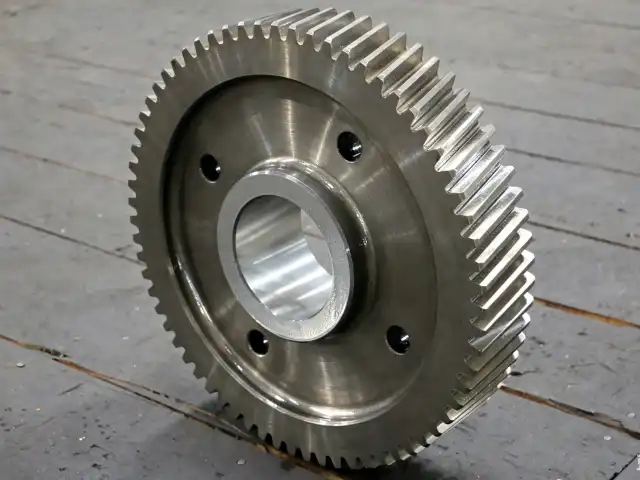
An Industrial Helical Gear features teeth cut at points of 5°–45°, shaping a helix around a round and hollow body. This geometry empowers slow tooth engagement, dispersing loads over different teeth and moving forward torque exchange. Fabricated from amalgams like 20CrMnTi, 40CrNiMo, and 18CrNiMo7, these gears experience manufacturing, hobbing, crushing, and warm treatment. Carburizing solidifies surfaces to 58–62 HRC whereas keeping up a extreme center for stun resistance. In spite of the fact that helix points produce hub pushed requiring bearing back, they essentially upgrade smoothness and diminish clamor compared to straight-tooth designs.
How Bevel Gears Differ in Design and Function
Bevel gears have cone-shaped shapes with teeth cut along the cone surface, empowering control exchange between meeting shafts, ordinarily at 90°. Tooth shapes incorporate straight, winding, and hypoid, each advertising distinctive execution levels. Straight incline gears are straightforward and conservative for low-speed utilize, whereas winding slope gears give smoother engagement, higher load capacity, and diminished clamor. Their complex geometry requires exact machining and specialized instruments. The cone-shaped plan permits compact right-angle transmission arrangements, making incline gears fundamental where parallel shaft setups are illogical, or space is limited.
Key Geometric and Functional Comparisons
The primary refinement lies in shaft introduction. Helical gears work on parallel shafts, whereas slope gears handle meeting tomahawks for heading alteration. Helical teeth lock in continuously, accomplishing tall contact proportions and indeed stack dispersion. Slope gears, particularly winding sorts, also lock in slowly but oversee more complex constraint bearings due to their funnel-shaped geometry. Both can reach ISO 5–6 exactness through crushing, but incline gears are, for the most part, more complex and expensive to create. These geometric contrasts straightforwardly influence fabricating trouble, fetched, and application appropriateness in mechanical systems.
Performance Comparison: Industrial Helical Gear vs Bevel Gear
Efficiency and Power Loss Characteristics
Efficiency strongly influences operating cost. Helical gears typically achieve 96–98% efficiency per stage, with losses from sliding friction and axial thrust-related bearing resistance. Proper lubrication using EP gear oils minimizes these losses. Bevel gears offer comparable efficiency, with spiral designs reaching 95–97%, while straight bevel gears are slightly less efficient due to poorer contact patterns. In multi-stage systems, Industrial Helical Gear solutions maintain better overall efficiency, as cumulative losses are lower compared to alternative gear types in heavy industrial drives.
Noise, Vibration, and Operational Smoothness
Helical gears give calmer operation due to slow tooth engagement, lessening clamor by 10–15 dB compared to goad gears. This smooth movement minimizes vibration transmission, amplifying bearing life and bringing down support needs. Winding slope gears moreover offer decreased clamor due to bended teeth, making them reasonable for car and aviation frameworks. In any case, straight slope gears produce more clamor and are less appropriate for noise-sensitive situations. By and large, helical plans exceed expectations in applications requiring moo vibration and steady performance.
Load Capacity and Durability Under Industrial Conditions
Helical gears handle higher loads due to predominant contact proportions, dispersing push over numerous teeth and decreasing localized stretch. This makes them perfect for heavy-duty applications like mining, cement, and expansive gearboxes. Carburized surfaces (58–62 HRC) stand up to wear whereas intense centers retain stuns. Slope gears can transmit tall torque in right-angle setups but for the most part have lower stack capacity per estimate compared to helical gears. Both depend on appropriate oil, arrangement, and adherence to ISO 6336 stretch limits for long benefit life.
Maintenance Requirements and Long-Term Cost Implications
Maintenance impacts total ownership cost significantly. Helical gears require periodic inspection of bearings managing axial thrust, but their wear patterns allow predictive maintenance planning. Bevel gears demand stricter alignment control due to sensitivity to shaft positioning, increasing maintenance complexity. Misalignment can lead to edge loading and early failure. While both benefit from oil analysis and thermography, Industrial Helical Gear systems typically incur lower annual maintenance costs due to easier alignment and more forgiving operating conditions.
Selecting the Right Gear for Industrial Applications
Industry-Specific Application Scenarios
Different industries favor specific gear types. Mining operations rely on helical gears for conveyors and mills due to their ability to handle shock loads and continuous operation. Aerospace systems use both: helical gears for high-speed drives and spiral bevel gears for compact right-angle transmissions. Heavy industries such as rolling mills and marine propulsion prefer helical gear trains for their ability to transmit large torques efficiently. Industrial Helical Gear designs are especially valued where reliability and durability under harsh conditions are critical.
Evaluating Operational Parameters in Gear Selection
Shaft configuration, speed, load, and environment determine gear selection. Intersecting shafts need bevel gears, whereas parallel shafts prefer helical designs. High-speed applications over 3,600 RPM benefit from precision-ground helical gears with optimal helix angles. Shock or changing loads prefer helical gears owing to multi-tooth contact, whereas steady loads may offer simpler choices. Environment variables including temperature, pollution, and space limits affect selection. Compact right-angle drives may justify bevel gears' increased cost and maintenance.
Real-World Case Studies Demonstrating Optimal Choices
Real-world applications show gear selection best. Replacement spur gears with double helical gears increased service life beyond five years and reduced noise in a cement mill. An aerospace provider transmitted 250 horsepower in a compact 90° layout using spiral bevel gears, reducing weight and efficiency. Carburised helical gears in a mining conveyor system eliminated surface breakdowns and downtime by absorbing 200% shock loads. These examples demonstrate how Industrial Helical Gear and bevel solutions solve operational issues.
Procurement and Supply Considerations for B2B Clients
Selecting Reputable Suppliers with Proven Capabilities
Supplier evaluation involves more than pricing. Reliable manufacturers operate advanced CNC machining, grinding, and controlled heat treatment systems. ISO 9001 certification ensures quality management, while AS9100 applies to aerospace-grade production. Companies with over 15 years of experience demonstrate expertise in materials, heat treatment, and quality control. Verifying inspection equipment calibration and conducting facility audits ensures claimed capabilities are genuine. Choosing experienced suppliers reduces risk, especially for critical applications where failure has significant consequences.
Customization Capabilities and Technical Collaboration
Industrial applications often require custom gear solutions. Effective suppliers follow structured processes: requirement analysis, engineering design, prototyping, and production. Helical gears offer flexibility with modules from 0.5–50, helix angles from 5°–45°, and tailored tooth counts. Material options range from economical steels to premium alloys like SAE4340. Advanced metrology tools ensure ISO 5–6 precision. Collaboration between buyers and engineers optimizes performance, ensuring gears integrate seamlessly into mechanical systems while balancing cost and durability.
Lead Times, Logistics, and Inventory Management
Production timelines affect project execution. Standard Industrial Helical Gear lead times range from 35–60 days, covering forging, machining, heat treatment, grinding, and inspection. Custom designs may extend schedules. Reliable suppliers provide milestone tracking and regular updates. Logistics solutions, including protective packaging and multiple transport modes, minimize damage risk and ensure timely delivery. Real-time tracking enhances supply chain visibility, helping procurement teams manage inventory efficiently and avoid costly delays.
After-Sales Support and Warranty Provisions
Strong after-sales support ensures long-term performance. Typical warranties cover manufacturing defects for one year. Technical support assists with installation, lubrication, and troubleshooting. Suppliers maintaining production records can provide accurate replacement parts quickly. Engineering support during design prevents specification errors, while condition monitoring guidance supports predictive maintenance strategies. These services reduce downtime and extend gear life, lowering total ownership costs and improving operational reliability.
Making the Decision: Industrial Helical Gear or Bevel Gear?
Synthesizing Performance, Cost, and Compatibility Factors
Optimal gear selection balances performance, cost, and system compatibility. Helical gears excel in high-speed, parallel-shaft applications requiring smooth, quiet operation. Bevel gears are essential for right-angle power transmission. While Industrial Helical Gear options may cost more initially, they reduce lifecycle costs through durability and lower maintenance. Compatibility with existing systems is critical—switching shaft configurations may require major redesign. Efficiency improvements, even by small percentages, significantly reduce long-term operating costs in energy-intensive applications.
Tailored Recommendations by Industrial Segment
Heavy equipment industries benefit from helical gears' load capacity and longevity. Automation industries favor them for CNC and robotic accuracy and minimal noise. OEM firms need flexible suppliers with low minimum orders and fast prototyping. Helical and spiral bevel gears are used in aerospace depending on configuration. Industrial Helical Gear systems excel in dependability, efficiency, and performance across different operating situations.
Leveraging Specialized Expertise for Optimal Outcomes
Expert technical assistance increases results with experienced gear manufacturers. Mining shock loads and aeronautical weight constraints are understood by industry-experienced suppliers. Their engineers optimize designs for performance and affordability. Superior components are produced via precision hobbing, grinding, and carburizing. Rigorous CMM, magnetic, and contact analysis inspection ensures dependability. The expertise decreases failure risks, extends service life, and lowers ownership costs.
Conclusion
Consider the product's demands, operating circumstances, and long-term costs while choosing between helical and bevel gears. Helical gears are suitable for two parallel shafts that must travel silently and smoothly while carrying heavy loads. Mine equipment, industrial gears, and precise machinery benefit from them. Their progressive tooth contact distributes stresses, extending part life and reducing maintenance. Right-angle power transmission requires bevel gears in aerospace, automotive, and other specialized industries where shaft geometry influences design. Both kinds of gear work best when correctly specified, built to precise standards, and supported by skilled suppliers that provide customization choices and complete technical support throughout the procurement and operating lifespan.
Frequently Asked Questions
1. How do helical gears achieve lower noise levels compared to other gear types?
Helical gears' slanted teeth push gently, unlike spur gears. Progressive meshing evenly distributes pressures over several teeth, eliminating impact forces that cause gear whining. Since the helix angle is normally 15° to 30°, contact periods overlap, thus new teeth start carrying load before old teeth totally separate. Noise is 10–15 dB lower than spur gears due to continual power transmission. Helical designs are superior for noise-controlling environments like closed manufacturing facilities and equipment near humans.
2. Can bevel gears handle the same load capacities as helical gears?
Bevel gears can manage high torques within their design, although their load capacity per unit size is generally lower than helical gear counterparts. Conical tooth shape and point contact patterns increase localized stresses compared to line contact helical gears. Curved teeth engage gradually in spiral bevel designs, improving load distribution and approaching helical gear performance. Application needs determine selection. Bevel gears are better for sending power at a straight angle, but they have lower load ratings than helical gears in intersecting shaft arrangements.
3. What are typical lead times for custom helical gear orders?
Order confirmation to delivery for custom helical gears takes 35 to 60 days, depending on specification complexity and material availability. This timeline includes forging or cutting blanks, precision hobbing to create tooth profiles, heat treatment techniques including carburizing and quenching, final grinding to achieve accuracy grades, thorough inspection, and protective packing. Rush orders may be possible with manufacturing plan changes, although shorter deadlines might increase prices. Schedules are more dependable when suppliers supply common materials and employ conventional production methods. However, uncommon alloys and non-standard shapes may need specific sourcing or tooling, increasing lead times.
Partner with YIZHI MACHINERY for Your Industrial Helical Gear Solutions
At YIZHI MACHINERY, we bring 15 years of specialized expertise in precision gear manufacturing, serving industrial machinery, mining, and aerospace sectors worldwide. Our Industrial Helical Gear solutions are crafted from premium materials like 20CrMnTi, 40CrNiMo, and 18CrNiMo7. They are manufactured using advanced techniques like forging, precision hobbing, and grinding to meet ISO 5-6 accuracy grades. We deliver customized gearing with modules from 0.5 to 50, helix angles from 5° to 45°, and surface hardness up to 58–62 HRC. We guarantee 35–60 day delivery with full tracking thanks to our streamlined process, which includes requirement consultation, design, production, quality inspection, and logistics. Contact our team at sales@yizmachinery.com to talk about your unique application needs and find out how working with a reputable Industrial Helical Gear manufacturer can improve the performance and dependability of your equipment.
References
1. Dudley, Darle W. Handbook of Practical Gear Design and Manufacture. CRC Press, 2020.
2. American Gear Manufacturers Association. AGMA 2001-D04: Fundamental Rating Factors and Calculation Methods for Involute Spur and Helical Gear Teeth. AGMA, 2004.
3. International Organization for Standardization. ISO 6336-1:2019 Calculation of Load Capacity of Spur and Helical Gears – Part 1: Basic Principles. ISO, 2019.
4. Townsend, Dennis P. Dudley's Gear Handbook: The Design, Manufacture, and Application of Gears. McGraw-Hill Education, 1992.
5. Lynwander, Peter. Gear Drive Systems: Design and Application. Marcel Dekker, 1983.
6. Radzevich, Stephen P. Dudley's Handbook of Practical Gear Design and Manufacture. CRC Press, 2016.

USER EVALUATE
Here is the customer's evaluation of us