


What Is Herringbone Gear Transmission?
Herringbone Gear Transmission uses two helical gears with teeth arranged in a special "V" shape to make specialized control exchange frameworks. Standard single-helical gears deliver a solid hub pushed that needs a solid pushed heading. Herringbone arrangements, on the other hand, have two opposite-hand helix points on the same equipotential. This diverse shape causes a self-centering activity that cuts out pivotal pushed strengths interior the gearbox, so it doesn't require as numerous expansive orientation and takes up less space. This innovation fixes vital issues in heavy-duty apparatus by diminishing vibration and commotion caused by changing loads by a expansive sum. This makes it basic for use in mining, airships, and mechanical machinery.
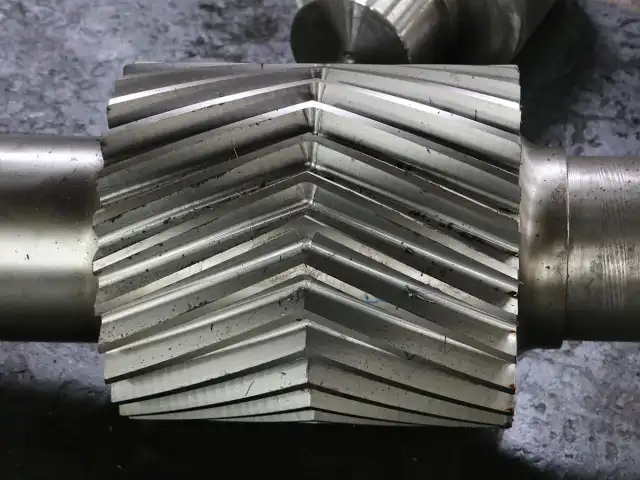
Understanding Herringbone Gear Transmission
Herringbone Gear Transmission units are exceptionally intelligent mechanically since of how they are built and how they work. These parts are a step forward in control transmission tech since they get around issues that come up with normal equip systems.
Working Principle and Structural Design
Herringbone Gear Transmission works by slowly meshing their curved teeth together, making sure that they stay in touch while the gear is turning. This makes the power transfer easier and quieter, with a lot less noise, vibration, and impact than spur gears. The spiral angle controls how well it works and how much weight it can hold. Depending on the purpose, the angle usually ranges from 5° to 45°. When the mesh is working, the teeth line up so that force can be transferred with great balance. This makes the performance steady even when the load changes.The double helix shape makes it easier for the load to be spread across the whole width of the tooth face, which increases the contact area and stress distribution. True continuous Herringbone Gear Transmission made with modern CNC machining is different from regular double-helical gears because they don't have a center relief groove. This groove makes the most of the face width and keeps the structure strong under high-pressure conditions. Having this design feature makes them perfect for high-speed transmission tasks that can't be touched in terms of durability.
Material Selection and Manufacturing Excellence
Herringbone Gear Transmission units are made at YIZHI Apparatus from high-quality materials like 45# steel, 20CrMnTi, 40CrNiMo, 42CrMo, AISI4140, 18CrNiMo7, 17CrNiMo6, 20CrNiMo, AISI8620, 20CrNi2Mo, and SAE4320. The choice of fabric has a coordinate impact on the stack capacity, strength, and working lifetime under intense conditions. To meet ISO 5-6 Review precision measures, we utilize fashioning, cutting, hobbing, processing, and exact pounding in our fabrication processes. Depending on the needs of the application, warm treatment strategies such as carburizing, cooling and hardening, and acceptance solidifying can make the surface hardness extend from 45 to 50 HRC to 58 to 62 HRC. Tooth crushing makes beyond any doubt that the surface is smooth and the measurements are redress, which are vital for lessening noise and ensuring that the machine runs easily. We can make gears with modules extending from 0.5 to 50, much appreciated by these advanced forms. These can be utilized in a wide extend of mechanical applications, from little machine apparatus axles to colossal clutches in mining equipment.
Customization Capabilities
We offer full customization administrations since we know that no two trade employments are the same. You can alter the number of teeth, the measure of the module, and the point of the helix to fit your needs for control exchange and the space you have accessible. Amid the necessity communication stage, our designing group works closely with clients to make point by point plan drawings that turn working needs into specs that can be made. This way of doing things makes sure that each Herringbone Gear Transmission unit fits perfectly into current equipment and works at its best.
Advantages of Herringbone Gear Transmission for Industrial Use
Choosing the right gear drive system has a direct effect on how well machinery works, how much it costs to maintain, and how reliably it works. Herringbone gear transmissions have many efficiency benefits that make them worth using in tough industrial settings.
Superior Load Capacity and Operational Stability
Herringbone Gear Transmission distributes forces evenly across its double-helix structure, empowering higher stack capacity than goad or single-helical gears of comparable estimate. The end of net hub pushed expels the require for overwhelming pushed orientation, streamlining gearbox plan and lessening component check. This permits compact however strong gatherings, perfect for space-limited frameworks like aviation and accuracy apparatus. In mechanical situations with stun loads and fluctuating torque, the dual-helix plan gives excess, keeping up execution indeed with localized wear. This strength expands hardware life, diminishes startling disappointments, and makes strides generation effectiveness whereas bringing down long-term operational costs.
Noise Reduction and Vibration Control
Herringbone Gear Transmission enables smooth, low-noise operation through continuous tooth engagement and covering contact zones. Not at all like goad gears, which create affect commotion from sudden contact, this plan accomplishes dynamic stacking that essentially diminishes vibration and sound levels. Lower vibration is basic in accuracy gear such as machine apparatus axles, where indeed minor unsettling influences influence machining precision. In mechanical offices, calmer operation progresses working conditions and shows steady mechanical execution. Diminished vibration moreover minimizes stretch on supporting structures and components, contributing to longer benefit life and more reliable operational reliability.
Maintenance Advantages and Longevity
With proper lubrication and design benefits, Herringbone Gear Transmission offers amplified benefit life. Indeed stack conveyance diminishes stretch concentrations that ordinarily cause weariness splits and setting. Case-hardened surfaces combined with extreme centers stand up to wear and assimilate stun loads successfully. Support remains clear, centering on oil checks, visual assessments, and intermittent arrangement confirmation. The self-centering nature endures minor misalignment, in spite of the fact that the ideal arrangement improves execution. Selecting appropriate oils decreases contact and warm buildup, expanding benefit intervals. These characteristics make herringbone frameworks perfect for inaccessible destinations and continuous-process businesses where support access is constrained, and reliability is essential.
Herringbone Gear Transmission vs. Other Gear Systems
Knowing the pros and cons of different types of gear helps you make smart purchases that meet the needs of your application and your operating limits. Herringbone Gear Transmission systems represent a significant evolution over traditional layouts.
Structural and Performance Comparisons
Helical gears improve smoothness over spur designs but generate axial thrust requiring additional bearings. Standard double-helical gears reduce this thrust but include a central groove that limits effective face width. Herringbone Gear Transmission eliminates this gap, maximizing contact area and load capacity. Bevel gears enable power transfer between intersecting shafts but involve higher manufacturing complexity and cost. Planetary systems provide compact, high-ratio solutions but require precise assembly. Each system serves specific needs, while herringbone designs excel in high-speed, high-load applications demanding smooth operation and zero axial thrust.
Cost Considerations and Maintenance Requirements
Herringbone Gear Transmission typically involves higher initial manufacturing costs due to precision machining and specialized equipment requirements. Skilled labor and advanced processes are necessary to achieve accurate double-helix profiles. However, these upfront costs are offset by long-term benefits, including simplified gearbox design, reduced bearing requirements, longer service life, and lower maintenance frequency. Maintenance focuses on lubrication, alignment, and inspection, similar to other precision systems. The absence of thrust bearings reduces service complexity. Over the lifecycle, herringbone systems often deliver superior value in demanding applications where reliability and efficiency are critical.
Procurement Guide for Herringbone Gear Transmission Units
To find effective Herringbone Gear Transmission units, you need to carefully evaluate suppliers and be clear about the technical requirements so that the transmissions fit your needs perfectly.
Supplier Evaluation Criteria
Selecting reliable manufacturers involves assessing production capability, quality systems, and responsiveness. Established suppliers with ISO-compliant systems and extensive experience ensure consistent output. Advanced equipment such as CNC machining centers, automated grinding machines, and intelligent heat treatment lines demonstrates technical strength. Quality verification includes apex alignment checks, tooth contact analysis, and non-destructive testing. Coordinate measuring machines confirm precise helix alignment, while blueing tests ensure adequate contact coverage. Magnetic Particle Inspection detects micro-cracks and grinding defects, ensuring structural integrity before shipment.
Standard vs. Custom Solutions
Custom Herringbone Gear Transmission solutions provide flexibility for varying power, speed, and installation constraints. A structured process defines specifications such as module, tooth count, helix angle, materials, and heat treatment. Client approval of design drawings ensures alignment with application needs before production begins. Low minimum order quantities, including single-unit capability, support prototyping and specialized machinery requirements. Typical production cycles range from 35 to 60 days, depending on complexity and material availability. Continuous progress reporting enhances transparency, distinguishing flexible suppliers from volume-focused providers.
Logistics and Delivery Considerations
Precision gears require protective packaging to prevent damage. Customized wooden crates combined with shock-absorbing materials safeguard components during transport, maintaining damage rates below 0.1%. Flexible logistics options—including sea, air, and rail freight—allow optimization based on cost and urgency. Real-time tracking systems provide visibility throughout the delivery process, from factory dispatch to final receipt. This transparency improves planning accuracy, supports installation scheduling, and ensures efficient inventory management across supply chains.
Maintenance, Lubrication, and Longevity of Herringbone Gears
To get the most out of a Herringbone Gear Transmission performance and lifespan, it's important to follow best practices for upkeep and lubrication throughout its working lifecycle.
Routine Inspection Procedures
Regular inspection programs detect early signs of wear, lubrication issues, or misalignment before failure occurs. Visual checks should identify pitting, cracking, or discoloration indicating overheating. Abnormal noise often signals developing faults requiring investigation. Monitoring operating temperature helps detect insufficient lubrication or excessive load conditions. Documenting inspection results establishes baseline data for trend analysis, enabling identification of gradual degradation patterns. This proactive approach supports predictive maintenance strategies, allowing planned interventions that minimize downtime and prevent unexpected production disruptions.
Lubrication Selection and Application
Selecting appropriate lubricants requires consideration of operating conditions such as temperature, load, speed, and environment. High-quality gear oils with extreme pressure additives protect against high contact stresses. Synthetic lubricants offer superior thermal stability and corrosion resistance, suitable for continuous operations. Application methods include splash lubrication for enclosed systems and forced circulation for large industrial setups. Maintaining correct oil levels and monitoring contamination through analysis prevents accelerated wear. Temperature control ensures lubricant effectiveness, as extremes reduce protective film strength and accelerate component degradation.
Troubleshooting Common Issues
Understanding common failure modes enables effective troubleshooting. Localized pitting often indicates inadequate lubrication or contamination. Scoring suggests insufficient lubricant film under high load or speed conditions. Tooth breakage may result from shock loading, material defects, or crack propagation. Effective solutions address root causes rather than symptoms, including improving lubrication systems, adjusting operating conditions, or upgrading materials. Comprehensive after-sales support and warranty services provide technical guidance, helping resolve issues quickly and ensuring long-term operational reliability across diverse applications.
Real-World Applications Across Industries
When high torque density, dependability, and smooth operation in complex settings are needed, Herringbone Gear Transmission units are the best way to go.
Industrial Machinery Applications
In machine tools, Herringbone Gear Transmission ensures precision and vibration control, supporting high-quality surface finishes and dimensional accuracy. The absence of axial thrust simplifies spindle bearing arrangements, reducing component count and increasing achievable speeds. Large industrial systems such as steel mills and processing plants use herringbone gears for efficient power transmission in continuous operations. Their durability and load capacity support high-torque applications, while consistent performance minimizes downtime in automated production environments.
Mining and Extraction Operations
Mining equipment operates under extreme conditions including shock loads, abrasive contamination, and continuous duty cycles. Herringbone Gear Transmission performs reliably in crushers, conveyors, and hoisting systems, resisting impact forces that would damage less robust designs. In drilling applications, these gears prevent axial movement that could disrupt pump operation and accelerate wear. Their durability ensures consistent performance, reducing costly downtime in remote locations where maintenance resources are limited.
Aerospace Applications
Although less common in aerospace than industrial use, Herringbone Gear Transmission serves specialized roles requiring balanced performance and reliability. Compact design and efficient power transfer suit accessory drives and actuator systems. Reduced vibration enhances system stability and minimizes stress on surrounding components. Advanced materials and surface treatments meet strict aerospace requirements for strength-to-weight ratios. Precision manufacturing and rigorous quality control ensure compliance with demanding performance standards, supporting reliable operation in critical applications.
Conclusion
Herringbone Gear Transmission represents a high-tech way to move power in difficult situations in the mining, aircraft, and industrial machinery industries. Their unique double-helical shape gets rid of axial movement and makes them run smoothly and quietly. They can also hold a lot of weight and last a long time. Understanding how things work, their benefits, and how often they need to be maintained helps procurement workers and engineers make choices that improve the performance and dependability of machines. Superior providers can deliver solutions that are specifically designed to meet the needs of an application because they can customize products, use precise production methods, and have a wide range of quality control measures. When you look at the total cost of ownership instead of the initial purchase price, you can see how valuable these modern gear systems are in the long run because they require less upkeep, last longer, and work more efficiently.
FAQ
1. How do herringbone gears achieve superior noise reduction compared to other gear types?
In herringbone patterns, the increasing tooth engagement pattern makes multiple contact zones that reduce the impact forces that cause gear noise. The angled teeth of Herringbone Gear Transmission mesh gradually, spreading loads easily and preventing the rapid contact that causes noise. This is in contrast to spur gears, which join suddenly across the entire tooth width. The double helix shape evens out the dynamic forces, which means that house structures don't feel as much shaking, which would otherwise make the noise levels louder.
2. What are typical lead times for custom herringbone gear orders?
Custom Herringbone Gear Transmission usually take between 35 and 60 days to make, but this depends on how complicated they are, what materials they are made of, and how they need to be heated. The schedule includes talking about the needs, making and approving the design drawing, forging or getting the materials, machining operations like hobbing and grinding, heat treatment processes, quality checks, and special packing. We give our clients synchronized information on the progress of their orders throughout the entire manufacturing process. This helps them plan their installations and keep track of their goods more efficiently.
3. Can herringbone gears reliably handle high torque demands in heavy-duty applications?
Of course. The double helix design spreads the load evenly across both helical sections, which makes it possible for it to handle more power than single helical or spur gears of the same size. Using high-quality materials like 40CrNiMo and SAE4340 in our manufacturing processes and carefully applying heat to achieve a surface hardness of up to 58–62 HRC makes parts that can withstand the high torque and shock loads that are common in mining crushers, steel mill roll stands, and marine propulsion systems. The lack of net axial thrust makes bearing setups even easier while keeping the high level of strength.
Partner with YIZHI MACHINERY for Custom Herringbone Gear Solutions
Selecting the right Herringbone Gear Transmission provider affects the success of the project and the reliability of the system in the long run. With 15 years of production experience, ISO-compliant manufacturing methods, and the ability to make any changes needed, YIZHI MACHINERY can help with industrial machinery, mining, and aircraft uses. Our advanced precise grinding technology, wide range of material choices, and adaptable production method can handle both large orders and unique fabrication of a single item. We offer full technical support from the first design plans to production, quality control, custom packaging, and dependable global shipping with tracking from start to finish. Get in touch with our engineering team at sales@yizmachinery.com to talk about your specific needs and find out how working with an expert Herringbone Gear Transmission maker can improve the performance of your machinery and give you real operational benefits. Ask for a technical advice right now and see how precision engineering and committed service can make a difference.
References
1. Dudley, D.W. (1994). Handbook of Practical Gear Design and Manufacture. CRC Press.
2. Radzevich, S.P. (2012). Dudley's Handbook of Practical Gear Design and Manufacture, Second Edition. CRC Press.
3. Stadtfeld, H.J. (2014). Gleason Bevel Gear Technology: The Science of Gear Engineering and Modern Manufacturing Methods for Angular Transmissions. The Gleason Works.
4. Drago, R.J. (1988). Fundamentals of Gear Design. Butterworth Publishers.
5. ISO 1328-1:2013 Cylindrical Gears - ISO System of Flank Tolerance Classification - Part 1: Definitions and Allowable Values of Deviations Relevant to Flanks of Gear Teeth. International Organization for Standardization.
6. AGMA 2015-1-A01 (2008). Accuracy Classification System - Tangential Measurements for Cylindrical Gears. American Gear Manufacturers Association.

USER EVALUATE
Here is the customer's evaluation of us