


Guide to Buying Industrial Gear Reducers For Large Machinery
Getting the correct heavy-duty gear reduction equipment can greatly improve the efficiency of mine conveyors, rocket assembly lines, and industrial manufacturing plants. An industrial reducer is a piece of machinery that connects electric motors that run at high speeds to big machines that need to move more slowly and with a lot of power. You can be sure that your investment will last for decades if you know how to evaluate torque capacity, material quality, source trustworthiness, and upkeep needs. This complete guide walks you through every important decision point, from figuring out technical specs to negotiating delivery terms, so you can choose industrial reducers that meet your current project needs and your long-term working goals.
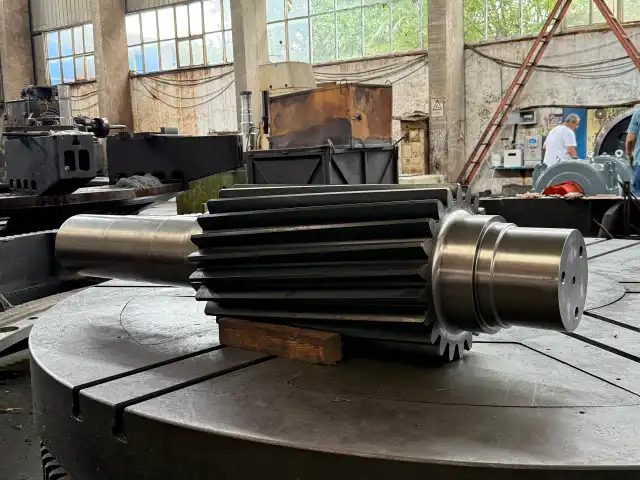
Understanding Industrial Gear Reducers
What Are Industrial Gear Reducers and How Do They Work?
An industrial reducer is a precise mechanical part that goes between a prime mover, which is usually an electric motor, and the equipment that it drives. The main thing it does is lower high-input rotational speeds (usually 1450 or 2900 RPM) while boosting output power to meet operating needs. This change from speed to torque is made possible by carefully designed gear meshes that send power with little energy loss. Industrial reducers made for heavy machinery are made from hardened alloy steels like 20CrMnTi or SAE4340 that have been carburised and heated until the surface is 58 to 62 HRC. This is different from general gearboxes that are made for light-duty jobs. These materials can handle the constant shock loads and thermal stresses that come with big manufacturing presses, mining crushers, and ground support tools for spacecraft.
The way it works is based on involute gear profiles that were calculated according to ISO 6336 standards. These profiles maximise tooth contact ratios while reducing noise and shaking. A bigger output gear is engaged when the motor shaft turns quickly but with little power. Because speed decrease makes torque increase in the opposite direction, a 10:1 ratio industrial reducer that sends 100 RPM output from a 1000 RPM motor makes torque ten times stronger. When you combine helical, bevel, or planetary gear sets in a multi-stage arrangement, you can get ratios higher than 100:1 while keeping the size small and the efficiency above 94%.
Common Types of Gear Reducers for Heavy Machinery
In different working situations, different mechanical designs work best. Helical reducers are the most common type of industrial reducer because they work smoothly and quietly and can handle a lot of weight. Angled tooth contact spreads forces across several teeth at once, which stops wear and increases service life beyond 20,000 hours. Planetary gear systems have a very high power density and can transmit a lot of torque into small housings. This makes them perfect for robotic joints in aircraft manufacturing or drives for precision instruments where room is limited.
Worm gear reducers work great in situations where they need to self-lock and have high reduction ratios in a single stage, but their moving contact makes more heat and reduces their efficiency to about 70 to 90%. Bevel reducers change the direction of a shaft. They are often found in conveyor transfer points and tools used to process gravel. Parallel shaft designs let you choose from a number of different mounting options, so they can be used with a wide range of mine-haulage systems and industrial mixing equipment. The choice of material also affects the quality: housings made of spheroidal graphite iron have better vibration damping than normal grey cast iron, which has a direct effect on the noise level of operations and the life of the mounting structure. An industrial reducer can refer to any of these types depending on the application.
Critical Factors When Selecting Industrial Gear Reducers
Assessing Torque Capacity and Speed Ratios
A load study is the first step in getting the right size. Multiply the load inertia, acceleration rate, and friction factors that are specific to your application to get the total torque you need. According to AGMA guidelines, mining conveyors that move bulk materials often experience shock loads when they first start up. This means that the Service Factor must be above 2.0. This safety buffer keeps the gear teeth from wearing out too quickly and the bearings from breaking. Choosing the right speed ratio rests on matching the motor's specs to the needs of the process. For example, a breaker that runs at 60 RPM and is powered by an 1800 RPM motor needs a 30:1 reduction ratio.
But a ratio doesn't tell the whole story by itself. Classification by duty cycle is very important. For example, steady S1 operation in wastewater treatment aerators needs different thermal management than occasional S3 operation in batch processing equipment. The power level needs to take into account the temperature, height, and location of the setting. When industrial reducers are mounted vertically or in small spaces, they produce higher running temperatures. This could mean that forced lubrication systems or synthetic oils with better thermal stability are needed. A lot of the time, procurement workers forget to do thermal capacity estimates, which causes breakdowns due to overheating within months of starting up.
Evaluating Efficiency, Noise Levels, and Durability
Efficiency has a direct effect on how much energy costs and how much heat is made. In spiral designs, good industrial reducers are 96–98% efficient, which means that only 2–4% of the power that goes into them is wasted as heat. This difference in efficiency means that over a 10-year operating life, a lot less power will be used, and less cooling will be needed. Noise levels are important in places like rocket assembly plants and sealed factories where workers are only allowed to be exposed to 85 decibels of noise. When compared to hobbed-only gears, premium industrial reducers have precision-ground gears that meet ISO 5-6 standards. This makes the mesh noise a lot less noticeable.
Durability comes from how the product is made and the materials that are used. For industrial reducers, forged gear blanks have better grain structure than cast ones, so they don't let wear cracks spread when they're loaded and unloaded over and over again. Carburising heat treatment makes the outside tough and resistant to wear while keeping the inside tough and flexible. This is important for taking shock loads without breaking into brittle pieces. Blackening the surface makes it less likely to rust in wet places like chemical processing plants and mines. When comparing providers, make sure to check if they fully grind the gear teeth after they've been heated. This gets rid of any heat distortion and ensures the accuracy needed for smooth, noiseless operation at rated loads.
Procurement Considerations for Industrial Gear Reducers
Pricing Structures and Bulk Ordering Advantages
Understanding the parts of a cost helps you reach a fair price. Custom industrial reducers require time for technical design, special tools, getting materials, cutting, heat treatment, assembly, and quality checks. The number of units produced has a big effect on the price per unit. For example, getting ten identical Industrial Reducers instead of prototyping a single unit can cut prices by 30–40% by spreading out setup costs and buying materials in bulk. A lot of makers have tiered pricing systems where commitments to annual volume open better prices.
Think about the total cost of ownership in addition to the initial buy price. If an Industrial Reducer costs 20% more but is 98% efficient instead of 94% efficient, it may pay for itself in energy savings within two years of being used continuously. It doesn't matter how often you do maintenance. With synthetic lubricants, changing the oil every 2,500 to 20,000 hours of use cuts down on both lube prices and production downtime. When asking for quotes, be sure to include all the operating details, such as input speed, output torque, duty cycle, ambient conditions, and mounting orientation. This will help make sure that the bids include correctly sized equipment, rather than units that are too small and need expensive upgrades or replacement before they're due.
Lead Times, Delivery Logistics, and Supplier Evaluation
Custom industrial reducers usually have production wait times of 35 to 60 days, which include validating the design, getting the materials, milling, heat treating, and checking the quality. International shipping needs to be taken into account in project plans. Sea freight from Asian producers adds 25–35 days to the transit time, while air freight speeds up the process to 5–7 days at a much higher cost. China-Europe freight trains are a good middle ground because they have reasonable freight rates and travel times of 18 to 22 days.
To judge a supplier's trustworthiness, you need to look at more than just price. Getting ISO 9001 approval shows that your quality management system is mature, but it doesn't mean that you are technically competent. Check to see if makers keep testing tools like torque testing rigs, noise measurement chambers, and coordinate measuring machines in-house. This shows that they are committed to proof and don't just rely on production processes. Technical support skills set exceptional sellers apart from average ones. Pre-sales engineering help with application sizing, visual progress updates during production, and post-delivery testing support all lower project risk by a large amount. Long-term partnerships between well-known manufacturers and aerospace OEMs and mining firms are common. These partnerships show that the manufacturers can be trusted to work reliably in tough circumstances.
Custom Gear Reducer Requirements and Communication
Standard catalogue Industrial Reducers can be used for many tasks, but big machines often need to be customised. Clear technical communication is needed for things like modified output shafts that fit certain coupling interfaces, special mounting flanges that fit the shapes of current equipment, or better sealing systems for harsh environments. Give exact measurement models that show the sizes of the shafts, keyways, bolt circles, and space envelopes. Include working factors such as the maximum radial and axial loads on output shafts, vibration guidelines, temperature ranges, and any ATEX or IECEx ratings for explosive atmospheres.
Suppliers with a lot of experience, such as those producing industrial reducers, run this process through organised workflows: first, needs discussion sessions make sure there are no problems with the application; then, basic design drawings are sent for approval before production tooling is made. Documentation from quality inspections, like material certificates, heat treatment reports, and measurement inspection records, makes it possible to track and meet the quality standards of the aircraft AS9100 and mining industries. For overseas shipping, the right packaging is important. For example, handmade wooden pallets with shock-absorbing cushioning layers keep precision-ground gear teeth of the industrial reducer from getting damaged during transport, with damage rates below 0.1% when done right. Integrated logistics tools let you watch shipments in real time, from the time they are loaded at the plant to the time they are delivered to the customer. This takes away any uncertainty during key project phases.
Conclusion
Finding the best gear reduction option for big machines means weighing technical requirements, the skills of the supplier, and the prices over the whole life of the machine. We looked at how torque capacity, efficiency scores, and the quality of the material directly affect how reliably something works in mining, aerospace, and industry settings. Good procurement plans take into account the need for customisation, the logistics of shipping, and how important it is to have expert help from the provider. Proactive upkeep and knowledgeable troubleshooting increase the life of a service and reduce the amount of unexpected downtime that happens. By using these tips, engineers and procurement managers can safely choose industrial reducers that will work well for decades. This will turn initial capital investments into long-term competitive benefits by increasing productivity and lowering running costs.
FAQ
1. What Determines Industrial Reducer Lifespan in Heavy-Duty Applications?
Service life is mostly determined by the right size with the right service factors; the quality of the lubrication and the frequency of maintenance; the temperature, contamination, and vibrations in the working area; and the type of load (shock loads vs. steady-state operation). Industrial reducers that are used within their stated capacities, have synthetic lubricants used, and are inspected regularly usually last longer than 20 years of constant work. Conversely, units that are too small and often get overloaded may fail within months, even if they are built with high-quality materials and techniques.
2. How Do I Calculate the Correct Torque Capacity for My Machinery?
Multiply the load's inertia by the speed at which it needs to move, then add the friction torque from the bearings and seals. Finally, use an AGMA-recommended service factor: 1.0 to 1.25 for even loads that don't start very often; 1.5 to 1.75 for moderate shock loads that do start often; and 2.0 to 2.5 for heavy shock loads like crushers. Include safety gaps for load increases that you didn't expect and roughness from old parts.
3. Can industrial reducers be upgraded or customised after purchase?
Many makers allow changes to be made after the product has been delivered. These changes can include better sealing systems for harsher conditions, switching to synthetic lubricants to extend the time between maintenance visits, and changing the output shaft to meet new driven equipment. Talk about these options when you are first buying housing to make sure that it has the features that will allow for future changes without having to rebuild the whole unit.
Partner With a Trusted Industrial Reducer Manufacturer for Your Next Project
YIZHI MACHINERY specialises in custom industrial reducer solutions that are made to meet the tough needs of big industrial machinery, mining operations, and aerospace uses. Our team has been making precise industrial reducers out of high-tech materials like 20CrMnTi and SAE4340 alloy steels since 2016. These are put through carburising and grinding processes to get them to an ISO 5–6 grade of accuracy and a surface hardness of 58–62 HRC. Our full customisation services, from the initial design advice to production, quality inspection, and global logistics, make sure that your equipment gets the best power transmission options within 35 to 60 days.
We keep up-to-date CNC gear machining centers and automatic grinding tools, which let us make unique module ranges from 0.5 to 50 with any number of teeth your application needs. Our low minimum order amounts allow for the development of prototypes and small-batch production, and our quality standards are backed up by partnerships with big mechanical engineering companies. Customized packing with shock-absorbing liners and real-time tracking of shipments keep the risk of damage during transport to less than 0.1%, protecting your investment all the way through foreign delivery. Email our technical team at sales@yizmachinery.com to talk about your unique needs for power, ratio, and mounting. As a seller of Industrial Reducers with years of experience, we offer full technical documentation, one-year warranties, and quick after-sales support to make sure your heavy machinery works steadily for decades.
References
1. American Gear Manufacturers Association. (2019). AGMA 6010-F19: Standard for Spur, Helical, Herringbone and Bevel Enclosed Drives. Alexandria, VA: AGMA Publications.
2. International Organization for Standardization. (2020). ISO 6336-1:2019 Calculation of Load Capacity of Spur and Helical Gears – Part 1: Basic Principles, Introduction and General Influence Factors. Geneva: ISO Standards.
3. Deutsches Institut für Normung. (2018). DIN 3990: Calculation of Load Capacity of Cylindrical Gears. Berlin: Beuth Verlag.
4. Juvinall, R. C., & Marshek, K. M. (2020). Fundamentals of Machine Component Design (6th ed.). Hoboken, NJ: John Wiley & Sons.
5. Budynas, R. G., & Nisbett, J. K. (2021). Shigley's Mechanical Engineering Design (11th ed.). New York, NY: McGraw-Hill Education.
6. Errichello, R., & Muller, J. (2022). Gearbox Reliability Collaborative: Gearbox Typical Failure Modes, Detection and Mitigation Methods. Golden, CO: National Renewable Energy Laboratory Technical Report.

USER EVALUATE
Here is the customer's evaluation of us