


Gear Milling: A Comprehensive Guide
Precision subtractive production is what gear milling is all about. It uses spinning multi-point cutting tools to carve specific tooth shapes into gear blanks. Gear teeth milling, on the other hand, uses form-copying or advanced CNC strategies to make custom gear shapes, unlike continuous generation processes like hobbing. This technology solves important problems in the industry, like expensive tools and long lead times for small batches. It is essential for industrial machinery, mining, and aircraft uses that need non-standard gear shapes or large-module parts.
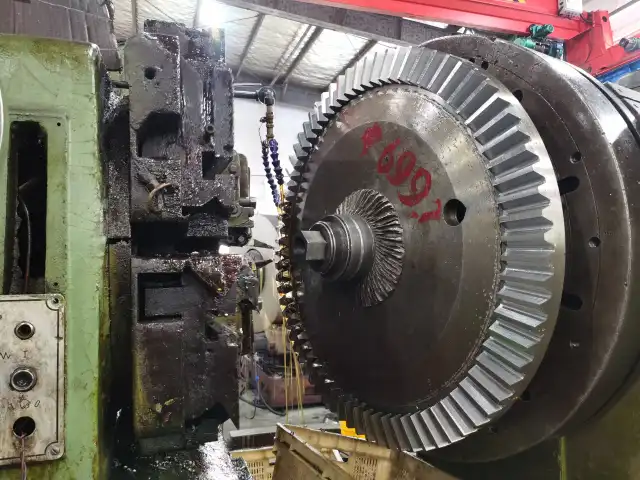
Understanding Gear Teeth Milling: Processes and Techniques
Gear teeth milling is one of the most important ways to make high-precision gears for a wide range of industries. The process starts with carefully preparing the materials. To make the base gear blank, the raw stock is forged or cut. After that, rough turning is done on the blank to form the outside diameter, end faces, and hole diameter before the teeth are cut.
Material Preparation and Selection
Choosing the right materials has a direct effect on how well gear works and how long it lasts. A lot of the things we work with are 45# steel, 20CrMnTi, 40CrNiMo, SAE4340, 42CrMo, AISI4140, and special alloys like 18CrNiMo7 and 17CrNiMo6. Each material has different mechanical qualities that make it best for a certain set of circumstances. Before cutting starts, materials are carefully checked to make sure they stay the same size and quality throughout the production cycle. High-carbon steels are very good at getting harder, and nickel-chromium alloys are very good at being tough in shock-sensitive situations like mining tools and aircraft transmission systems.
The Core Milling Operation
The most important part of gear teeth milling is carefully cutting away material to make the shape of the involute tooth. Engineers can programme complicated tool paths that keep feed rates and cutting speeds constant on modern CNC-controlled milling centres. The shape of the tool is very important for both the quality of the finish and the accuracy of the measurements. Milling tools have rake angles, relief angles, and cutting-edge diameters that are carefully chosen to work best with certain gear modules and materials. Milling machines cut one tooth space at a time, while hobbing machines make teeth all the time. This gives them a lot of freedom for making unique profiles and big modules from 0.5 to 50.
Calibration of cutting factors needs to be done carefully. Feed rates are usually between 100 and 500 mm/min, but they depend on the roughness of the material and the size of the module. Spindle speeds range from 200 to 2,000 RPM. For metal materials, carbide tools allow for higher speeds. Applying coolant is still very important, not only for keeping the temperature down but also for getting rid of chips and improving the surface finish. Flood cooling systems send high-pressure streams straight to the cutting zone. This keeps the tool from warping due to heat and increases its life by 40 to 60 per cent compared to dry cutting.
CNC Versus Manual Milling Operations
CNC-controlled gear cutting systems have changed the way things can be made by automating and repeating processes. These machines have complicated programmes that run multiple pass techniques, like roughing, semi-finishing, and finishing, without any help from the user. On-machine probing systems check the accuracy of the dimensions between passes and fix any problems caused by tool wear or temperature changes. It regularly gets ISO 5–6 grade precision, which meets the strict requirements for machine tool spindles, robotic joints, and transmission systems for precise instruments.
Manual milling is still useful for making prototypes and small batches of goods when programming time is longer than machine time. Skilled machinists use hand controls to make setup changes and design changes quickly. The choice between CNC and manual ways depends on how much is being made, how complicated it is, and how precise it needs to be. When making a lot of the same gears, CNC systems work best. When making a single unique gear or a fast prototype, however, manual processes are more cost-effective.
Comparing Gear Teeth Milling with Alternative Gear Manufacturing Methods
Being aware of the pros and cons of each method is important for picking the best way to make gears. Each method has its own benefits that depend on the amount being made, the size of the gears, the qualities of the material, and the level of accuracy needed.
Milling Versus Hobbing
The most common way to make a lot of gears is by hobbing, which uses a worm-shaped cutter to make teeth by continuously referencing along with gear teeth milling. This method works great for mass production, making external spur and helical gears very quickly and consistently. Medium modules are often made at rates of 300 to 500 gears per shift. For hobbing, you need special cutting tools that are made to fit a certain type of gear. Custom hobs take 8 to 12 weeks to make and cost between $2,000 and $15,000 each.
Gear teeth milling is very flexible because it can use standard end mills or form cuts that can work with a wide range of gear shapes without having to buy special tools. This benefit is especially useful for small-scale production, modules bigger than 20 mm, and complicated shapes like herringbone or double-helical gears. Milling is the best way to work with internal gears because it's easier than hobbing, which is why it's used for ring gears in planetary gearboxes and large-diameter internal gear sets in mine drills and rotary kilns.
Shaping and Grinding Comparisons
For gear shape, a revolving cutter that looks like a gear is used. This type of cutter works well for internal gears and shoulders that are close to the gear face. Shaping works pretty well at average speeds, but it has trouble with big modules, and the tools wear out faster. The most accurate work is done by grinding, which can produce DIN 4-5 quality grades with surface finishes below 0.4 Ra. Grinding is mostly used to smooth out the surface after heat treatment, fixing any flaws that were created by cooling and carburising.
Gear teeth milling is a way to get from roughing quickly to finishing precisely. When heat treatment is followed by hard milling with CBN or ceramic tools, extra grinding is often not needed. This cuts the total cycle time by 30 to 40 per cent. This feature is very useful when making gears from materials that have already been hardened or when the required surface hardness is less than 62 HRC. When you hard grind something, the surface has to be between 58 and 62 HRC, and the size tolerances have to be within ISO 6-7 grades.
Selecting the Right Gear Teeth, Milling Machines and Tools
The choice of machinery has a big effect on how well things are made, how consistent the quality is, and how flexible the business can be. Procurement professionals can make smart investment choices that meet their technology needs when they know what machines can do and what kinds of tools are available.
Machine Platform Considerations
These days, gear teeth milling machines come in many forms, from general-purpose machining centres to platforms designed specifically for cutting gears. Five-axis CNC milling centres are the most flexible machines on the market. They can make complicated gear shapes like bevel gears, tooth modifications with crowns, and custom relief profiles. Spindle power is an important specification. For small-module precise gears, it needs to be 15 kW, while for big mining gears, it needs to be 100 kW or more. When the spindle torque is just right, the cutting forces stay the same during heavy roughing operations. This keeps the tools from deflecting and the dimensions accurate.
Control systems decide how easy it is to write and how often a process can be done. Modern controls from Fanuc, Siemens, and Heidenhain have conversational programming interfaces that are built to work with gear-cutting processes. Engineers can enter basic gear factors like module, number of teeth, and pressure angle, and the systems will automatically make the best tool tracks. Quick changes are possible with modular tool systems, which cut the time it takes to set up from hours to minutes when switching between gear specs.
Leading Manufacturers and Supplier Evaluation
When buying equipment, you need to carefully consider the manufacturer's skills and help systems. Well-known names don't just sell machines; they also offer full technical help, training programmes, and access to parts. When looking at possible sources, buying teams should look into the machine rigidity specs, thermal stability specs, and accuracy of placing when the machine is loaded. When you use sample materials and gear specs for demonstration cuts, you can learn a lot about how well the machine actually works compared to the published specifications.
Custom milling services, including gear teeth milling, are an option to buying new equipment, especially for businesses that don't always make the same amount of products or don't have a lot of floor room. Contract makers that focus on making gears keep a wide range of machines and skilled workers who can handle difficult tasks. When judging service providers, you need to look at their quality licenses, their ability to do inspections, and examples of the work they've done in the past. ISO 9001 certification shows that quality management systems are well-established, while AS9100 approval shows that quality controls are in place for aircraft.
Optimising Gear Teeth Milling for Quality and Efficiency
For milling to work at its best, process factors, preventative maintenance, and constant quality tracking must be carefully considered and followed. Through structured process optimisation, engineering teams must find a balance between quality standards and goals for efficiency.
Cutting Parameter Optimisation
When grinding or performing gear-teeth milling, cutting forces have a direct effect on tool life, surface finish, and accuracy of measurements. Too many forces cause tools to bend, which leads to mistakes in the tooth shape and bad surface quality. Engineers find the best cutting settings by using multi-pass methods that remove material in stages, such as roughing, semi-finishing, and finishing. Roughing passes use high feed rates and deep cuts to remove 70–80% of the material, removing as much metal as possible while keeping enough stock for later runs.
For finishing passes, small feeds and short depths of cut are used to get the surface finish and size tolerances that are needed. When you use climb milling, the cutter rotates in the same direction as the feed. This lowers the cutting forces and makes the surface finish better than regular milling. Tool path optimisation gets rid of air cutting time that isn't needed and keeps chip loads steady during the cutting cycle. Advanced CAM software makes tool paths that are efficient, cut down on cycle time, and work with the machine's dynamic limits.
Coolant Strategy and Tool Life Extension
When coolant is used correctly, it greatly increases tool life and makes the surface finish and physical stability better. High-pressure coolant supply systems, which work at 20 to 70 bar, get into the cutting zone and break up chips and remove material from between teeth. The type of coolant used depends on the material being made. Synthetic coolants are good for iron-based materials, while oil-based cutting fluids are best for non-iron metals and tough materials like titanium.
Monitoring systems for tool life keep track of cutting time, spinning load, and sound patterns to figure out when a tool will wear out before it breaks completely. Preventive tool changes keep quality high and keep workpieces from being thrown away because of old tools. When used properly, carbide tools coated with TiAlN or AlCrN work best for cutting steel gears, and they can be used for 8 to 12 hours of cutting time. CBN tools can be used for hard milling because they keep their sharp cutting edges when working with materials harder than 45 HRC.
Quality Verification and Metrology
For consistent quality, there must be thorough checking methods in place throughout the whole manufacturing process. Using on-machine probing tools for in-process metrology checks important dimensions between processes. This lets changes be made in real time that stop parts from not meeting standards. Coordinate measuring tools (CMMs) and gear analysers are used in post-process checking to check that the tooth profile is correct and that pitch variation and helix angle errors are in line with ISO 1328 standards.
Statistical process control (SPC) techniques look at changes in dimensions over time to find slow process drift before parts go beyond their tolerances. In gear teeth milling, control charts keep an eye on important factors like tooth thickness, root width, and surface finish. When processes get close to control limits, they set off corrective actions. This proactive method lowers the number of parts that need to be thrown away and guarantees delivery of parts that meet strict quality standards for use in aircraft, precision instrument transmissions, and high-speed machine tool spindles.
Conclusion
Gear teeth milling gives industrial tools, mining, and aircraft uses that need custom gear solutions the most freedom and accuracy. While keeping ISO 5-6 grade accuracy, the method can handle a wide range of materials, complicated geometries, and module sizes. Procurement and engineering teams can make production plans work better by learning about cutting techniques, comparing different ways to make things, and choosing the right tools. Controlling parameters, doing preventative maintenance, and using full measurement to improve quality make sure that output is always the same. Supplier partnerships that work well combine technical know-how with service quality. This helps businesses reach their long-term goals by delivering parts reliably.
FAQ
1. How does gear teeth milling differ from hobbing?
Hobbing uses a worm-shaped cutter to make gear teeth all the time, which makes it perfect for making a lot of external gears at once. By indexing, gear teeth milling cuts one tooth space at a time, giving you more options for big modules, custom shapes, and internal gears that hobs can't reach. Milling is better for samples and other specialised uses because it can handle smaller production numbers without having to spend a lot of money on custom tools.
2. Can you mill gears after heat treatment?
These days, rigid CNC machines can be used for hard cutting to make gears up to 62 HRC with CBN or ceramic tools. This method usually gets rid of the need for extra grinding, which cuts the total time needed for production by 30 to 40 per cent. It is possible for ultra-precision needs to still be met by grinding, but gear teeth milling can fix distortions caused by heat treatment and produce surface finishes that are good for many uses.
3. What quality standards can gear milling achieve?
Standard form milling usually gets as precise as ISO 7-8, which is good for most industry uses. Five-axis CNC milling with on-machine probing and correction can reach ISO 5-6 grades of accuracy, which meets the strict requirements for high-speed machine tool spindles, precision instrument systems, and aircraft transmissions. For normal gear teeth milling, surface finishes range from 1.6 to 3.2 Ra. For hard milling, they range from 0.4 to 0.8 Ra.
Partner with YIZHI MACHINERY for Superior Gear Teeth Milling Solutions
YIZHI MACHINERY has been delivering custom Gear Teeth Milling for 15 years for the mining, aircraft, and industrial machinery industries around the world. Our ISO-certified factories have cutting-edge CNC milling centers that can work with expensive materials like SAE4340, AISI4140, and 18CrNiMo7 to meet surface hardness requirements of 58 to 62 HRC. These centers can handle modules ranging from 0.5 to 50. We can do all kinds of heat treatments, like carburizing, cooling, tempering, and induction hardening. We also do precise grinding that makes sure the accuracy is ISO 5-6 grade. Low minimum order amounts allow for everything from single-piece prototypes to full production runs. Standardized 35–60 day delivery plans are backed up by customized packaging and real-time tracking of shipments. Contact us at sales@yizmachinery.com to talk about your Gear Teeth Milling needs with a reliable company that offers full technical support, from design advice to service after delivery.
References
1. Klocke, F., & Brecher, C. (2017). Gear Manufacturing Processes: Cutting, Grinding, and Finishing. Munich: Hanser Publications.
2. Radzevich, S.P. (2016). Dudley's Handbook of Practical Gear Design and Manufacture (3rd ed.). Boca Raton: CRC Press.
3. American Gear Manufacturers Association. (2015). AGMA 2000-A88: Gear Classification and Inspection Handbook. Alexandria: AGMA.
4. Stadtfeld, H.J. (2014). Advanced Bevel Gear Technology: Manufacturing and Optimization. Rochester: Gleason Works.
5. ISO 1328-1:2013. Cylindrical Gears — ISO System of Flank Tolerance Classification — Part 1: Definitions and Allowable Values of Deviations Relevant to Flanks of Gear Teeth. Geneva: International Organization for Standardization.
6. Litvin, F.L., & Fuentes, A. (2004). Gear Geometry and Applied Theory (2nd ed.). Cambridge: Cambridge University Press.

USER EVALUATE
Here is the customer's evaluation of us