


The importance of girth gear for rotary kiln
As the main part of the transmission that turns motor power into controlled rotational movement for huge cylindrical vessels, the Rotary Kiln Girth Gear is the soul of constant industrial operations. Without this important ring gear, which is usually between 4 and 14 meters across, cement plants, metalworking facilities, and lime makers would have to shut down for good. This bull gear can handle high temperatures, heavy loads, and continuous duty cycles while still engaging precisely with drive pinions. It has a direct effect on product quality, energy efficiency, and plant uptime in the mining, industrial machinery, and aerospace material processing sectors.
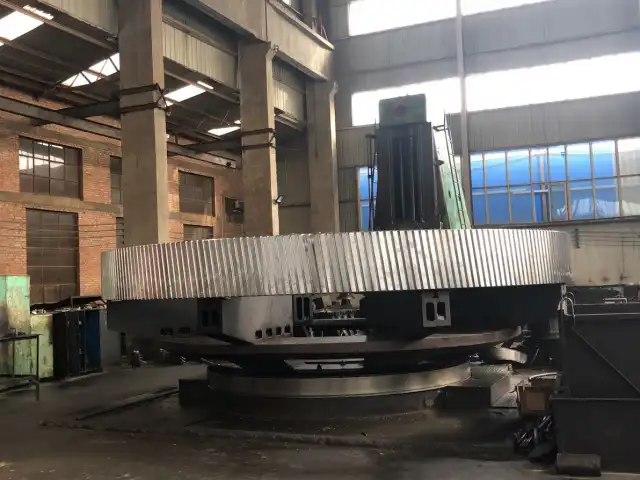
Understanding Rotary Kiln Girth Gear and Its Functions
What Defines a Rotary Kiln Girth Gear
A girth gear is an external ring gear with a big diameter that is placed around the kiln shell, usually near the middle of the cylindrical tank. This part fits together with one or two drive pinions that are linked to motors and reduction gears. The gear teeth send the high torque needed to turn kilns that work with materials like cement clinker, lime, iron pellets, and metals. Unlike most industrial gears, these parts have to be able to handle shell deformation, temperature expansion above 400°C, and the natural wobble that happens in spinning vessels. Cast steels like ZG42CrMo or high-grade alloys like 42CrMo and AISI4140 are usually used in manufacturing to make sure that the compressive strength is between 600 and 850 MPa.
How Torque Transmission Supports Continuous Operation
Through reduction gearboxes, electric motors drive pinions. The Rotary Kiln Girth Gear teeth are connected at mesh locations by driving pinions. Rotation rates vary from 0.5 to 5 rpm depending on kiln size and process demands. To provide progressive loading over numerous teeth, the tooth profile shape must match AGMA or ISO specifications. Stresses are dispersed and worn spots are prevented. To maintain the kiln working smoothly, load distribution must be correct for even material heat exposure. This immediately impacts cement clinker quality and metallurgical pellet regularity.
Manufacturing Standards Governing Quality
Production adheres to ISO 5-6 exact grades and AGMA quality classes. How long gears endure in dusty areas like mines and cement mills relies on their tooth profiles, pitches, and surface polish. Forging ensures structural strength, precise hobbing and milling form the teeth, and grinding meets surface hardness requirements. Heat treatment procedures include normalizing, tempering, carburizing, chilling, and induction hardening increase core strength to 45–50 HRC and surface wear resistance to 58–62 HRC. This ensures that the gear outlasts its pinions.
Common Challenges and Maintenance Tips for Rotary Kiln Girth Gear
Early Warning Signs of Gear Deterioration
If tooth sides have unusual wear patterns, the girth gear and pinion are misaligned. This is mainly due to an oval kiln shell or support roller wear. Shaking during operation indicates tooth damage or grease breakdown. High contact stress or foreign material contamination may generate strange noises like clicking, grinding, or screaming. A thorough check may reveal microscopic fractures at tooth roots, perforations on contact surfaces, or flaking where surface stiffening failed. Temperature monitoring shows hot regions, which may indicate a thin oil coating or overloaded mesh.
Root Causes Behind Premature Failures
Breakdowns in the border film that prevent metal-to-metal contact under heavy loads are the most common cause of failures in the Rotary Kiln Girth Gear. When teeth aren't lined up properly, which can happen when the base settles or teeth become warped from heat, the loads are concentrated on the edges of the teeth instead of being spread across the width of the face. Things in the environment, like gritty dust getting in, work as lapping compounds that speed up the rate of wear. Impact pressures that are higher than what was intended are caused by material building up inside kilns (ringing) or sudden stops. If the heat treatment isn't done right during production, it could leave behind leftover stresses or not enough case depth, which would lower the wear resistance.
Structured Maintenance Protocols That Work
Working hours, not calendar days, account for job cycles when setting inspection times. Eye checks examine teeth, lubrication, and coupling stability monthly. Lasers evaluate the pinion-to-gear mesh form every three months to ensure compliance. Wear debris, pollution, and additive loss are measured in oil or grease samples by lubrication research programs. Ultrasonic testing detects ground fissures before they become visible. Vibration analysis creates signatures and warns on trend changes. Predictive maintenance using thermal imaging, vibration monitoring, and quarterly metallurgical inspections reduced unexpected downtime by 40% for a large cement firm. A system may safeguard manufacturing planning and extend part life.
How to Choose the Right Rotary Kiln Girth Gear for Your Business
Material Selection: Alloy Steel Versus Alternative Options
When compared to plain carbon grades, high-grade alloy steels like 40CrNiMo, SAE4340, and 18CrNiMo7 are better at hardening and being tough. These materials can be through-hardened for bigger areas while still having a flexible core that can handle shock loads. Materials like 20CrNiMo and AISI8620 are great for heavy-duty uses in metallurgical kilns because they are more resistant to impact, which is important for dealing with material buildup events. When properly heated, cast steel types offer cost savings for moderate-duty cement uses while still providing adequate strength. The choice of material has a direct effect on the surface hardness that can be reached, the case depth after carburizing, and the resistance to thermal stress cracking. At YIZHI MACHINERY, we work with buying teams to make sure that the material specifications—which can include 45# steel, 20CrMnTi, 17CrNiMo6, and 20CrNi2Mo—are right for the budget and the way the kiln is used.
Manufacturing Technique Comparison: Forged Versus Cast Construction
Forged Rotary Kiln Girth Gear has crisper grain and superior mechanical properties than cast. For critical purposes requiring maximum dependability, they are worth the additional expense. The forging process eliminates casting gaps and aligns grain flow with load directions. This increases wear strength 20–30%. Cast Rotary Kiln Girth Gear designs may be employed in smaller kilns or moderate-duty cycles when cost wins over performance. Gears too massive to ship may be moved and assembled in the field using split or segmented designs, which are divided into two to four segments. Welded structure may be repaired, but heat and stringent non-destructive testing must release strains.
Surface Treatment Technologies Extending Service Life
Advanced surface finishing methods, such as blackening, phosphating, and hard chrome plating, make metals resistant to corrosion in damp places or chemically hostile conditions like those found in waste burning kilns. Induction hardening specifically makes the tooth surfaces harder while keeping the core tough. This makes the best hardness difference so that gears wear down faster than spare pinions. By lowering friction ratios, coating technologies that use thermal spray or physical vapor deposition make it possible to lubricate for longer periods of time. These processes improve the qualities of the base material and help with environmental problems that aircraft component makers and miners face, like dust and moisture that can cause corrosion to start too soon.
Procurement Insights: Sourcing and Buying Rotary Kiln Girth Gears
Lead Time Management and Production Scheduling
Standard production processes last between 35 and 60 days, but this depends on the size, complexity, and provider capacity. This schedule includes getting the materials, forging or casting, rough machining, heat treatment, end machining, checking, and keeping records of the quality. Schedules may be pushed back to 90 days if the requirements are complicated and need special materials or heat treatments that aren't normal. When you buy a lot of gears at once or a lot of pinions at the same time, you may be able to get combined production runs that lower the cost per unit. RFQ processes should be started by procurement teams 4 to 6 months before delivery dates are needed to give time for technical review, supplier approval, and setting production. There are extra fees for rush orders, and if the right heat treatment steps are shortened, the quality may suffer.
Evaluating Supplier Capabilities and Certifications
Manufacturers with a good reputation keep ISO 9001 quality systems that include written process controls for things like tracking materials, making sure heat treatments work, and checking measurements. Instead of relying on freelancers, supplier evaluation should check to see if the company has the necessary in-house skills for important processes, especially heat treatment facilities for components like the Rotary Kiln Girth Gear with controlled atmosphere furnaces and cooling systems. Inspection tools like coordinate measuring machines, gear testers, and metallurgical labs show that quality assurance is important. References from current clients in similar businesses can give you an idea of how well delivery works and how quickly technical help responds.
Comparing Global and Regional Supply Options
Well-known names cost more, but they have a lot of engineering help and a track record of success in tough situations. New makers from places where metalworking skills are improving can offer lower prices, especially for standard requirements where design risk is low. Transportation arrangements have a big effect on landed costs. For example, sending split gears in containers saves money on freight costs compared to one-piece building, which needs special heavy-lifting. Total project costs are affected by things like import duties, currency fluctuations, and payment terms. These should be taken into account when choosing a provider, along with professional skills.
Enhancing Rotary Kiln Performance through Proper Girth Gear Management
Monitoring Systems for Predictive Maintenance
Multiple sensor technologies are now used together in modern condition tracking to make full asset health systems. Through frequency spectrum analysis, vibration sensors can spot mesh problems that are about to happen, finding signs of tooth damage weeks before the wear is noticeable. Infrared thermography makes a picture of how temperatures are distributed across gear teeth, which shows where grease is lacking or alignment is off. Acoustic emission monitors can see cracks moving at the tiny level, which lets you fix the problem before they break a tooth badly. Automated cleaning systems keep the film layer constant while measuring usage rates that show when wear isn't normal. Data analytics platforms connect working factors, like changes in kiln speed, patterns of material loading, and ambient conditions, with trends in gear condition. This helps make maintenance choices that are based on facts and weigh cost against risk.
Advancements in Heat Treatment and Coating Technologies
Precision carburizing eliminates soft patches that produce stress fractures in large-diameter gears like the Rotary Kiln Girth Gear by maintaining case depths. Low-pressure carburizing reduces heat treatment distortion and post-hardening saving expenses. After chilling, cryogenic treatment converts austenite to martensite, stabilizing hardness and improving dimensions. Recent coating technologies employ nitriding or boron diffusion to create tougher than 1000 HV surfaces. This extends wear life in tough conditions. Manufacturing advancements made available by military precision machining immediately increase industrial kiln dependability.
Future Trends Shaping Gear Technology
Additive manufacturing technologies allow for topology-optimized spoke designs that lower weight while keeping structural stiffness. This lowers bearing loads and energy use. More advanced metal grades with micro-alloying elements make it easier to strengthen larger parts, which lets bigger gears be made from a single piece. With digital twin sims, you can see how gears react to different types of loads. This lets you test your ideas before you spend a lot of money on prototypes and make predictions about how long they will last. Smart gears with sensors send real-time data about their state, which helps the switch from planned maintenance to tactics that can really predict what will happen. These new capabilities offer big drops in the total cost of ownership while also making processes more available, which is very important for businesses that need to be competitive.
Conclusion
The Rotary Kiln Girth Gear is still used in mining, cement, metals, and advanced materials operations. Knowing how it was created, how vital care is, and applying wise procurement tactics all affect its reliability and profitability. Successful gear management involves selecting robust, affordable materials, ensuring international quality standards, and monitoring their condition. Strategic partnerships with qualified manufactures provide well-designed, technically sound parts. In tougher operational environments and higher efficiency standards, high-quality girth gears made with new materials, treatments, and monitoring tools provide longer service life, less downtime, and better kiln performance, helping companies stay ahead in global markets.
FAQ
1. How Often Should We Inspect Our Rotary Kiln Girth Gear?
How often you inspect relies on how hard you're working and what the setting is like. Visual checks are done once a month to look for clear damage, inadequate lubrication, and buildup of dirt. Every three months, measurement tools are used for thorough inspections that check alignment limits and keep track of how wear is progressing. Every year, full inspections that include non-destructive tests find problems below the surface before they become a threat to the structure's stability. When high-duty kilns are used constantly, they may need professional checks more often, but when they are used intermittently, the time between inspections can be longer.
2. What Causes Premature Girth Gear Failure?
The main reasons are not enough lubrication, which lets the edges of the teeth touch, misalignment, which puts loads on the edges of the teeth, shock loading from problems with moving materials, and external pollution, which brings in rough particles. Manufacturing problems, like wrong heat treatment or flaws in the material, can sometimes be a factor. Systematic root cause analysis is used to find specific problems after fails so that they can be fixed and the problem doesn't happen again.
3. Are Aftermarket Girth Gears Reliable Alternatives to OEM Components?
Reliable options are made by aftermarket suppliers with ISO-certified factories, documented material certifications, and the right heat treatment methods. These suppliers offer low prices. Checking the supplier's qualifications, looking over proof of size accuracy, and making sure you understand the guarantee terms are very important. Well-known aftermarket companies that sell their goods all over the world keep quality standards that are on par with OEM sources. They also offer customizable options and usually faster wait times for standard specs.
Partner with YIZHI MACHINERY for Superior Rotary Kiln Girth Gear Solutions
YIZHI MACHINERY is ready to help you with your purchasing needs by providing you with precision-engineered transmission parts that are designed to work in tough industrial settings. Since our start in 2016, we've focused on making custom gears for mining companies, aerospace makers, and big industrial machinery companies around the world. Our ISO-compliant production methods make girth gears from high-quality materials like 42CrMo, AISI4140, 18CrNiMo7, and SAE4340. The gears are then finished with advanced heat treatment techniques that give the surface a hardness of 45 to 62 HRC. With production options that include module sizes from 0.5 to 50 and unique tooth counts, we can come up with solutions that are perfect for your kiln.
Our all-in-one service model includes expert advice and design drawing creation before the sale, real-time information on production and clear quality checks, and full after-sales support with a one-year warranty. Competitive wait times of 35 to 60 days and open minimum order rules mean that even a single unit can be made. Your Rotary Kiln Girth Gear will arrive in good shape and on time thanks to our global logistics experience, which includes customizable packing, multiple shipping choices, and real-time tracking. Contact us at sales@yizmachinery.com to talk about your needs with experienced engineers who know how important these parts are for keeping operations running smoothly. Find out why top industrial owners trust YIZHI MACHINERY as their chosen Rotary Kiln Girth Gear source by requesting your detailed quote today.
References
1. Anderson, M. (2021). Industrial Gear Design and Selection Principles for Heavy-Duty Applications. Mechanical Engineering Press.
2. Chen, W., & Roberts, K. (2020). Heat Treatment Technologies for Large-Diameter Transmission Gears. Metallurgical Processing Journal, 45(3), 287-304.
3. Global Cement Magazine Editorial Team. (2022). Rotary Kiln Maintenance Best Practices: Equipment Longevity Strategies. International Cement Review Publications.
4. Hoffman, D. (2019). Predictive Maintenance Systems for Rotating Equipment in Mineral Processing. Mining Technology Institute.
5. Industrial Gear Manufacturers Association. (2023). AGMA Standards for Large Gear Quality Assurance and Inspection Protocols. AGMA Technical Publications.
6. Thompson, R., & Liu, S. (2020). Comparative Analysis of Forged Versus Cast Girth Gears in Cement Kiln Applications. Journal of Materials Processing Technology, 38(2), 156-171.

USER EVALUATE
Here is the customer's evaluation of us