


A Complete Overview of Gear Shaping
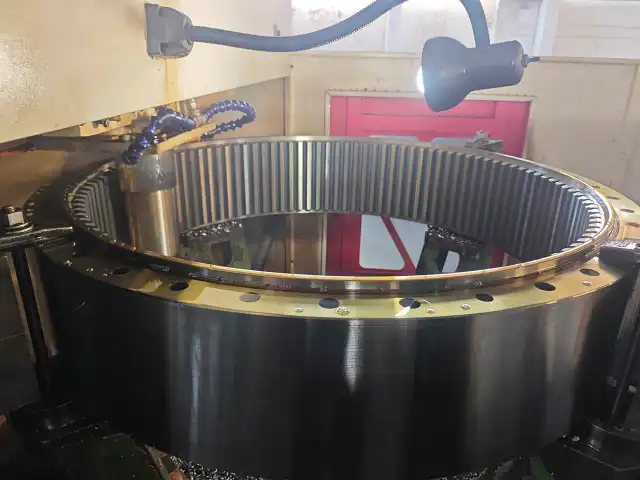
Gear Teeth Shaping is a unique way of making things that uses a rotating pinion-type cutter to cut out complex curves, internal and exterior gear teeth, and splines. In contrast to hobbing, which needs a lot of axial space, Gear Teeth Shaping works by rotating the cutter and object at the same time while the cutter moves back and forth vertically to remove material. This method fixes important industrial problems, especially for internal ring gears, cluster gears with shoulders that get in the way, and double helical gears that can't be made any other way. We've seen how this technology has changed the way precision parts get to industries that expect the highest level of dependability.
Understanding Gear Teeth Shaping – Fundamentals and Processes
Core Operating Principles
Three coordinated movements make up the Gear Teeth Shaping process: rotary motion between the cutter and the object creates the shape, vertical reciprocating strokes cut the shape, and radial in-feed controls the depth of entry. This linear relationship makes it possible to make very accurate profiles for involute teeth. During reciprocation, the cutter can handle high temperatures. It is usually made of cobalt-alloyed high-speed steel or powder metallurgy materials with TiN or AlCrN coats. Cutting speeds vary from 15 to 60 strokes per minute, based on the size and hardness of the module.
Critical Process Parameters
To perform Gear Teeth Shaping correctly, you need to be able to precisely control a number of factors. To make sure all teeth are formed, the stroke length must be longer than the gear face width by 5 to 8 mm. Most of the time, feed rates are between 0.5 and 2.5 mm per stroke. Finer feeds result in better surface finishes. The cutter's relief curves keep things from getting in the way during the return stroke. Cutting fluids, which are usually sulfurized oils, keep the tooth flanks intact during production runs by reducing friction and stopping the cutter from welding to the object.
Common Production Challenges
Tool wear is still the biggest problem during long production runs, especially when cutting harder materials above 45 HRC. Wearing down teeth over time changes their shape, which moves gear quality from ISO 5–6 grades to levels that aren't acceptable. When burrs form on the edges of teeth, they need to be deburred again, which takes longer. Chatter noises can happen when the stiffness of a machine isn't enough, making the surface uneven on a regular basis. Regular inspections that keep an eye on these factors stop expensive batches from being thrown away and keep the quality of the output uniform.
Comparing Gear Teeth Shaping with Alternative Gear Manufacturing Methods
Efficiency and Precision Analysis
Gear hobbing is faster for making external gears. For example, simple spur gears can be made in 2–5 minutes instead of 5–12 minutes for Gear Teeth Shaping. But Gear Teeth Shaping works best in situations where hobbing can't—on internal gears, gears next to shoulders, and herringbone patterns with no breaks. Broaching is the fastest way to make a lot of internal splines, but it costs a lot because it needs special tools for each tooth count. While grinding can produce better surface edges below 0.8 Ra, it is more of a finishing process than a way to make new teeth.
Application-Specific Advantages
For planetary gear systems like those in wind mills and automatic transmissions, Gear Teeth Shaping is a must because it gives access to specific geometric shapes. Internal ring gears that make up the outside edge of planetary sets need a vertical method that can only be given by Gear Teeth Shaping. When automotive cluster gears are stacked on transmission shafts, the shaper's ability to stop precisely at shoulders is helpful because it doesn't require runout zone hobbing. When aerospace actuator splines work in blind spaces, they need this vertical cutting action to keep their structure strong when safety-critical loads are applied.
Machine and Tooling Selection
Modern CNC Gear Teeth Shaping machines from well-known brands have in-process measurement systems, automatic tool changing, and adaptable control that adjusts to changes in cutting force. Tolerances that can be reached are directly affected by how stiff the machine is. For example, heavy cast iron frames reduce shaking better than welded steel frames. The type of cutter used varies on the module range. Modules 0.5-8 are handled by disc-type cutters, while modules 8–50 are handled by shank-type cutters. For material compatibility, it's important to match the coatings on the cutter to the alloys of the workpiece. For example, AlCrN coatings work well on nickel-chromium alloys that are popular in aerospace uses.
Procurement Guide for Gear Teeth Shaping Machinery and Tools
Strategic Investment Considerations
When purchasing Gear Teeth Shaping tools, people in charge of buying things need to look at the total cost of ownership, which includes the initial cash cost. The capabilities of the machines you use should match the needs of your production. For example, a company that makes airplane parts that need ISO 5 precision needs different specs than a company that sells industrial tools that can work with ISO 7 tolerances. A brand's image is highly linked to how reliable it is over time and how easy it is to get replacement parts. Well-known companies take care of their service networks so that there is little downtime when they need to be fixed.
New Versus Used Equipment Assessment
The prices of used Gear Teeth Shaping machines are usually 40 to 60 percent less than the prices of new ones. But this needs a careful assessment of the risks. Machines that don't have CNC controls need skilled workers, who are getting harder and harder to find. Worn slides and spindle bearings make precision less possible and could require expensive rebuilds that cost up to 30% of the price of a used machine. On the other hand, well-kept units from reputable rebuilders are a great deal for businesses that want to start making gear or increase capacity for non-critical tasks.
Outsourcing Decision Framework
For many businesses, hiring out Gear Teeth Shaping is cheaper than buying the tools and training employees to do it themselves. This is especially true for testing or low-volume production of less than 500 gears per year. We have precision CNC Gear Teeth Shaping centers, automatic grinding machines, and smart heat treatment lines at YIZHI MACHINERY so that we can serve clients in the mining, aircraft, and industrial machinery sectors. We can make modules from 0.5 to 50 with ISO 5-6 precise grades, and it takes us 35 to 60 days to send finished parts. Working with an experienced source for Gear Teeth Shaping saves money on capital costs, shipping costs, and gives you access to specialized knowledge without having to train your own staff.
Optimizing Gear Teeth Shaping for Enhanced Performance
Addressing Production Bottlenecks
The most frequent streamlining goal is to cut down on cycle time. By looking at each step of the process individually, you can see where changes have the most effect. Approaching and retracting the tool take 15 to 20 percent of the total cycle time. CNC programming improvements cut down on these moves that aren't cutting. Increasing feed rates within the limits of the tool's life cuts down on cutting time, but you have to keep an eye on wear patterns to make sure the tool doesn't break down too soon. Using quick-change fittings cuts down on the time it takes to set up different combinations of gear, which is especially helpful in custom production settings.
Material-Specific Adaptations
To get the best results, different types of project materials need different methods. Case-hardening steels, such as 20CrMnTi and SAE8620, can be easily shaped when they are pre-hardened and below 30 HRC. They can also handle higher feed rates, which increases efficiency. To control cutting forces, carbide-tipped blades and slower feed rates are needed for through-hardened materials like 42CrMo and AISI4140. High-nickel metals are often used in aircraft applications. When they are cut, they harden, so positive rake angles and interrupted cutting techniques are needed to keep the tool's life. The time of heat treatment also affects how easily something can be machined. For example, carburizing after Gear Teeth Shaping lets you use aggressive cutting settings, while induction hardening after shaping lets you do final grinding to meet 58–62 HRC surface hardness requirements.
Quality Control Integration
Instead of finding flaws after the fact, we've found that using in-process tracking stops them before they happen. Touch probe measurement devices check the accuracy of the tooth shape and thickness in the middle of the cycle. This lets parameters be changed right away before the whole batch is finished. Statistical process control charts show how tool wear downs over time before parts go beyond standard limits by following changes in the sizes of parts. Coordinate measuring tools with gear measurement software give thorough inspection data for important aircraft and precision instrument transmission parts that can't be compromised on reliability.
The Future of Gear Teeth Shaping – Trends and Innovations
Technology Evolution Trajectory
As CNC controllers get better, they can perform Gear Teeth Shaping in more ways. Modern systems have conversational programming interfaces that make setup a lot easier by letting workers enter basic gear specs instead of writing G-code. Closed-loop servo drives can place with a resolution of less than 0.001mm, which gives our aircraft clients the ISO 5 accuracy they need. Integrated tool life management takes into account expected wear trends and makes up for them automatically. This lets you go longer between tool changes while keeping the same dimensions. Smart sensor integration checks for cutting forces, sound patterns, and temperature levels, sending out alerts before a catastrophic tool failure delays production plans.
Market Demand Drivers
As the world moves toward electric vehicles, the demand for accurate gears rises in a strange way. Transmissions for electric vehicles need to be very quiet. Gear Teeth Shaping creates a surface structure that meets noise goals of less than 65 dB when the car is loaded. Production of planetary gear systems for wind turbines is driven by the growth of renewable energy. Internal ring gears that are made to exact specifications ensure that the systems work for 25 years. Gear Teeth Shaping is the only way to make small, high-precision actuation gears, which are needed for the growth of the aerospace industry, especially in regional airplanes and robotic systems. Updating mining equipment needs long-lasting gears that can work in harsh conditions. Choosing the right materials and performing precise Gear Teeth Shaping is what makes them reliable.
Strategic Partnership Value
To get around in this changing environment, you need to work with makers who offer technical know-how, flexible output, and a commitment to quality. YIZHI MACHINERY has been making precision gears since 2016 and has 15 years of engineering experience working with mining equipment, industrial machinery, and aircraft. Our wide range of services includes figuring out what you need, making design drawings, using cutting-edge CNC equipment to make things, inspecting them carefully for quality, and managing supplies around the world. We've spent money on custom packing with shock-absorbing liners and wooden boxes, which keeps damage to a minimum (below 0.1%) even when shipping across continents. Real-time tracking tools let people in charge of procurement see what's going on throughout the supply chain. This gives them faith that deliveries will be made on time.
Conclusion
For making internal gears, cluster configurations, and complicated profiles, Gear Teeth Shaping is still needed when other ways don't work. Procurement pros can find solutions that meet quality, speed, and cost-effectiveness needs by learning about the basics of processes, comparing different ways of making things, and finding the best ways to set up production parameters. As technology moves toward CNC integration, smart tracking, and connection through Industry 4.0, capabilities will continue to grow. Companies that need precision gears should think about whether they should make them themselves or form smart partnerships with specialized makers. They should think about total cost, quality standards, and production volumes.
FAQ
1. What distinguishes gear teeth shaping from hobbing processes?
What makes Gear Teeth Shaping different from hobbing is that a revolving pinion-type cutter moves vertically while turning at the same speed as the workpiece. This makes it possible to make internal gears and machine next to shoulders. Hobbing uses a continuous worm-like cutting that needs axial runout space, so it can only be used on gears that are on the outside and have room for it. When it comes to external gears, Gear Teeth Shaping is just as precise as hobbing, but it's only used for internal designs.
2. Which factors determine cutter selection for specific applications?
The module range is the most important thing to think about for Gear Teeth Shaping applications. Disc cutters deal with modules 0.5-8, while shank cutters deal with modules 8-50. For material compatibility, it's important to match the layers on the cutter to the alloys of the workpiece. TiN works well on carbon steels, while AlCrN works best on nickel-chromium aircraft alloys. Because cuts make specific involute shapes, the tooth count and pressure angle must be exactly what the design calls for.
3. Should we invest in new machinery or purchase used equipment?
New CNC-controlled Gear Teeth Shaping machines offer the most up-to-date technology, warranties, and expert support, which makes the higher price point worth it when output volume, precision needs, and long-term capacity plans call for it. Used equipment can save you 40 to 60 percent on costs and is good for low-volume jobs, prototype development, or non-critical parts, as long as it's inspected carefully to make sure it's still in good working shape.
Partner with YIZHI MACHINERY for Precision Gear Teeth Shaping Solutions
With 15 years of specialized engineering experience and quality standards that are in line with ISO, YIZHI MACHINERY can perform all types of Gear Teeth Shaping. We use advanced CNC machine centers, automatic grinding equipment, and smart heat treatment systems to make unique internal gears, double helical configurations, and precision splines. We are a trusted company for Gear Teeth Shaping. We can make modules from 0.5 to 50 mm in diameter and use ISO 5-6 precise grades for materials like 20CrMnTi, 42CrMo, SAE4340, and aerospace-grade 18CrNiMo7. Low minimum order numbers are fine with us, and we can even make just one thing as a prototype. Email our technical team at sales@yizmachinery.com to talk about your unique application needs and get thorough quotes with delivery times of 35 to 60 days. You can look at our whole product line at yizhimachinery.com and learn about how our customized packing, multi-channel logistics, and real-time tracking systems make sure that your parts always come on time and without damage.
References
1. Davis, J.R. (2005). Gear Materials, Properties, and Manufacture. ASM International, Materials Park, Ohio.
2. Klocke, F. (2009). Manufacturing Processes 1: Cutting. Springer-Verlag Berlin Heidelberg.
3. Radzevich, S.P. (2012). Dudley's Handbook of Practical Gear Design and Manufacture, Second Edition. CRC Press, Boca Raton, Florida.
4. Stadtfeld, H.J. (2014). Gleason Bevel Gear Technology: The Science of Gear Engineering and Modern Manufacturing Methods for Angular Transmissions. The Gleason Works, Rochester, New York.
5. Townsend, D.P. (1991). Dudley's Gear Handbook: The Design, Manufacture, and Application of Gears. McGraw-Hill Professional, New York.
6. Weck, M. and Brecher, C. (2006). Werkzeugmaschinen 5: Messtechnische Untersuchung und Beurteilung, dynamische Stabilität. Springer-Verlag Berlin Heidelberg.

USER EVALUATE
Here is the customer's evaluation of us