


Reliable Herringbone Gear Suppliers 2026
When searching for reliable herringbone gear suppliers in 2026, procurement managers and engineers prioritize manufacturers demonstrating ISO-compliant production, advanced grinding capabilities, and proven track records in demanding sectors like aerospace and mining. Herringbone Gear Transmission systems feature a unique double-helix V-shaped tooth geometry that cancels axial thrust internally, eliminating the need for massive thrust bearings while delivering smooth, quiet operation under extreme loads. Quality suppliers combine material expertise—using alloy steels like 20CrMnTi and 42CrMo—with precision manufacturing processes including carburizing and grinding to ISO 5-6 grade tolerances, ensuring components meet stringent performance standards across industrial machinery, compressors, and large gearbox applications worldwide.
Introduction
Power transfer systems that can handle constant torque, high speeds, and shock loads that can't be predicted are needed for heavy industrial work. With its unique double-helix shape, Herringbone Gear Transmission technology solves these problems and offers unbeatable dependability in the heavy equipment, industrial, and energy production sectors. Choosing reliable providers has a direct effect on how well your equipment works in the long run, how much it costs to maintain, and how much time it takes to run.
B2B buying directors are under more and more pressure to discover parts that are both in fact progressed and cost-effective. Engineers require equipment frameworks that can work in harsh conditions without needing to be replaced regularly. OEM clients require dealers who know how complicated customization can be and can meet tight due dates. This direct makes a difference. You make vital choices in 2026 by looking at the essentials of herringbone adapt, how to assess providers, how to get the best bargains on buys, and the best ways to keep it in great shape. The data given makes a difference stars make buying choices that are in line with changing industry needs, while bringing down the dangers in the supply chain.
Understanding Herringbone Gear Transmission: Fundamentals and Advantages
How Double-Helix Design Eliminates Axial Thrust
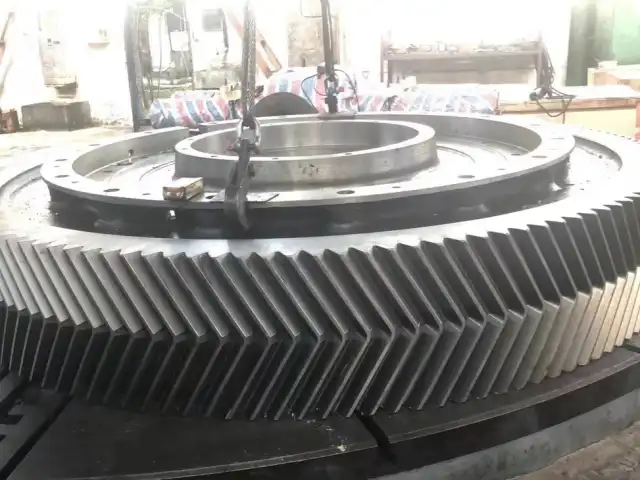
Herringbone Gear Transmission uses opposite helix points orchestrated in a V-shape, combining cleared out- and right-hand teeth on one adapt confront. This setup makes a self-balancing framework where pivotal powers cancel inside, killing the requirement for overwhelming pushed heading required in single-helical plans. As a result, gearbox structures ended up less complex, lighter, and more dependable. Genuine herringbone gears need a central alleviation groove, permitting full face-width contact and uniform stack distribution—critical in high-power frameworks like rolling plants or marine drives. Fabricating requires progressed strategies such as 5-axis CNC machining or Sykes generators to guarantee exact V-junction geometry without compromising tooth accuracy.
Material Selection and Manufacturing Excellence
High-performance Herringbone Gear Transmission systems rely on amalgam steels such as 20CrMnTi, 40CrNiMo, SAE4340, and 42CrMo for quality and heat-treatment reaction. Generation starts with manufacturing to adjust grain structure with stretch ways, followed by cutting and hobbing to frame tooth geometry. Helix points between 5° and 45° are optimized based on stack and speed necessities. Accuracy pounding refines tooth surfaces, expelling micro-defects and guaranteeing smooth operation. Warm medicines like carburizing and quench-tempering deliver difficult external layers (58–62 HRC) with extreme centers for stun resistance. Discretionary acceptance solidifying upgrades localized wear zones, moving forward, solidness without treating the whole gear.
Key Industrial Benefits Driving Adoption
Herringbone Gear Transmission offers smoother movement and lower clamor than goad or single-helical gears due to persistent multi-tooth engagement. This diminishes vibration exchange, basic for accuracy frameworks like machine instrument axles. Stack capacity is essentially made strides since strengths are dispersed over a more extensive contact zone, empowering ISO 5–6 review gears to handle high torque dependably. The end of hub pushed bolsters higher speeds without bearing overburden. Customizable module ranges from 0.5 to 50 permit utilize in different applications, from aviation actuators to expansive control frameworks. Moo least arrange adaptability also underpins prototyping and R&D projects.
Comparing Herringbone Gears with Alternative Transmission Solutions
Performance Against Spur and Single-Helical Gears
Spur gears, though simple and economical, suffer from impact loading and noise due to full-tooth contact, limiting speed and durability. Single-helical gears improve smoothness and load capacity through angled teeth but introduce axial thrust, requiring additional bearing support. Herringbone Gear Transmission overcomes both limitations by combining smooth engagement with internal force balancing. This reduces noise further and increases load capacity by spreading stress across larger contact areas. In heavy-duty environments like mining crushers, herringbone gears handle shock loads more effectively and reduce uneven wear, extending maintenance intervals and lowering downtime costs.
Trade-Offs with Double-Helical and Planetary Systems
Double-helical gears reduce axial thrust but include a central groove that lowers effective contact area. Herringbone Gear Transmission eliminates this crevice, maximizing stack conveyance and torque density—ideal for compact, high-power frameworks such as marine turbines. Planetary gears give tall control thickness in little spaces but include different work focuses, expanding complexity and upkeep. Herringbone frameworks, by contrast, convey high productivity in easier single-stage setups, making them appropriate for long-term applications like control era. Field information shows efficiencies over 98% kept up over decades with legitimate support, highlighting their unwavering quality advantage.
Finding and Evaluating Reliable Herringbone Gear Suppliers in 2026
Critical Supplier Selection Criteria
Selecting reliable Herringbone Gear Transmission suppliers requires confirming certifications such as ISO 9001, ISO 1328, AGMA guidelines, or AS9100 for aviation applications. Progressed fabricating capabilities—including CNC machining, pounding, and mechanized warm treatment—indicate solid specialized mastery. Review strategies like CMM for dimensional precision and MPI for identifying breaks to guarantee item quality. Providers incapable to give nitty gritty review reports posture quality dangers. Industry pioneers frequently collaborate with investigative teachers to create progressed materials and forms. Production line reviews, third-party audits, and long-term associations with major building firms assist in affirming provider credibility.
Direct Manufacturing Versus Distribution Channels
Direct sourcing of Herringbone Gear Transmission products enables better pricing transparency and technical communication. Engineers can collaborate directly with manufacturers to optimize designs for cost and performance. Lead times are more predictable, typically 35–60 days, with real-time production updates. Distributors offer convenience by consolidating sourcing, but add markups and may lack deep technical expertise. This can slow issue resolution and complicate warranty claims. Direct relationships generally provide faster support, clearer accountability, and improved customization options, making them preferable for critical or high-value applications.
Quality Assessment Through Verification Methods
Risk reduction in Herringbone Gear Transmission procurement involves sample validation and independent testing. Buyers should request prototype gears and conduct dimensional checks, hardness testing, and metallurgical analysis to confirm supplier claims. Factory audits provide insight into production conditions, equipment maintenance, and process control. Reviewing calibration records, defect rates, and raw material traceability ensures consistent quality. Direct discussions with quality teams reveal problem-solving approaches and operational maturity. These verification steps offer deeper assurance than documentation alone, enabling confident supplier selection for demanding applications.
Optimizing Procurement of Herringbone Gear Transmissions
Understanding Lead Times and Pricing Factors
Herringbone Gear Transmission procurement involves extended timelines due to complex manufacturing stages. Material sourcing, especially for specialized alloys, requires certified supply chains. Forging, machining, and tooth generation establish geometry, followed by heat treatment processes that enhance strength and durability. Final grinding restores precision after distortion, achieving ISO 5–6 accuracy. Inspection checkpoints throughout production ensure quality but add time, resulting in typical lead times of 35–60 days. Pricing depends on material costs (30–40%), design complexity, and order volume. Bulk orders reduce unit costs through tooling amortization, while stable steel prices in 2026 support predictable contract planning.
Leveraging Customization Services for Specialized Needs
Customization in Herringbone Gear Transmission allows adaptation to specific operational requirements. Modifications may include non-standard dimensions, special mounting interfaces, or material adjustments for extreme environments. Engineering teams translate application needs into manufacturable designs using CAD and FEA analysis to validate stress distribution and performance. Production preparation involves custom tooling and extended quality checks to meet precise tolerances. Packaging and logistics are tailored for unique geometries. A structured workflow—from requirement analysis to delivery—ensures consistent results, even for highly specialized designs, supporting industries with unique technical demands.
Contract Negotiation and Volume Strategies
Effective negotiation for Herringbone Gear Transmission sourcing includes volume commitments that improve production efficiency and reduce costs. Tiered pricing models enable savings as order quantities increase. Contracts should include technical support provisions such as installation guidance and performance optimization. Payment terms typically follow 30/70 structures but may be extended for long-term partnerships. Warranty clauses covering manufacturing defects and clear replacement policies protect operations. Lead time guarantees and delay penalties ensure supply reliability. These contractual elements establish accountability and support stable, long-term supplier relationships.
Maintenance, Noise Reduction, and Performance Optimization Tips
Establishing Preventive Maintenance Protocols
Preventive maintenance is essential for reliable Herringbone Gear Transmission performance. Monthly inspections detect early signs of wear such as pitting, scoring, or discoloration. Monitoring tooth contact patterns identifies misalignment before severe damage occurs. Backlash measurements reveal progressive wear, while vibration analysis detects issues like profile errors or bearing degradation. Proper lubrication with EP synthetic oils prevents metal contact under heavy loads. Filtration systems remove contaminants, reducing abrasive wear. Temperature monitoring ensures lubricant stability. Periodic oil analysis identifies wear particles and contamination trends, enabling proactive maintenance decisions and extending gear service life.
Strategies for Noise Control and Vibration Reduction
Noise in Herringbone Gear Transmission systems arises from meshing impacts, bearing resonance, and structural vibration. Double-helix geometry naturally reduces noise, but further improvements are possible through micro-geometry modifications such as tip relief and profile optimization. Precision grinding ensures smooth load transfer. Material selection influences damping, with alloy steels offering balanced stiffness and energy absorption. Housing design also plays a role—ribbed structures increase stiffness, while damping materials reduce sound transmission. Flexible mounting isolates vibrations, preventing amplification in surrounding structures and improving overall system quietness.
Leveraging Supplier Support for Long-Term Performance
Long-term Herringbone Gear Transmission performance benefits from strong supplier support. Training programs help maintenance teams understand inspection techniques and wear analysis. Technical assistance enables rapid troubleshooting of unexpected issues using cross-industry experience. Advanced systems integrate IoT sensors to monitor temperature, vibration, and acoustic data in real time. Machine learning analyzes patterns to predict failures before they occur, enabling predictive maintenance. These technologies optimize component usage, reduce unplanned downtime, and extend equipment lifespan. Suppliers offering digital monitoring and engineering support transform maintenance from reactive repair to proactive asset management.
Conclusion
In 2026, finding trusted providers of herringbone gear means carefully checking their technical skills, quality control systems, and dedication to customer service. Herringbone Gear Transmission technology has special advantages like canceling out axial thrust, carrying more weight, and running quietly. These advantages make it useful in industrial tools, mining, and aircraft. For successful procurement, it's important to understand how complicated manufacturing is, compare options rationally, and form partnerships with manufacturers who can show that they use ISO-compliant processes and high-tech production tools. By using customization services, volume strategies, and preventative maintenance routines to make buying more efficient, you can get the most out of your money while keeping operations running as smoothly as possible. The strategies described will help B2B decision-makers easily handle the supply world of 2026, finding power transmission solutions that improve the reliability of tools and give them a competitive edge.
FAQ
1. Which fields can use herringbone gear sets the most?
The biggest benefit goes to heavy businesses that need a lot of power and smooth operation. Marine propulsion systems use main reduction units with herringbone gears to send power from turbines to propeller shafts. Power plants use them in turbine-generator links, where output is directly affected by how well and how reliably they work. These gears in crushers and conveyors handle very high shock loads, which is important for mining. They help steel rolling mills keep precise control while shaping metal. In aerospace, there are specialized actuator systems that need to save weight and keep vibrations under control.
2. How do herringbone gears compare in cost to alternatives?
Due to the difficulty of making them, initial purchase costs are higher than for spur or single-helical gears. Lifecycle cost study, on the other hand, shows benefits. When thrust bearings are taken out of a gearbox, the number of parts and the difficulty of assembly go down. Longer service life from proper loading lowers the number of times that parts need to be replaced. Less upkeep means less money spent on workers and downtime. Over the years of running, gains in energy saving add up. Total cost of ownership estimates usually favor herringbone solutions for uses that will last longer than 10 years, especially in installations that are hard to get to and where upkeep costs are high.
3. What lead times apply to customized orders?
Standard customization requests, like changing the size of the fastening holes or using a different material, don't add to our 35–60 day production schedule. Complex changes that need to be made with special tools or that require a lot of design approval may take an extra two to three weeks. Priority schedule makes it possible for expedited production to meet urgent needs, which could cut lead times to 25 to 30 days with extra costs. Clear communication during the requirement talk phase makes it possible to make accurate schedule predictions, which helps procurement teams plan when to improve equipment or do upkeep.
Partner with YIZHI MACHINERY for Premium Herringbone Gear Solutions
To achieve operational success in tough industrial settings, you need to work with experienced herringbone gear transmission providers who can provide both technical know-how and on-time delivery. YIZHI MACHINERY has been making specialized gears for 15 years and supplies ISO-compliant precise parts to the mining, aircraft, and industrial machinery industries. We can do custom design engineering, use advanced CNC machining centers, set up automated grinding systems, and follow strict quality checking routines to make sure every gear meets ISO 5-6 grade tolerances. We can make changes to anything from a single prototype to mass production, and our prices are reasonable, and our lead times are promised to be 35 to 60 days. Customized packaging that protects against shock and multiple shipping choices, such as sea freight, air, and the China-Europe train, make sure that deliveries are damage-free and that you can see where they are at all times. You can be sure of everything because of the pre-sales design help, synchronized production updates, and one-year guarantee coverage. Get in touch with our engineering team at sales@yizmachinery.com to talk about your herringbone gear transmission needs and find out how our precision-engineered solutions can make your equipment more reliable.
References
1. American Gear Manufacturers Association. (2022). AGMA 2015-1-A01: Accuracy Classification System - Tangential Measurements for Cylindrical Gears. Alexandria, VA: AGMA Publications.
2. Budynas, R.G. & Nisbett, J.K. (2020). Shigley's Mechanical Engineering Design (11th ed.). New York: McGraw-Hill Education.
3. International Organization for Standardization. (2021). ISO 1328-1: Cylindrical Gears - ISO System of Flank Tolerance Classification - Part 1: Definitions and Allowable Values of Deviations Relevant to Flanks of Gear Teeth. Geneva: ISO.
4. Lynwander, P. (2019). Gear Drive Systems: Design and Application. Boca Raton: CRC Press.
5. Stadtfeld, H.J. (2023). Advanced Gear Engineering: Theory and Practice for Modern Manufacturing. Munich: Hanser Publications.
6. Townsend, D.P. (Ed.). (2021). Dudley's Handbook of Practical Gear Design and Manufacture (4th ed.). Boca Raton: CRC Press.

USER EVALUATE
Here is the customer's evaluation of us