


Benefits of Right Hand Helical Gear Explained
It is important to know the specific benefits of helical gear systems when choosing power transmission parts for industrial tools, mining equipment, or aircraft uses. With their unique tooth design of slanted teeth that curve clockwise along the gear line, Right Hand Helical Gears work better than left hand ones. This engineering method solves important practical problems like too much noise, shaking, and premature wear that affect lots of high-speed transmission systems. These parts' slow tooth engagement turns point contact into extended line contact, which greatly lowers impact stress and makes it possible for smooth torque transfer between shafts that are parallel or crossing.
Understanding Right Hand Helical Gears
What Defines a Right Hand Helical Gear
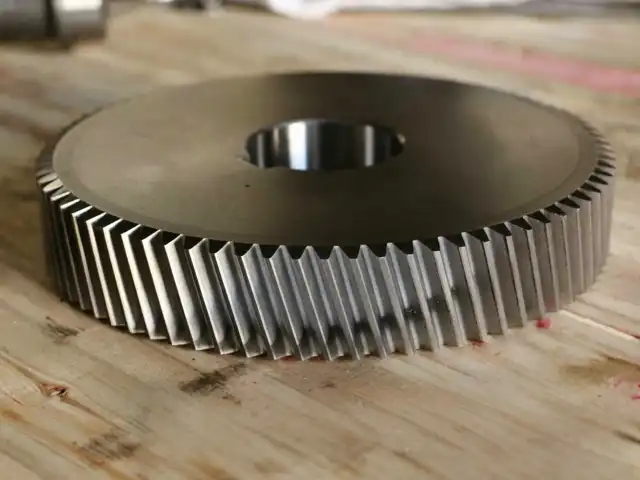
A Right Hand Helical Gear is a precision cylinder part with a tooth trace that turns clockwise when looking along the axis of rotation. In contrast to straight-cut spur gears, these parts have teeth that are made at specific helix angles between 5° and 45° from the gear axis. With this angle, a helical design is made that turns away from the viewer and to the right.
Core Design Elements
The main factor that determines the contact ratio and the size of the axial thrust is the spiral angle. When the angle is higher, the overlap ratio goes up. This makes operating easier, but it needs strong thrust bearings to handle the axial forces that are created. Premium alloy steels like AISI 8620, 18CrNiMo7, 42CrMo, and SAE4340 are often used in manufacturing. These steels are forging, cutting, hobbing, milling, and precise grinding to get ISO 8-9 grade accuracy.
Technical Specifications That Matter
Module lengths from 0.5 to 50 can be used for a variety of application sizes, and tooth counts can be changed to ensure exact ratio matches. When you carburize, quench and temper, or induction harden something, the surface hardness usually goes up to 58 to 62 HRC. This makes the layers of the metal resistant to wear while keeping the cores tough. It's possible for more than one tooth to share loads at the same time because the crosswise contact ratio is higher than 1.0 and often gets close to 2.0 or higher.
Key Benefits of Right Hand Helical Gears for Industrial Applications
Knowing the real benefits these parts offer helps procurement professionals make choices based on facts and that are in line with practical goals. Here are the main reasons why Right Hand Helical Gear designs are better than traditional gear systems:
1. Smooth Transmission with Minimal Noise: The angled tooth shape lets the teeth connect slowly instead of all at once. As the machine turns, the teeth gradually mesh from one end to the other. This spreads the forces evenly and greatly lowers the noise level. It is very helpful to have this trait in factories where noise levels have to meet strict government rules and worker comfort standards. This ability to reduce vibrations is especially useful for places that use machine tool spindles, compressors, and precise transmission equipment.
2. Enhanced Load-Bearing Capacity: The slanted tooth surface makes more contact areas than spur gears of the same size. This bigger contact zone spreads applied forces over a larger amount of material, which makes it 20–30% stronger than straight-tooth options. Extreme twisting loads and shock hits are handled by mining equipment, and it depends on this superior strength to keep teeth from breaking and catastrophic failure happening while it's working. This structural benefit is shown by the "high load capacity" label.
3. Suitability for High-Speed Applications: Gradual tooth contact lowers dynamic loads and impact stress, which gets worse at high rotational speeds. The higher contact ratio makes sure that power is transferred continuously, without any breaks. This keeps transmission efficiency high even as RPMs rise. This steadiness is important for aerospace and car systems that need to work reliably at different speeds. Gearboxes that work between 1,500 and 10,000 RPM especially benefit from longer service intervals and less wear.
4. Customization Flexibility: Forging, hobbing, and grinding are all manufacturing methods that can be used to meet a wide range of specifications. Some of the factors that can be changed are the number of teeth, the choice of module, the best helix angle, and the material grade. Because it is so flexible, engineers can exactly match the gear's properties to the needs of the application, whether they are dealing with limited room, high torque needs, or harsh environmental conditions. The production powers allow for both big batch orders and unique manufacturing of a single item, with low minimum order numbers that make them easy to get.
All of these benefits help with operational problems that lower the reliability of tools and raise the cost of upkeep. Companies that use these parts in transmission systems say that machine performance, energy economy, and total cost of ownership are all better than with other gear designs.
Comparison and Decision-Making: Right Hand Helical Gears vs Alternatives
Right Hand Helical Gears Versus Spur Gears
Spur gears have straight teeth that are parallel to the shaft plane. This makes full-length tooth contact at the same time, which makes a lot of noise and impact forces. The sudden contact causes vibrations that speed up the wear on the bearings and lower the operating speeds. These problems are solved by Right Hand Helical Gear patterns, which use slow meshing to spread loads out over time. Lifespan studies show that helical designs have 40–60% longer repair intervals when the working conditions are the same. The trade-off is that you have to deal with axial thrust forces that spur gears don't have to deal with, which means you have to choose the right bearings.
Right Hand Versus Left Hand Helical Gears
The main difference is the direction of the spiral and the vertical thrust that results. When two gears are paired on parallel shafts, one Right Hand Helical Gear must mesh with a left-hand gear to keep the axial forces equal. Which arrangement makes thrust go outward or inward along the shaft depends on the direction of rotation. To make sure the load is spread out evenly and no bearings fail, system compatibility needs to be carefully thought out during design and installation. When used properly, both positions give the same functional transmission performance.
Helical Gears Compared to Bevel and Worm Configurations
Bevel gears send power between shafts that cross each other at right angles, usually 90 degrees, using cone-shaped surfaces instead of cylindrical ones. They work well for changing directions, but they can only handle low power levels and need to be mounted precisely to keep tooth contact. Worm gears have high reduction ratios and are small, but they are less efficient because of friction between the moving contacts. When a parallel shaft application needs high torque density, high efficiency (usually 94–98%), and less backlash at high speeds, Right Hand Helical Gear configurations work best. The choice relies on how the shafts are set up, the speed ratio needs, and how efficient you want to be.
Procurement Insights for Right Hand Helical Gears
Selecting Reliable Suppliers
To do effective buying, you must first evaluate manufacturers using quality signs that can be checked. ISO standard compliance ensures systematic quality management, while production experience spanning 15 years or more indicates established process maturity. The powers of equipment like high-precision CNC gear machining centers, automatic grinding systems, and intelligent heat treatment lines have a direct effect on the quality of the dimensions and the finish on the surface. Suppliers who offer full technical support, design drawing services, and guarantees after delivery show that they are committed in a way that goes beyond business relationships.
Critical Specification Parameters
The choice of material has a big impact on how well it works and how long it lasts. After being heated, alloy steels like 20CrMnTi, 40CrNiMo, AISI4140, 17CrNiMo6, 20CrNiMo, and 20CrNi2Mo have different amounts of core strength and surface hardness. The precision grade specification that follows the ISO 8-9 classification makes sure that the dimensions are correct for the application. Tooth grinding reduces the sharpness of the surface to less than 0.8µm, which cuts down on friction losses and boosts efficiency.
Understanding Lead Times and Logistics
Production times range from 35 to 60 days, but they rely on how complicated the job is and how much customization is needed. This time frame includes stages of forging, machining, heat treatment, grinding, and quality inspection. Logistics skills have a big effect on overall delivery schedules. Multiple modes of transportation, such as sea freight, air cargo, and rail services, make it possible to manage deadlines in a flexible way. Customized packing using shock-absorbing foam and protective wooden crates keeps goods from getting damaged in transit; damage rates have been recorded at less than 0.1%. Real-time tracking systems giving insight from plant loading through final transport reduce doubt and allow proactive schedule management.
Cost Optimization Strategies
Most bulk price models offer 15–25% lower unit costs as the quantity ordered rises. However, prototype and low-volume needs can still be met with smaller orders. Instead of using maximum specs, the quality trade-offs between standard-grade and expensive materials should be based on the stress levels of the real application. When you look at the total cost of ownership, including projected lifespan, upkeep frequency, and downtime costs, it's often worth the extra money to buy things that last longer. Suppliers who offer one-year guarantees and quick settlement of problems show that they are confident in the quality of their products and lower the risk of buying them.
Troubleshooting and Maintenance Tips to Maximize Gear Lifespan
Common Operational Issues
Too much noise during operation is usually a sign of imbalance, not enough lubricant, or damage to the tooth surface. Backlash outside of the specifications areas means that the bearings are worn or the mesh distance is not right. Uneven wear patterns that focus on certain tooth sections are a sign of misaligned teeth or uneven loading. Early pitting or spalling can happen when the surface isn't hard enough or when the grease is dirty and abrasive bits get into the system. If the temperature goes above the usual working range, it means that there is too much friction because the lubrication viscosity is wrong or there isn't enough cooling.
Preventive Maintenance Protocols
Every 500 hours of use, the tooth surfaces should be visually checked for pitting, scoring, or cracking as part of regular inspection plans. Protocols for lubrication must define the right oil viscosity grades based on the temperature and speed ranges that will be used, and the manufacturer's suggestions for how often to change the oil should be followed. Using dial indicators or laser systems to check the alignment should be done during installation and after any repair that might change the direction of the shaft. Accelerometers used for vibration tracking can find problems before they become catastrophic, allowing planned repairs to be made during planned breaks.
Expert Consultation Benefits
Technical support from the maker can help with complicated issues like wear patterns that don't make sense, noises that don't make sense, or parts that fail before they should. Engineers with a lot of experience can look at working conditions, stress estimates, and the properties of materials to find the reasons. Some design changes that can be made to solve specific application problems are changing the helix angle, upgrading the materials, or making the greasing system better. Professional advice given at the right time can stop breakdowns from happening again and protect capital investments in important transmission systems over the long run.
Conclusion
The technical benefits of Right Hand Helical Gears directly solve problems that come up in the working of industrial tools, mining equipment, and aircraft systems. Gradual tooth engagement makes operation smooth and quiet, and larger contact areas make load capacity much higher than with spur gears alone. It is possible to make exact matches to the needs of an application by customizing the materials, sizes, and heat treatment methods. Choosing experienced suppliers that offer ISO-compliant manufacturing, full technical support, and reliable global logistics is key to successful procurement. Proactive maintenance, which includes ensuring proper alignment, lubrication, and regular inspections, extends the life of parts, protects machine investments, and keeps output going.
Frequently Asked Questions
1. Can Right and Left Hand Helical Gears Be Used Interchangeably?
Without redesigning the system, these setups can't be switched out for each other. The direction of axial push and meshing compatibility are determined by the shape of the helix. To balance axial pressures, parallel shaft systems need hands that are oriented in opposite directions, while crossed shaft systems need hands that are oriented in the same direction. By replacing it, the thrust would go in the opposite direction, which could overwork the bearings and cause them to fail early.
2. What Materials Are Commonly Used for Helical Gear Manufacturing?
In industry, 45# steel, 20CrMnTi, 40CrNiMo, SAE4340, 42CrMo, AISI4140, 18CrNiMo7, 17CrNiMo6, 20CrNiMo, AISI8620, 20CrNi2Mo, and SAE4320 are the most common alloy steels. The choice of material strikes a balance between the needs for core stiffness and top hardness after heat treatment. In places where things are likely to rust, stainless steel options may be worth the extra cost.
3. What Lead Times Should I Expect for Custom Orders?
Standard production times are between 35 and 60 days, but they can be longer or shorter based on the complexity of the specifications, the need for heat treatment, and the precise grinding processes. Rush orders may be able to be processed faster if the schedule is changed. Communication during the requirement assessment sets reasonable output goals that are in line with the project's schedule.
Partner with YIZHI MACHINERY for Superior Right Hand Helical Gear Solutions
Picking the right Right Hand Helical Gear maker has a direct effect on how well and how reliably your equipment works. YIZHI MACHINERY has been making unique gears for 15 years, working with companies in the mining, aircraft, and industrial machinery industries around the world. Through advanced heat treatment methods, our precision-ground parts made from quality alloy steels reach an ISO 8–9 grade of accuracy and a surface hardness of 58–62 HRC. Forging, CNC cutting, hobbing, and grinding are just some of the production methods we use. We also have smart quality checking systems that make sure everything works the same way every time. Our streamlined customization process can handle everything from single-item samples to large-scale production runs. During the requirement communication, design drawing creation, manufacturing, and quality testing stages, engineering help is available. With real-time tracking and multiple transportation choices, delivery times can still be controlled between 35 and 60 days. The one-year guarantee and helpful technical support team will keep your investment safe and operating risks to a minimum. Get in touch with our engineering experts at sales@yizmachinery.com to talk about your unique transmission needs and get competitive quotes from a reputable Right Hand Helical Gear provider that wants you to succeed.
References
1. Dudley, D.W. (1994). Handbook of Practical Gear Design and Manufacture. CRC Press, Boca Raton, Florida.
2. Khurmi, R.S. & Gupta, J.K. (2005). A Textbook of Machine Design. S. Chand Publishing, New Delhi.
3. Maitra, G.M. (2013). Handbook of Gear Design, Second Edition. Tata McGraw-Hill Education, New York.
4. Radzevich, S.P. (2012). Dudley's Handbook of Practical Gear Design and Manufacture, Second Edition. CRC Press, Boca Raton, Florida.
5. Stadtfeld, H.J. (2014). Advanced Bevel Gear Technology. The Gleason Works, Rochester, New York.
6. Townsend, D.P. (1991). Dudley's Gear Handbook: The Design, Manufacture, and Application of Gears. McGraw-Hill Professional, New York.

USER EVALUATE
Here is the customer's evaluation of us